
Why Is the US Dollar Consolidating Above 99.50 Amid Middle East Tensions?

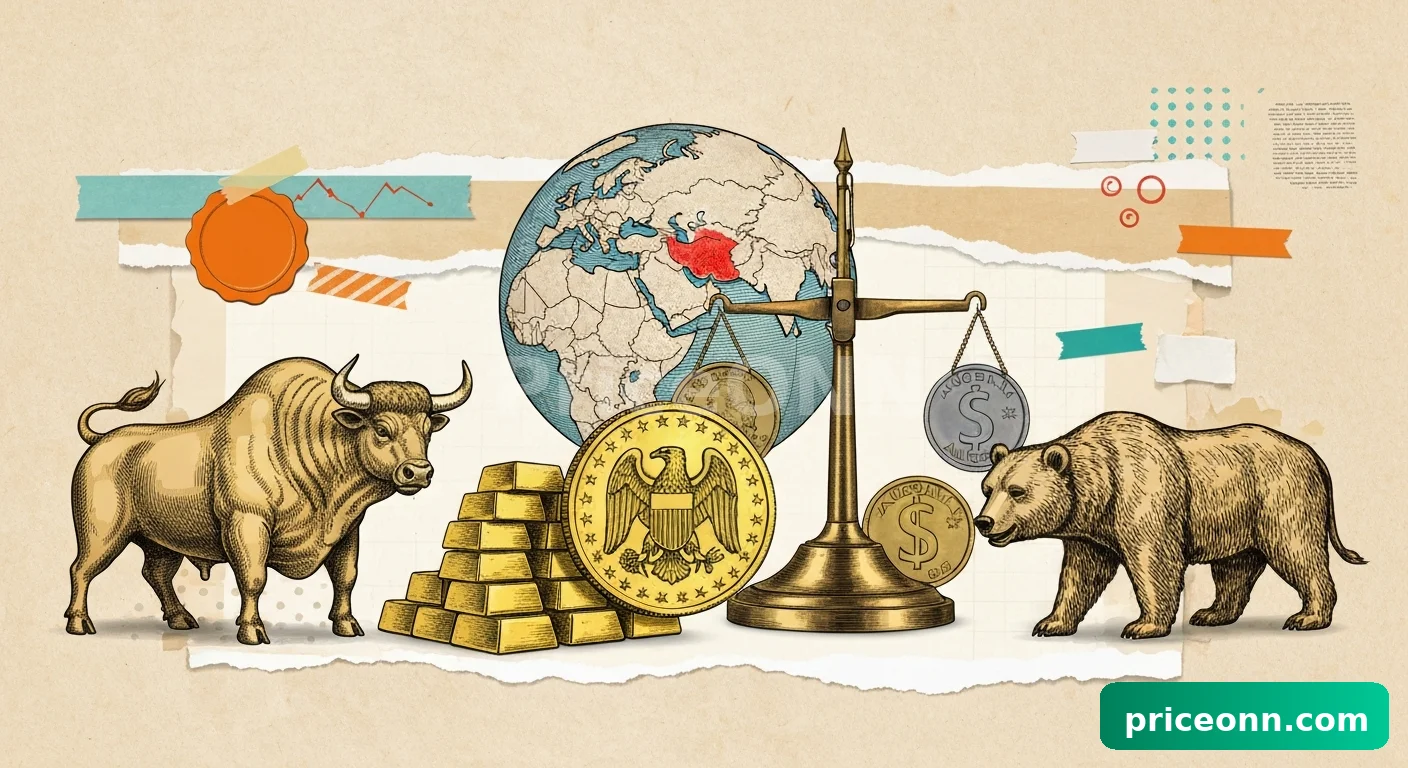
The US Dollar Index (DXY), a benchmark for the greenback's strength against a basket of major currencies, is consolidating its gains, trading around the 99.65 region. This positive start to the week, though lacking significant upward momentum beyond Friday's highs, underscores the dollar's resilience amid heightened global uncertainty. The ongoing geopolitical tensions in the Middle East are providing a supportive undercurrent for the dollar, a traditional safe-haven asset.
Market Context
The DXY saw a modest uptick of 0.15% on the day, indicating a cautious market environment where investors are seeking perceived safety. This move comes as the Australian Dollar (AUD) experienced some selling pressure, with AUD/USD retreating towards the 0.7000 handle during early Asian trading. The escalating tensions in the Middle East have triggered a risk-off sentiment, prompting a shift away from riskier currencies like the AUD and towards the relative stability of the US Dollar.
The US Dollar's role as a global reserve currency, established after World War II, and its significant share in foreign exchange turnover (over 88% in 2022, averaging $6.6 trillion daily) highlight its pivotal importance in international finance. Historically backed by gold until 1971, its value is now predominantly influenced by the Federal Reserve's monetary policy, which aims to balance price stability and full employment through interest rate adjustments.
Analysis & Drivers
The primary driver underpinning the current dollar strength is the escalating geopolitical risk emanating from the Middle East. Such events typically lead investors to divest from riskier assets and reallocate capital into safe-haven instruments like the US Dollar. This dynamic is a recurring theme in financial markets; when global uncertainties rise, the demand for stability intensifies.
Beyond immediate geopolitical concerns, the Federal Reserve's monetary policy remains a critical long-term factor. Should inflation persist above the Fed's 2% target, the central bank might consider raising interest rates, further bolstering the dollar. Conversely, any indication of economic slowdown or a shift towards easing monetary policy could weigh on the currency. The Fed's toolkit also includes quantitative easing (QE), a measure used during crises to inject liquidity, which typically weakens the dollar.
For the Australian Dollar, its sensitivity to global commodity prices and the economic health of China are key considerations. As a major commodity exporter, Australia's currency often moves in tandem with resource prices, particularly iron ore. Furthermore, China, being Australia's largest trading partner, significantly influences the AUD's performance. Any signs of economic stress in China or a downturn in commodity demand could exacerbate the AUD's weakness, especially when combined with broader risk aversion.
Trader Implications
Traders should closely monitor the geopolitical developments in the Middle East, as any further escalation or de-escalation will likely dictate short-term currency movements. The 99.50 level on the DXY is a critical support zone; a sustained break below this could signal a shift in sentiment. Conversely, holding above this level, especially with continued geopolitical uncertainty, suggests the dollar may retain its upward bias.
For those trading AUD/USD, the 0.7000 level represents a key psychological and technical area. A decisive break below this could open the door for further downside towards 0.6950. Traders should also be attuned to RBA policy statements and upcoming Australian economic data, which could provide localized support or pressure. Risk management is paramount, with tight stop-losses recommended given the current volatility.
Outlook
The immediate outlook for the US Dollar appears cautiously positive, supported by safe-haven demand stemming from Middle East tensions. However, its ability to sustain gains will depend on the trajectory of these geopolitical events and any forthcoming US economic data that could influence Federal Reserve policy expectations. Traders should remain vigilant for shifts in market sentiment and be prepared to adjust positions accordingly.
Frequently Asked Questions
What is the current trading range for the US Dollar Index (DXY)?
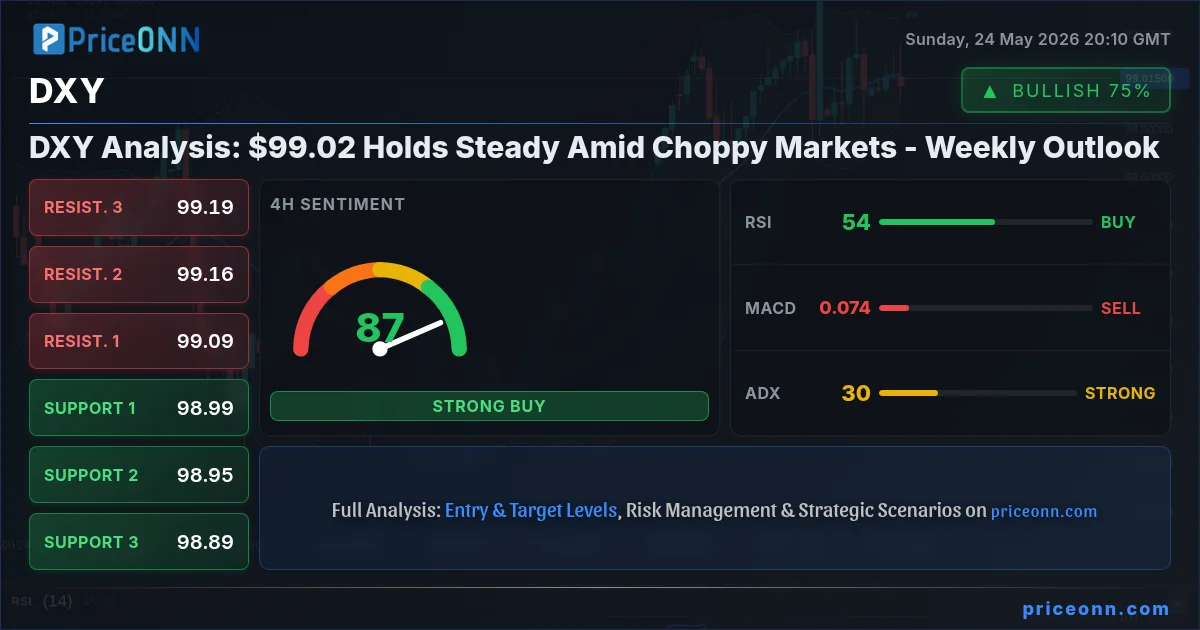
The US Dollar Index (DXY) is currently consolidating around the 99.65 region, with the 99.50 level acting as a key support. A sustained hold above this level suggests continued strength, while a break below could indicate a reversal.
How are Middle East tensions impacting currency markets?
Escalating tensions in the Middle East are fueling a risk-off sentiment, boosting demand for safe-haven assets like the US Dollar (USD) and pressuring riskier currencies such as the Australian Dollar (AUD). This is evident as AUD/USD retreats towards 0.7000.
What should traders watch for in the coming week regarding the US Dollar?
Traders should monitor geopolitical developments in the Middle East for immediate impact and upcoming US economic data releases that could shape Federal Reserve interest rate expectations. A sustained DXY above 99.50 is a key bullish indicator.
Track markets in real-time
Empower your investment decisions with AI-powered analysis, technical indicators and real-time price data.
Join Our Telegram Channel
Get breaking market news, AI analysis and trading signals delivered instantly to your Telegram.
Join Channel PriceONN News
(RTTNews) - Gold prices have soared on Friday amid rising optimism about an end to the Middle East war with the chances of reopening of the Strait of Hormuz and resumption of oil and energy trade growing stronger.
PriceONN News
(RTTNews) - Extending the losses from yesterday's session, gold prices have slumped on Wednesday as traders watch the ongoing efforts to end the U.S.-Iran standoff with cautious optimism while the blockade on the Strait of Hormuz continues. The rising inflationary pressure weighe
PriceONN News
Gold (XAU/USD) rebounds sharply on Monday as hopes for a US-Iran deal to end the war in the Middle East and reopen the Strait of Hormuz weigh on the US Dollar (USD) and Oil prices. At the time of writing, XAU/USD is trading around $4,556, up 1.0% on the day.
PriceONN News
(RTTNews) - Gold prices traded higher on Monday, oil prices tumbled nearly 5 percent and the dollar hovered near a one-week low after U.S. President Donald Trump said on Saturday a peace deal with Iran had been "largely negotiated."
PriceONN News
Gold futures broke above $4,500 per ounce on Friday, driven by increasing optimism for a de-escalation in the U.S.-Iran conflict and the potential reopening of the Strait of Hormuz. Silver also saw significant gains, reflecting a broader shift towards precious metals as geopolitical tensions ease.
PriceONN News
(RTTNews) - Gold held firm above $4,500 an ounce on Friday, the dollar headed for a small weekly loss on improved risk sentiment in markets, and oil prices slipped to a one-month low amid investor optimism that the Middle East conflict is inching toward an end and that the reopen
PriceONN News
(RTTNews) - After moving sharply lower earlier in the day, the price of gold has shown a significant turnaround over the course of the trading session on Thursday.
PriceONN News
Gold prices experienced a significant decline on Wednesday, falling over 1% as diplomatic optimism surrounding U.S.-Iran talks grew, despite ongoing military actions. The June gold contract settled at $4,444.50.
PriceONN News
Gold prices experienced a significant downturn, shedding 2% this week to settle near $4,444.50 per ounce. This decline is attributed to evolving U.S.-Iran diplomatic efforts and concerns over potential central bank rate hikes.
PriceONN News
Gold prices fell below the $4500 mark on Wednesday, extending previous losses as oil prices tumbled and geopolitical tensions between the US and Iran remained a key market driver. Investors are weighing inflation concerns against hopes of de-escalation.
PriceONN News
(RTTNews) - Gold prices traded lower on Wednesday, extending losses from the previous session as investors fretted about oil-driven inflation and the potential impact on interest rates.
PriceONN News
(RTTNews) - Oil prices traded sharply lower on Wednesday as U.S.-Iran talks continued despite new American attacks on missile sites and mine-laying ships in the Strait of Hormuz.