SP500 Tests $6,556.10 Support Amidst Strong DXY and Tech Weakness
The S&P 500 is trading at $6,556.10, testing critical support as the DXY strengthens and tech stocks face selling pressure. Analysis suggests a cautious outlook.
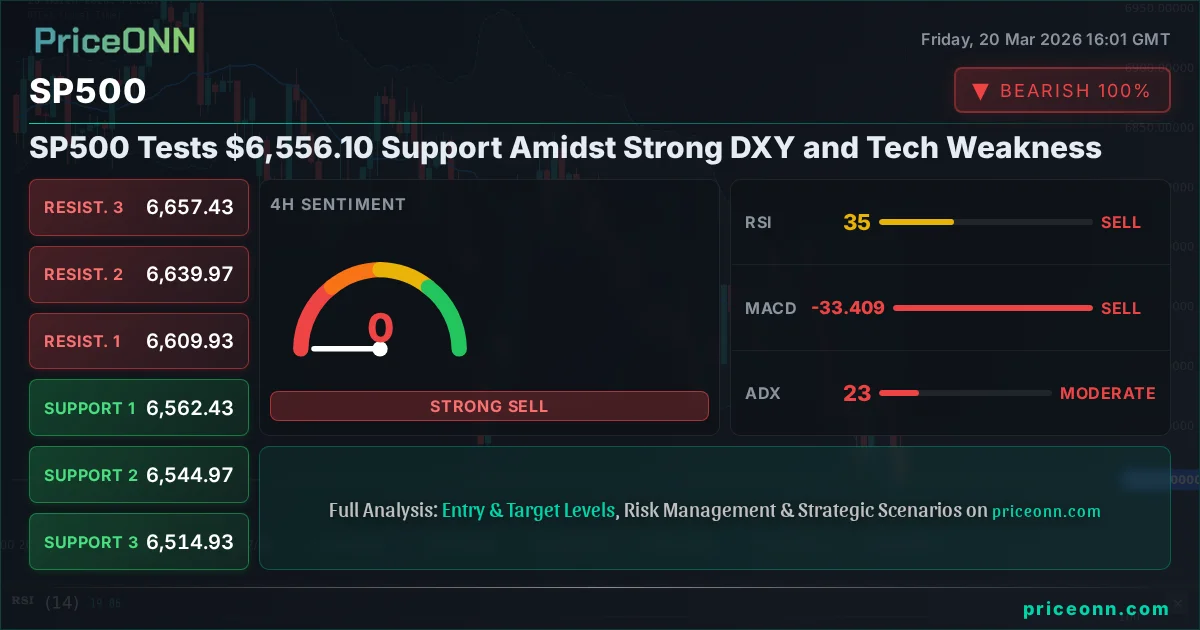
The S&P 500 is currently navigating a challenging phase, trading at $6,556.10 and probing key support levels. This downturn is unfolding against a backdrop of a strengthening US Dollar Index (DXY) and persistent weakness in the technology sector, creating a complex environment for investors. As traders eye the $6,569.53 support level, the question on everyone's mind is whether this marks a temporary pause or the beginning of a deeper correction. My take right now is that the bears are certainly gaining traction, and we need to see a decisive hold above $6,556.10 to even consider a reprieve.
- The S&P 500 is trading at $6,556.10, testing the $6,569.53 support level.
- The DXY is at 99.49, showing strength that typically pressures risk assets like the S&P 500.
- Technical indicators across multiple timeframes suggest a bearish bias, with RSI readings low and MACD showing negative momentum.
- The current market sentiment is risk-off, correlating with declines in Nasdaq and Dow Jones, while energy prices are showing resilience.
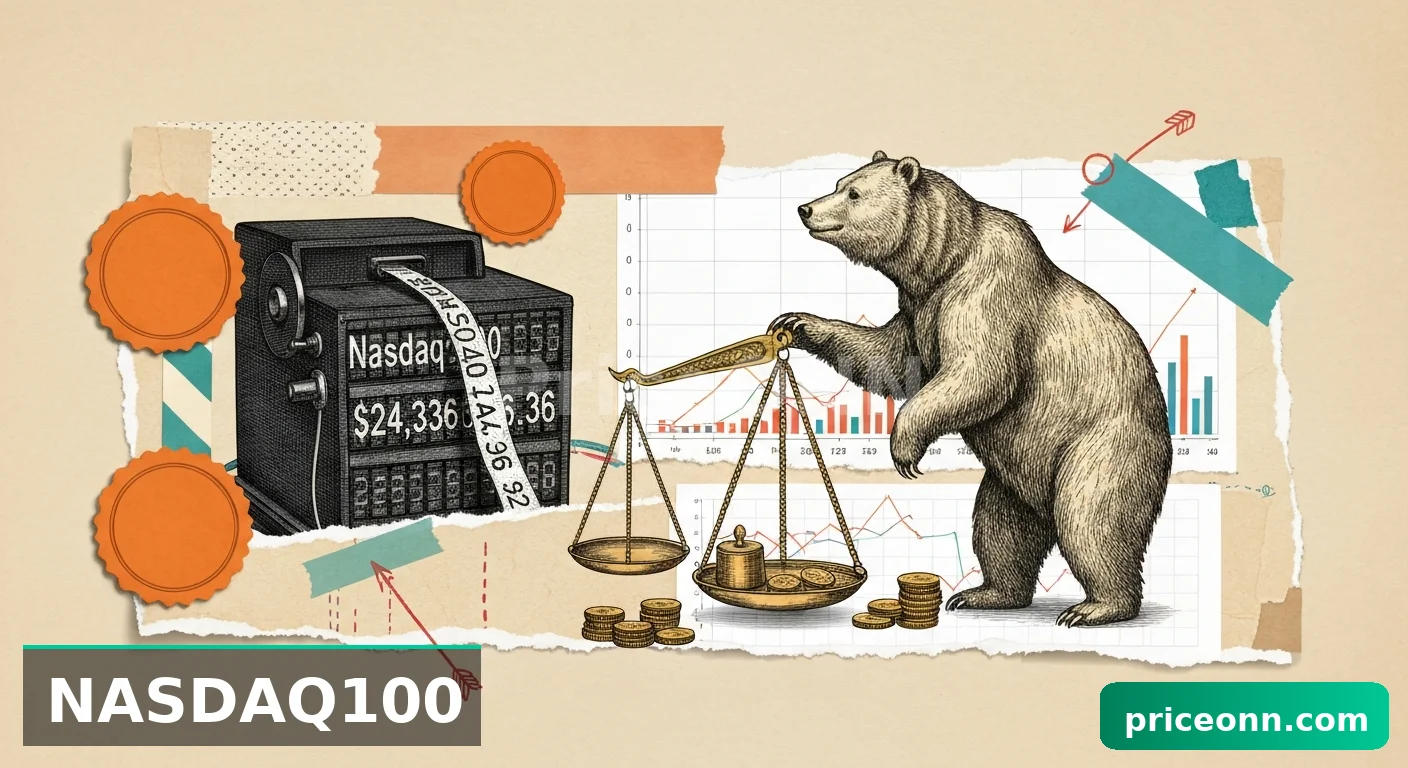
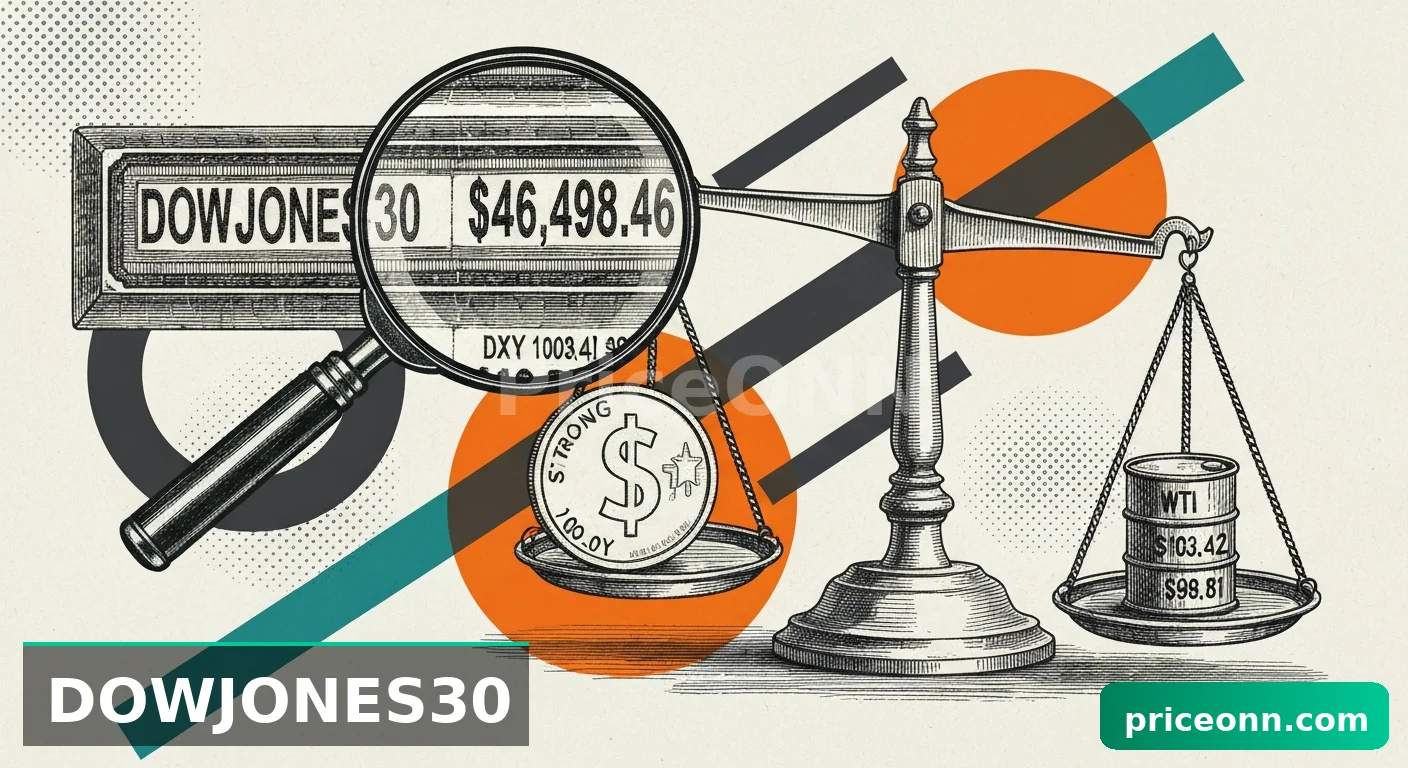
The market sentiment is undeniably shifting towards risk aversion. The S&P 500's retreat to $6,556.10 comes as the Nasdaq 100 plunged 1.21% to 24,098.9 and the Dow Jones Industrial Average fell 0.63% to 45,794.5. This broad-based weakness in major US indices paints a clear picture: investors are becoming more cautious, favoring safer assets. The correlation between the DXY and risk assets is particularly noteworthy. With the DXY currently at 99.49 and showing a bullish trend on the daily timeframe, it's acting as a significant headwind for equities. This dynamic suggests that any rebound in the S&P 500 might be capped as long as the dollar remains strong.
The Bearish Momentum on Multiple Timeframes
Looking at the technicals, the picture for the S&P 500 is largely bearish across the board. On the 1-hour chart, the trend is neutral but with a strong 95% bearish power, and the ADX at 31.42 indicates a strong downtrend is forming. The RSI(14) is sitting at 36.08, firmly in neutral territory but with a clear downward inclination, suggesting sellers are stepping in. The MACD is below its signal line, confirming negative momentum. The Stochastic Oscillator's K line is below the D line, reinforcing the bearish sentiment. The Bollinger Bands are also showing the price trading below the middle band, indicating downward pressure.
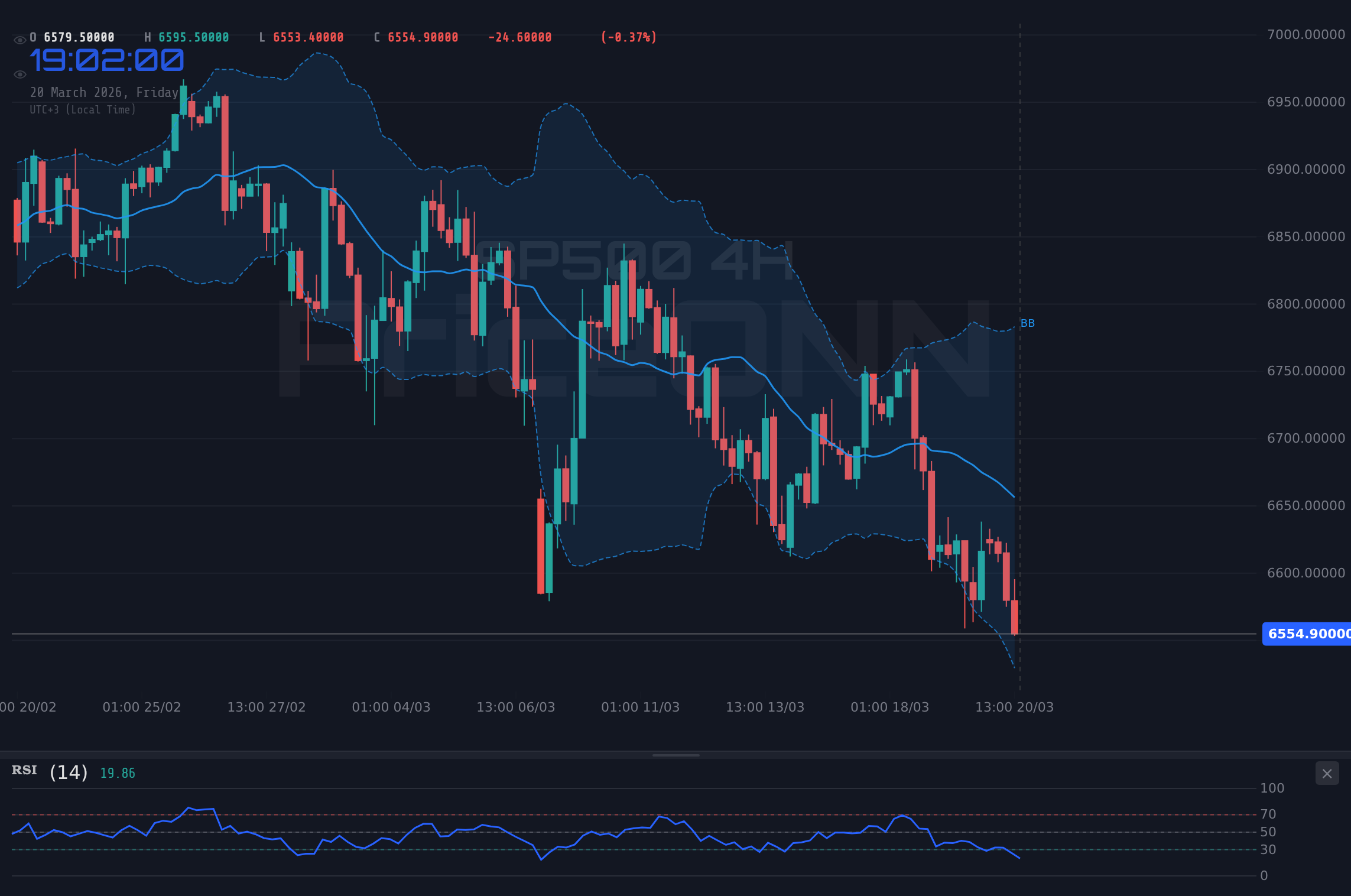
The 4-hour timeframe offers little respite. The trend is firmly bearish with 87% power, and the ADX at 23.45 signifies a moderate downtrend. The RSI(14) at 34.43 continues the narrative of weakening buying interest. MACD histogram is negative, and Stochastic is also showing a bearish cross. The price is hugging the lower half of the Bollinger Bands, a classic sign of selling pressure. This consistent bearish reading across shorter timeframes suggests that the immediate pressure is downwards, and any rallies are likely to be met with selling.
Even the daily chart, often considered more resilient, is showing signs of strain. While the trend is classified as bearish with 100% power, the ADX at 44.31 indicates a strong downtrend is already in play. The RSI(14) is at 33.46, deep in the neutral zone but pointing lower, signaling room for further downside before reaching oversold conditions. Both MACD and Stochastic are aligned with the bearish sentiment, with the MACD histogram deeply negative and Stochastic showing a clear downtrend. The price action below the middle Bollinger Band confirms the prevailing bearish sentiment. This confluence of bearish signals across 1-hour, 4-hour, and daily charts paints a rather bleak short-to-medium term picture for the S&P 500.
Key Levels and What They Mean
The current price action is focused on the support level at $6,569.53. This is a critical area. On the 1-hour chart, this is the first significant support. A break below this level, especially with conviction and increased volume, would likely trigger further selling pressure. The next support to watch on the 1-hour is $6,552.7, followed by $6,544.97 on the 4-hour chart. These levels represent areas where buyers might step in, but given the current momentum, they could be breached relatively quickly. The ADX readings across all timeframes (31.42 on 1H, 23.45 on 4H, 44.31 on 1D) highlight that while the 1-hour and 4-hour suggest a forming or moderate downtrend, the daily chart indicates a strong, established downtrend is already in motion. This means any support test is happening within a larger bearish context.
On the resistance side, the immediate hurdle is the $6,559.9 level on the 1-hour chart. A successful reclaim and hold above this could signal a short-term bounce. However, the more significant resistance lies at $6,609.93 on the 4-hour chart and $6,652.23 on the daily chart. These are the levels that bulls need to conquer to even begin to challenge the bearish narrative. Given the current market conditions, particularly the strength of the DXY at 99.49 and the general risk-off sentiment, breaking through these resistance levels will be a significant challenge. The RSI readings, even on the daily chart at 33.46, suggest there's still potential for price to fall further before reaching oversold territory, meaning immediate upside is likely limited.
Correlation with DXY and Global Equities
The US Dollar Index (DXY) is currently trading at 99.49, showing a strong upward trend on the daily chart with 92% power. This strength is a major factor weighing on the S&P 500. Historically, a rising DXY often correlates with a decline in US equities, as it makes US goods more expensive for foreign buyers and can signal tighter financial conditions or a flight to safety. The current DXY strength, with its ADX at 34.64 indicating a strong uptrend, is a clear signal that global liquidity might be tightening or that geopolitical risks are driving capital towards the dollar. This inverse relationship is playing out quite clearly, with the S&P 500 showing weakness while the dollar strengthens.
Furthermore, the correlation with other equity markets cannot be ignored. The Nasdaq 100 and Dow Jones 30 are also experiencing significant pullbacks. The Nasdaq 100's fall to 24,098.9 and the Dow Jones' dip to 45,794.5 suggest a sector-wide or market-wide risk-off sentiment. This is not an isolated event for the S&P 500; it's part of a broader trend affecting major US stock indices. This interconnectedness means that any rebound in the S&P 500 will likely require a broader improvement in risk appetite, potentially signaled by a cooling off in the DXY or a stabilization in global geopolitical tensions. The fact that Brent crude is at $109.56 and WTI at $97.13, both showing bullish trends, adds another layer of complexity, potentially fueling inflation concerns that central banks might react to, further pressuring equities.
What the Indicators Are Saying
Diving deeper into the indicators, the Stochastic Oscillator on the S&P 500's daily chart shows K at 12.75 and D at 27.24. This positions it deep in oversold territory, hinting at a potential for a bounce. However, this is occurring within the context of a strong downtrend indicated by the ADX of 44.31. This means that while oversold conditions might suggest a short-term reprieve, the underlying trend is powerful and could easily push the index lower even with oversold readings. The RSI(14) at 33.46 further supports the idea that there's still room to fall before exhaustion sets in. It's crucial to remember that in strong trends, oscillators can remain in oversold or overbought territory for extended periods.
The MACD on the daily chart is also bearish, with the MACD line below the signal line and a negative histogram. This suggests that downward momentum is building. While the 4-hour chart shows a potential bullish signal from Stochastic (K=24.48, D=27.5), this is contradicted by the RSI and MACD, and the strong ADX of 23.45 on that timeframe still points to a moderate downtrend. The 1-hour chart, with its ADX of 31.42 and bearish momentum signals, reinforces the immediate downside risk. The conflicting signals between the 4-hour Stochastic and the broader bearish picture across other indicators and timeframes highlight the uncertainty. A confirmed bullish reversal would need to see stronger confirmation, such as a break above key resistance levels coupled with improving oscillator readings and positive MACD crosses.
Scenario Analysis: Navigating the Current Landscape
Bearish Scenario: Testing Lower Depths
65% ProbabilityNeutral Scenario: Consolidation Around Support
25% ProbabilityBullish Scenario: Bounce from Support
10% ProbabilityThe current technical setup, particularly the strong ADX readings and prevailing bearish momentum indicators, lends more weight to the bearish scenario. The probability assigned reflects this bias. For a bullish scenario to materialize, we would need to see a significant shift in market sentiment, potentially driven by dovish signals from the Federal Reserve or a de-escalation of geopolitical tensions, which would likely also weaken the DXY. Until then, the path of least resistance appears to be downwards.
The Impact of Geopolitics and Fed Policy
The geopolitical landscape remains a significant undercurrent affecting market sentiment. News regarding potential disruptions in the Strait of Hormuz, while not directly impacting the S&P 500's price action in this moment, contributes to overall market nervousness and can fuel demand for safe-haven assets like the US dollar. This indirectly pressures equities. Similarly, reports of China's substantial global mining investments might signal long-term economic shifts, but in the immediate term, the focus remains on established global powers and their policy decisions.
The Federal Reserve's stance is always paramount. While no immediate Fed actions are on the immediate calendar, market participants are constantly assessing future policy. Persistent inflation, as suggested by strong energy prices like Brent at $109.56, could keep the Fed in a hawkish posture, or at least delay any expected rate cuts. This uncertainty about future monetary policy can lead to increased volatility in the stock market. The correlation between the S&P 500 and the DXY is a constant reminder that dollar strength, often linked to interest rate differentials or safe-haven demand, can act as a drag on US equities. If the Fed continues to signal a 'higher for longer' interest rate environment, it would likely continue to support the DXY and weigh on the S&P 500.
Traders should remain vigilant. The S&P 500 is trading near critical support levels ($6,569.53 and $6,556.10). A breakdown below these levels could accelerate selling pressure, especially given the strong bearish trend indicated by the daily ADX (44.31). Conversely, a failure to break lower could lead to a short-term bounce, but significant upside may be limited without a broader shift in market sentiment or a weaker DXY.
Looking Ahead: What to Watch
For the S&P 500, the immediate focus will be on the price action around the $6,556.10 mark. A failure to hold this level could open the door to the lower supports, targeting $6,522.70 and potentially $6,509.30. On the flip side, a strong bounce from current levels would need to overcome the resistance at $6,585.2, and more importantly, the $6,609.93 level on the 4-hour chart. The strength of the DXY will be a key barometer; any signs of weakness in the dollar could provide a much-needed boost to the equity market. Additionally, monitoring the performance of the tech sector, which has been a major driver of market sentiment, will be crucial. If tech stocks continue to underperform, it will be difficult for the broader S&P 500 to find sustainable footing.
The ongoing strength in energy prices, with Brent at $109.56 and WTI at $97.13, presents a double-edged sword. While it boosts energy stocks, it also fuels inflation concerns, which could lead to delayed Fed rate cuts, thereby strengthening the dollar and pressuring the broader market. This complex interplay of factors means that traders should remain disciplined, focusing on price action at key levels and managing risk prudently. The current technical indicators, while leaning bearish, also show oversold conditions on the daily Stochastic, suggesting that a bounce is possible if key support holds. However, until we see clear confirmation of a trend reversal or a significant shift in macroeconomic drivers, caution remains the prudent approach.
Frequently Asked Questions: SP500 Analysis
What happens if the S&P 500 breaks below the $6,556.10 support level?
A decisive break below $6,556.10, especially confirmed by increased volume, would likely trigger further selling pressure. This could lead to a test of the next support at $6,522.70, with the potential to extend towards $6,509.30 if the bearish momentum continues.
Should I consider buying the S&P 500 at current levels around $6,556.10 given the oversold Stochastic?
While the daily Stochastic is oversold, the strong bearish trend indicated by the daily ADX (44.31) suggests caution. A buy-the-dip strategy here is risky; confirmation of a reversal, such as a break above $6,585.2 resistance with improving momentum, would be needed for a higher probability trade.
Is the RSI at 33.46 a sell signal for the S&P 500 right now?
An RSI of 33.46 is in the neutral zone but trending lower, indicating waning buying pressure rather than an immediate sell signal. In a strong downtrend, RSI can remain in these lower levels for some time. It suggests further downside is possible before reaching oversold conditions that might prompt a bounce.
How will the strong DXY at 99.49 affect the S&P 500 this week?
The strong DXY at 99.49 typically exerts downward pressure on US equities like the S&P 500. This is because a stronger dollar makes US exports more expensive and can indicate a flight to safety, reducing risk appetite in stock markets. Expect this to act as a headwind for any potential S&P 500 rallies.
Track markets in real-time
AI-powered analysis, technical indicators and real-time price data.
Join Our Telegram Channel
Breaking market news, AI analysis and trading signals instantly.
Join Channel