China’s Sinopec not Buying Iranian Crude despite U.S. Waiver

Sinopec Declines Iranian Crude Despite U.S. Waiver Opportunity
Asia's premier refining entity, Sinopec, has signaled a definitive stance against purchasing Iranian crude oil. This decision comes even as the United States issued a general license that theoretically permits the import of Iranian crude loaded onto vessels as of March 20. A senior executive from the state-owned giant, officially known as China Petroleum & Chemical Corporation, articulated the company's cautious approach, indicating that potential trade risks associated with Iranian oil are being closely evaluated. The executive's statement, widely reported, suggests that Sinopec is "basically won't buy" Iranian crude, underscoring a significant divergence from potential opportunities presented by the waiver.
The U.S. Treasury Department's Office of Foreign Assets Control (OFAC) released this general license, which effectively provides authorization for imports of Iranian crude loaded on ships before March 20, with a grace period extending until April 19. This move by the U.S. administration appears to be part of broader efforts to manage global oil price volatility. Reports surfaced early this week suggesting that China's state refiners were reassessing the viability of acquiring Iranian crude, now appearing 'unsanctioned' under the terms of the waiver, a status also extended to certain Russian crude cargoes. Historically, China has been the principal, almost exclusive, destination for Iranian crude amidst international sanctions, with these shipments typically navigating to independent Chinese refiners via less transparent means.
Navigating Sanctions and Shifting Supply Chains
These independent processors, often termed 'teapots', prioritize price above all else. Iranian crude has consistently offered a significant discount compared to international benchmarks, a premium driven by the complexities and inherent risks of its trade and shipment. However, major Chinese state-owned refiners, including Sinopec, have maintained a deliberate distance from Iranian crude for years, prioritizing compliance with U.S. sanctions to avoid severe repercussions. This strategic avoidance has shaped their sourcing policies, leading them to seek supply elsewhere.
While Sinopec has opted out of acquiring Iranian barrels, the company is reportedly petitioning Chinese authorities to permit access to the nation's substantial strategic petroleum reserves. This internal push highlights the company's need to secure alternative supply lines. Currently, Sinopec's crude procurement strategy involves sourcing from Saudi Arabia, specifically from loadings at Yanbu on the Red Sea coast. The executive also confirmed that the company is diversifying its crude imports, drawing supplies from regions outside the Middle East, demonstrating a commitment to a broader and potentially more stable supply network.
Market Ripple Effects
Sinopec's decision to bypass Iranian crude, even with the U.S. waiver, carries notable implications for the global oil market and related financial instruments. The waiver itself represents a complex maneuver by the U.S. to influence oil prices without overtly lifting sanctions, creating a short-term window for certain transactions. However, the reluctance of a major player like Sinopec to engage suggests that the perceived risks, including reputational damage and the potential for future policy shifts, still outweigh the financial incentives of discounted Iranian crude for state-owned entities.
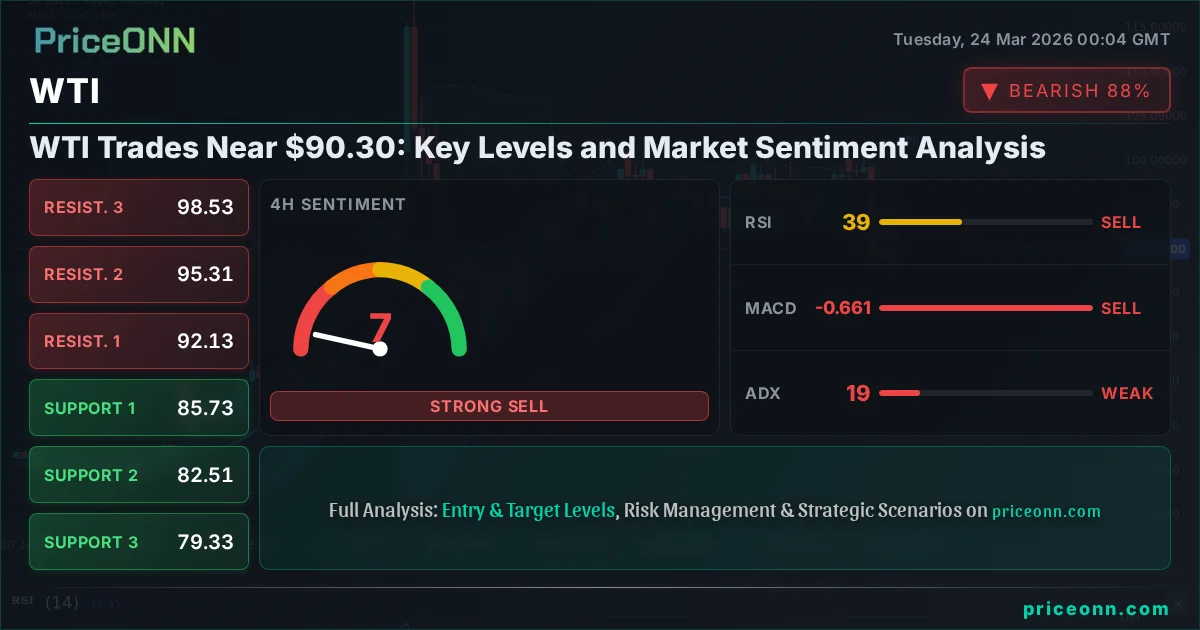
This development could subtly impact the supply dynamics for other Middle Eastern producers, particularly Saudi Arabia, which remains a key supplier for Sinopec. While Sinopec is diversifying, its significant demand will still lean on established, less controversial sources. Furthermore, the ongoing U.S. efforts to manage oil prices, coupled with geopolitical tensions involving oil-producing nations, will continue to influence benchmarks like Brent crude and WTI. Traders will be watching closely to see if other major Asian refiners follow Sinopec's cautious lead or if price sensitivity eventually draws them toward Iranian barrels. The situation also adds a layer of complexity to the US Dollar Index (DXY), as oil price fluctuations are a significant factor in currency markets.
Track markets in real-time
Empower your investment decisions with AI-powered analysis, technical indicators and real-time price data.
Join Our Telegram Channel
Get breaking market news, AI analysis and trading signals delivered instantly to your Telegram.
Join Channel