
Will the IEA Release More Oil as Middle East Tensions Escalate?

Global energy markets are on high alert as the International Energy Agency (IEA) indicates a willingness to tap into strategic petroleum reserves for a second time in quick succession. The agency's executive director, Fatih Birol, stated that further releases would be considered if market disruptions intensify, underscoring the precarious state of energy security.
Market Context
The IEA's potential intervention follows an unprecedented coordinated release of 400 million barrels of crude from OECD reserves earlier in March, an action taken to mitigate severe supply chain disruptions. This move was only the sixth such action in the agency's history, highlighting the gravity of the current situation. The primary driver behind the current market unease is the escalating military tensions in the Middle East, which have severely hampered shipping through the vital Strait of Hormuz. This strait is a critical transit point for approximately 20% of global oil and liquefied natural gas trade. Fatih Birol has characterized the current supply challenges as exceeding the combined impact of the 1970s Arab oil embargo and the conflict in Ukraine.
Analysis & Drivers
The immediate catalyst for concern is the ongoing strategic dilemma surrounding Iran's nuclear ambitions. While airstrikes have not secured its enriched uranium, the prospect of deploying ground forces to achieve this goal introduces significant risks of wider regional conflict. This uncertainty has directly impacted crude oil prices. As of late Thursday, Brent crude for May delivery had retreated to approximately $112.02 per barrel, down from recent highs exceeding $118. Similarly, West Texas Intermediate (WTI) crude for May delivery was trading around $98.32 per barrel, a dip from its Thursday high of $101. Despite these pullbacks, prices remain elevated due to the persistent instability. Several European nations, including Germany, Italy, and Greece, have signaled reluctance to join U.S.-led security initiatives in the Gulf, preferring diplomatic solutions and citing a lack of direct involvement or adequate consultation. This international hesitation creates a complex geopolitical landscape that directly influences energy supply expectations.
Trader Implications
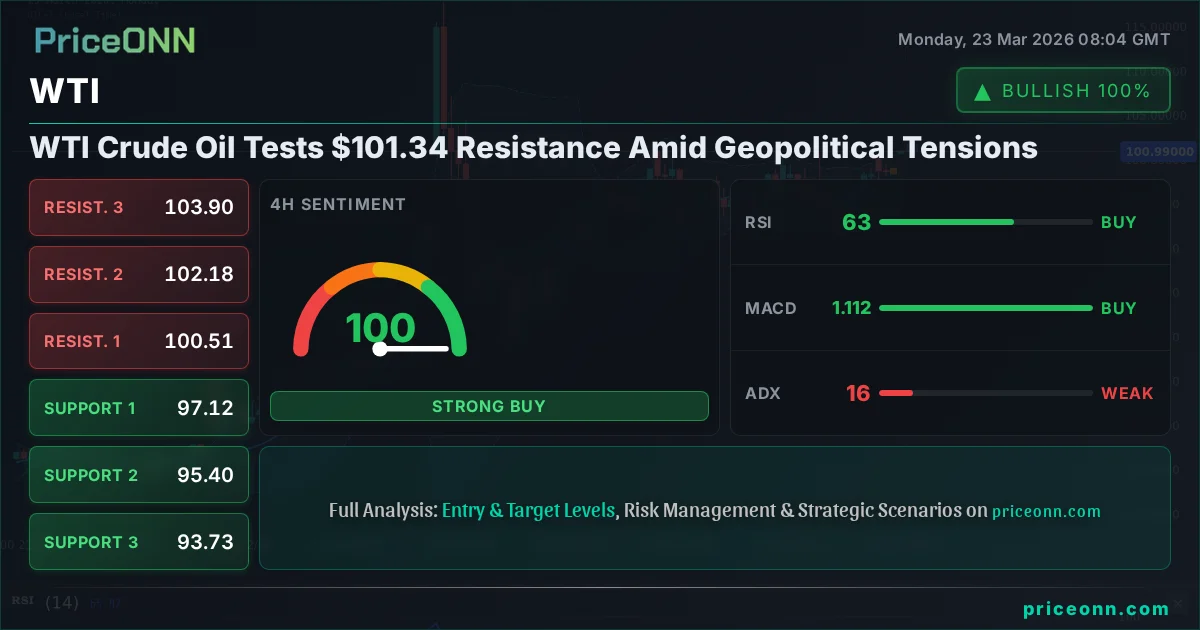
Traders should closely monitor geopolitical developments in the Middle East, as any significant escalation could trigger a rapid price surge. Key levels to watch for Brent crude include resistance around the $118-$120 mark and support near $110. For WTI, resistance lies around $101-$103, with support at $95. The IEA's communication regarding potential reserve releases serves as a short-term buffer but is not a long-term solution to supply deficits. Therefore, the underlying supply and demand fundamentals, heavily influenced by geopolitical risk premiums, will dictate price direction. A failure to de-escalate tensions could see crude prices retest previous highs. Conversely, any diplomatic breakthroughs or de-escalation would likely lead to further price declines.
Outlook
The energy market faces a period of heightened volatility. While the IEA stands ready to provide temporary relief through reserve releases, the fundamental threat to supply from the Middle East remains. The strategic decisions regarding Iran's nuclear program and the willingness of international partners to commit to security operations will be critical determinants of future price action. Traders should remain cautious, prioritizing risk management as the geopolitical tightrope walk continues. Upcoming economic data releases, particularly inflation figures and manufacturing indices, will also play a role in shaping broader market sentiment and demand forecasts.
Frequently Asked Questions
What is the current price of Brent crude?
As of late Thursday, Brent crude for May delivery was trading around $112.02 per barrel, though it had previously touched highs above $118 amid escalating tensions.
Why is the IEA considering another oil release?
The IEA is considering further releases due to escalating military tensions in the Middle East that are disrupting global oil supply routes. This follows an earlier release of 400 million barrels this month to stabilize markets.
What are the key support and resistance levels for WTI crude?
Key resistance for WTI crude is observed around the $101-$103 range. Support is noted near the $95 per barrel level, indicating potential trading boundaries.
Track markets in real-time
Empower your investment decisions with AI-powered analysis, technical indicators and real-time price data.
Join Our Telegram Channel
Get breaking market news, AI analysis and trading signals delivered instantly to your Telegram.
Join Channel


PriceONN