Gold price holds steady to halt nine-day slump

Market Stabilizes Amid Shifting Sands
Gold prices found a moment of calm on Tuesday, temporarily arresting a prolonged downturn that had seen the precious metal shed significant value. This pause comes as traders grapple with an uncertain geopolitical landscape and reassess the trajectory of inflation, creating a complex backdrop for the safe-haven asset.
The yellow metal experienced volatility earlier in the session, dipping as much as 2.7% during Asian trading hours. However, it managed to claw back losses, holding its ground above the critical $4,400 per ounce mark. U.S. gold futures mirrored this resilience, showing a modest gain of 0.2% by the close of trading.
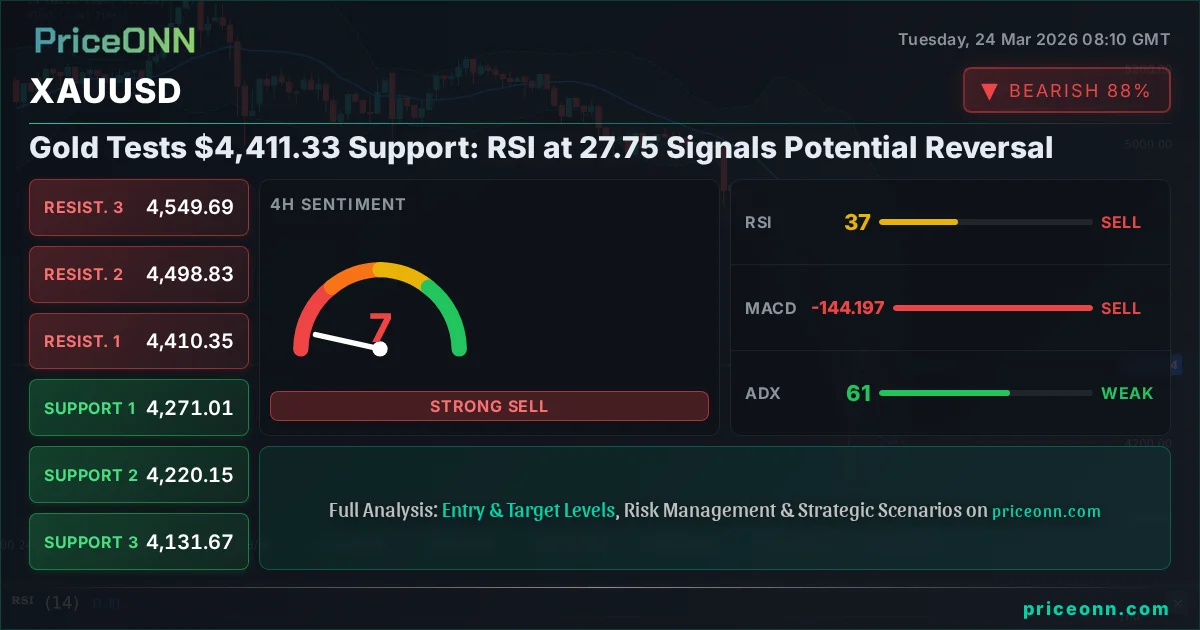
This recovery followed a relentless nine-day slump for bullion. The preceding weeks were characterized by growing concerns that elevated energy prices, stemming from the ongoing conflict in the Middle East, could reignite inflationary pressures. Such a scenario typically pressures non-yielding assets like gold, as it suggests central banks might maintain higher interest rates for longer periods.
Market data shows that a hawkish shift in expectations for U.S. monetary policy, coupled with a strengthening dollar driven by rising yields, has been a significant headwind for gold. Frank Monkam, head of cross-asset macro strategy and trading at Buffalo Bayou Commodities, highlighted these factors as key drivers of the recent pullback.
Liquidity Crunch Fuels Sell-Off
Beyond monetary policy shifts, broader market distress has also played a crucial role in gold's recent decline. Recent market dynamics reveal a widespread liquidity stress, compelling investors to liquidate positions across various asset classes, including gold, to meet margin calls and offset losses in other portfolios.
Monkam further elaborated that the selling pressure on gold has been amplified by deleveraging activities among retail investors. Additionally, emerging market players, notably central banks, have been seen liquidating bullion holdings. This move is often undertaken to bolster foreign exchange reserves, particularly when oil prices remain elevated, creating a dual pressure on gold.
Since the onset of the conflict, gold has experienced a substantial decline, losing approximately 15% of its value. This represents a significant erosion of its earlier yearly gains and places it down nearly 21% from its all-time peak reached just two months prior.
Industry analysts, including Suki Cooper, global head of commodities research at Standard Chartered, and Daniel Ghali, commodity strategist at TD Securities, have recently signaled the potential for further short-term weakness. Cooper noted that periods of extreme market distress can often lead to extended downside pressure on gold, explaining that the metal's liquidity makes it an attractive asset to sell when cash is urgently needed. This pattern is not uncommon during heightened geopolitical uncertainty, as seen in 2022 when gold faced a prolonged downturn following Russia's invasion of Ukraine amid energy price shocks and subsequent inflation.
The Bigger Picture
Despite the recent turbulence and the sharp retracement from record highs, the long-term fundamental outlook for gold remains robust. The underlying drivers supporting the precious metal appear intact, with central banks continuing to be significant net buyers of bullion, providing a solid floor for demand over the longer term.
Evidence from institutional flows suggests that while short-term price action can be volatile, the strategic importance of gold in global reserves and diversified portfolios remains undiminished. For instance, projections from prominent financial institutions, predating the recent conflict, had anticipated significant upside for gold this year, with some forecasts reaching levels like $6,300 per ounce by year-end.
While specific price targets are subject to revision based on evolving market conditions, the enduring appeal of gold as a store of value and a hedge against uncertainty underpins its long-term investment thesis. The current price action, though concerning for short-term holders, may present a strategic opportunity for investors looking to capitalize on a potential rebound once market stability returns.
Track markets in real-time
Empower your investment decisions with AI-powered analysis, technical indicators and real-time price data.
Join Our Telegram Channel
Get breaking market news, AI analysis and trading signals delivered instantly to your Telegram.
Join Channel