Goldman Boosts Oil Price Forecast by $8 for Brent and $7 for WTI
Oil Market Sees Price Surge as Supply Fears Intensify
The global oil market is bracing for potential supply shocks as a prominent financial institution significantly raises its price expectations. Commodity analysts at Goldman Sachs have unveiled an updated outlook, signaling a notable increase in their forecasts for both Brent and West Texas Intermediate (WTI) crude benchmarks. This revision comes on the heels of heightened geopolitical friction, which threatens to disrupt critical shipping lanes.
The revised projections now place the average price for Brent crude at $85 per barrel for the current year, a substantial jump from the previous $77 estimate. Similarly, WTI is now anticipated to average $79 per barrel, up from an earlier forecast of $72. These adjustments reflect a growing concern over the stability of global oil flows, particularly those transiting through strategically vital waterways.
Recent events have underscored the vulnerability of these supply routes. A developing crisis has led to projections of a peak daily supply loss potentially reaching an astounding 17 million barrels. This figure highlights the sheer scale of potential disruption should tensions escalate further.
Geopolitical Flashpoint Triggers Supply Chain Worries
The immediate catalyst for this reassessment appears to be a rapidly evolving geopolitical situation involving Iran and its potential actions concerning the Strait of Hormuz. An ultimatum issued recently has set a tight deadline for Iran to resume passage through this crucial chokepoint. The implications of non-compliance are severe, with threats of significant military responses and counter-threats from Iran targeting allied energy infrastructure.
Goldman Sachs’ analysis factors in a projected six-week disruption to tanker traffic in the Strait of Hormuz. Following this period, the firm anticipates a gradual recovery in crude shipments from the Persian Gulf region within approximately one month. This assumed timeline, however, is not universally shared, with some market observers warning that disruptions could persist for several months, even if immediate military actions cease.
The Strait of Hormuz, responsible for a staggering 20% of global oil transit, was effectively rendered impassable following recent coordinated attacks. This immediate cutoff sent shockwaves through the market, illustrating the profound impact that localized conflicts can have on worldwide energy supplies.
The Bigger Picture
The current volatility underscores a critical underlying issue: the structural risks associated with the heavy concentration of oil production and spare capacity in the Middle East, coupled with the inherent vulnerability of energy infrastructure. As the Goldman Sachs commodity team articulated in their note, the unprecedented scale of the potential supply shock is forcing policymakers and markets alike to confront these systemic dangers. This situation could very well prompt a broader reevaluation of global energy security strategies and investment in alternative supply routes or sources.
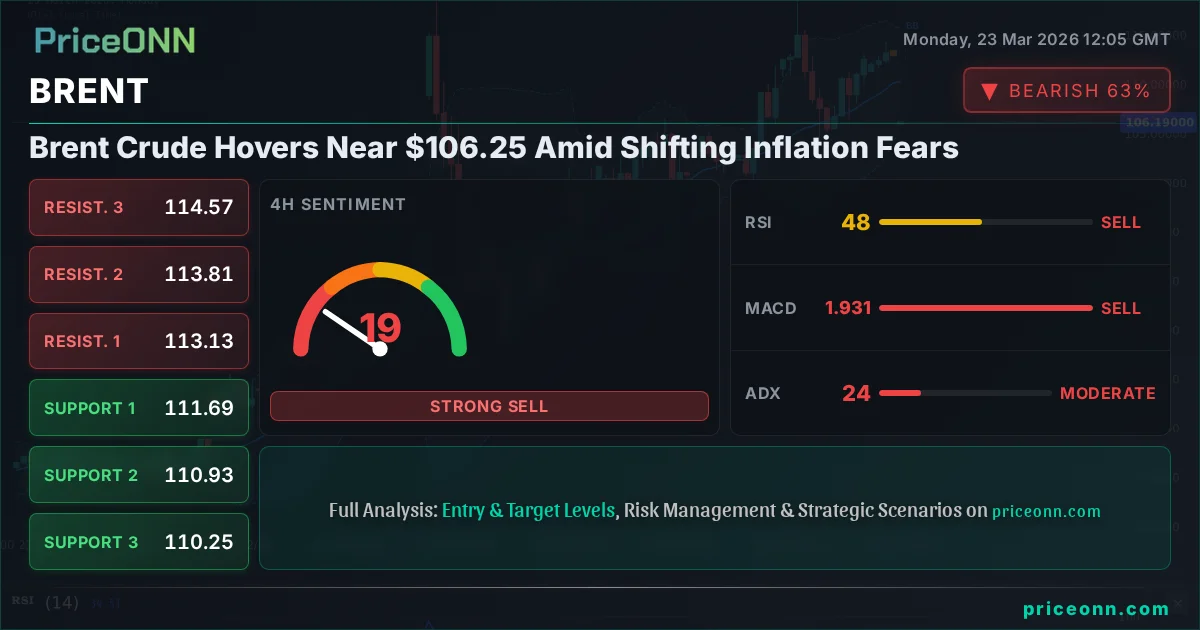
The market’s reaction has been swift. At the time of this analysis, the international benchmark, Brent crude, was trading significantly higher, hovering around $112.69 per barrel. The U.S. benchmark, WTI, was also elevated, trading near $99.60 per barrel. Both benchmarks saw gains from their previous closing prices, reflecting the immediate price pressure driven by these escalating tensions and supply concerns.
Market Ripple Effects
This upward revision in oil price forecasts by Goldman Sachs carries significant implications beyond the energy sector itself. Traders and investors will be closely monitoring the unfolding geopolitical situation, as it directly impacts inflation expectations and central bank policy. A sustained period of higher oil prices could fuel inflationary pressures, potentially leading to more hawkish stances from monetary authorities like the Federal Reserve.
The immediate beneficiaries of rising oil prices are typically energy stocks and commodity-linked currencies. For instance, the Canadian Dollar (CAD), often correlated with oil prices, may see upward momentum. Conversely, sectors heavily reliant on energy inputs, such as airlines and transportation, could face increased operating costs, potentially impacting their profitability. Furthermore, the benchmark U.S. Dollar Index (DXY) might experience fluctuations depending on how global risk sentiment shifts and whether the U.S. dollar is seen as a safe haven amidst broader market uncertainty.
Key levels to watch include the aforementioned price points for Brent and WTI, as well as any further pronouncements from geopolitical actors. The duration and severity of the supply disruption will be critical factors determining the trajectory of oil prices and their broader economic influence. Investors should consider the potential for increased volatility across multiple asset classes as this situation develops.
Track markets in real-time
Empower your investment decisions with AI-powered analysis, technical indicators and real-time price data.
Join Our Telegram Channel
Get breaking market news, AI analysis and trading signals delivered instantly to your Telegram.
Join Channel