
Oil Prices Tumble Over 5% as Middle East Ceasefire Hopes Emerge

Oil prices experienced a sharp decline in early Asian trading on Wednesday, with both West Texas Intermediate (WTI) and Brent crude benchmarks shedding over 5% of their value. This significant retreat occurred after a period of heightened volatility, driven by escalating geopolitical tensions in the Middle East. At the time of reporting, WTI was trading at $87.51, down 5.24%, while Brent crude had fallen below the crucial $100 per barrel mark to $98.03, a 6.08% decrease.
Market Context
The rapid selloff signals a shift in market sentiment, moving away from fear-driven premiums towards cautious optimism. For the past 48 hours, oil prices had been on an upward trajectory, fueled by anxieties surrounding potential supply disruptions stemming from the Middle East conflict. However, recent developments suggest a potential de-escalation, with reports indicating the U.S. has presented a framework for peace talks involving Iran. This news directly counteracted earlier fears, leading traders to unwind long positions.
Further easing concerns about supply routes, official communications from Iran to the International Maritime Organization suggested that non-hostile vessels could continue navigating the Strait of Hormuz, provided they coordinate with Iranian authorities. This move aims to mitigate risks in a critical global energy chokepoint. Adding to the narrative of potential resolution, comments from President Trump indicated that Iran was engaging in constructive dialogue, with suggestions of a potential one-month ceasefire proposal being discussed. However, it is important to note that Iranian officials have publicly denied direct talks are underway, introducing a layer of uncertainty.
Analysis & Drivers
The primary driver behind the current price plunge is the emerging hope for a diplomatic resolution to the Middle East conflict. The prospect of a ceasefire, even a temporary one, significantly reduces the immediate risk of supply disruptions, which had been the dominant factor pushing prices higher. The U.S. dollar's performance also plays a role; a stronger dollar typically exerts downward pressure on oil prices, as oil is denominated in dollars.
Adding to the bearish pressure, particularly for WTI, was the release of U.S. crude inventory data. The American Petroleum Institute (API) reported an unexpected build in crude oil stocks, indicating a potential easing of demand or an increase in supply within the United States. A build in inventories suggests that supply is outpacing demand, a bearish signal for prices. This data, released on Tuesday, directly influenced trading in Wednesday's session.
- Geopolitical De-escalation: Hopes for a Middle East ceasefire are reducing risk premiums.
- Inventory Build: Unexpected increase in U.S. crude stockpiles.
- Maritime Transit Assurance: Iran's communication on Strait of Hormuz navigation.
The Organization of the Petroleum Exporting Countries (OPEC) and its allies, known as OPEC+, will continue to be a key factor. Their production decisions significantly influence global supply dynamics. Any indication of adjustments to output quotas could rapidly alter market sentiment.
Trader Implications
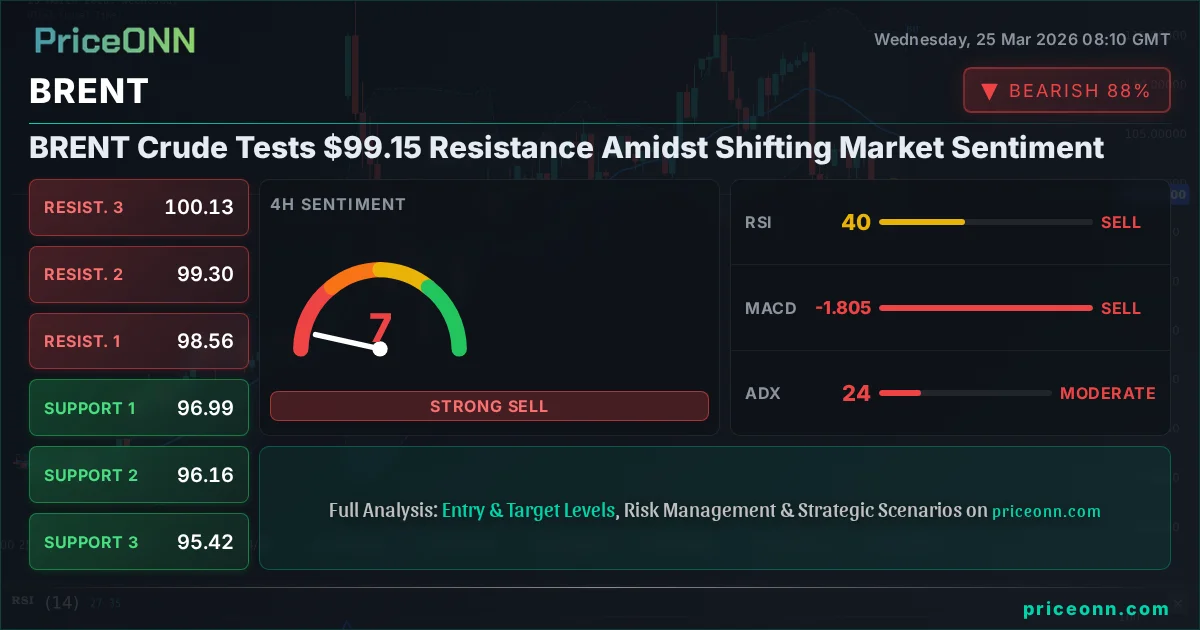
Traders should monitor developments in the Middle East closely, as any resurgence in tensions could quickly reverse the current downtrend. Key resistance levels for Brent crude are now around the $100 to $102 range, with immediate support potentially forming near $96. For WTI, resistance is seen around $88.50, and support could be tested near $85.
The upcoming Energy Information Administration (EIA) inventory report, due later today, will be crucial. A larger-than-expected build could further pressure prices, while a draw might offer some support. The market is sensitive to any news that either solidifies or negates the ceasefire optimism. Given the rapid price swings, risk management is paramount. Traders might consider short-term strategies focused on the downside while remaining alert for any signs of a geopolitical reversal that could trigger a swift rebound.
Outlook
The immediate outlook for oil prices remains contingent on the progression of diplomatic efforts and the upcoming EIA inventory data. While current sentiment favors a pullback, the market remains on edge, with the potential for volatility persisting. A confirmed ceasefire could see prices test lower levels, potentially targeting the high $80s for WTI and low $90s for Brent. Conversely, any breakdown in talks or renewed escalation would likely send prices surging back towards recent highs. Investors and traders should remain agile, prepared for rapid shifts in direction based on geopolitical headlines and supply-side data.
Frequently Asked Questions
What caused oil prices to drop sharply today?
Oil prices tumbled over 5% due to growing optimism for a ceasefire in the Middle East and an unexpected build in U.S. crude inventories reported by the API. This eased fears of supply disruptions that had previously driven prices higher.
What are the key price levels to watch for WTI and Brent crude?
For WTI crude, traders are watching resistance near $88.50 and support around $85. Brent crude faces resistance at $100-$102 and potential support near $96. A confirmed ceasefire could push prices lower, while renewed conflict would likely send them higher.
What is the short-term outlook for crude oil prices?
The short-term outlook is highly dependent on diplomatic progress in the Middle East and upcoming EIA inventory data. A confirmed de-escalation could lead to prices testing the high $80s for WTI and low $90s for Brent, but any breakdown in talks could cause a sharp reversal.
Track markets in real-time
Empower your investment decisions with AI-powered analysis, technical indicators and real-time price data.
Join Our Telegram Channel
Get breaking market news, AI analysis and trading signals delivered instantly to your Telegram.
Join Channel



PriceONN