
Why Did Oil Prices Plunge Over 5% Overnight?

Oil prices experienced a dramatic reversal in early Asian trading on Wednesday, with both WTI and Brent benchmarks tumbling more than 5%. This sharp selloff followed a volatile period where prices had initially surged on geopolitical tensions. At the time of reporting, WTI crude was trading at $87.51, down 5.24%, while Brent crude had fallen below the critical $100 mark to $98.03, a 6.08% decrease.
Market Context
The sudden downturn in oil prices was primarily triggered by emerging signs of de-escalation in the Middle East. Reports indicated that the United States presented a potential peace framework to Iran, fueling hopes for a temporary cessation of hostilities. This development directly countered earlier anxieties that had driven prices upward. Adding to the eased tensions, Iran communicated through official channels to the International Maritime Organization, suggesting that “non-hostile vessels” could continue to navigate the Strait of Hormuz with coordination. This action aimed to alleviate concerns regarding maritime transit in a crucial global chokepoint. Furthermore, comments from President Trump suggested progress in negotiations, hinting at a potential 15-point settlement proposal for a one-month ceasefire. However, Iranian officials have publicly denied direct talks.
Analysis & Drivers
The primary catalyst for the sharp decline in crude oil prices was the shift in market sentiment towards potential diplomatic breakthroughs in the Middle East. The prospect of reduced geopolitical risk, particularly concerning supply disruptions from Iran, significantly diminished the risk premium that had been priced into oil contracts. This optimism was further bolstered by official communications regarding maritime passage in the Strait of Hormuz, a vital artery for global oil trade.
Compounding the bearish pressure, especially for West Texas Intermediate (WTI), was the release of inventory data from the American Petroleum Institute (API). Market data shows an unexpected build in both crude oil and gasoline inventories in the U.S. for the past week. An increase in stockpiles typically signals weaker demand or increased supply, both of which are bearish for prices. For WTI, which is heavily influenced by U.S. domestic supply dynamics, this inventory build was a significant factor in its steeper decline compared to Brent.
The interplay between geopolitical optimism and a less favorable inventory report created a powerful downward force on prices. While geopolitical events had previously driven prices higher, the market is now re-evaluating those gains based on the potential for a more stable supply outlook.
Trader Implications
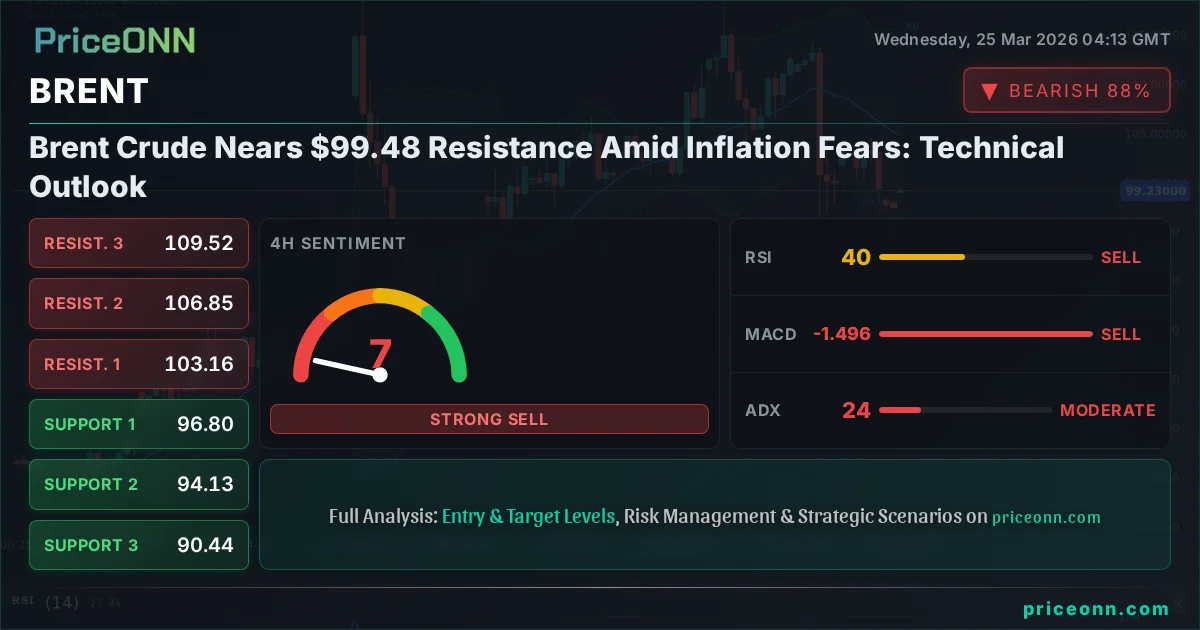
Traders are now faced with a rapidly changing landscape. The immediate focus shifts to the sustainability of the ceasefire optimism and any further developments in U.S.-Iran relations. Key levels to watch for WTI crude include the recent lows around $86.85 and the psychological support at $85.00. For Brent crude, the $100 level has now become a resistance point, with further downside potentially targeting $95.00.
The unexpected inventory build reported by the API suggests that underlying demand may not be as robust as previously assumed, or that supply is more readily available than anticipated. Traders should closely monitor upcoming inventory reports from the Energy Information Administration (EIA) for confirmation. Additionally, any statements from OPEC or key member nations regarding production levels could significantly impact market direction, especially if they perceive a sustained drop in prices.
The U.S. dollar's performance also remains a background factor. A strengthening dollar typically puts downward pressure on dollar-denominated commodities like oil, making them more expensive for holders of other currencies. Traders should remain vigilant for shifts in currency markets that could influence oil price movements.
Outlook
The immediate outlook for oil prices is cautious, leaning towards bearish in the short term, provided that diplomatic progress in the Middle East continues to hold and no new supply disruptions emerge. The market will be keenly watching for confirmation of any ceasefire agreements and the impact of U.S. inventory levels on global supply expectations. If the de-escalation trend persists, prices could see further consolidation or a deeper correction. However, the volatile nature of geopolitical events means that any renewed escalation could quickly reverse this trend, sending prices soaring once more.
Frequently Asked Questions
What caused the sudden drop in oil prices on Wednesday?
Oil prices plunged over 5% due to renewed optimism for a Middle East ceasefire following U.S.-Iran peace talks, coupled with an unexpected build in U.S. crude oil inventories reported by the API. WTI fell to $87.51 and Brent to $98.03.
What are the key support and resistance levels for WTI and Brent crude?
For WTI crude, immediate support lies around $86.85 and then $85.00. The $100 level has become resistance for Brent crude, with potential further downside targeting $95.00.
What should traders watch for in the coming days?
Traders should monitor further developments in U.S.-Iran relations and the sustainability of ceasefire hopes. Upcoming EIA inventory data and any OPEC production policy shifts will be crucial indicators for future price direction.
Track markets in real-time
Empower your investment decisions with AI-powered analysis, technical indicators and real-time price data.
Join Our Telegram Channel
Get breaking market news, AI analysis and trading signals delivered instantly to your Telegram.
Join Channel



PriceONN