Trump’s Iran Pause Triggers Oil Selloff and a Safe-Haven Reset
Market Reassesses Geopolitical Risk as Diplomatic Overtures Emerge
The stark reality of potential conflict in the Middle East dramatically shifted Monday, as President Trump indicated a willingness to engage directly with Iranian representatives. The White House announced that contact was established with a senior Iranian official, described as 'respected,' with claims that Tehran itself is now seeking a resolution to the ongoing tensions, now in their fourth week. This overture led to a significant extension of a deadline previously set for Iran to reopen the critical Strait of Hormuz. Instead of immediate U.S. strikes on Iranian energy infrastructure, a five-day reprieve has been granted, signaling a sharp departure from the heightened threats exchanged over the weekend.
These weekend exchanges had previously stoked fears of severe energy supply disruptions across Iran and the wider Gulf region, with particular concern for desalination plants vital for regional water security. However, the latest communications, reportedly involving U.S. special envoy Steve Witkoff and peace envoy Jared Kushner engaging with their Iranian counterparts on Sunday night, have injected a wave of optimism. The immediate market reaction was palpable, with crude oil prices experiencing a significant downturn and equity markets finding stability as traders pulled back from worst-case supply disruption scenarios.
Commodities and Cryptocurrencies Diverge on New Geopolitical Outlook
The dramatic pivot towards diplomacy triggered an immediate and sharp selloff in oil markets. Brent crude for May delivery plunged by 12.06%, trading at $98.06 per barrel, while its West Texas Intermediate counterpart shed 10.58%, changing hands at $87.84 per barrel. This dramatic price action reflects the market's rapid repricing of geopolitical risk premiums that had been rapidly inflating due to escalating tensions.
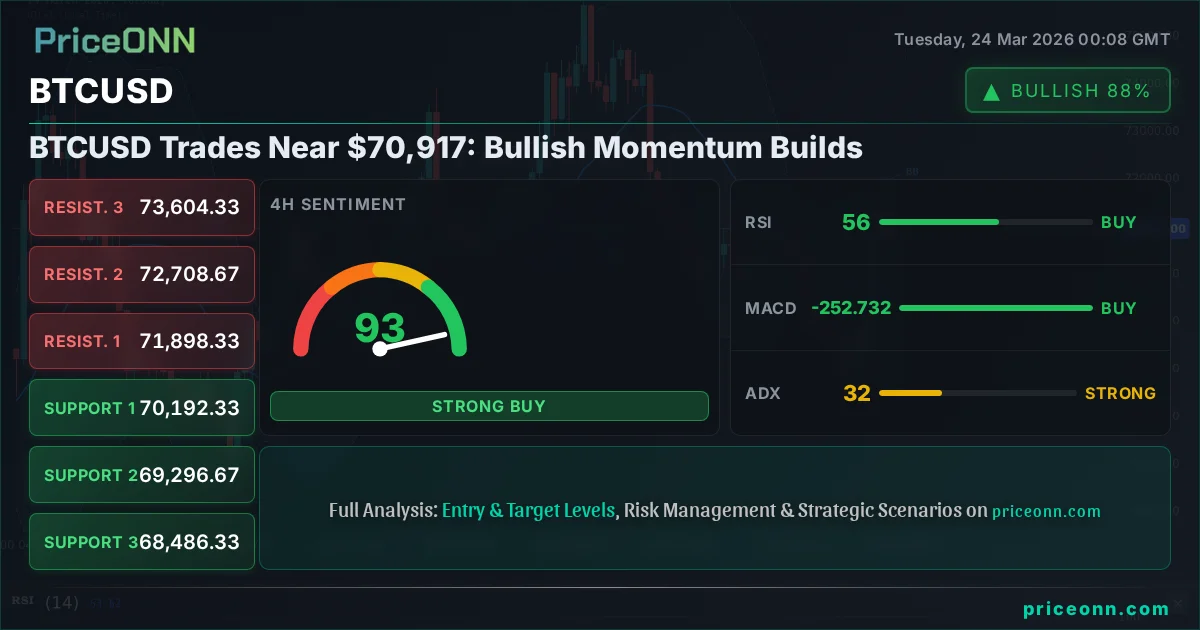
Interestingly, the anticipated divergence in safe-haven assets has continued, presenting a complex picture for investors. While spot gold experienced a notable decline, falling 2.2% to trade around $4,395 per ounce before paring some losses, Bitcoin has defied expectations by continuing its upward trajectory. The digital asset climbed 3.0% earlier in the day, extending gains to 4% by mid-afternoon, reaching $70,713. This performance contrasts sharply with gold's recent struggles, highlighting a shifting preference in perceived safe havens.
The Shifting Sands of Safe Havens: Gold's Reversal and Bitcoin's Ascent
The conflict in Iran has undeniably added a layer of confusion to traditional safe-haven plays. Gold, which initially surged to record highs above $5,400 in the wake of the conflict's outbreak, has since seen a significant correction, plummeting nearly 22% from its late January peak of over $5,590 per ounce. This reversal is largely attributed to the unwinding of what had become an extremely crowded trade. Substantial speculative capital had flooded into gold throughout late 2025 and early this year, making the market susceptible to a sharp, 'stampede-like' sell-off when sentiment shifted.
What began as a geopolitical shock quickly morphed into an inflation shock as oil prices surged past $110 per barrel. This inflationary pressure prompted markets to anticipate interest rate hikes rather than cuts from central banks. The Federal Reserve, after pausing its rate hikes at 3.5%-3.75% in March, is now facing increased pressure to tighten policy further, with traders pricing in an additional 20-44 basis points of increases by the end of 2026. This environment of rising rates increases the opportunity cost of holding non-yielding assets like gold, making interest-bearing assets more attractive. In a turbulent market, investors have been liquidating gold holdings to meet margin calls or cover losses in collapsing equity markets.
In stark contrast, Bitcoin has shown remarkable resilience. Outperforming both gold and stocks during periods of the Iran conflict, its 24/7 trading cycle allows for faster repricing of geopolitical events compared to traditional markets. Institutional inflows into Bitcoin ETFs have been robust, signaling growing acceptance. The cryptocurrency began to decouple from its typical correlation with technology stocks after the Middle East conflict erupted, posting gains while major indices like the S&P 500 declined. This resilience has helped Bitcoin recover some of its early-year losses, which stemmed from a 'crypto winter' characterized by low liquidity and waning hype.
However, Bitcoin's role as a safe haven remains complex, oscillating between a volatile risk asset and a liquidity provider. While it doesn't always function as a traditional safe haven, its increasing ties to macro liquidity and rapid rebounds from oil-induced downturns are notable. The recent price spike following news of delayed military action underscores its sensitivity to headlines reducing immediate geopolitical risk. Yet, recent data indicates a strong correlation, nearly 90%, between Bitcoin and the S&P 500 during crises, suggesting its movements are heavily influenced by broader institutional macro sentiment rather than acting purely as a safe haven.
The Dollar's Dominance Amidst Shifting Risk Appetites
Amidst this turbulent backdrop, the U.S. dollar has re-emerged as the preeminent safe haven. The U.S. Dollar Index, tracking the greenback against a basket of major currencies, has surged approximately 300 basis points since the initial U.S. strikes on Iran, marking its strongest performance in months. The inflationary shock from elevated oil prices has reinforced market expectations of a 'higher-for-longer' interest rate environment from the Federal Reserve, significantly bolstering the dollar's appeal.
Furthermore, ongoing economic instability in emerging markets has prompted a capital flight towards perceived safer U.S. assets, further amplifying the dollar's strength. This confluence of factors solidifies the dollar's position as the go-to asset for investors seeking stability in uncertain times.
Market Ripple Effects
The de-escalation signals from the U.S. regarding Iran have fundamentally altered the risk landscape, creating distinct opportunities and challenges across asset classes. For traders, the sharp decline in crude oil prices necessitates a reassessment of energy sector exposure. While the immediate threat of supply disruption has receded, the underlying geopolitical tensions remain a latent risk factor that could resurface. The sharp sell-off in gold, driven by both shifting safe-haven demand and inflation concerns translating into rate hike expectations, presents a potential turning point. Investors who had bet heavily on gold may need to re-evaluate their strategies, especially if the Federal Reserve continues to signal a hawkish stance.
Bitcoin's persistent strength, despite its correlation with broader market sentiment, warrants attention. Its ability to attract institutional capital via ETFs and its 24/7 trading nature make it a unique instrument to monitor for shifts in risk appetite. The U.S. dollar's surge, driven by a combination of 'higher-for-longer' rate expectations and capital flows from emerging markets, suggests a continued strengthening trend for the greenback. Traders should closely watch key currency pairs like USD/JPY for potential upside, and monitor emerging market currencies for signs of further outflows. Additionally, the shifting narrative around inflation and interest rates will directly impact bond yields and equity market valuations, particularly in interest-rate sensitive sectors.
Track markets in real-time
Empower your investment decisions with AI-powered analysis, technical indicators and real-time price data.
Join Our Telegram Channel
Get breaking market news, AI analysis and trading signals delivered instantly to your Telegram.
Join Channel