
Why Is Brent Crude Outpacing WTI? The Iran Conflict's Impact on Oil Spreads

Brent crude prices have surged to approximately $108.40 per barrel, marking a significant divergence from U.S. West Texas Intermediate (WTI), which hovers near $98.50. This widening gap, now around $10 per barrel, signals increasing market anxiety over seaborne supply routes, particularly those transiting the Strait of Hormuz, amid heightened geopolitical activity involving Iran.
Market Context
The price action on Wednesday saw global benchmark Brent crude pull decisively away from its U.S. counterpart. This divergence is a direct reflection of markets pricing in risk associated with oil flows through the Persian Gulf. Military activities in the region have begun to disrupt tanker movements, leading to higher insurance and freight costs. The spread between Brent and WTI has widened to its broadest level in months, indicating mounting stress in the physical oil markets.
Brent's sensitivity stems from its role in pricing most internationally traded crude. Fears of supply disruptions in the Middle East, where approximately one-fifth of global oil flows pass through the Strait of Hormuz, are immediately tightening availability for refiners in Europe and Asia. This forces them to bid up prices for seaborne grades. In contrast, WTI pricing remains more insulated, largely reflecting domestic U.S. supply conditions and inventory dynamics that have not tightened to the same extent, leaving U.S. barrels comparatively discounted.
Analysis & Drivers
The primary driver behind the widening Brent-WTI spread is the escalating conflict involving Iran. The disruption of tanker movements through the Strait of Hormuz, a critical chokepoint for global energy trade, is the central catalyst. Reports indicate that daily tanker traffic has plunged from over 100 ships to as few as 21 following the conflict's intensification. This has led to a significant build-up of stranded vessels near the Gulf of Oman.
Adding complexity, Iraq has announced the resumption of oil exports from its northern Kirkuk province to Turkey's Port of Ceyhan, with an initial limit of 250,000 barrels per day. This development, while easing some localized supply concerns, has not been enough to counteract the broader geopolitical risk premium being applied to Brent. Furthermore, recent U.S. policy shifts, including permits for certain trade activities with Venezuela's state-run oil enterprise, have introduced a slight downward pressure on WTI, contributing to the spread's expansion.
The ongoing U.S.-led coalition's efforts to secure maritime routes have faced reluctance from allies, underscoring the complex geopolitical landscape. The confirmed deaths of senior Iranian security officials and Iran's vow of retaliation suggest that the conflict is far from over, maintaining upward pressure on oil prices sensitive to Middle Eastern supply.
Trader Implications
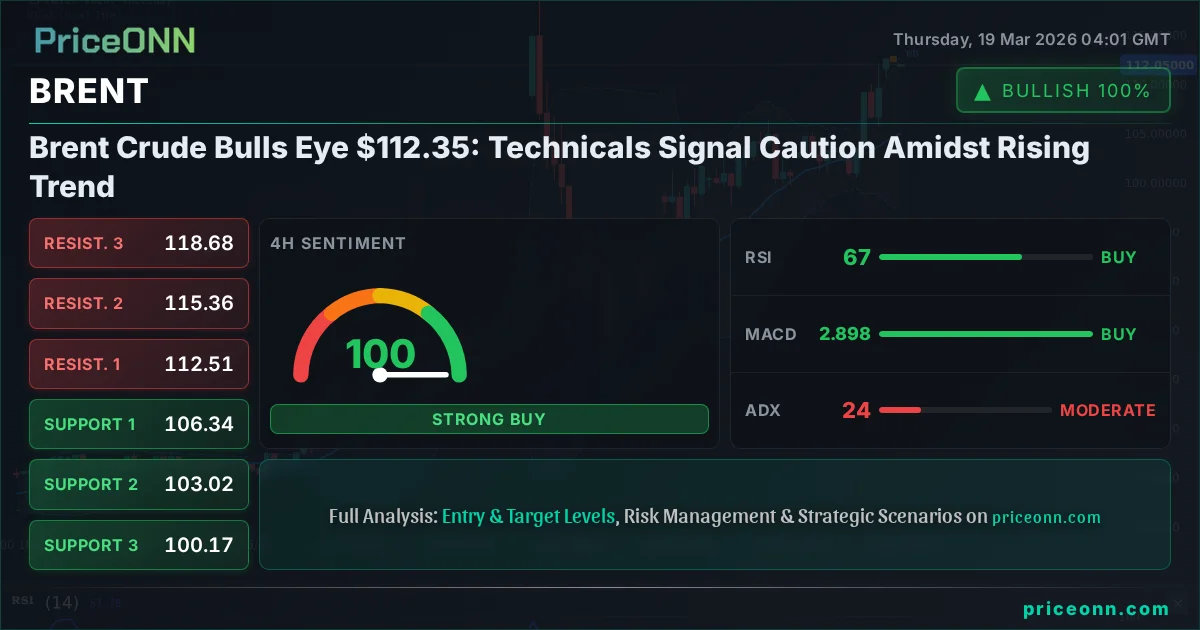
Traders should closely monitor the Brent-WTI spread as a real-time indicator of supply disruption severity. A further widening of this spread beyond the current $10 mark would suggest a more significant constraint on globally traded barrels. Key levels to watch for WTI include the $98.00 psychological level and potential support around $96.39, the price observed after Wednesday's trading dip. Resistance for Brent is now tested above the $108.40 mark.
The resumption of Iraqi exports provides a potential counter-balance to supply fears, but the overarching geopolitical risk premium tied to Iran's Strait of Hormuz transit remains the dominant factor for Brent. Any news regarding further escalation or de-escalation in the Middle East will likely trigger sharp moves in both benchmarks. Traders should also remain aware of weekly U.S. inventory reports from the API and EIA, which typically influence WTI prices by reflecting domestic supply and demand dynamics.
Outlook
The outlook for oil prices remains heavily influenced by the geopolitical situation in the Middle East. While Iraqi production resumption offers some relief, the ongoing conflict and the potential for further disruptions in the Strait of Hormuz are likely to keep Brent crude supported. The divergence between Brent and WTI is expected to persist as long as seaborne supply risks remain elevated. Traders should brace for continued volatility, with the Brent-WTI spread serving as a critical barometer for market sentiment and supply security.
Frequently Asked Questions
What is the current Brent-WTI spread and why is it widening?
The Brent-WTI spread has widened to approximately $10 per barrel. It is widening due to increased geopolitical risk in the Persian Gulf, which disrupts seaborne oil flows priced by Brent, while WTI remains more insulated by domestic U.S. supply conditions.
What is the significance of the Strait of Hormuz for oil markets?
The Strait of Hormuz is a critical chokepoint through which more than 20% of the world's crude oil and natural gas transit. Disruptions here directly impact global supply availability and prices, especially for crude grades like Brent.
What should traders watch for in the coming days regarding oil prices?
Traders should monitor geopolitical developments in the Middle East for escalation or de-escalation news, the trajectory of the Brent-WTI spread, and weekly U.S. inventory reports. Key levels to watch include $108.40 for Brent and $98.00 for WTI.
Track markets in real-time
Empower your investment decisions with AI-powered analysis, technical indicators and real-time price data.
Join Our Telegram Channel
Get breaking market news, AI analysis and trading signals delivered instantly to your Telegram.
Join Channel



PriceONN