
Why Did Crude Oil Prices Tumble Over 10% Amid Iran Diplomacy?

Crude oil prices experienced a dramatic sell-off on Monday, with Brent crude for May delivery plunging 12.06% to $98.06 per barrel and West Texas Intermediate (WTI) shedding 10.58% to $87.84 per barrel. This sharp decline followed unexpected news that President Trump indicated a willingness to engage in direct diplomacy with Iran, extending a deadline for the reopening of the Strait of Hormuz.
Market Context
The sudden pivot towards diplomatic engagement significantly altered market sentiment, which had been bracing for potential military escalation and severe energy supply disruptions in the Middle East. Just days prior, heightened tensions surrounding Iran had fueled fears of direct conflict, leading to a rapid inflation of geopolitical risk premiums in oil markets. The market had priced in the possibility of immediate U.S. strikes on Iranian energy infrastructure, which would have severely impacted global supply chains. However, the White House announced that contact had been established with a senior Iranian official, suggesting Tehran might be seeking a resolution to the ongoing conflict, now in its fourth week. This development led to a five-day extension of the deadline for Iran to reopen the critical Strait of Hormuz, a vital chokepoint for global oil transit.
Analysis & Drivers
The primary driver behind the oil price collapse was the rapid evaporation of the geopolitical risk premium. Analysts note that the market had heavily factored in a worst-case scenario involving direct conflict and significant supply interruptions. The prospect of a diplomatic breakthrough, however improbable it may have seemed over the weekend, led traders to unwind long positions aggressively. The White House's statement about established contact with a 'respected' Iranian figure and claims of Tehran seeking a deal suggested a de-escalation path was suddenly on the table. This shift fundamentally altered the supply-demand calculus for crude oil, as the immediate threat to energy infrastructure and transit routes receded. The extension of the Strait of Hormuz deadline, in particular, eased concerns over potential disruptions to oil flows from the Persian Gulf, a region responsible for a substantial portion of global oil exports.
Trader Implications
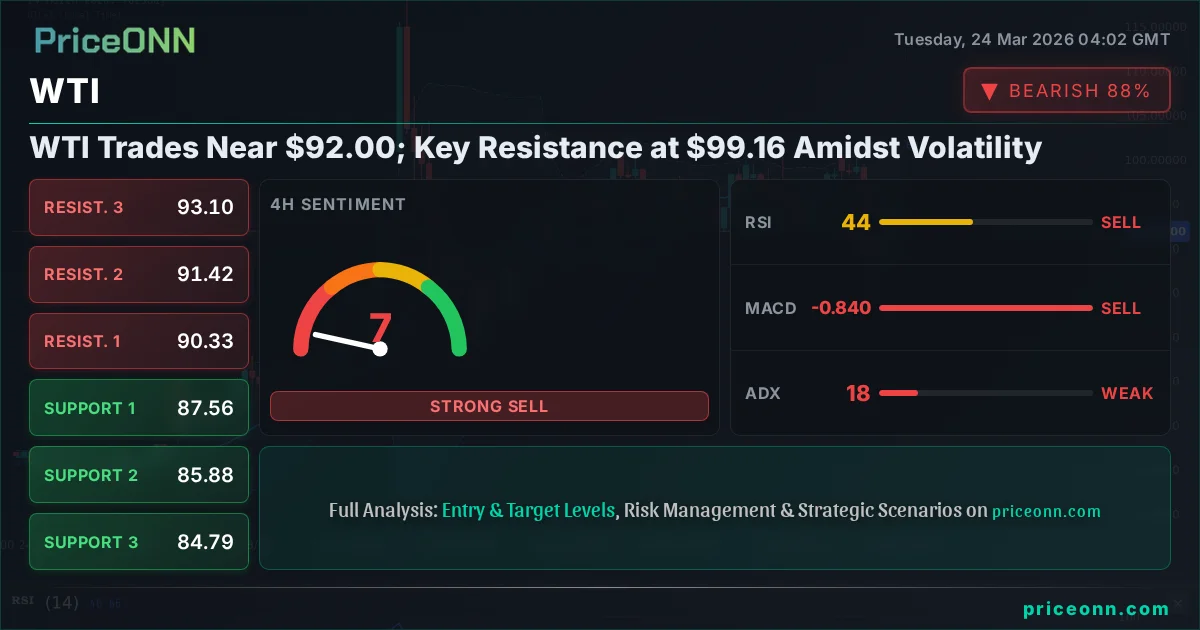
The swift reversal in oil prices presents a significant challenge for traders who had positioned for continued upside driven by geopolitical tensions. The sharp decline suggests that any lingering bullish sentiment based on conflict fears should be re-evaluated. Key levels to watch for Brent crude include the $98-$100 per barrel range, which now acts as immediate resistance, with potential support found around the $85-$87 per barrel mark for WTI. Traders should monitor any further communications from the White House and Tehran closely, as the diplomatic situation remains fluid. Any renewed escalation could quickly reignite upward price pressure, while sustained de-escalation would likely lead to further price consolidation or declines as market focus shifts back to fundamental supply and demand dynamics and global economic growth prospects. Risk management is paramount, given the volatility introduced by these geopolitical developments.
Outlook
The immediate future for oil prices hinges on the success of these nascent diplomatic efforts. While the price plunge reflects a significant reduction in perceived risk, the underlying geopolitical complexities in the Middle East remain. Should diplomatic channels remain open and lead to a genuine de-escalation, oil prices could face further downward pressure as traders pivot to concerns about global economic demand and OPEC+ production policies. Conversely, any breakdown in talks or renewed saber-rattling could see prices rebound sharply. Market participants will be closely watching for further statements from both the U.S. and Iran, as well as the broader implications for energy security in the region.
Frequently Asked Questions
What caused the sharp drop in crude oil prices?
Crude oil prices tumbled due to unexpected diplomatic overtures between the U.S. and Iran. President Trump's announcement of contact with Iranian officials and an extended deadline for reopening the Strait of Hormuz significantly reduced the perceived geopolitical risk premium that had been driving prices higher.
What are the key price levels traders should watch for Brent crude?
Following the sharp decline, traders should monitor the $98-$100 per barrel range for Brent crude, which may now act as immediate resistance. Support levels to watch could be around the $85-$87 per barrel area, particularly if downward momentum continues.
What is the outlook for oil prices if diplomacy fails?
If diplomatic efforts falter and tensions re-escalate, crude oil prices could experience a rapid rebound. The market's sensitivity to geopolitical risk in the region means that any renewed threat to supply or transit routes, such as the Strait of Hormuz, could quickly push prices back towards recent highs.
Track markets in real-time
Empower your investment decisions with AI-powered analysis, technical indicators and real-time price data.
Join Our Telegram Channel
Get breaking market news, AI analysis and trading signals delivered instantly to your Telegram.
Join Channel



PriceONN