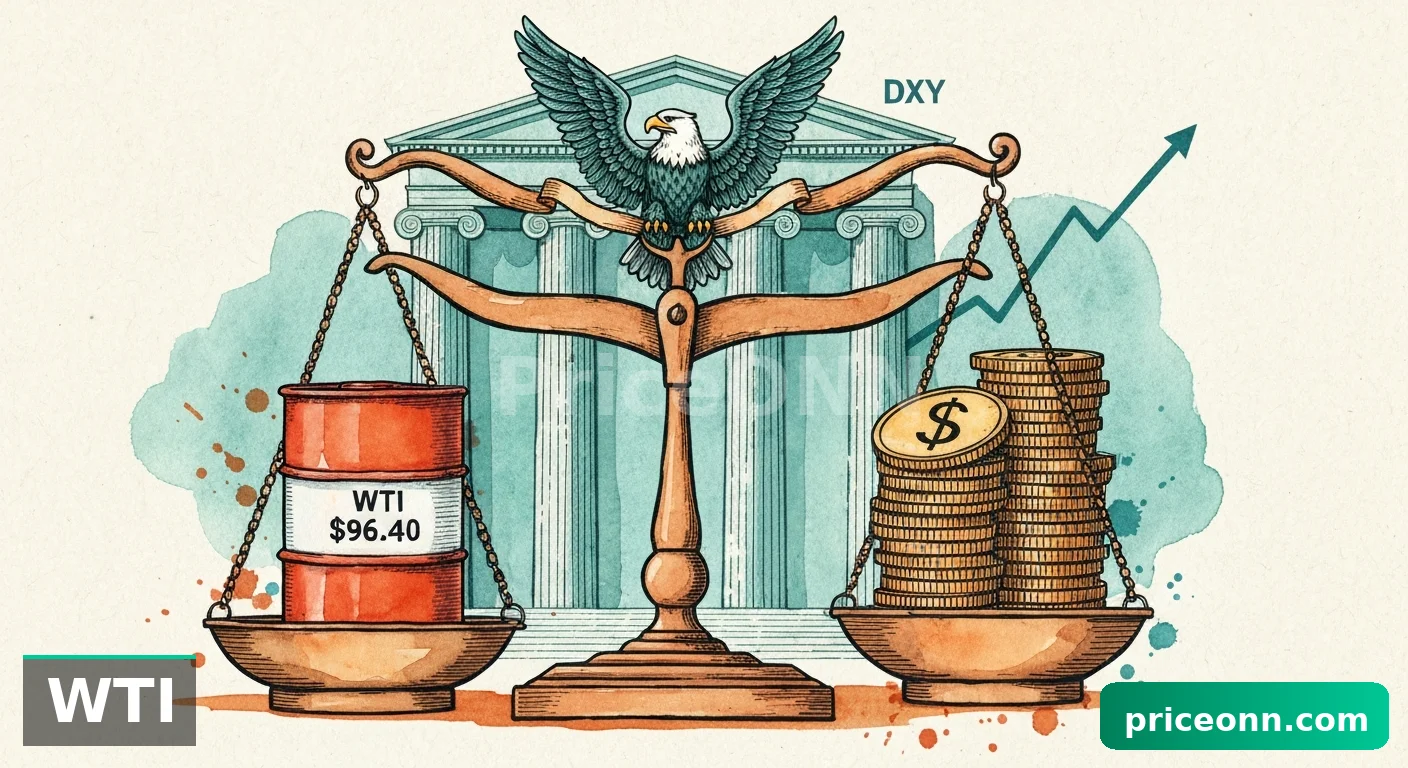
WTI Crude Oil holds firm as Middle East tensions, strong US Dollar shape upside limits
Market Momentum in Focus
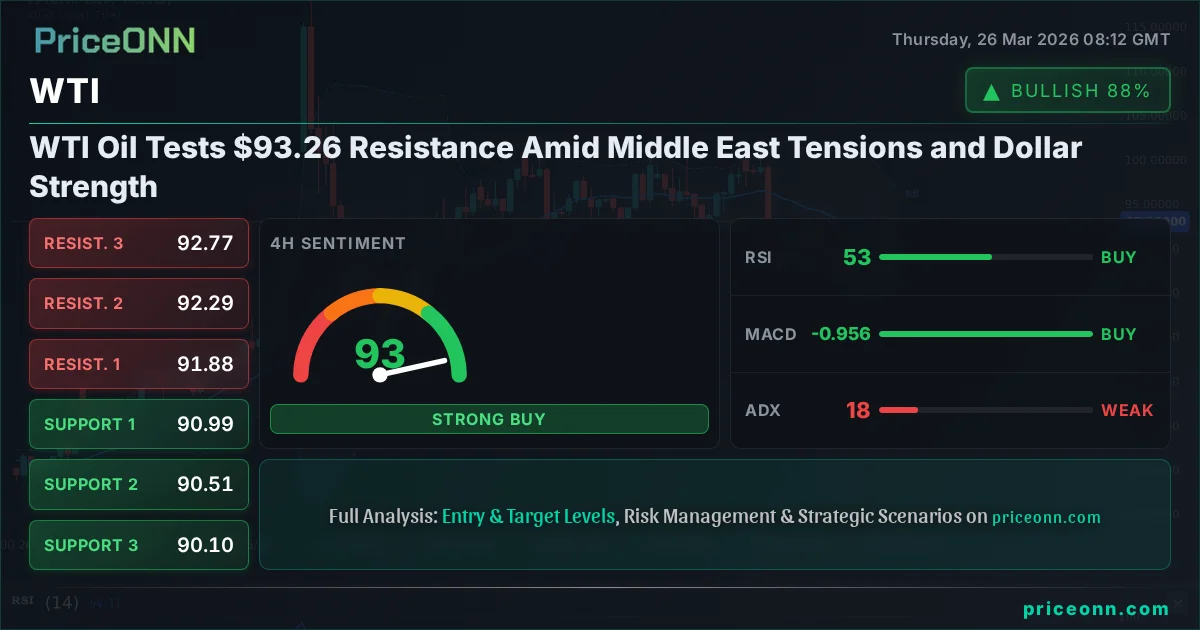
WTI Crude Oil is currently navigating a complex market environment, trading around the $92.05 mark. This level represents a 1.73% increase on the day, suggesting underlying strength. However, the advance is occurring without the overwhelming conviction typically seen in a strong bull run, indicating that upside potential might be capped by competing market forces.
The benchmark’s resilience can be attributed to a confluence of factors. Heightened geopolitical tensions in the Middle East continue to cast a shadow, creating a baseline level of supply disruption risk. This underlying unease provides a floor for oil prices, preventing significant pullbacks.
Simultaneously, the US Dollar has been exhibiting considerable strength. As oil is predominantly priced in dollars, a robust dollar typically makes the commodity more expensive for holders of other currencies. This dynamic acts as a natural headwind, limiting how high WTI prices can climb, even in the face of supply-side concerns.
The interplay between these two powerful forces-geopolitical risk premium and currency valuation-is creating a delicate balance in the oil market. Traders are closely watching for any shifts that could tip the scales in either direction.
Understanding the Benchmark
West Texas Intermediate, or WTI, is a crucial grade of crude oil recognized globally. Its name originates from its primary extraction region in the United States. Unlike other benchmarks like Brent or Dubai Crude, WTI is characterized by its lighter density and lower sulfur content, earning it the descriptors “light” and “sweet.” These qualities make it exceptionally easy to refine into valuable petroleum products, enhancing its desirability and market value.
Production of WTI is centered in the United States, with a significant portion flowing through the Cushing hub in Oklahoma. This location is famously dubbed “The Pipeline Crossroads of the World” due to its extensive network of pipelines, storage facilities, and refineries. Consequently, WTI serves as a key price indicator, frequently quoted in financial news and market reports, influencing broader energy sector valuations.
The fundamental drivers of WTI prices, like any commodity, are supply and demand dynamics. Global economic growth plays a pivotal role; robust expansion typically fuels higher energy consumption, boosting demand. Conversely, economic slowdowns can dampen demand, exerting downward pressure on prices.
Supply disruptions, whether from political instability, international conflicts, or economic sanctions, can dramatically impact prices by constricting availability. The strategic decisions made by OPEC, the Organization of the Petroleum Exporting Countries, are another critical element. This cartel of major oil-producing nations wields significant influence over global supply levels.
Key Market Influences
The strength of the US Dollar exerts a notable influence on WTI crude. Since oil transactions are predominantly settled in dollars, a stronger dollar increases the cost for international buyers, potentially dampening demand and capping price increases. A weaker dollar, conversely, can make oil more accessible and attractive to non-dollar economies.
Furthermore, weekly inventory reports from the American Petroleum Institute (API) and the Energy Information Administration (EIA) provide vital insights into the balance of supply and demand. A reduction in crude oil stockpiles, as reported by these agencies, can signal robust demand or constrained supply, often leading to upward price pressure. An increase in inventories, however, may suggest oversupply, pushing prices lower.
The API releases its data on Tuesdays, followed by the EIA’s report on Wednesdays. While their figures are usually closely aligned, the EIA’s data is generally considered more authoritative due to its status as a government agency.
OPEC, comprising 12 oil-producing nations, convenes biannually to set production quotas. Their decisions directly impact global supply. Lowering production targets typically tightens the market and supports higher prices, while increasing output can have the opposite effect. The expanded OPEC+ group, which includes non-member nations like Russia, further amplifies the influence on global energy markets.
Reading Between the Lines
The current market scenario for WTI crude oil is a tug-of-war between simmering geopolitical risks in the Middle East and a firming US Dollar. While the threat of supply disruptions provides a bullish undertone, the dollar’s ascent is acting as a significant ceiling, preventing a decisive breakout.
For traders, this suggests a period of consolidation or range-bound trading might be in play until a clearer catalyst emerges. Key levels to watch will be the immediate resistance around the current trading price and potential support zones if the dollar’s strength intensifies or geopolitical fears subside.
The upcoming inventory data from the API and EIA will be critical. A larger-than-expected draw in crude stocks could temporarily override dollar strength, while a build could exacerbate downward pressure. Market participants should also monitor statements from OPEC+ officials for any hints regarding future production policy, as this remains a powerful lever for supply management.
The broader economic outlook also bears watching. Signs of a global economic slowdown would likely weigh on oil demand, adding another layer of complexity to an already intricate market picture.
Track markets in real-time
Empower your investment decisions with AI-powered analysis, technical indicators and real-time price data.
Join Our Telegram Channel
Get breaking market news, AI analysis and trading signals delivered instantly to your Telegram.
Join Channel