WTI Oil approaches $94.00 as investors brace for a protracted war in Iran
Oil Rebounds Amid Escalating Geopolitical Risk
Energy traders are witnessing a swift reversal in crude oil's trajectory. After experiencing earlier declines, West Texas Intermediate (WTI) futures have clawed their way back, surpassing the $93.50 per barrel level as the European trading session commenced on Friday. This resurgence is largely fueled by anxieties surrounding the ongoing conflict in Iran, with market participants bracing for a potentially protracted regional engagement.
WTI, a globally recognized benchmark for crude oil, represents a specific grade sourced from the United States. Often described as "light" and "sweet" due to its low density and minimal sulfur content, it is highly valued for its ease of refining into usable products. Its primary distribution point, the Cushing hub in Oklahoma, is a critical nexus for pipeline infrastructure, earning it the moniker "The Pipeline Crossroads of the World." The pricing of WTI is a constant fixture in financial news, reflecting its status as a key indicator of global oil market health.
Fundamental Forces Shaping Energy Valuations
The price dynamics of WTI, like any commodity, are fundamentally governed by the interplay of supply and demand. Broad economic trends, particularly the pace of global growth, significantly influence demand. Robust economic expansion typically spurs higher consumption, while economic downturns tend to dampen it. However, the oil market is particularly sensitive to disruptions that impact supply. Political instability, armed conflicts, and the imposition of international sanctions can severely curtail production or trade flows, leading to price spikes.
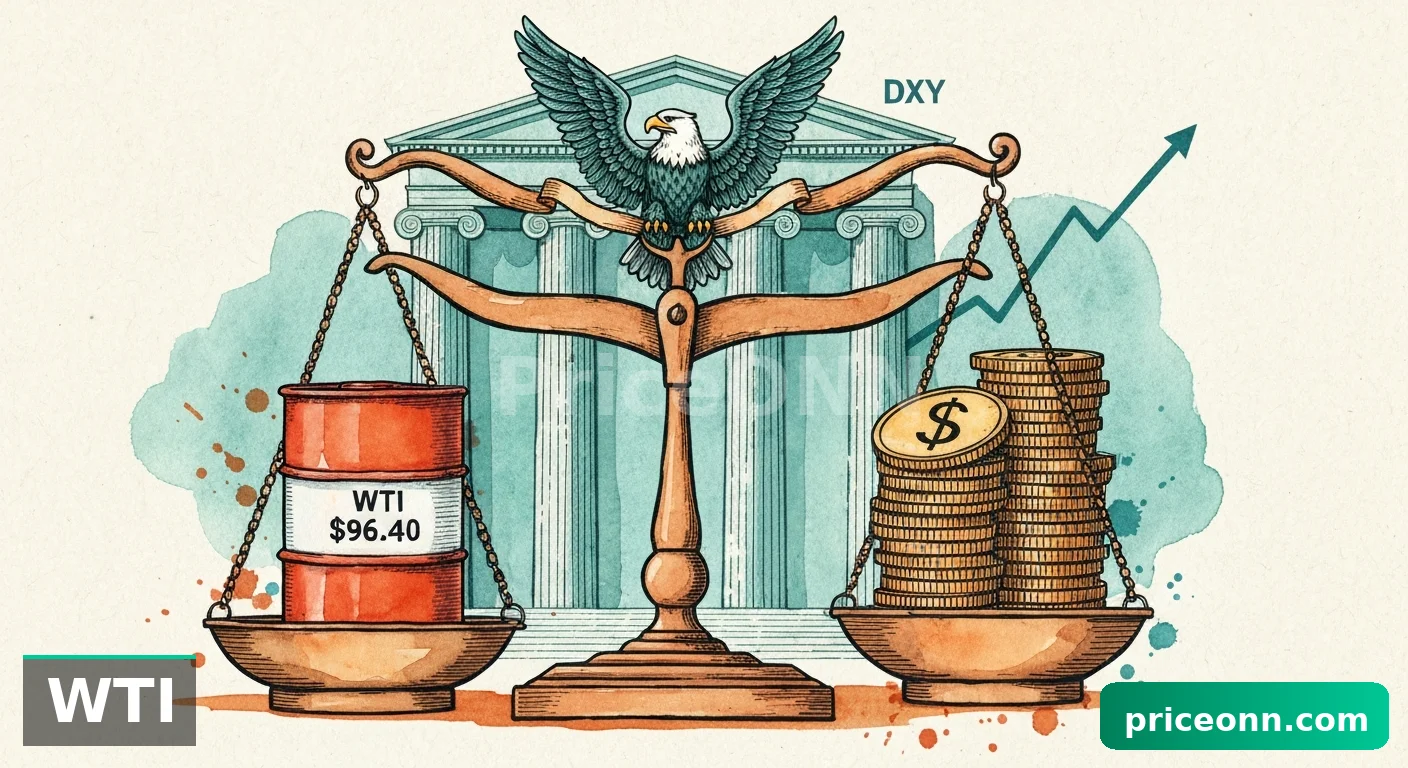
Another powerful influence stems from the strategic decisions of the Organization of the Petroleum Exporting Countries (OPEC). This cartel of major oil-producing nations wields considerable power over global supply levels through its production quota agreements. Furthermore, the value of the US Dollar plays a crucial role. Since oil contracts are predominantly denominated in dollars, a weaker dollar generally makes crude oil more affordable for holders of other currencies, potentially boosting demand and prices. Conversely, a stronger dollar can have a dampening effect.
Market observers closely scrutinize weekly inventory reports from the American Petroleum Institute (API) and the Energy Information Administration (EIA). These reports offer a snapshot of crude oil and refined product stockpiles in the United States, signaling shifts in the balance between supply and demand. A reported decrease in inventories often suggests stronger-than-anticipated demand or supply constraints, which can propel prices upward. Conversely, an unexpected build in stockpiles might indicate oversupply or weaker demand, exerting downward pressure on prices. The API releases its data every Tuesday, with the EIA following on Wednesday. While their figures are typically closely aligned, the EIA's data is generally regarded as more authoritative due to its governmental status.
The Bigger Picture
The current price action in WTI crude oil is a stark reminder of how geopolitical flashpoints can rapidly override other market considerations. While economic data and inventory levels are important, the specter of a prolonged conflict in the Middle East introduces a significant risk premium. This premium reflects the market's anticipation of potential supply disruptions, even if they have not yet materialized. The potential for escalation in the region, involving major oil-producing nations or critical transit routes, keeps traders on edge.
This heightened geopolitical tension directly impacts not only crude oil prices but also has broader implications. We should expect to see increased volatility in related energy commodities, such as Brent crude. Currencies of oil-exporting nations, like the Canadian Dollar (CAD), may also experience fluctuations. Furthermore, sustained high oil prices can contribute to rising inflation expectations, potentially influencing central bank policy and impacting global equity markets, particularly sectors sensitive to energy costs like transportation and airlines.
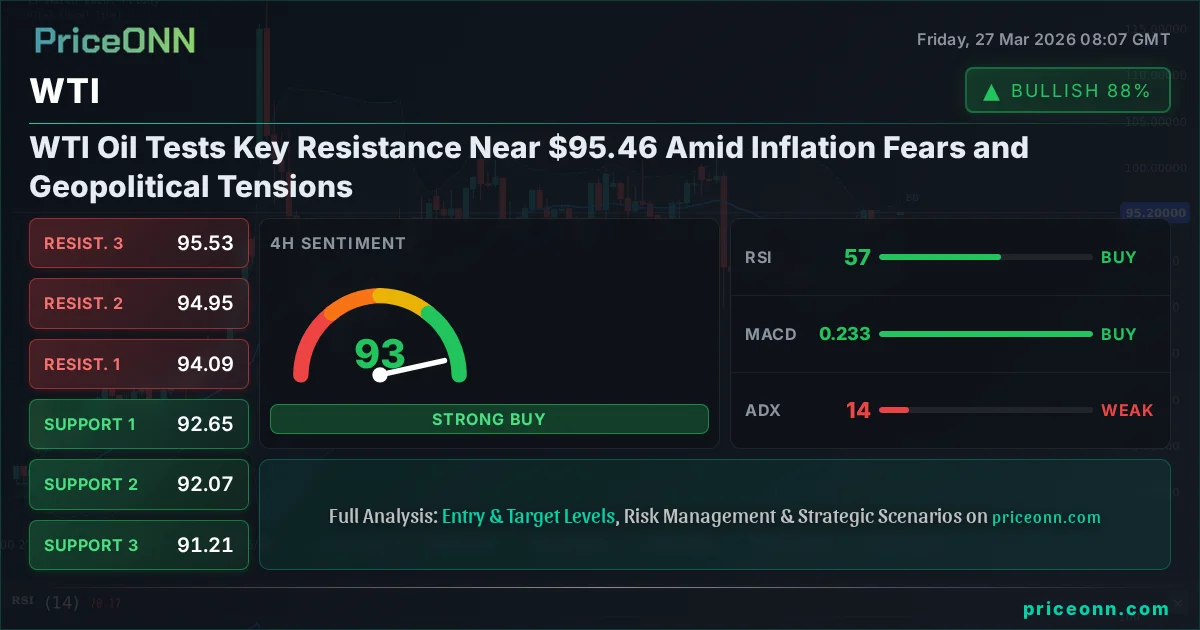
Traders will be closely monitoring diplomatic efforts and any signs of de-escalation or, conversely, further escalation in the Middle East. Key levels to watch for WTI include the recent highs around $94.00 and the psychological $100 mark. Support is emerging around the $92.00 to $93.00 range. The narrative is shifting from purely economic drivers to geopolitical risk, demanding a cautious and risk-aware approach from market participants.
Track markets in real-time
Empower your investment decisions with AI-powered analysis, technical indicators and real-time price data.
Join Our Telegram Channel
Get breaking market news, AI analysis and trading signals delivered instantly to your Telegram.
Join Channel