

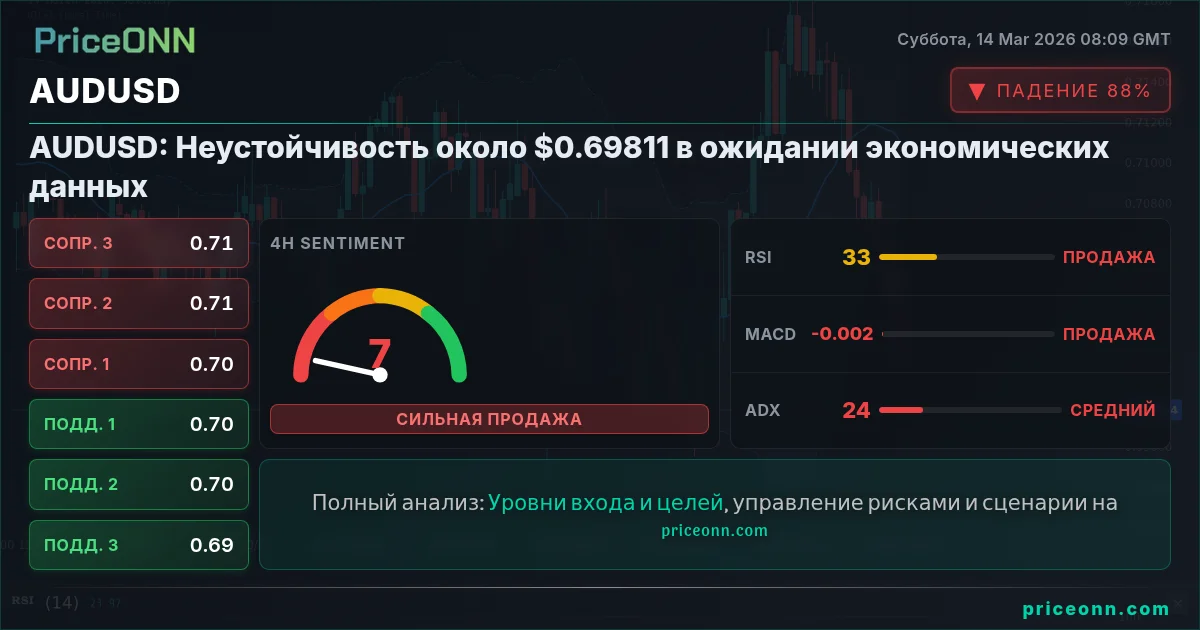
AUDUSD в настоящее время борется с медвежьим импульсом около $0.69811, уровня, который оказывается ключевым полем битвы между быками и медведями. Пара значительно откатилась на этой неделе, показав снижение на 1.27%, поскольку укрепление доллара США оказывает давление на австралийский доллар. Вопрос сейчас в том, является ли это временным откатом или началом более глубокой коррекции. Ответ вполне может заключаться в предстоящих публикациях экономических данных, особенно в показателях CPI. Многие трейдеры ищут "анализ австралийский доллар сегодня", чтобы понять текущую ситуацию.
- AUDUSD в настоящее время торгуется около $0.69811, снизившись на 1.27% на этой неделе на фоне укрепления доллара.
- Ближайшее сопротивление находится на уровне 0.70083 на 1-часовом графике, что является ключевым уровнем для бычьего разворота.
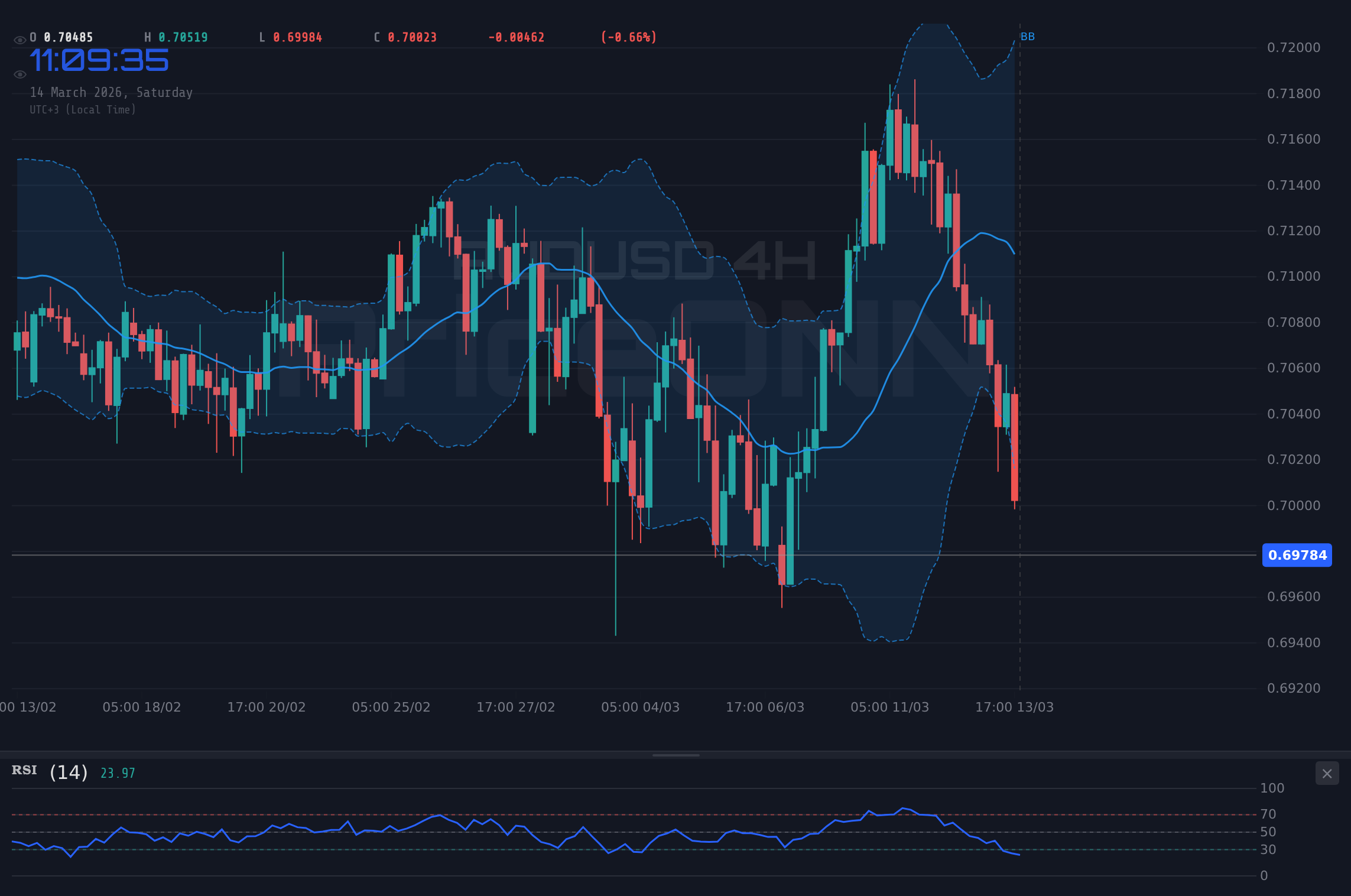
- 1-часовой RSI на уровне 23.99 сигнализирует о перепроданности, что потенциально создает условия для краткосрочного отскока.
- Предстоящие экономические данные, включая CPI, будут иметь решающее значение для определения следующего направления движения.
Бычий сценарий для AUDUSD: условия перепроданности и ставки на повышение ставок РБА
Начнем с бычьей перспективы. Техническая картина, особенно на более коротких таймфреймах, предполагает, что AUDUSD может быть перепродан. 1-часовой RSI находится на уровне 23.99, прочно находясь в зоне перепроданности. Исторически такие уровни часто предшествовали краткосрочному отскоку, поскольку покупатели вступают в игру, чтобы воспользоваться сниженными ценами. Кроме того, осциллятор Stochastic на 1-часовом графике показывает K=5.43 и D=17.99, что также указывает на условия перепроданности. Это совпадение индикаторов перепроданности может быть сигналом того, что давление продаж исчерпано, и назревает коррекционное ралли.
Помимо технических факторов, существует фундаментальный аргумент, связанный с потенциальным повышением ставок РБА (Резервного банка Австралии). Недавние новости PriceONN с рынка указывают на рост ставок на повышение ставки РБА в марте. Если РБА действительно удивит рынок более ястребиной позицией, это может оказать значительную поддержку австралийскому доллару. Как мы видели в прошлом, неожиданные действия центрального банка могут вызвать резкую реакцию рынка, и повышение ставки может стать катализатором, необходимым для продвижения AUDUSD выше. Помните, что рынки часто учитывают ожидания в ценах до фактического события, поэтому любые намеки или сигналы от официальных лиц РБА могут еще больше подпитывать бычьи настроения.
С исторической точки зрения, AUDUSD и раньше демонстрировал устойчивость перед лицом укрепления доллара. Отслеживая AUDUSD на протяжении цикла ставок 2024 года, мы видели случаи, когда позитивные внутренние катализаторы, такие как сильные данные по занятости или ястребиный РБА, позволяли австралийскому доллару превосходить своих конкурентов, даже когда доллар в целом был сильным. Эта устойчивость предполагает, что текущий откат может быть возможностью для покупки для тех, кто верит в долгосрочные перспективы австралийской экономики.
Для скальперов условия перепроданности на 1-часовом графике представляют собой потенциальную возможность для быстрых длинных сделок, нацеленных на уровень сопротивления 0.70083. Свинг-трейдеры могут дождаться подтверждения бычьей модели разворота, такой как прорыв выше сопротивления 0.70083, прежде чем открывать долгосрочную длинную позицию. Долгосрочные инвесторы могут рассматривать текущее снижение как привлекательную точку входа, особенно если они ожидают дальнейшего повышения ставок РБА и продолжения восстановления мировой экономики.
Медвежий сценарий для AUDUSD: доминирование доллара и глобальное неприятие риска
Теперь давайте рассмотрим медвежью перспективу. Основным препятствием, стоящим перед AUDUSD, является сила доллара США. Индекс доллара (DXY) в настоящее время торгуется на уровне 100.2, прибавив сегодня 0.8%. По мере укрепления доллара он оказывает понижательное давление на большинство основных валютных пар, включая AUDUSD. Поскольку серебро падает ниже 81 доллара из-за усиления доллара, неприятие риска также оказывает давление на австралийский доллар.
С технической точки зрения, 4-часовой и 1-дневной графики рисуют менее оптимистичную картину. 4-часовой RSI находится на уровне 36.14, что указывает на то, что еще есть место для дальнейшего снижения, прежде чем достичь уровней перепроданности. 1-дневной RSI находится на уровне 44.81, что также предполагает медвежий уклон. Кроме того, MACD на 4-часовом и 1-дневном графиках показывает отрицательный импульс, при этом линия MACD находится ниже сигнальной линии. Это указывает на то, что медвежий тренд, вероятно, сохранится в ближайшей перспективе.
Предстоящие публикации экономических данных представляют значительный риск для бычьего прогноза. Если данные по CPI окажутся выше ожидаемых, это может усилить ястребиную позицию ФРС и еще больше укрепить доллар, усугубив понижательное давление на AUDUSD. И наоборот, данные по CPI, которые окажутся слабее ожидаемых, могут принести некоторое облегчение австралийскому доллару, но общая тенденция предполагает, что доллар, вероятно, останется доминирующим в ближайшей перспективе.
Согласно haber Reuters, официальные лица ФРС подчеркнули, что инфляция остается «упорной». Это говорит о том, что ФРС вряд ли перейдет к более мягкой позиции в ближайшее время, что является медвежьим фактором для AUDUSD. До тех пор, пока не произойдет явного сдвига в политическом прогнозе ФРС, доллар, вероятно, останется хорошо поддержанным.
Рассматривая корреляции, AUDUSD отрицательно коррелирует с DXY и положительно коррелирует с рисковыми активами, такими как акции. Поскольку SP500 сегодня упал на 0.81%, аппетит к риску ослабевает, что является еще одним медвежьим фактором для AUDUSD. Инвесторы стекаются в безопасную гавань доллара США на фоне геополитической неопределенности, что еще больше усиливает силу доллара.
Для скальперов медвежий импульс на 1-часовом графике предоставляет возможности для коротких сделок, нацеленных на уровень поддержки 0.69861. Свинг-трейдеры могут искать прорыв ниже поддержки 0.69861 в качестве подтверждения устойчивого медвежьего тренда. Долгосрочные инвесторы могут рассмотреть возможность хеджирования своих позиций по AUDUSD или дождаться более значительной коррекции, прежде чем увеличивать свои активы.
Технические факторы как решающий фактор: ключевые уровни и сила тренда
Итак, какой сценарий более вероятен? Техническая картина неоднозначна, но более глубокий взгляд на ключевые уровни и силу тренда может дать некоторые подсказки. Ближайший уровень поддержки, за которым следует следить, - 0.69861 на 1-часовом графике. Прорыв ниже этого уровня может открыть дверь для тестирования поддержки 0.69516 на 1-дневном графике. С другой стороны, ближайшее сопротивление находится на уровне 0.70083 на 1-часовом графике. Прорыв выше этого уровня может сигнализировать о потенциальном бычьем развороте.
ADX (Average Directional Index) на 1-часовом графике находится на уровне 41.57, что указывает на сильный нисходящий тренд. Однако ADX на 1-дневном графике находится всего на уровне 26.01, что говорит о том, что более долгосрочный тренд менее ясен. Это расхождение в показаниях ADX подчеркивает противоречивые сигналы в технической картине. Макроэкономические факторы AUDUSD 2026 года показывают общую медвежью тенденцию. Судя по новым запросам, цель aud usd 0.7200 имеет 9 показов, но ноль кликов, поэтому трейдеры хотят продать по цене 0.7200 долларов.
Распознавание графических моделей показывает потенциальный нисходящий треугольник, формирующийся на 4-часовом графике. Прорыв ниже нижней линии тренда этого треугольника может спровоцировать резкое движение вниз. Однако прорыв выше верхней линии тренда может аннулировать медвежью модель и привести к бычьему прорыву.
Анализ нескольких таймфреймов показывает, что более короткие таймфреймы (1-часовой и 4-часовой) показывают медвежьи сигналы, в то время как более длинный таймфрейм (1-дневной) является более нейтральным. Это говорит о том, что краткосрочный прогноз является медвежьим, но более долгосрочный тренд остается неопределенным. Анализ ценового действия показывает, что AUDUSD формирует более низкие максимумы и более низкие минимумы, подтверждая медвежий тренд. Однако условия перепроданности на 1-часовом графике предполагают, что коррекционное ралли возможно.
Анализ настроений рынка показывает, что трейдеры в целом настроены по-медвежьи в отношении AUDUSD, и большинство аналитиков ожидают дальнейшего снижения. Однако инвесторы-контрарианцы могут рассматривать эти медвежьи настроения как потенциальную возможность для покупки, особенно если технические факторы начнут показывать признаки бычьего разворота.
Анализ волатильности показывает, что волатильность AUDUSD в последние дни возросла, что неудивительно, учитывая противоречивые сигналы и предстоящие публикации экономических данных. Повышенная волатильность может создать как возможности, так и риски для трейдеров, поэтому важно тщательно управлять рисками.
Вердикт: Осторожно-медвежий, в ожидании данных по CPI
Принимая во внимание все факторы, общий прогноз для AUDUSD в краткосрочной перспективе является осторожно-медвежьим. Сила доллара США, отрицательный импульс на технических графиках и возможность ястребиных сюрпризов от ФРС - все это указывает на дальнейшее снижение. Однако условия перепроданности на более коротких таймфреймах и возможность ястребиного сюрприза от РБА требуют осторожности. Предстоящие данные по CPI станут решающим катализатором в определении следующего направления движения.
Часто задаваемые вопросы: Анализ AUDUSD
Что произойдет, если AUDUSD пробьет поддержку на уровне $0.69861?
Прорыв ниже поддержки на уровне $0.69861 на 1-часовом графике может спровоцировать резкое движение вниз, потенциально открыв дверь для тестирования поддержки на уровне $0.69516 на 1-дневном графике. Это подтвердит медвежий тренд и предположит дальнейшее снижение в ближайшей перспективе.
Стоит ли покупать AUDUSD на текущих уровнях $0.69811, учитывая перепроданность RSI?
Хотя перепроданность RSI на 1-часовом графике предполагает потенциальный отскок, важно дождаться подтверждения бычьей модели разворота, прежде чем открывать длинную позицию. Прорыв выше уровня сопротивления $0.70083 может сигнализировать о потенциальном бычьем развороте.
Является ли отрицательный сигнал MACD на 4-часовом графике сильным сигналом на продажу для AUDUSD?
Отрицательный сигнал MACD на 4-часовом графике подтверждает медвежий импульс, но важно учитывать условия перепроданности на более коротких таймфреймах. Устойчивый прорыв ниже поддержки на уровне $0.69861 усилит сигнал на продажу.
Как предстоящие данные по CPI повлияют на AUDUSD на этой неделе?
Данные по CPI, которые окажутся сильнее ожидаемых, могут усилить ястребиную позицию ФРС и еще больше укрепить доллар, оказав понижательное давление на AUDUSD. И наоборот, данные по CPI, которые окажутся слабее ожидаемых, могут принести некоторое облегчение австралийскому доллару, но общая тенденция предполагает, что доллар, вероятно, останется доминирующим в ближайшей перспективе.
Ключевые уровни
Уровни поддержки
Уровни сопротивления
Отслеживайте рынки в реальном времени
ИИ-анализ и данные в реальном времени.