

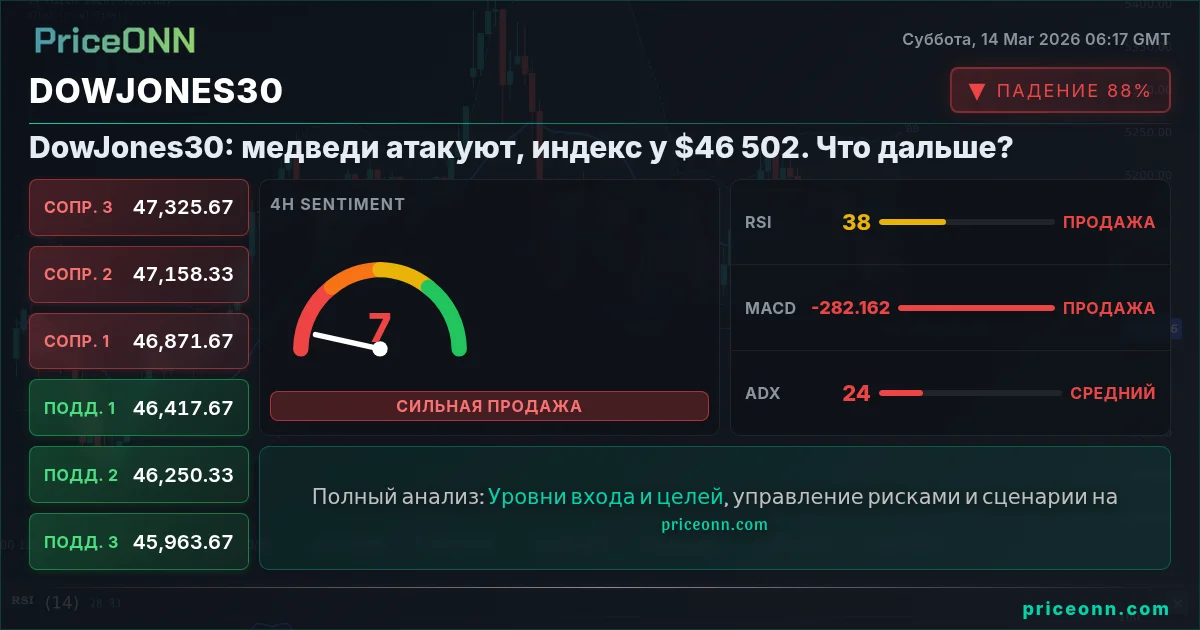
DowJones30 завершил прошлую неделю на отметке $46 502.50, столкнувшись со значительным медвежьим давлением. Индекс движется в сложных условиях технических препятствий и надвигающихся экономических данных, что создает предпосылки для потенциально волатильной недели. Несколько технических индикаторов указывают на возможность дальнейшего снижения, призывая инвесторов к осторожности. Анализ dow jones сегодня показывает преобладание негативных факторов.
- RSI на дневном графике на уровне 27.44 сигнализирует о перепроданности, но также и о лежащей в основе слабости.
- Критическая поддержка находится на уровне 46 485.67, прорыв ниже которого может спровоцировать дальнейшие продажи.
- Гистограмма MACD показывает отрицательный импульс, что говорит о сохранении медвежьего давления.
- Ожидания относительно политики Федеральной резервной системы определяют корреляцию DowJones30 с DXY.
Динамика DowJones30 на прошлой неделе характеризовалась устойчивым снижением, кульминацией которого стало закрытие на уровне $46 502.50. Этот медвежий импульс отражен на дневном графике, где индекс относительной силы (RSI) находится на уровне 27.44, что указывает на условия перепроданности. Хотя это может указывать на потенциал для отскока, это также подчеркивает лежащую в основе слабость индекса. Перепроданность по RSI сама по себе не является сигналом к покупке; ей необходимо подтверждение от других индикаторов или изменение настроений на рынке. Инвестор, играющий против тренда, может увидеть в этом возможность, но общая техническая картина требует осторожности.
К медвежьему прогнозу добавляется гистограмма схождения-расхождения скользящих средних (MACD), которая показывает отрицательный импульс. Линия MACD остается ниже сигнальной линии, усиливая нисходящий тренд. Это говорит о том, что давление продаж все еще преобладает, и разворот тренда еще не подтвержден. ADX на дневном таймфрейме находится на уровне 34.71, что указывает на сильный нисходящий тренд, который еще больше поддерживает медвежий сценарий. В то время как RSI может намекать на условия перепроданности, MACD и ADX подтверждают, что медведи все еще контролируют ситуацию.
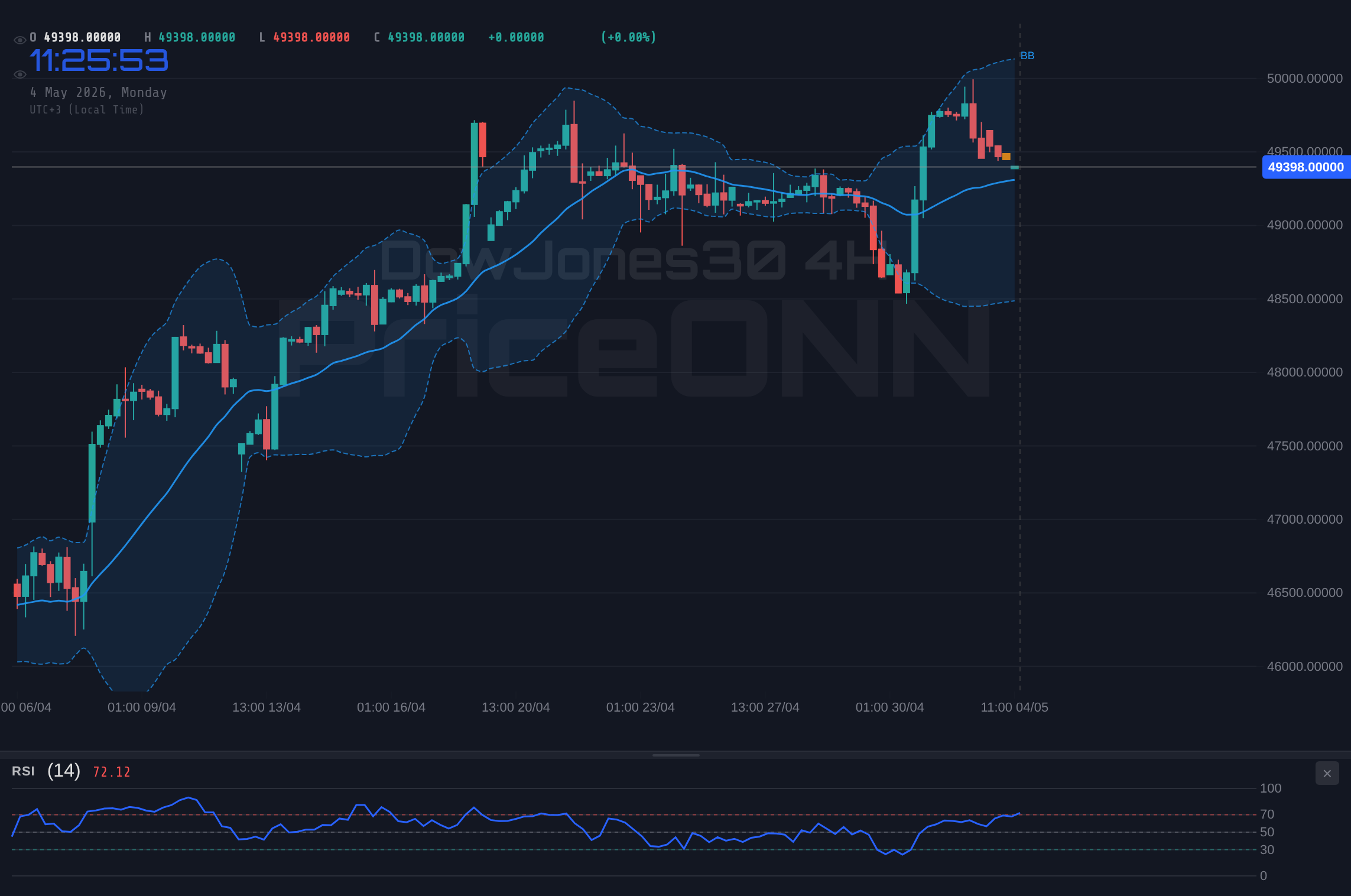
Ключевые уровни поддержки, за которыми следует следить, включают 46 485.67, 46 243.33 и 45 825.67. Непосредственная поддержка на уровне 46 485.67 имеет решающее значение; прорыв ниже этого уровня может спровоцировать дальнейшие продажи, потенциально приведя индекс к последующим уровням поддержки. С другой стороны, уровни сопротивления расположены на отметках 47 145.67, 47 563.33 и 47 805.67. DowJones30 необходимо убедительно прорваться выше 47 145.67, чтобы нивелировать текущий медвежий тренд. Без такого прорыва путь наименьшего сопротивления, по-видимому, лежит вниз.
Изучение часовых и 4-часовых таймфреймов дает дополнительную информацию. На 1-часовом графике RSI находится на уровне 36.82, в то время как MACD также показывает отрицательный импульс, усиливая краткосрочный медвежий прогноз. ADX находится на уровне 19.63, что указывает на слабую тенденцию в краткосрочной перспективе. 4-часовой график представляет аналогичную картину с RSI 37.64 и отрицательным импульсом MACD. ADX на 4-часовом графике находится на уровне 24, что говорит об умеренном нисходящем тренде. Эти более короткие таймфреймы соответствуют дневному графику, подтверждая, что DowJones30 сталкивается с медвежьими встречными ветрами на нескольких временных горизонтах.
Кроме того, решающую роль играет более широкий рыночный контекст. Индекс доллара США (DXY) в настоящее время торгуется на уровне 100.2, показывая дневной прирост на 0.8%. Более сильный доллар обычно оказывает давление на акции, включая DowJones30. Эта обратная корреляция очевидна в текущей рыночной среде, где рост DXY способствует понижательному давлению на Dow. Склонность к риску также снижается, о чем свидетельствует дневное изменение SP500 на -0.81% и дневное изменение Nasdaq100 на -0.85%. Это неприятие риска еще больше поддерживает спрос на активы-убежища и оказывает давление на более рискованные активы, такие как акции.
В энергетическом секторе наблюдаются заметные движения: нефть Brent торгуется на уровне $103.82, а нефть WTI - на уровне $99.18. Эти повышенные цены на нефть способствуют инфляционному давлению, что может побудить Федеральную резервную систему сохранить свою ястребиную позицию. DowJones30 чувствителен к ожиданиям процентных ставок, и любое указание на продолжение повышения ставок может еще больше повлиять на индекс. Согласно последним новостям, напряженность на Ближнем Востоке нарастает, что потенциально может нарушить глобальные цепочки поставок нефти. Этот геополитический риск добавляет инфляционного давления и создает дополнительную неопределенность для DowJones30.
Экономический календарь сегодня относительно спокоен, но следующая неделя насыщена важными событиями. Хотя конкретные события не указаны с фактическими данными 11 марта 2026 года (среда) или 13 марта 2026 года (пятница), рынок будет внимательно следить за любыми новостями, касающимися инфляции и занятости. Эти данные могут существенно повлиять на политические решения Федеральной резервной системы и, следовательно, на динамику DowJones30. Предстоящие данные по индексу потребительских цен (CPI) станут ключевым катализатором, предоставив информацию о траектории инфляции и потенциально формируя рыночные ожидания относительно будущего повышения ставок. Если данные по индексу потребительских цен окажутся выше ожидаемых, это может усилить медвежьи настроения и привести к дальнейшему снижению DowJones30.
Учитывая текущий технический и фундаментальный фон, нейтральная позиция кажется разумной. Медвежий импульс очевиден на нескольких таймфреймах, и рост DXY усиливает понижательное давление. Хотя перепроданность по RSI может указывать на потенциальный отскок, это не является надежным сигналом само по себе. Инвесторам следует внимательно следить за ключевыми уровнями поддержки и дождаться подтвержденного прорыва выше уровней сопротивления, прежде чем рассматривать какие-либо длинные позиции. С другой стороны, к коротким позициям следует подходить с осторожностью, учитывая условия перепроданности и возможность короткого сжатия.
Анализ DowJones30 сегодня выявляет сочетание медвежьих сигналов. Закрытие в прошлую пятницу на уровне $46 502.50 отражает кульминацию недели устойчивого снижения. Ключевые уровни, за которыми следует следить, включают немедленную поддержку на уровне 46 485.67 и сопротивление на уровне 47 145.67. Решительный прорыв любого уровня, вероятно, будет определять следующее направление индекса. В то же время важно следить за публикацией экономических данных на следующей неделе, особенно за данными по индексу потребительских цен, которые, вероятно, будут играть ключевую роль в формировании рыночных ожиданий. DowJones30 находится в нестабильном положении, и необходим осторожный подход.
Часто задаваемые вопросы: Анализ DowJones30
Что произойдет, если DowJones30 пробьет поддержку на уровне $46 485.67?
Если DowJones30 решительно пробьет уровень поддержки $46 485.67, это может спровоцировать дальнейшее давление продаж и привести к тестированию последующих уровней поддержки на 46 243.33 и 45 825.67. Этот пробой подтвердит преобладающий медвежий тренд и потенциально откроет путь для более значительного снижения.
Стоит ли покупать DowJones30 на текущих уровнях $46 502.50, учитывая RSI на уровне 27.44?
Хотя RSI на уровне 27.44 указывает на условия перепроданности, это не является самостоятельным сигналом к покупке. Медвежьи MACD и ADX предполагают, что нисходящий тренд остается в силе. Более разумным подходом было бы дождаться подтверждения разворота тренда, прежде чем рассматривать длинные позиции, такие как прорыв выше уровня сопротивления 47 145.67.
Является ли отрицательная гистограмма MACD надежным сигналом для анализа тренда DowJones30?
Отрицательная гистограмма MACD является надежным индикатором медвежьего импульса. Она подтверждает, что давление продаж все еще преобладает и что нисходящий тренд, вероятно, продолжится до тех пор, пока линия MACD не пересечет сигнальную линию. Трейдерам следует использовать его в сочетании с другими индикаторами и ценовым действием для подтверждения своих торговых решений.
Как предстоящие данные по индексу потребительских цен повлияют на DowJones30 на этой неделе?
Предстоящие данные по индексу потребительских цен станут ключевым катализатором для DowJones30. Данные по индексу потребительских цен выше ожидаемых могут усилить медвежьи настроения, поскольку это будет означать, что Федеральная резервная система, вероятно, сохранит свою ястребиную позицию. Это может привести к дальнейшему снижению индекса, поскольку инвесторы закладывают в цену возможность продолжения повышения ставок.
Волатильность создает возможности - те, кто подготовлен, будут вознаграждены. Рынки цикличны; каждый спад закладывает семена для следующего ралли. Терпеливые инвесторы всегда находят возможности - главное - дождаться подходящего момента. Ключ к успеху - дисциплинированное управление рисками.
Технический Обзор
| Индикатор | Значение | Сигнал |
|---|---|---|
| RSI (14) | 27.44 | Перепроданность |
| MACD Histogram | Отрицательный | Медвежий |
| Stochastic | 19.19 | Перепроданность |
| ADX | 34.71 | Сильный нисходящий тренд |
| Bollinger | Нижняя граница | Наблюдение |
Ключевые Уровни
Уровни Поддержки
Уровни Сопротивления
Отслеживайте рынки в реальном времени
ИИ-анализ и данные в реальном времени.