

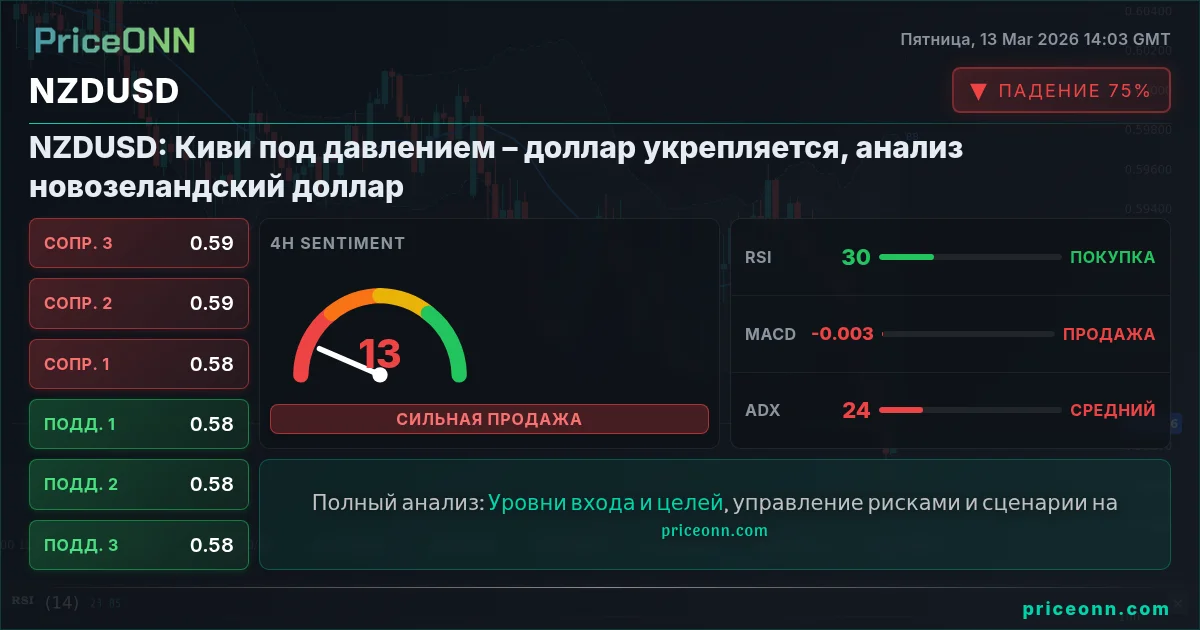
Новозеландский доллар находится под давлением, в настоящее время тестируя поддержку в районе $0.58369, поскольку доллар США укрепляется по всем направлениям. Слабость "Киви" происходит на фоне более широкого неприятия рискам и скачка индекса доллара (DXY).
- NZDUSD тестирует поддержку на уровне $0.58262 на 1H таймфрейме.
- Индекс доллара (DXY) в настоящее время находится на уровне 99.73, оказывая понижательное давление на NZDUSD.
- Stochastic на 4H таймфрейме находится в зоне перепроданности при K=15.78, D=6.97, что предполагает потенциальный отскок.
- Общий тренд для NZDUSD на 1D таймфрейме нейтральный, но краткосрочный импульс благоприятствует снижению.
Отслеживая NZDUSD на протяжении различных рыночных циклов, становится ясно, что пара очень чувствительна к изменениям в настроениях риска и, что критически важно, к силе доллара США. Недавний скачок DXY, теперь на уровне 99.73, оказывает значительное давление на "Киви", подталкивая его к ключевым уровням поддержки. Давайте углубимся в факторы, влияющие на это движение, и на что следует обращать внимание трейдерам.
"Киви" под давлением: Доминирование доллара
Основной причиной текущей слабости NZDUSD является возрождение доллара США. Как сообщалось ранее сегодня, доллар достиг четырехмесячного максимума на фоне растущих опасений стагфляции. Это привело к широкомасштабному уходу от риска, когда инвесторы стекаются в безопасную гавань доллара. Это неприятие рискам отражается в S&P 500, который, хотя в настоящее время вырос на 0.63% до 6721.8, демонстрирует основную слабость на 4H и 1D таймфреймах.
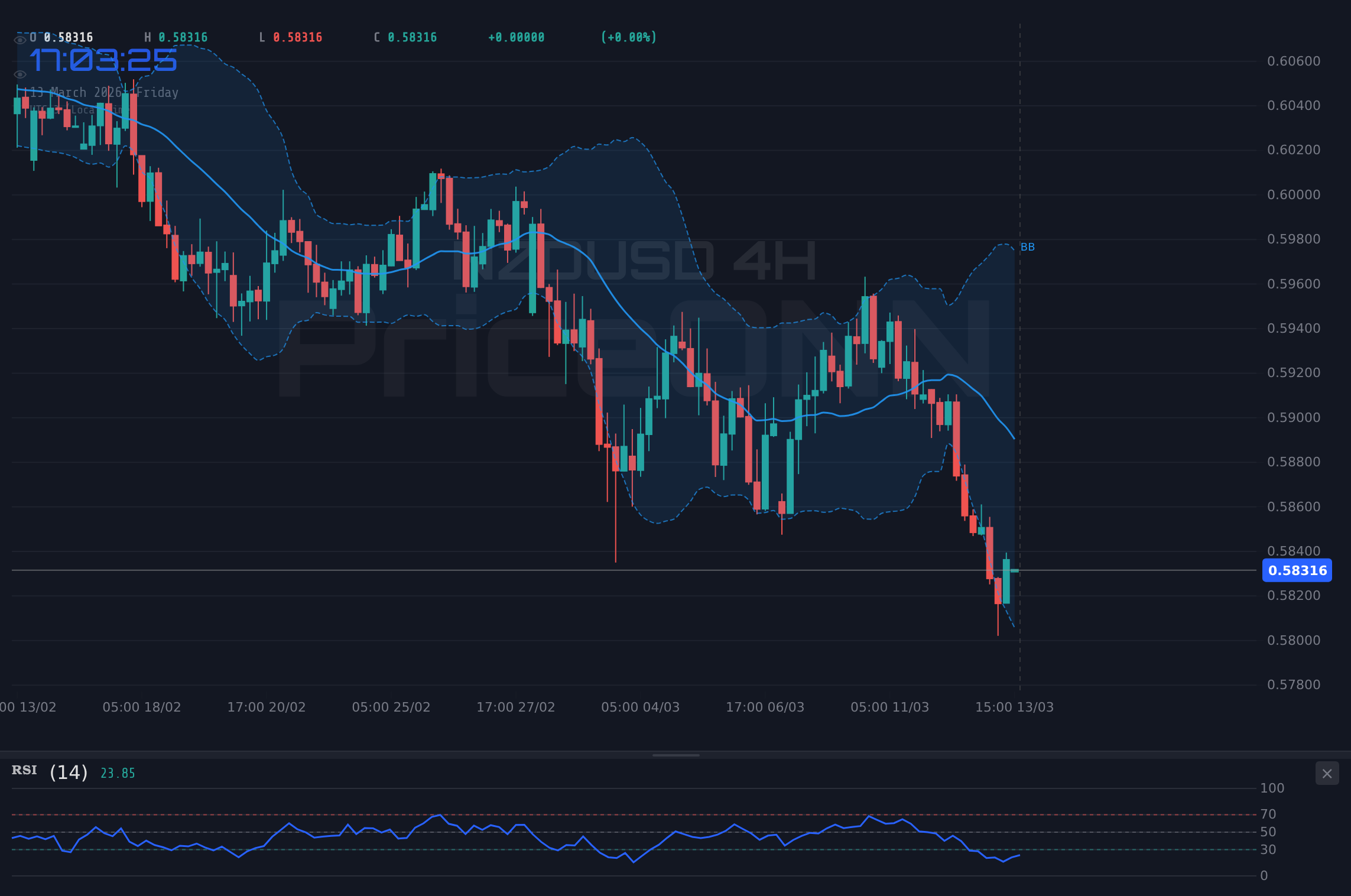
Сильный доллар также влияет на другие основные валютные пары. EURUSD торгуется вблизи 1.14772, также под давлением силы доллара. GBPUSD аналогичным образом испытывает трудности, торгуясь на уровне 1.32794. Сила DXY является серьезным препятствием для рисковых активов, включая новозеландский доллар.
Технический анализ: Ключевые уровни для наблюдения
С технической точки зрения, NZDUSD в настоящее время тестирует критическую зону поддержки. На 1H таймфрейме немедленная поддержка находится на уровне 0.58262, за которой следуют 0.58184 и 0.58123. Прорыв ниже этих уровней может спровоцировать дальнейшее снижение к уровням поддержки 4H 0.5803 и 0.57893.
Сопротивление в настоящее время наблюдается на уровне 0.58401, за которым следуют 0.58462 и 0.5854 на 1H таймфрейме. Устойчивый прорыв выше этих уровней потребуется для ослабления текущего медвежьего давления. Дневной пивот находится на уровне 0.5826, который может служить ключевой точкой перегиба.
Индекс относительной силы (RSI) на 1H таймфрейме составляет 42.13, что указывает на нейтральный импульс с небольшим медвежьим уклоном. Схождение-расхождение скользящих средних (MACD) показывает положительный импульс, но это может быть недолгим, если доллар продолжит укрепляться. Индекс среднего направления (ADX) на 1H таймфрейме высок и составляет 44.93, что сигнализирует о сильном нисходящем тренде.
Фундаментальные факторы: Экономические данные в центре внимания
Заглядывая вперед, несколько ключевых публикаций экономических данных могут повлиять на NZDUSD. Сила доллара США в значительной степени зависит от ожиданий относительно политики Федеральной резервной системы. Таким образом, трейдерам следует уделять пристальное внимание любым указаниям ФРС относительно повышения процентных ставок и количественного ужесточения. Любые "ястребиные" сигналы от ФРС могут еще больше укрепить доллар и оказать давление на NZDUSD.
В календаре сегодня, 13 марта, запланировано несколько событий по USD. Предыдущий уровень безработицы составлял 4.3. Предыдущие продолжающиеся заявки составляли 3. Предыдущий основной индекс PPI составлял 0.4, а предыдущий PPI составлял -1.4. Результаты этих показателей окажут значительное влияние на траекторию доллара.
Сила новозеландского доллара также связана с ценами на сырьевые товары, особенно на молочную продукцию. Любое значительное снижение цен на молочную продукцию может негативно повлиять на "Киви". Трейдерам также следует следить за публикациями экономических данных из Новой Зеландии, таких как данные по ВВП и инфляции, для получения информации о перспективах политики Резервного банка Новой Зеландии (RBNZ).
Корреляционный анализ: DXY и настроения риска
Индекс доллара (DXY) является критическим индикатором, за которым следует следить при торговле NZDUSD. По мере роста DXY, как правило, оказывает понижательное давление на NZDUSD. Поскольку DXY в настоящее время находится на уровне 99.73 и демонстрирует сильный восходящий тренд на дневном таймфрейме, перспективы для NZDUSD остаются сложными. RSI DXY находится на уровне 71.7, что указывает на условия перекупленности, но сильный восходящий тренд предполагает, что доллар может продолжить расти в ближайшей перспективе.
NZDUSD также демонстрирует некоторую корреляцию с настроениями риска, что отражается в динамике фондовых рынков. S&P 500, хотя в настоящее время и растет, сталкивается с сопротивлением на уровне 6738.8. Устойчивое снижение на фондовых рынках может еще больше оказать давление на "Киви", поскольку инвесторы ищут активы-убежища.
Что это значит для трейдеров прямо сейчас
Учитывая текущие рыночные условия, трейдерам следует проявлять осторожность при торговле NZDUSD. Сильный доллар и неприятие рискам создают сложную среду для "Киви". Трейдерам следует сосредоточиться на управлении рисками и дождаться четких сигналов перед открытием новых позиций.
Торговля NZDUSD сопряжена со значительным риском. Пара очень волатильна и чувствительна к изменениям в настроениях рынка и экономических данных. Всегда используйте стоп-лосс ордера и тщательно управляйте размером своей позиции.
Для тех, кто хочет открыть Short позицию по NZDUSD, прорыв ниже уровня поддержки 0.58262 может предоставить возможность для входа. Однако трейдерам следует помнить об условиях перепроданности на 4H таймфрейме и возможности отскока. Для тех, кто хочет купить NZDUSD, рекомендуется дождаться устойчивого прорыва выше уровня сопротивления 0.58401. Подтверждение разворота восходящего тренда DXY также будет положительным сигналом.
Часто задаваемые вопросы: Анализ NZDUSD
Что произойдет, если NZDUSD пробьет поддержку на уровне $0.58262?
Прорыв ниже уровня поддержки $0.58262 может спровоцировать дальнейшее снижение, потенциально нацеленное на уровни поддержки 4H 0.5803 и 0.57893. Этот сценарий, вероятно, будет вызван продолжающимся укреплением доллара США и неприятием рискам.
Стоит ли покупать NZDUSD на текущих уровнях $0.58369, учитывая DXY на уровне 99.73?
Учитывая сильный восходящий тренд DXY на уровне 99.73, следует проявлять осторожность. Рекомендуется дождаться устойчивого прорыва выше уровня сопротивления 0.58401 и подтверждения разворота восходящего тренда DXY, прежде чем рассматривать длинную позицию.
Является ли RSI на уровне 42.13 на 1H таймфрейме сигналом к продаже для NZDUSD?
Хотя RSI на уровне 42.13 предполагает нейтральный импульс с небольшим медвежьим уклоном, это не является окончательным сигналом к продаже. Трейдерам следует учитывать другие факторы, такие как общий тренд, ключевые уровни поддержки и динамика DXY, прежде чем принимать торговое решение.
Как предстоящие события по USD 13 марта повлияют на NZDUSD на этой неделе?
Предстоящие события по USD 13 марта, включая уровень безработицы и данные PPI, могут оказать значительное влияние на NZDUSD. Сильные экономические данные США могут еще больше укрепить доллар и оказать давление на NZDUSD, в то время как слабые данные могут привести к развороту восходящего тренда доллара и потенциальному отскоку для "Киви".
Терпение, похоже, будет вознаграждено здесь. Управляйте своим риском, ждите своей установки - рынок всегда дает второй шанс.
Отслеживайте рынки в реальном времени
ИИ-анализ и данные в реальном времени.