

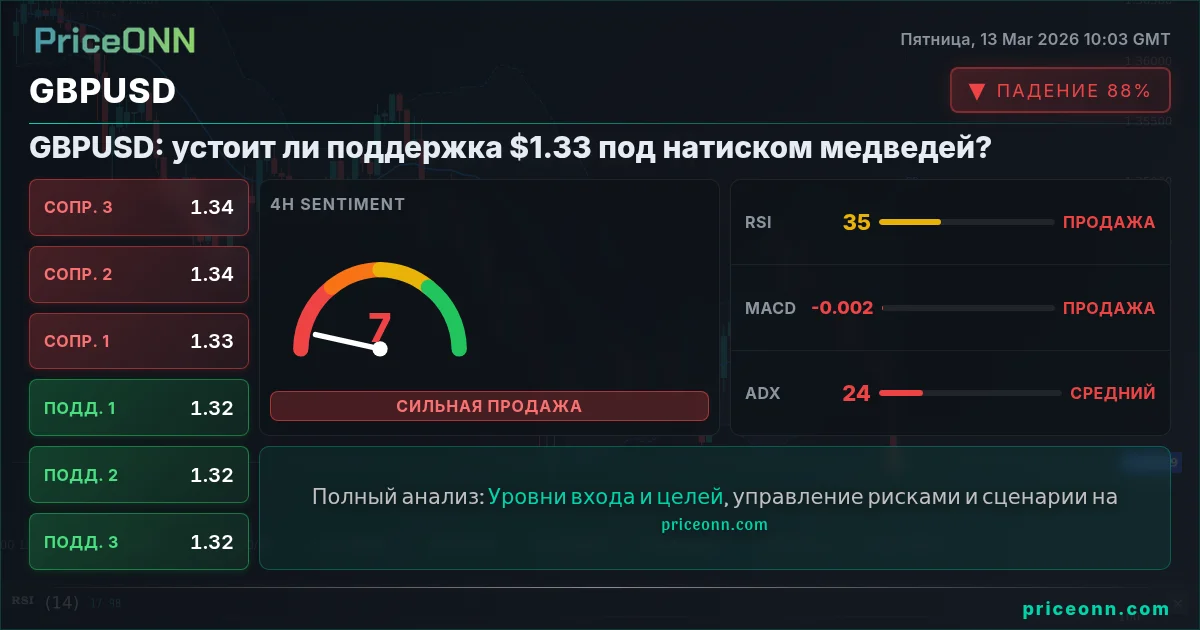
GBPUSD в настоящее время тестирует критический уровень поддержки около $1.33, уровень, который неоднократно защищался в последние недели. Вопрос сейчас в том, выдержит ли эта поддержка на фоне усиления медвежьих сигналов или прорыв неизбежен.
- GBPUSD тестирует ключевую поддержку на уровне $1.33 по состоянию на 13 марта 2026 года.
- RSI на уровне 20.95 на 1-часовом графике сигнализирует о перепроданности, но общая тенденция остается медвежьей.
- Прорыв ниже 1.32494 может спровоцировать резкое снижение к следующему уровню поддержки.
- Укрепление доллара и неприятие риска способствуют понижательному давлению на GBPUSD.
Медвежьи настроения вокруг GBPUSD подпитываются сочетанием факторов, включая укрепление доллара США и опасения по поводу экономических перспектив Великобритании. Индекс доллара (DXY) в настоящее время торгуется на уровне 99.91, что на 0.51% выше, оказывая значительное давление на основные валютные пары. Эта сила в значительной степени объясняется спросом на безопасные активы на фоне эскалации геополитической напряженности, особенно на Ближнем Востоке. Недавние новости о том, что цена на нефть WTI взлетела выше 95 долларов за баррель из-за напряженности в Ормузском проливе, как сообщалось ранее сегодня, еще больше усугубляют неприятие риска. Эти события повышают привлекательность доллара США как безопасной гавани, отвлекая капитал от более рискованных активов и валют, таких как британский фунт.
С технической точки зрения, GBPUSD демонстрирует несколько медвежьих сигналов на разных таймфреймах. На 1-часовом графике тренд уверенно нисходящий, с силой тренда 100%. RSI находится на уровне 20.95, что указывает на условия перепроданности, которые могут привести к краткосрочному отскоку. Однако MACD остается отрицательным, что говорит о том, что медвежий импульс все еще в игре. Осциллятор Stochastic также находится в зоне перепроданности, с %K на уровне 5.44 и %D на уровне 10.71. ADX на уровне 35.63 подтверждает силу текущего нисходящего тренда. Ближайшее сопротивление находится на уровне 1.32743, и прорыв выше этого уровня потребуется для ослабления некоторого медвежьего давления.
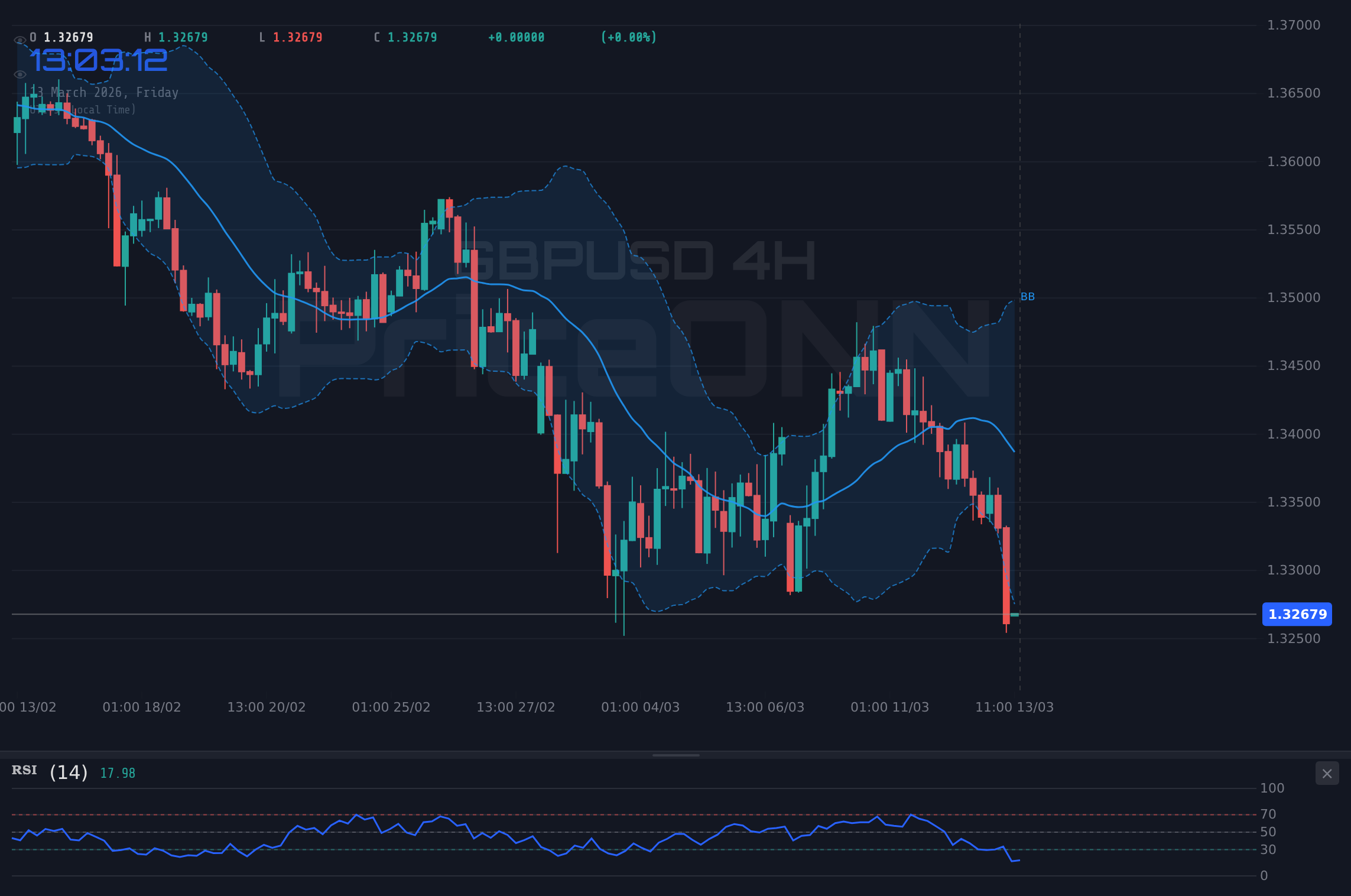
4-часовой график рисует аналогичную картину, с нейтральным трендом, но с медвежьим уклоном. RSI немного выше на уровне 31.56, что по-прежнему указывает на медвежий импульс. MACD остается отрицательным, и осциллятор Stochastic также находится в зоне перепроданности. ADX на уровне 22.36 предполагает умеренный нисходящий тренд. Ключевое сопротивление на этом таймфрейме находится на уровне 1.33522. На дневном графике тренд медвежий с силой 94%. RSI находится на уровне 32.74, и MACD остается отрицательным. Осциллятор Stochastic также сигнализирует о нисходящем тренде, с %K на уровне 34.13 и %D на уровне 45.11. ADX на уровне 28.94 подтверждает силу нисходящего тренда. Ближайший уровень поддержки, за которым следует следить, - 1.33125, прорыв которого может ускорить распродажу.
Предстоящие публикации экономических данных будут иметь решающее значение для определения следующего шага для GBPUSD. Хотя в сегодняшнем экономическом календаре нет конкретных событий с высоким уровнем воздействия для GBP или USD, рынок, вероятно, будет чувствителен к любым неожиданным объявлениям или заявлениям политиков из центрального банка. Общие настроения на рынке склоняются к осторожности, и инвесторы внимательно следят за геополитическими событиями и экономическими показателями, чтобы получить дополнительные подсказки о будущем направлении денежно-кредитной политики. Тот факт, что EUR/CHF упал ниже 0.97, поскольку Швейцарский национальный банк занимает выжидательную позицию на фоне геополитических рисков, как сообщалось ранее сегодня, подчеркивает более широкое неприятие риска на рынке.
Одним из ключевых макроэкономических факторов, которые следует учитывать, является расхождение в денежно-кредитной политике между Федеральной резервной системой и Банком Англии. Ожидается, что ФРС сохранит свою ястребиную позицию, в то время как Банк Англии воспринимается как более голубиный из-за опасений по поводу перспектив экономического роста Великобритании. Это расхождение оказывает понижательное давление на GBPUSD, поскольку инвесторы отдают предпочтение более высокодоходному доллару США. GBP находится под дальнейшим давлением, поскольку самые последние результаты GSC keyword intelligence показывают, что трейдеры уже рассматривают макроэкономические факторы GBPUSD на март 2026 года.
Отслеживая GBPUSD в течение цикла ставок 2024 года, становится ясно, что пара очень чувствительна к изменениям в ожиданиях процентных ставок. Исторически, когда RSI достигает текущих уровней на GBPUSD, результатом был краткосрочный отскок с последующим продолжением нисходящего тренда. Эта закономерность предполагает, что, хотя временный откат возможен, общая медвежья тенденция, вероятно, сохранится. Опытные трейдеры знают, что терпение здесь будет вознаграждено. Управляйте своим риском, ждите своей установки - рынок всегда дает второй шанс.
С точки зрения настроений рынка, существует явное предпочтение коротким позициям по GBPUSD. Это отражено в общем сигнале с 1-часового, 4-часового и дневного таймфреймов, который последовательно является медвежьим. Тот факт, что AUD/USD защищает ключевую поддержку, поскольку ставки на повышение ставок РБА растут, как сообщалось ранее сегодня, еще больше подчеркивает более широкое неприятие риска на рынке. Инвесторы ищут безопасности в долларе США и других активах-убежищах, оказывая давление на более рискованные валюты, такие как британский фунт и австралийский доллар.
А вот тут становится интересно! Текущая техническая настройка на GBPUSD представляет собой потенциальную возможность для трейдеров, стремящихся извлечь выгоду из нисходящего тренда. Однако крайне важно проявлять осторожность и дождаться подтверждения, прежде чем открывать какие-либо позиции. Прорыв ниже ближайшего уровня поддержки 1.32494 на 1-часовом графике может спровоцировать резкое снижение к следующему уровню поддержки, но важно учитывать риски, связанные с торговлей на волатильном рынке. ADX на уровне 35.63 - вот настоящая история. Сильное чтение тренда, подобное этому, означает, что прорыв произошел; он может пойти в любом направлении.
Смотрите, этот уровень абсолютно критичен: поддержка 1.33. Если этот уровень будет пробит, мы можем увидеть значительное движение вниз. Ключ в том, чтобы следить за сигналами подтверждения, такими как закрытие ниже этого уровня на 4-часовом графике или прорыв ниже поддержки 1.32394 на 1-часовом таймфрейме. Если эти условия сработают, мы можем увидеть отличную настройку! Похоже, что терпение здесь будет вознаграждено. Управляйте своим риском, ждите своей установки - рынок всегда дает второй шанс.
Одна из потенциальных торговых стратегий - дождаться повторного тестирования уровня 1.33 после прорыва, а затем открыть короткую позицию со стоп-лосс ордером, размещенным выше недавнего максимума. Это позволит трейдерам извлечь выгоду из нисходящего тренда, ограничивая при этом свои потенциальные убытки. Другая стратегия - использовать скользящий стоп-лосс ордер для защиты прибыли по мере снижения цены. Это позволит трейдерам оставаться в сделке до тех пор, пока сохраняется нисходящий тренд, сводя к минимуму риск возврата прибыли.
Часто задаваемые вопросы: Анализ GBPUSD
Что произойдет, если GBPUSD пробьет поддержку 1.32494?
Прорыв ниже поддержки 1.32494 на 1-часовом графике может спровоцировать резкое снижение к следующему уровню поддержки, потенциально ускорив нисходящий тренд. Это ключевой уровень, за которым следует следить для подтверждения дальнейшего медвежьего импульса.
Стоит ли открывать Short позицию по GBPUSD на текущих уровнях $1.33, учитывая RSI на уровне 20.95?
Хотя RSI на уровне 20.95 сигнализирует о перепроданности, важно учитывать общую медвежью тенденцию. Короткую позицию можно рассмотреть после подтвержденного прорыва ниже 1.32494 со стоп-лоссом выше недавнего максимума для управления риском.
Является ли RSI на уровне 20.95 сигналом к покупке для GBPUSD?
Хотя RSI на уровне 20.95 указывает на условия перепроданности, это не является окончательным сигналом к покупке. Общая тенденция медвежья, и более вероятен краткосрочный отскок, чем устойчивый разворот. Трейдерам следует искать другие подтверждающие сигналы, прежде чем открывать длинную позицию.
Как повлияют предстоящие экономические данные на GBPUSD на этой неделе?
Хотя сегодня не указаны события с высоким уровнем воздействия для GBP или USD, любые неожиданные заявления о политике или неожиданные объявления могут оказать существенное влияние на GBPUSD. Участникам рынка следует внимательно следить за экономическими показателями и сообщениями центрального банка на предмет потенциальных катализаторов.
В заключение, техническая картина для GBPUSD остается медвежьей, и пара в настоящее время тестирует критический уровень поддержки около $1.33. Сочетание укрепления доллара США, геополитической напряженности и опасений по поводу экономических перспектив Великобритании оказывает понижательное давление на GBPUSD. Трейдерам следует проявлять осторожность и дождаться сигналов подтверждения, прежде чем открывать какие-либо позиции. При дисциплинированном управлении рисками эти неспокойные воды можно преодолеть безопасно.
Отслеживайте рынки в реальном времени
ИИ-анализ и данные в реальном времени.