

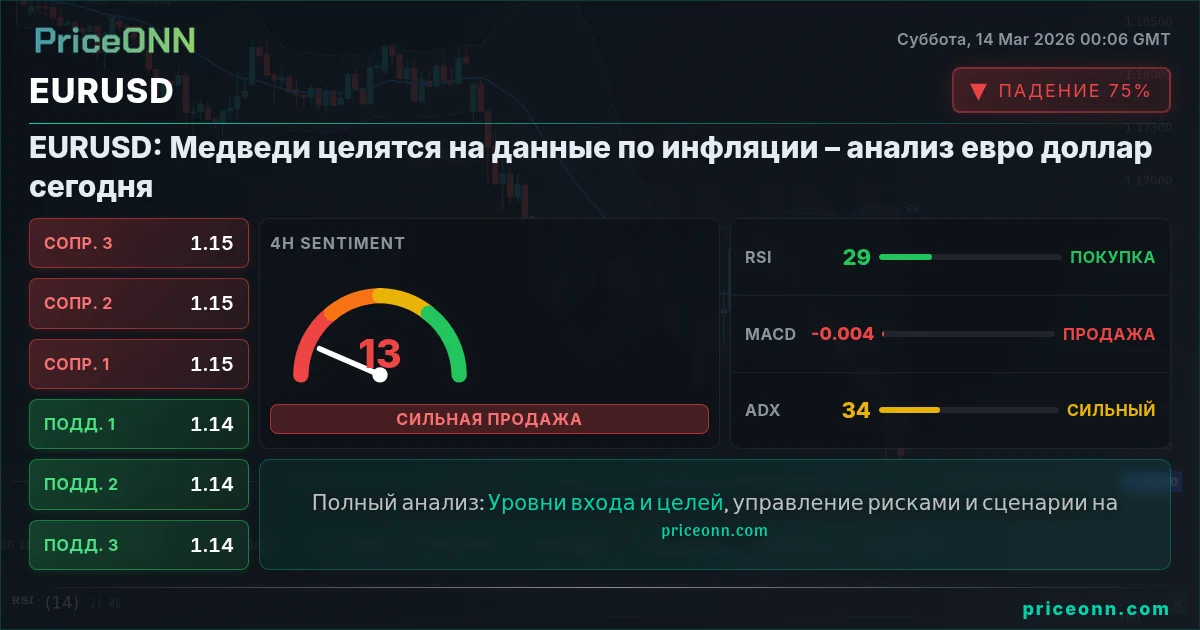
EURUSD находится в критической точке, завершив прошлую неделю вблизи многомесячных минимумов на уровне $1.14, поскольку медвежьи настроения охватили пару. Идет напряженная борьба между быками и медведями, и данные по инфляции на следующей неделе могут стать потенциальным катализатором для следующего крупного движения. Смогут ли медведи сохранить свое доминирование или быки смогут организовать возвращение? Ответ, вероятно, зависит от предстоящих экономических релизов и их влияния на силу доллара. Текущий анализ евро доллар сегодня показывает преобладание нисходящего тренда.
- EURUSD закрылась вблизи многомесячного минимума на уровне $1.14, что отражает медвежий импульс, вызванный силой доллара.
- Ближайшее сопротивление находится на уровне 1.14412 на 1H графике, уровень, который быкам необходимо вернуть, чтобы сигнализировать о смене тренда.
- Перепроданность на 1H RSI (23.05) предполагает потенциальный краткосрочный отскок, но общая тенденция остается нисходящей.
- Данные по инфляции на следующей неделе будут иметь решающее значение для определения траектории пары, при этом более высокая, чем ожидалось, инфляция, вероятно, приведет к дальнейшему росту доллара.
Медвежий сценарий: Доминирование доллара и геополитические риски
Медвежий сценарий для EURUSD в первую очередь основан на укреплении доллара США. Индекс доллара (DXY) в настоящее время находится на уровне 100.2, прибавив 0.8% сегодня, что сигнализирует о высоком спросе на доллар. По мере эскалации геополитических рисков, особенно напряженности на Ближнем Востоке, доллар продолжает извлекать выгоду из своего статуса безопасной гавани. Новостные агентства сообщают о повышенной напряженности в Ормузском проливе, что вызывает опасения по поводу перебоев в поставках нефти и еще больше укрепляет спрос на доллар. По данным Reuters, представители ФРС внимательно следят за ситуацией, готовые действовать, если инфляционные ожидания выйдут из-под контроля. Кроме того, недавний скачок цен на нефть, при этом нефть Brent стоит $103.82, усиливает инфляционное давление, потенциально заставляя ФРС сохранить свою ястребиную позицию. Этот ястребиный прогноз поддерживает более высокую доходность казначейских облигаций, что еще больше повышает привлекательность доллара.
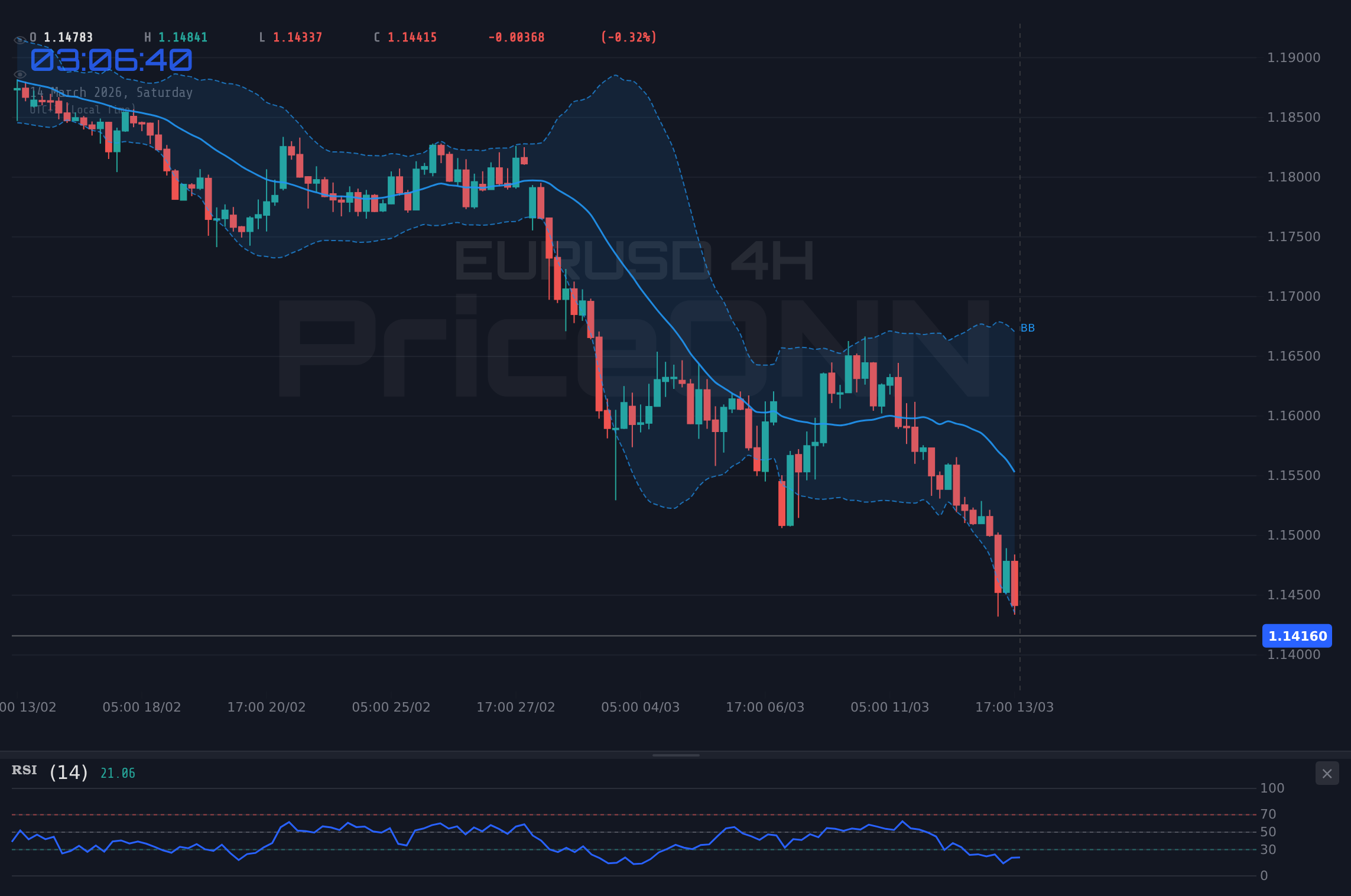
С технической точки зрения, медвежий импульс очевиден на нескольких таймфреймах. 1H, 4H и 1D графики показывают отрицательный MACD, что указывает на устойчивое понижательное давление. ADX на 1H графике находится на уровне 41.97, что подтверждает сильный нисходящий тренд. Более того, осциллятор Stochastic на 1H графике показывает K=8.21 и D=25.03, сигнализируя о перепроданности, которая может обеспечить временную передышку, но общая медвежья картина остается неизменной. Пара торгуется ниже своих краткосрочных и долгосрочных скользящих средних, что усиливает медвежий уклон. Свинг-трейдерам следует следить за прорывом ниже ближайшей поддержки на уровне 1.14188 на 1H графике в качестве подтверждения дальнейшего снижения. Долгосрочные инвесторы могут рассматривать это как возможность накапливать долларовые позиции на более низких уровнях, ожидая дальнейшего роста, поскольку ФРС сохраняет свою ограничительную политику.
Бычий сценарий: Перепроданность и потенциал для отскока
Несмотря на преобладающие медвежьи настроения, есть аргументы в пользу потенциального бычьего разворота или, по крайней мере, временного отскока. Наиболее убедительный аргумент заключается в перепроданности, особенно на более коротких таймфреймах. RSI на 1H графике находится на глубоко перепроданном уровне 23.05, что предполагает, что пара готова к коррекции. Исторически, когда RSI достигает этих уровней, часто следует краткосрочный отскок. Это согласуется с показаниями перепроданности осциллятора Stochastic, что потенциально сигнализирует о возможности покупки для скальперов, стремящихся извлечь выгоду из краткосрочных колебаний цен.
Кроме того, экономические данные Еврозоны, хотя и не являются в подавляющем большинстве положительными, показали некоторые признаки устойчивости. Хотя конкретные экономические события еще не были опубликованы, любые положительные сюрпризы в предстоящих данных могут спровоцировать ралли евро. Однако этот бычий сценарий зависит от ослабления доллара, что маловероятно в нынешней геополитической обстановке. Чтобы быки вернули контроль, им необходимо прорваться выше ближайшего сопротивления на уровне 1.14412 на 1H графике. Успешный прорыв может проложить путь к тестированию следующего уровня сопротивления на уровне 1.14473. Однако этот сценарий зависит от значительного изменения настроений рынка и ослабления привлекательности доллара как безопасной гавани. Долгосрочным инвесторам следует сохранять осторожность, поскольку фундаментальные факторы продолжают благоприятствовать силе доллара.
Технический анализ: Поле битвы на ключевых уровнях
Техническая картина для EURUSD рисует сложный сценарий с противоречивыми сигналами на разных таймфреймах. На 1H графике пара явно находится в нисходящем тренде, при этом цена торгуется ниже 200-периодной скользящей средней. Однако перепроданный RSI предполагает, что нисходящий импульс может ослабевать. Гистограмма MACD отрицательная, но показывает признаки схождения, что указывает на потенциальное ослабление медвежьего импульса. На 4H графике тренд все еще медвежий, но RSI немного выше на уровне 31.08, что предполагает, что условия перепроданности не такие экстремальные. MACD остается отрицательным, а осциллятор Stochastic показывает потенциальный бычий пересечение, которое может сигнализировать о краткосрочном отскоке. На дневном графике тренд определенно нисходящий, при этом цена торгуется ниже 200-дневной скользящей средней. RSI находится на уровне 23.59, что указывает на чрезвычайно перепроданные условия, но ADX находится на уровне 32.84, что подтверждает сильный нисходящий тренд. Это предполагает, что любой потенциальный отскок, вероятно, будет недолгим.
Более глубокий взгляд на многотаймфреймовый анализ показывает важность ключевых уровней. Ближайшая поддержка на 1H графике находится на уровне 1.14188. Прорыв ниже этого уровня, вероятно, вызовет дальнейшее давление продаж. С другой стороны, ближайшее сопротивление находится на уровне 1.14412, который необходимо пробить для того, чтобы удержать какой-либо бычий импульс. На 4H графике ключевой уровень поддержки находится на уровне 1.14185, а сопротивление - на уровне 1.14947. На дневном графике основная поддержка находится на уровне 1.14237, а сопротивление - на уровне 1.15525. Скальперам следует сосредоточиться на торговле краткосрочными отскоками и падениями в установленном диапазоне, в то время как свинг-трейдерам следует дождаться четкого прорыва выше или ниже ключевых уровней поддержки и сопротивления, прежде чем открывать позицию. Долгосрочным инвесторам следует сохранять осторожность, поскольку общая тенденция продолжает благоприятствовать силе доллара.
Данные по инфляции на следующей неделе: Решающий фактор
Все внимание сейчас приковано к данным по инфляции на следующей неделе, которые, как ожидается, станут основным катализатором для EURUSD. Предыдущий выпуск данных по инфляции вызвал значительное ралли доллара, подтолкнув пару к многомесячным минимумам. Более высокое, чем ожидалось, значение инфляции на следующей неделе, вероятно, усилит ястребиную позицию ФРС и еще больше укрепит доллар, потенциально подтолкнув EURUSD ниже критической поддержки на уровне 1.14. И наоборот, более слабое, чем ожидалось, значение инфляции может ослабить инфляционное давление и ослабить доллар, обеспечив столь необходимый импульс для евро. Однако, учитывая нынешнюю геополитическую обстановку и приверженность ФРС борьбе с инфляцией, вероятность более слабого значения инфляции относительно низка.
Предстоящий выпуск данных по инфляции будет иметь далеко идущие последствия для различных участников рынка. Скальперам следует подготовиться к повышенной волатильности и потенциальным торговым возможностям вокруг релиза. Свинг-трейдерам следует дождаться четкой реакции на данные, прежде чем открывать позицию, так как первоначальное движение может быть ложным. Долгосрочным инвесторам следует оценить влияние данных на политический прогноз ФРС и скорректировать свои позиции соответствующим образом. Важно помнить, что рынок уже учел определенную степень ястребиности от ФРС, поэтому любые сюрпризы в данных могут оказать огромное влияние. Пара EURUSD будет чувствительна к каждому тику в цифрах инфляции, и реакция рынка, вероятно, определит траекторию пары на ближайшие недели.
Корреляционный анализ: DXY, акции и нефть
Движения EURUSD неразрывно связаны с динамикой других классов активов, особенно индекса доллара (DXY), акций и нефти. Как упоминалось ранее, DXY имеет сильную обратную корреляцию с EURUSD. Когда DXY укрепляется, EURUSD обычно ослабевает, и наоборот. Текущий уровень DXY в 100.2 оказывает значительное давление на EURUSD, усиливая медвежьи настроения. Акции также играют роль в динамике EURUSD. Снижение на фондовых рынках, как видно на примере SP500, который в настоящее время находится на уровне 6625.3, и Nasdaq100 на уровне 24337.41, часто приводит к увеличению спроса на активы-убежища, такие как доллар, что еще больше давит на EURUSD. Цены на нефть, при этом нефть Brent стоит $103.82, также оказывают косвенное влияние на EURUSD. Более высокие цены на нефть способствуют инфляционному давлению, потенциально заставляя ФРС сохранить свою ястребиную позицию, что, в свою очередь, укрепляет доллар.
Корреляционный анализ предоставляет ценную информацию для трейдеров и инвесторов. Скальперы могут использовать DXY в качестве опережающего индикатора для краткосрочных движений EURUSD. Свинг-трейдеры могут отслеживать фондовые рынки на предмет сигналов риска/неприятия риска, которые могут влиять на направление EURUSD. Долгосрочным инвесторам следует учитывать общую макроэкономическую картину, включая инфляцию, процентные ставки и геополитические риски, при принятии инвестиционных решений. Важно отметить, что эти корреляции не всегда идеальны, и другие факторы также могут влиять на динамику EURUSD. Однако понимание этих взаимосвязей может обеспечить ценное преимущество на рынке.
Прогноз: Навигация в условиях неопределенности с осторожностью
Прогноз для EURUSD остается неопределенным, пара застряла между конфликтующими силами. Медвежий импульс силен, обусловлен силой доллара и геополитическими рисками. Однако нельзя игнорировать перепроданность и потенциал для краткосрочного отскока. Данные по инфляции на следующей неделе станут ключевым определяющим фактором траектории пары. Трейдерам и инвесторам следует сохранять осторожность и избегать принятия импульсивных решений. Терпение и дисциплинированное управление рисками имеют решающее значение для навигации в этих неспокойных водах. Важно также помнить слова Сунь Цзы: «В разгар хаоса есть и возможность».
Часто задаваемые вопросы: Анализ EURUSD
Что произойдет, если EURUSD пробьет поддержку на уровне 1.14?
Если EURUSD пробьет уровень поддержки 1.14, это, вероятно, вызовет дальнейшее давление продаж и потенциально приведет к тестированию следующего уровня поддержки на уровне 1.1350. Этот сценарий усилит медвежий прогноз и сигнализирует о продолжении нисходящего тренда.
Стоит ли покупать EURUSD на текущих уровнях $1.14, учитывая RSI на уровне 23?
Хотя перепроданный RSI на уровне 23 предполагает потенциальный краткосрочный отскок, это не является окончательным сигналом к покупке. Общая тенденция остается медвежьей, и любой отскок, вероятно, будет ограниченным. Более разумным подходом было бы дождаться подтверждения бычьего разворота, прежде чем открывать длинную позицию.
Является ли текущий сигнал MACD надежным индикатором продолжения снижения для EURUSD?
Отрицательный сигнал MACD на нескольких таймфреймах усиливает медвежий прогноз для EURUSD. Хотя MACD является запаздывающим индикатором, он подтверждает устойчивое понижательное давление и предполагает, что нисходящий тренд, вероятно, продолжится, особенно если DXY останется сильным.
Как предстоящие данные по инфляции повлияют на EURUSD на этой неделе?
Предстоящие данные по инфляции являются решающим катализатором для EURUSD. Более высокое, чем ожидалось, значение инфляции, вероятно, укрепит доллар и подтолкнет EURUSD ниже, в то время как более слабое, чем ожидалось, значение может дать импульс евро и вызвать краткосрочное ралли. Реакция рынка на данные, вероятно, определит траекторию пары на ближайшие недели.
Технический прогноз
| Индикатор | Значение | Сигнал |
|---|---|---|
| RSI (14) | 23.05 | Перепроданность |
| Гистограмма MACD | Отрицательная | Медвежий |
| Stochastic | 8.21/25.03 | Перепроданность |
| ADX | 41.97 | Сильный тренд |
| Bollinger | Нижняя граница | Наблюдение |
Ключевые уровни
Уровни поддержки
Уровни сопротивления
Отслеживайте рынки в реальном времени
ИИ-анализ и данные в реальном времени.