

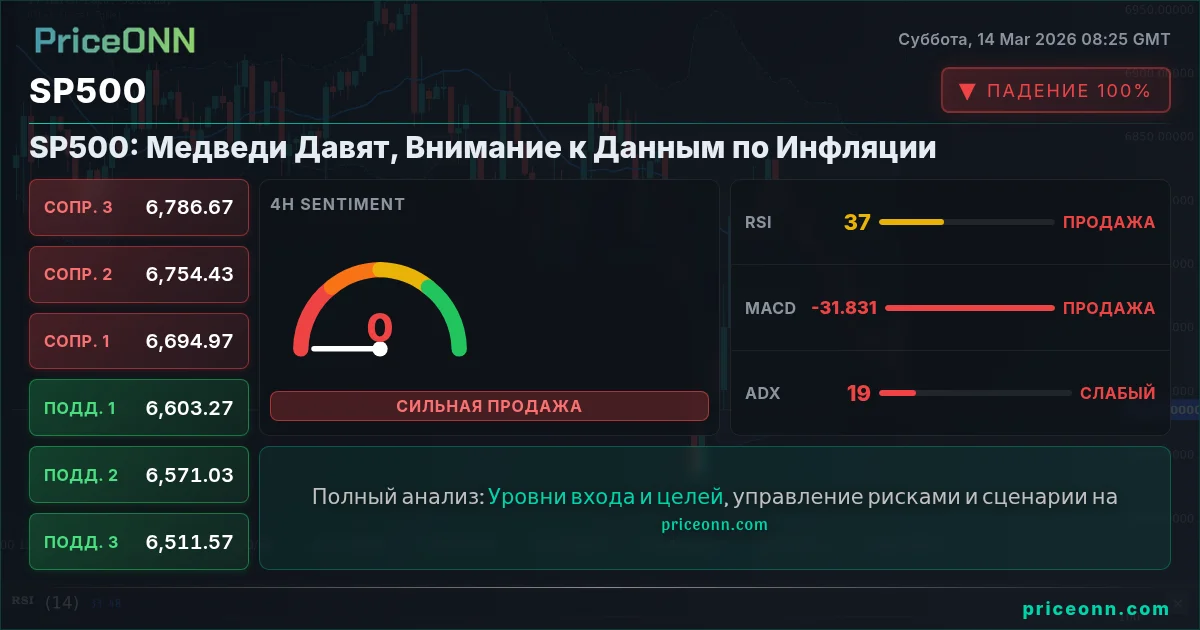
SP500 торгуется на уровне $6,625.30, снизившись на -0.81% за день, поскольку участники рынка готовятся к публикации ключевых экономических данных на следующей неделе. Индекс сталкивается с препятствиями в виде укрепления доллара и эскалации геополитической напряженности, что побуждает к переходу в активы-убежища. Основное внимание сейчас сосредоточено на предстоящих данных по индексу потребительских цен (CPI), которые могут существенно повлиять на решения Федеральной резервной системы в области денежно-кредитной политики. Анализ SP500 сегодня показывает преобладание медвежьих настроений.
- SP500 снизился на -0.81% до $6,625.30 на фоне неприятия риска.
- Критический уровень поддержки, за которым стоит следить, находится на отметке $6,614.43, протестирован внутри дня.
- Гистограмма MACD указывает на отрицательный импульс, сигнализируя о дальнейшем потенциале снижения.
- Ожидания по ставкам ФРС и сила DXY определяют корреляцию SP500.
Бычий Сценарий: Восстановление Выше $6,742.23
Чтобы быки вернули контроль, SP500 должен решительно пробить уровень сопротивления $6,742.23 на 4-часовом графике. Это сигнализирует об изменении импульса и потенциально откроет путь для повторного тестирования недавних максимумов. Успешный прорыв выше $6,742.23 может нацелиться на уровни сопротивления $6,769.57 и $6,806.13, предлагая потенциальный рост для внутридневных или свинг-трейдеров. RSI, в настоящее время находящийся на уровне 37.5 на 4-часовом таймфрейме, должен подняться выше 50, чтобы подтвердить бычий импульс. Этот сценарий, вероятно, будет обусловлен позитивными новостями или «голубиным» сдвигом в ожиданиях относительно ФРС.
Однако этот бычий сценарий зависит от нескольких факторов. Во-первых, необходимо улучшить аппетит к риску, что может быть вызвано деэскалацией геополитической напряженности или позитивными отчетами о прибылях. Во-вторых, доллар должен ослабнуть, поскольку сильный доллар обычно оказывает понижательное давление на акции. DXY в настоящее время находится на уровне 100.2, и движение ниже 99.78 будет положительным знаком для SP500. В-третьих, предстоящие данные по CPI должны оказаться ниже ожиданий, что ослабит опасения по поводу инфляции и потенциально побудит ФРС занять более осторожный подход к повышению ставок.
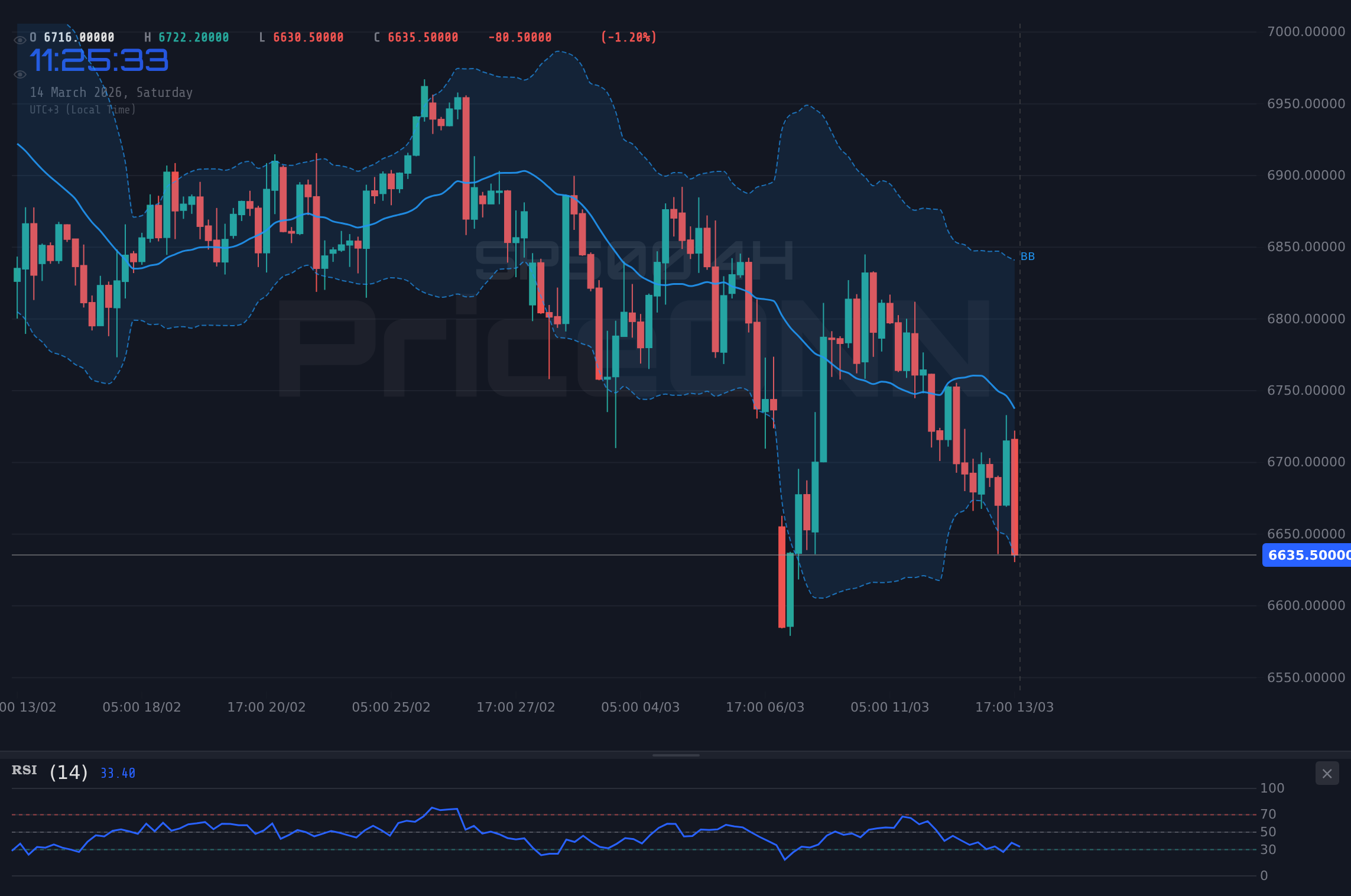
Если эти условия будут выполнены, SP500 может продемонстрировать значительное восстановление. Однако важно управлять рисками и дождаться подтверждения, прежде чем открывать длинные позиции. Прорыв выше $6,742.23 с увеличением объема будет сильным сигналом того, что быки вернулись к контролю.
Медвежий Контроль: Прорыв Ниже $6,614.43
В настоящее время медведи имеют преимущество, поскольку SP500 торгуется ниже своих ключевых скользящих средних, а гистограмма MACD находится в отрицательной зоне. Чтобы медвежий сценарий реализовался, SP500 должен пробить уровень поддержки $6,614.43 на 1-часовом графике. Это подтвердит нисходящий тренд и потенциально вызовет дальнейшую распродажу. Прорыв ниже $6,614.43 может нацелиться на уровни поддержки $6,606.90 и $6,547.60 на дневном графике, предлагая потенциал снижения для внутридневных или свинг-трейдеров. ADX, в настоящее время находящийся на уровне 24.69 на 1-часовом таймфрейме, указывает на умеренный нисходящий тренд.
Несколько факторов могут способствовать медвежьему исходу. Во-первых, доллар может продолжать укрепляться, оказывая дальнейшее давление на акции. Во-вторых, геополитическая напряженность может усилиться, что приведет к усилению неприятия риска. В-третьих, предстоящие данные по CPI могут оказаться выше ожиданий, что усилит опасения по поводу инфляции и потенциально побудит ФРС занять более «ястребиный» подход к повышению ставок. По данным Reuters, представители ФРС подчеркнули, что инфляция остается «упорной», что говорит о готовности центрального банка принять дальнейшие меры в случае необходимости.
Если эти условия будут выполнены, SP500 может испытать значительное снижение. Однако важно управлять рисками и дождаться подтверждения, прежде чем открывать короткие позиции. Прорыв ниже $6,614.43 с увеличением объема будет сильным сигналом того, что медведи контролируют ситуацию.
Ожидание: Диапазон Между $6,614.43 и $6,742.23
В отсутствие явного катализатора SP500 может оставаться в диапазоне между уровнем поддержки $6,614.43 и уровнем сопротивления $6,742.23. Этот сценарий, вероятно, будет характеризоваться нестабильным движением цен и нерешительностью среди участников рынка. RSI, в настоящее время колеблющийся около 35-40 на более коротких таймфреймах, предполагает, что рынок не является ни перекупленным, ни перепроданным. Осциллятор Stochastic, с K=8.97 и D=23.59, указывает на медвежий сигнал на 1H таймфрейме, но 4H таймфрейм показывает K>D.
Несколько факторов могут способствовать формированию диапазона. Во-первых, участники рынка могут ждать предстоящих данных по CPI, прежде чем предпринимать какие-либо значительные шаги. Во-вторых, геополитическая напряженность может оставаться повышенной, создавая неопределенность и препятствуя принятию рисков. В-третьих, сезон отчетности может быть относительно спокойным, без каких-либо серьезных катализаторов для движения рынка в любом направлении.
В этом сценарии трейдеры могут сосредоточиться на краткосрочных торговых стратегиях, таких как покупка на поддержке и продажа на сопротивлении. Однако важно проявлять осторожность и управлять рисками, поскольку рынки, ограниченные диапазоном, могут быть подвержены внезапным прорывам или провалам. Терпение и дисциплина являются ключевыми в этой среде.
Наиболее Вероятный Сценарий: Медвежий Импульс с Вероятностью 50%
Учитывая текущие рыночные условия, наиболее вероятным сценарием является продолжение медвежьего импульса с оценочной вероятностью 50%. Укрепление доллара, повышенная геополитическая напряженность и возможность выхода данных по CPI выше ожиданий указывают на дальнейший риск снижения для SP500. Сигнал «продавать», подаваемый скользящими средними, поддерживает этот прогноз. Внутридневной минимум SP500 на уровне 6621.70 является уровнем, за которым стоит следить, поскольку прорыв ниже этого уровня может сигнализировать о дальнейшей слабости.
Однако важно признать возможность бычьего разворота или диапазона. «Голубиный» сдвиг в ожиданиях относительно ФРС или деэскалация геополитической напряженности могут спровоцировать ралли SP500. Точно так же отсутствие каких-либо серьезных катализаторов может привести к периоду консолидации. Вероятность других сценариев составляет 30% и 20% соответственно.
Ключевые Триггеры, за Которыми Стоит Следить на Этой Неделе
Несколько ключевых событий и публикаций данных могут повлиять на динамику цен SP500 на этой неделе. Прежде всего, за предстоящими данными по CPI будут внимательно следить, чтобы получить подсказки о дальнейших действиях ФРС. Более высокое, чем ожидалось, значение может усилить опасения по поводу инфляции и побудить ФРС занять более «ястребиную» позицию, оказывая понижательное давление на акции. И наоборот, более низкое, чем ожидалось, значение может ослабить опасения по поводу инфляции и потенциально привести к ралли SP500.
Во-вторых, любые события на геополитической арене также могут оказать существенное влияние на рынок. Эскалация напряженности может привести к усилению неприятия риска и бегству в безопасные активы, в то время как деэскалация может повысить аппетит к риску и поддержать акции. Тот факт, что нефть приближается к 100 долларам за баррель из-за напряженности на Ближнем Востоке, согласно недавним сообщениям, является фактором, который нельзя игнорировать. Наконец, любые крупные объявления о доходах или корпоративные новости также могут сдвинуть рынок. Трейдерам следует уделять пристальное внимание этим триггерам и соответствующим образом корректировать свои позиции.
| Сценарий | Триггер | Цель | Вероятность |
|---|---|---|---|
| Бычий | Прорыв выше $6,742.23 | $6,769.57 / $6,806.13 | 20% |
| Медвежий | Прорыв ниже $6,614.43 | $6,606.90 / $6,547.60 | 50% |
| Диапазон | Остается между $6,614.43 и $6,742.23 | N/A | 30% |
Часто Задаваемые Вопросы: Анализ SP500
Что произойдет, если SP500 пробьет поддержку на уровне $6,614.43?
Если SP500 пробьет уровень поддержки $6,614.43, это может спровоцировать дальнейшую распродажу, потенциально нацелившись на уровни поддержки $6,606.90 и $6,547.60 на дневном графике. Этот пробой подтвердит нисходящий тренд и предположит, что медведи контролируют ситуацию.
Стоит ли покупать SP500 на текущих уровнях $6,625.30, учитывая RSI на уровне 34.97?
При RSI на уровне 34.97 на 1-часовом графике SP500 еще не находится в состоянии перепроданности, что предполагает возможность дальнейшего снижения. Хотя можно рассмотреть контр-трендовый подход, разумно дождаться подтверждения бычьего разворота, прежде чем открывать длинные позиции. Решительный прорыв выше $6,742.23 будет более убедительным сигналом к покупке.
Является ли отрицательный сигнал MACD надежным индикатором дальнейшего снижения SP500?
Отрицательная гистограмма MACD действительно предполагает, что SP500 испытывает отрицательный импульс, но важно учитывать и другие факторы. Также следует учитывать силу нисходящего тренда, как показывает ADX, и общее настроение рынка. Совпадение медвежьих сигналов повысит надежность сигнала MACD.
Как предстоящие данные по CPI повлияют на SP500 на этой неделе?
Предстоящие данные по CPI являются важным катализатором, который может существенно повлиять на SP500 на этой неделе. Более высокое, чем ожидалось, значение может усилить опасения по поводу инфляции и побудить ФРС занять более «ястребиную» позицию, оказывая понижательное давление на акции. И наоборот, более низкое, чем ожидалось, значение может ослабить опасения по поводу инфляции и потенциально привести к ралли SP500.
Отслеживайте рынки в реальном времени
ИИ-анализ и данные в реальном времени.