
Russia expands military cooperation with Iran
 PriceONN Editorial Desk
Multi-source verification
PriceONN Editorial Desk
Multi-source verification
Geopolitical Ties Deepen Amidst Shifting Alliances
The scope of this deepening alliance extends beyond mere information sharing. Sources point to Russia also furnishing Iran with improved drone technology. This transfer of advanced equipment could significantly amplify Iran's operational effectiveness and its capacity to project power in a volatile region.
The Mechanics of WTI Crude Oil Pricing
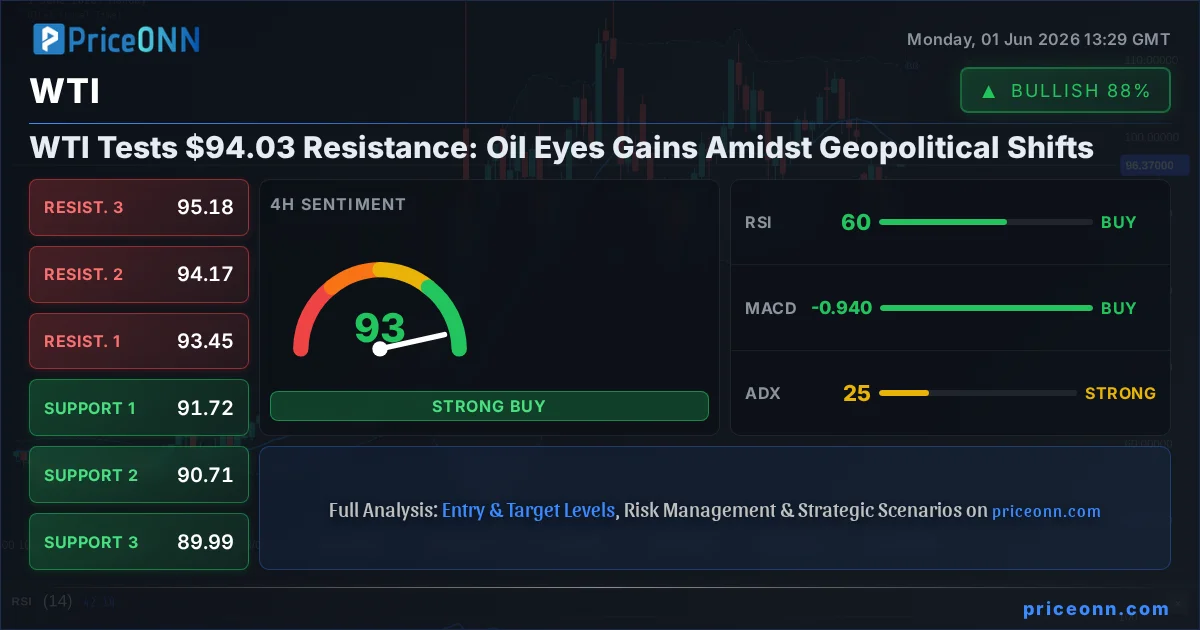
Understanding the benchmark West Texas Intermediate (WTI) crude oil is fundamental to grasping global energy dynamics. Often referred to as "light" and "sweet" due to its low density and minimal sulfur content, WTI is a premium grade oil that is relatively easy to process into valuable fuels.
This U.S.-sourced crude is primarily distributed through a vital network culminating in Cushing, Oklahoma, a hub famously dubbed "The Pipeline Crossroads of the World." The price of WTI serves as a widely quoted benchmark, reflecting broader trends in the international oil market.
Key Drivers of WTI Price Fluctuations
Like any traded commodity, the price of WTI oil is fundamentally dictated by the interplay of supply and demand. Global economic health plays a crucial role; robust worldwide growth typically spurs higher demand for energy, pushing prices upward. Conversely, economic downturns often lead to decreased consumption and downward price pressure.
Geopolitical events introduce significant volatility. Political instability, armed conflicts, and international sanctions can directly disrupt the flow of oil, impacting global supply levels and consequently, prices. The strategic decisions made by major oil-producing nations, particularly within the Organization of the Petroleum Exporting Countries (OPEC), wield considerable influence over WTI pricing.
Furthermore, the strength of the US Dollar acts as an indirect but potent factor. Since crude oil transactions are predominantly settled in dollars, a weaker dollar makes oil purchases more affordable for holders of other currencies, potentially increasing demand and driving prices higher. A stronger dollar typically has the opposite effect.
Inventory Reports and OPEC's Influence
Market participants closely monitor weekly inventory reports released by the American Petroleum Institute (API) and the U.S. Energy Information Administration (EIA). These reports offer insights into the balance between oil supply and demand. A reported decrease in stockpiles can signal robust demand, potentially leading to price increases. Conversely, an increase in stored oil often suggests oversupply, which can depress prices.
The API releases its data every Tuesday, with the EIA following the next day. While their figures are usually closely aligned, the EIA's government-backed data is generally considered the more authoritative source.
The collective actions of OPEC, an cartel of 12 oil-producing countries, significantly shape market conditions. Through twice-yearly meetings, OPEC members establish production quotas. When OPEC opts to reduce output, it tightens global supply, often resulting in higher oil prices. Conversely, an increase in production by OPEC members tends to lower prices.
The group's influence is further amplified through OPEC+, which includes ten additional non-OPEC nations, most notably Russia. This broader coalition has an even greater capacity to impact global oil supply and price dynamics.
Market Ripple Effects
The expanding military cooperation between Russia and Iran, while seemingly a regional geopolitical development, carries potential implications that ripple across global markets, particularly in the energy sector. The reported transfer of advanced drone technology and satellite imagery to Iran, aimed at countering U.S. forces, introduces a new layer of tension in the Middle East. Such heightened geopolitical risk can directly influence crude oil prices. Traders will be closely watching for any escalation that could threaten supply routes or disrupt production in key oil-producing nations within the region. This could lead to increased volatility in Brent Crude and WTI futures. Additionally, increased regional instability often correlates with a move towards safe-haven assets. Investors might consider increased exposure to gold, and conversely, a potential weakening of the US Dollar Index (DXY) if the geopolitical uncertainty drives capital away from U.S. assets or if perceived inflation risks increase. The broader energy sector, including oil and gas exploration and production companies, could also experience price swings based on shifting supply expectations and risk premiums.
Track markets in real-time
Empower your investment decisions with AI-powered analysis, technical indicators and real-time price data.
Join Our Telegram Channel
Get breaking market news, AI analysis and trading signals delivered instantly to your Telegram.
Join Channel PriceONN News
(RTTNews) - Oil prices traded sharply lower on Wednesday as U.S.-Iran talks continued despite new American attacks on missile sites and mine-laying ships in the Strait of Hormuz.
PriceONN News
Gold futures broke above $4,500 per ounce on Friday, driven by increasing optimism for a de-escalation in the U.S.-Iran conflict and the potential reopening of the Strait of Hormuz. Silver also saw significant gains, reflecting a broader shift towards precious metals as geopolitical tensions ease.
PriceONN News
(RTTNews) - After moving sharply lower earlier in the day, the price of gold has shown a significant turnaround over the course of the trading session on Thursday.
PriceONN News
Gold prices fell below the $4500 mark on Wednesday, extending previous losses as oil prices tumbled and geopolitical tensions between the US and Iran remained a key market driver. Investors are weighing inflation concerns against hopes of de-escalation.
PriceONN News
Gold prices surged by 1% to approximately $4,556 on Monday as market participants reacted to developing news of a potential US-Iran peace deal. The speculation weakened the US Dollar and sent oil prices tumbling.
PriceONN News
(RTTNews) - Gold prices traded higher on Monday, oil prices tumbled nearly 5 percent and the dollar hovered near a one-week low after U.S. President Donald Trump said on Saturday a peace deal with Iran had been "largely negotiated."
PriceONN News
Gold prices fell on Friday as concerns over crude oil inventories and the prolonged closure of the Strait of Hormuz fueled inflation anxieties, overshadowing U.S.-Iran peace talks. The June Comex Gold contract settled down 0.55% at $4,517.40.
PriceONN News
(RTTNews) - Gold prices have edged lower on Friday as crude oil inventory concerns and the extended delay in the reopening of the Strait of Hormuz increased inflation-related apprehensions, overshadowing the positive signals from the developments in the U.S.-Iran negotiations.
PriceONN News
(RTTNews) - Gold prices have soared on Friday amid rising optimism about an end to the Middle East war with the chances of reopening of the Strait of Hormuz and resumption of oil and energy trade growing stronger.
PriceONN News
(RTTNews) - Gold held firm above $4,500 an ounce on Friday, the dollar headed for a small weekly loss on improved risk sentiment in markets, and oil prices slipped to a one-month low amid investor optimism that the Middle East conflict is inching toward an end and that the reopen
PriceONN News
Gold prices experienced a significant decline on Wednesday, falling over 1% as diplomatic optimism surrounding U.S.-Iran talks grew, despite ongoing military actions. The June gold contract settled at $4,444.50.
PriceONN News
Gold prices experienced a significant downturn, shedding 2% this week to settle near $4,444.50 per ounce. This decline is attributed to evolving U.S.-Iran diplomatic efforts and concerns over potential central bank rate hikes.