

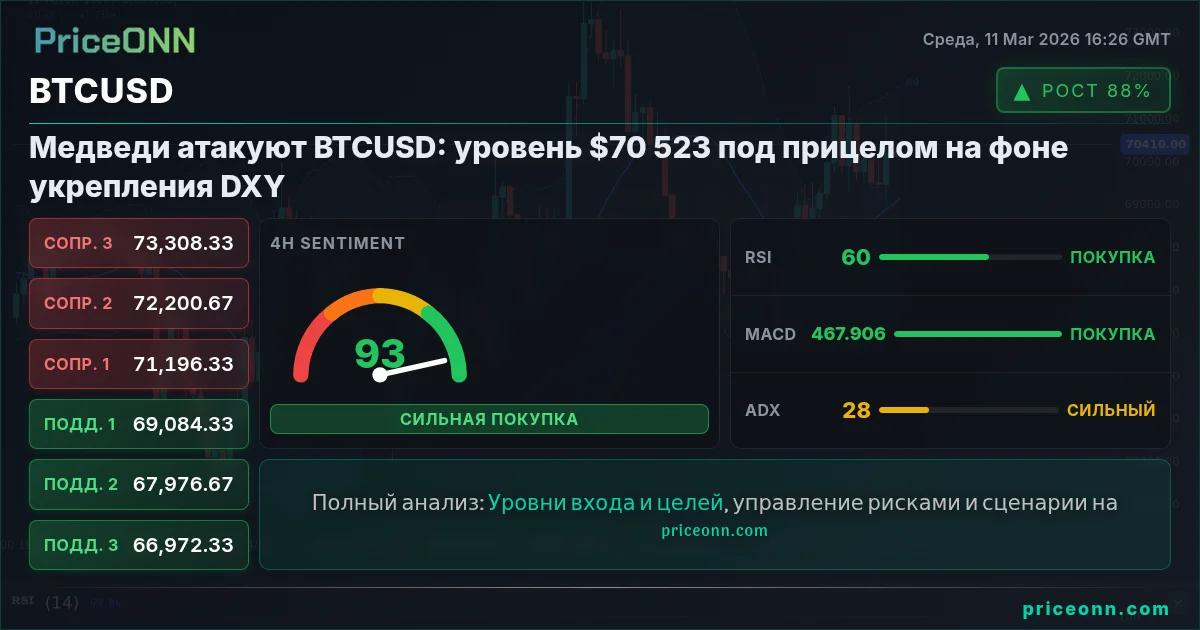
Биткоин сегодня находится под давлением, тестируя критический уровень $70 523, поскольку укрепление индекса доллара (DXY) усиливает медвежьи настроения. Быки и медведи ведут ожесточенную борьбу в этой ключевой точке, и ближайшая динамика BTCUSD находится под вопросом. Сейчас главный вопрос в том, смогут ли быки защитить эту важную поддержку, или медведи преуспеют в дальнейшем снижении цены. Кстати, анализ биткоин сегодня показывает повышенную волатильность.
- RSI на 1-часовом графике на уровне 57.5 предполагает нейтральный импульс с потенциалом для дальнейшего снижения.
- Критическая поддержка находится на уровне $70 042.33; прорыв ниже может спровоцировать более глубокую коррекцию.
- MACD на 4-часовом графике остается положительным, но медвежье пересечение будет сигнализировать о слабости.
- Укрепление DXY оказывает давление на BTCUSD; следите за потенциальным разделением, если вернется аппетит к риску.
Бычий сценарий для BTCUSD
Несмотря на текущее давление продаж, есть несколько причин сохранять оптимизм в отношении перспектив Биткоина. Фундаментальные факторы остаются благоприятными, с ростом институционального принятия и растущим признанием Биткоина в качестве средства сохранения стоимости. С технической точки зрения, хотя 1-часовой и 4-часовой графики демонстрируют некоторую слабость, дневной график предполагает формирование потенциального дна. RSI на дневном графике находится на уровне 51.81, что указывает на нейтральные условия с возможностью роста. Кроме того, стохастический осциллятор на дневном таймфрейме показывает бычье пересечение (K=51.14, D=50.23), что предполагает потенциальный разворот тренда. Скальперы могут искать возможности для быстрых длинных позиций выше незначительной поддержки, в то время как свинг-трейдеры могут дождаться подтверждения дневного более высокого минимума, прежде чем открывать позиции.
Положительный MACD на 1-дневном таймфрейме, хотя и с отрицательным импульсом, предполагает, что общий бычий тренд может все еще оставаться в силе, несмотря на текущий откат. Долгосрочные инвесторы могут рассматривать это снижение как возможность для покупки, при условии, что ключевые уровни поддержки удержатся. Важно учитывать, что Биткоин продемонстрировал замечательную устойчивость в прошлом, отскакивая от значительных коррекций и достигая новых исторических максимумов. Общие настроения на рынке остаются позитивными, и многие аналитики прогнозируют дальнейший рост Биткоина в долгосрочной перспективе. Предстоящее событие халвинга также является потенциальным катализатором дальнейшего роста цен. Ключевым моментом для быков является защита уровня $70 042.33, чтобы предотвратить более глубокую коррекцию. Если этот уровень устоит, мы можем увидеть отскок обратно к уровню сопротивления $71 051.33.
Медвежий сценарий для BTCUSD
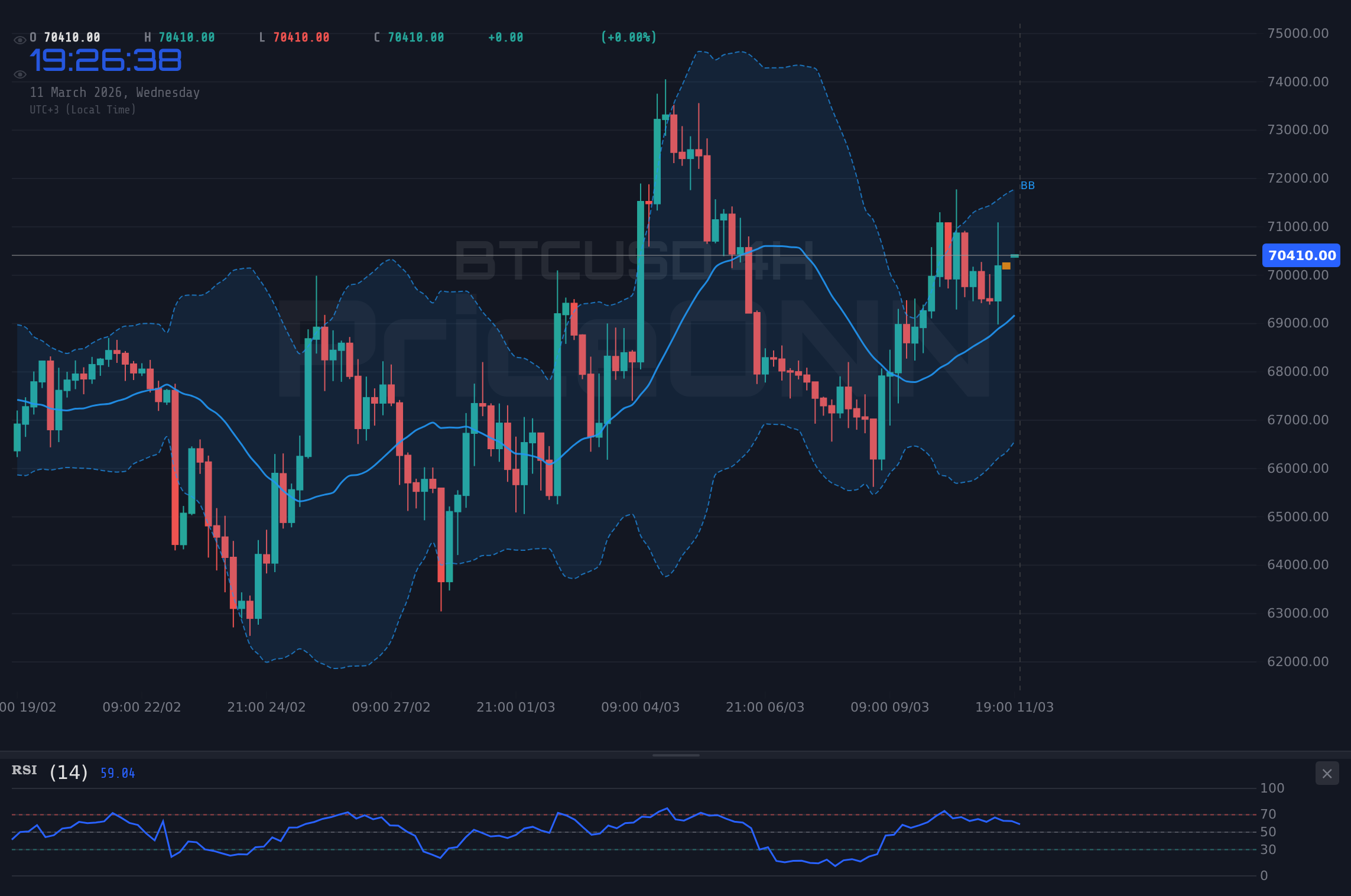
С другой стороны, есть веские основания полагать, что Биткоин может столкнуться с дальнейшим снижением в ближайшей перспективе. Укрепление индекса доллара (DXY), в настоящее время находящегося на уровне 98.98, оказывает значительное давление на BTCUSD. Исторически сложилось так, что сильный доллар часто совпадал со снижением цен на Биткоин, поскольку Биткоин часто рассматривается как альтернатива доллару. Более сильный доллар делает Биткоин относительно более дорогим для инвесторов, владеющих другими валютами. Общие настроения неприятия риска на рынке также оказывают давление на Биткоин, при этом SP500 сегодня снизился на 0.48%. Инвесторы становятся все более осторожными из-за опасений по поводу инфляции и потенциального повышения процентных ставок Федеральной резервной системой.
С технической точки зрения, 1-часовой график демонстрирует значительную слабость, при этом цена торгуется ниже средней полосы полос Боллинджера. RSI на 1-часовом графике находится на уровне 42.7, что указывает на нейтральный импульс с медвежьим уклоном. Скальперы, вероятно, будут открывать короткие позиции на ралли к 1-часовому сопротивлению на уровне $71 051.33. Свинг-трейдеры могут искать возможности для открытия коротких позиций ниже уровня поддержки $70 042.33, нацеливаясь на более низкие уровни. ADX на 1-часовом графике находится на слабом уровне 16.05, что предполагает, что консолидация более вероятна, чем прорыв. Критическим уровнем, за которым следует следить, является $70 042.33; прорыв ниже этого уровня может спровоцировать резкую распродажу к следующему уровню поддержки на уровне $69 503.67. Недавние новости о том, что EUR/USD нацелен на 1.1700, в то время как USD/JPY консолидируется ниже 159.00, предполагают более широкое укрепление доллара, которое может продолжать оказывать давление на BTCUSD.
Технические факторы как арбитр: анализ нескольких таймфреймов
Чтобы получить более четкое представление о вероятном направлении BTCUSD, важно учитывать несколько таймфреймов. Как упоминалось ранее, 1-часовой график показывает медвежьи сигналы, в то время как дневной график предполагает формирование потенциального дна. 4-часовой график представляет собой смешанную картину. RSI на 4-часовом графике находится на уровне 58.05, что указывает на нейтральный импульс с бычьим уклоном, однако ADX на 4-часовом графике находится на уровне 26.51, что указывает на сильный восходящий тренд. MACD на 4-часовом графике остается положительным, но медвежье пересечение будет сигнализировать о слабости. Стохастический осциллятор на 4-часовом графике показывает медвежье пересечение (K=41.08, D=57.56), что предполагает потенциальный разворот тренда. Ключевым моментом является наблюдение за подтверждением этих сигналов на нескольких таймфреймах. Если 1-часовой график продолжит демонстрировать слабость, а 4-часовой MACD пересечется по-медвежьи, это увеличит вероятность более глубокой коррекции к уровню $69 503.67. Общий сигнал бычий, но с осторожностью.
Однако 1-дневной график - это другая история. 1-дневной график отображает сильный восходящий тренд с ADX 28.25 и RSI 51.81, что указывает на нейтральные условия с возможностью роста. Это означает, что долгосрочный тренд BTCUSD остается бычьим, и любые краткосрочные коррекции следует рассматривать как возможности для покупки. Долгосрочным инвесторам следует ориентироваться на 1-дневной график при принятии инвестиционных решений, а не на 1-часовой или 4-часовой графики. Также важно учитывать влияние предстоящих публикаций экономических данных на BTCUSD. Сегодня выходят данные по индексу цен производителей (PPI) в США, которые окажут влияние на цену. Если число PPI окажется выше ожидаемого, это может привести к дальнейшему укреплению доллара и оказать давление на BTCUSD. И наоборот, если число PPI окажется ниже ожидаемого, это может ослабить доллар и поддержать BTCUSD.
Корреляционный анализ: DXY, SP500 и нефть
Понимание корреляций между BTCUSD и другими классами активов имеет решающее значение для принятия обоснованных торговых решений. Как упоминалось ранее, BTCUSD имеет сильную обратную корреляцию с индексом доллара (DXY). Растущий DXY обычно оказывает давление на BTCUSD, в то время как падающий DXY имеет тенденцию поддерживать BTCUSD. DXY в настоящее время находится на уровне 98.98, увеличившись на 0.45% за день, что способствует текущему давлению продаж на BTCUSD. Важно помнить, что эти корреляции могут нарушаться во время периодов крайней рыночной волатильности или неожиданных новостных событий.
BTCUSD также имеет тенденцию коррелировать с аппетитом к риску на более широком рынке. Когда SP500 растет, это обычно указывает на то, что инвесторы чувствуют себя оптимистично и более охотно идут на риск, что может поддержать BTCUSD. Однако, когда SP500 падает, это говорит о том, что инвесторы становятся более не склонными к риску, что может оказать давление на BTCUSD. SP500 в настоящее время снизился на 0.48% за день, что также способствует текущему давлению продаж на BTCUSD. Наконец, цены на нефть также могут оказывать влияние на BTCUSD, поскольку они часто рассматриваются как барометр глобального экономического роста. Рост цен на нефть может привести к более высоким инфляционным ожиданиям, что может оказать давление на рисковые активы, такие как Биткоин. Нефть WTI в настоящее время торгуется на уровне $87.97, увеличившись на 1.94% за день, что может усилить медвежьи настроения вокруг BTCUSD.
Вердикт: Осторожность оправдана, но долгосрочный бычий тренд сохраняется
Учитывая противоречивые сигналы с нескольких таймфреймов и влияние внешних факторов, таких как DXY и SP500, в ближайшей перспективе оправдана осторожность. Непосредственная точка давления для Биткоина находится на уровне $70 523. Решительный прорыв ниже $70 042.33 откроет путь для тестирования $69 503.67, в то время как устойчивое движение выше $71 051.33 может проложить путь для повторного тестирования недавних максимумов. Текущая техническая картина неоднозначна, но долгосрочный бычий тренд остается в силе. Терпеливым инвесторам следует дождаться подтверждения дна, прежде чем увеличивать свои позиции. Также важно тщательно управлять рисками, используя стоп-лосс ордера для защиты от потенциального снижения. Ключом к успеху на этом рынке является сохранение гибкости и адаптация к меняющимся условиям. Недавние новости о том, что золото торгуется с осторожностью вблизи $5 190 в преддверии публикации данных по инфляции в США, указывают на то, что инвесторы ищут тихие гавани, что может принести пользу Биткоину в долгосрочной перспективе.
Часто задаваемые вопросы: Анализ BTCUSD
Что произойдет, если BTCUSD пробьет поддержку на уровне $70 042.33?
Прорыв поддержки на уровне $70 042.33, вероятно, спровоцирует дальнейшую распродажу, потенциально приведя к тестированию следующего уровня поддержки на уровне $69 503.67. Этот сценарий будет подтвержден медвежьим пересечением на 4-часовом MACD.
Стоит ли покупать BTCUSD на текущих уровнях $70 523, учитывая силу DXY?
Учитывая текущую силу DXY, оправдана осторожность. В то время как долгосрочные инвесторы могут рассмотреть возможность накопления на этих уровнях, краткосрочным трейдерам следует дождаться отката или прорыва выше сопротивления $71 051.33, прежде чем открывать длинные позиции.
Является ли RSI на уровне 57.5 на 1-часовом графике сигналом к продаже BTCUSD?
RSI на уровне 57.5 на 1-часовом графике не обязательно является сигналом к продаже, но это говорит о том, что бычий импульс ослабевает. Трейдерам следует следить за подтверждением разворота медвежьего тренда, прежде чем рассматривать короткие позиции.
Как данные по индексу цен производителей (PPI) в США повлияют на BTCUSD на этой неделе?
Если данные по индексу цен производителей (PPI) в США окажутся выше ожидаемых, это может привести к дальнейшему укреплению доллара и оказать давление на BTCUSD. И наоборот, если данные по индексу цен производителей (PPI) окажутся ниже ожидаемых, это может ослабить доллар и поддержать BTCUSD. Рынок будет внимательно следить за этой публикацией данных, чтобы получить подсказки о будущем направлении денежно-кредитной политики.
Технический Обзор
| Индикатор | Значение | Сигнал |
|---|---|---|
| RSI (14) | 57.5 | Нейтральный |
| MACD Histogram | Положительный | Бычий |
| Stochastic | 68.7 | Бычий |
| ADX | 16.05 | Слабый |
| Bollinger | Средняя полоса | Следить |
Ключевые уровни
Уровни поддержки
Уровни сопротивления
Отслеживайте рынки в реальном времени
ИИ-анализ и данные в реальном времени.