

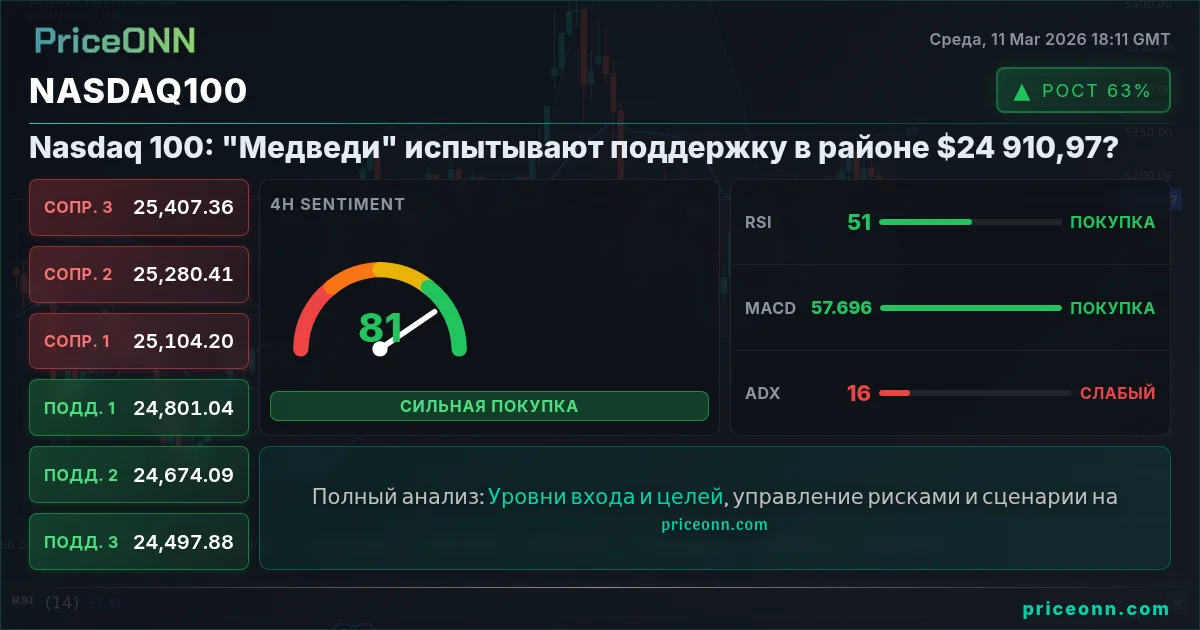
Индекс Nasdaq100 в настоящее время колеблется около отметки $24 910,97, сталкиваясь с усилением давления со стороны "медведей", поскольку трейдеры оценивают влияние последних экономических данных и ожидают дальнейших катализаторов. Индекс демонстрирует волатильность, и "медведи", похоже, берут контроль в свои руки, тестируя критические уровни поддержки.
- RSI на уровне 46.39 указывает на ослабление "бычьего" импульса, что говорит о потенциальном изменении настроений на рынке.
- Критическая поддержка находится на уровне $24 795.58, пробой которой может спровоцировать дальнейшее снижение.
- Гистограмма MACD показывает отрицательный импульс, сигнализируя о давлении "медведей" в краткосрочной перспективе.
- Растущий DXY оказывает давление на Nasdaq100, поскольку укрепление доллара оказывает давление на рисковые активы.
Текущие трудности Nasdaq100 можно объяснить стечением нескольких факторов. Индекс доллара (DXY) торгуется на уровне 99, отражая укрепление доллара, что обычно оказывает давление на рисковые активы, такие как акции. Как сообщает Reuters, "Представители ФРС подчеркнули, что инфляция остается 'упорной', что указывает на осторожный подход к денежно-кредитной политике". Эта "ястребиная" позиция Федеральной резервной системы способствует укреплению доллара и оказывает давление на Nasdaq100.
С технической точки зрения, 1-часовой график показывает нейтральный тренд, но RSI на уровне 46.39 предполагает ослабление "бычьего" импульса. Гистограмма MACD также показывает отрицательный импульс, что еще больше усиливает "медвежий" прогноз. Однако ADX находится на слабом уровне 13.58, что указывает на отсутствие сильного тренда, что может привести к нестабильным, ограниченным диапазоном ценовым движениям. Трейдерам следует обратить внимание на ближайшее сопротивление на уровне 25021 и поддержку на уровне 24909.68. Пробой ниже этой поддержки может спровоцировать более резкое снижение.
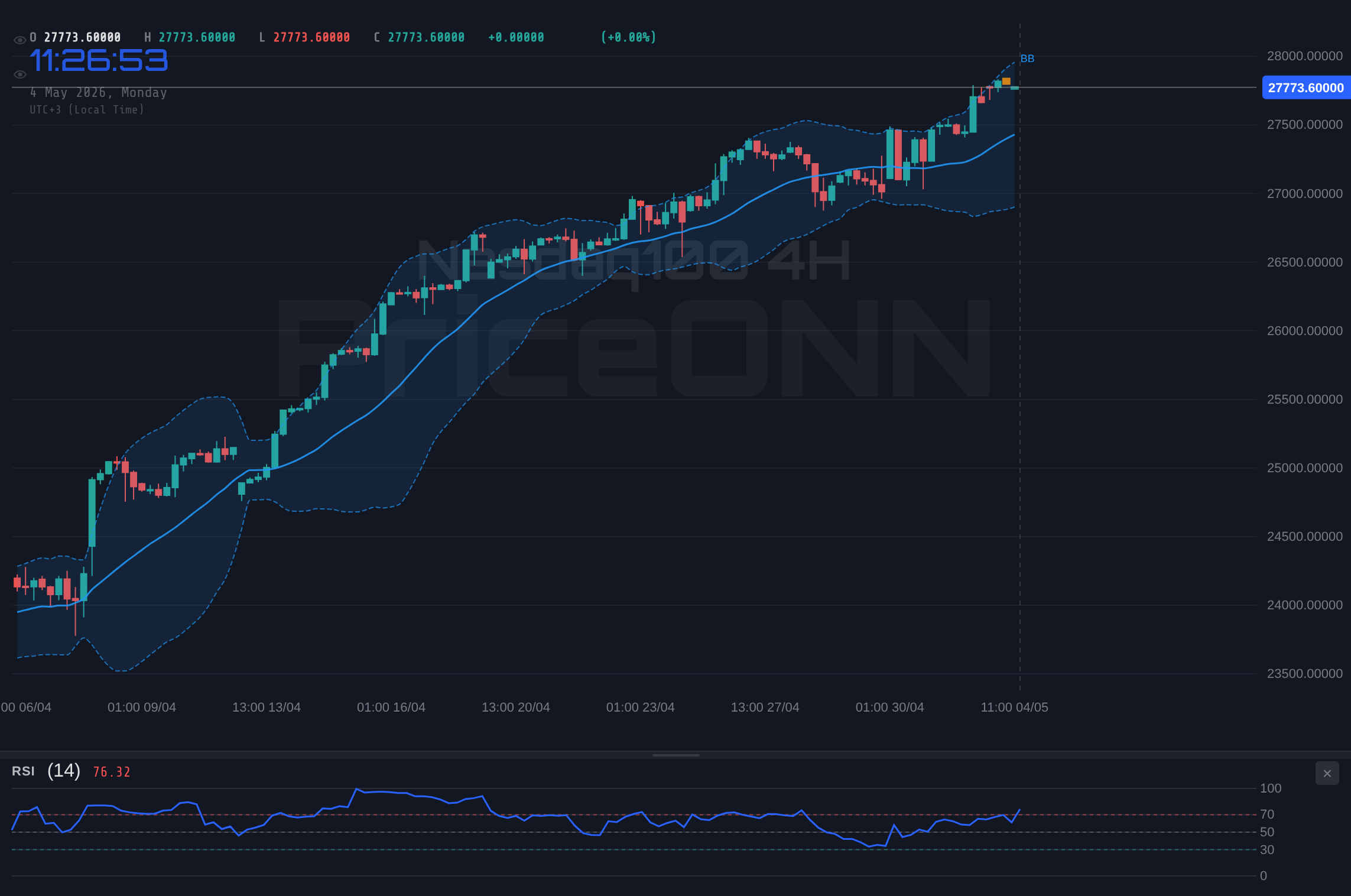
На 4-часовом таймфрейме тренд также нейтральный, RSI на уровне 51.14 предполагает потенциал для дальнейшего роста, если "бычий" импульс сохранится. Однако индикатор Stochastic показывает %K на уровне 35.15 и %D на уровне 65.88, что указывает на потенциальную перекупленность и возможный откат. ADX находится на уровне 15.83, сигнализируя о слабом тренде и на этом таймфрейме. Ключевые уровни, за которыми следует следить на 4-часовом графике, включают сопротивление на уровне 25153.58 и поддержку на уровне 24934.32.
Глядя на дневной график, тренд Nasdaq100 демонстрирует "медвежий" уклон. RSI находится на уровне 48.3, что указывает на то, что еще есть место для дальнейшего снижения, прежде чем достичь зоны перепроданности. MACD показывает положительный импульс, в то время как индикатор Stochastic показывает %K на уровне 71.24 и %D на уровне 55.62, что предполагает потенциальную перекупленность. Критические уровни, за которыми следует следить на дневном графике, включают сопротивление на уровне 25178.03 и поддержку на уровне 24795.58. Пробой ниже этой поддержки может привести к значительной распродаже.
Первый уровень поддержки для Nasdaq100 на 1-часовом графике находится на уровне 24909.68. 4-часовая поддержка находится на уровне 24934.32, а дневная поддержка - на уровне 24795.58. Решительный пробой ниже этого уровня может спровоцировать более глубокую коррекцию. Текущее снижение Nasdaq100 соответствует более широкой распродаже на рынке акций, о чем свидетельствует снижение S&P 500 на 0.48% сегодня, торгуясь на уровне 6757.95, и падение Dow Jones на 0.86% до 47309.5.
Общие настроения на рынке, по-видимому, смещаются в сторону неприятия риска, что обусловлено опасениями по поводу роста процентных ставок и устойчивой инфляции. Как показывают данные Bloomberg, инвесторы все чаще закладывают в цены возможность дальнейшего повышения ставок Федеральной резервной системой. Это оказывает понижательное давление на акции и поддерживает активы-убежища, такие как доллар США.
Учитывая противоречивые сигналы и общие "медвежьи" настроения, разумным представляется занять позицию ВНЕ ЗОНЫ НАБЛЮДЕНИЯ. ADX на уровне 15.83 указывает на нестабильный, колеблющийся рынок, что делает четкий план направленной торговли рискованным. В то время как RSI и гистограмма MACD согласованы, сигнализируя о давлении "медведей", индикатор Stochastic предполагает потенциальную перекупленность, которая может привести к краткосрочному отскоку. Ключевым уровнем, за которым следует следить, является дневная поддержка на уровне 24795.58. Дневное закрытие ниже этого уровня откроет путь для тестирования более низких уровней поддержки.
С точки зрения анализа настроений рынка, наблюдается явный сдвиг в сторону осторожности. Рост DXY и снижение акций предполагают, что инвесторы сокращают свою подверженность рисковым активам. Это также подтверждается осторожной торговлей золотом, которое колеблется около $5 173,41, поскольку рынки ожидают важных данных по инфляции в США. Предстоящие экономические данные, включая данные по GBP в пятницу, прогноз по которым составляет - , а предыдущее значение - 0.1, могут дать дополнительную информацию о состоянии мировой экономики и повлиять на направление Nasdaq100.
Для скальперов нестабильные условия могут предоставить возможности для краткосрочных сделок в пределах диапазона, но с жесткими ордерами стоп-лосс для управления риском. Свинг-трейдерам следует сохранять терпение и дождаться четкого пробоя либо сопротивления на уровне 25178.03, либо поддержки на уровне 24795.58, прежде чем открывать новые позиции. Долгосрочные инвесторы могут рассматривать текущий откат как возможность для накопления качественных акций по более низким ценам, но также должны помнить о возможности дальнейшего снижения.
Исторически, когда RSI достигает этой зоны на Nasdaq100, исход был неоднозначным, с периодами консолидации, за которыми следовал либо резкий отскок, либо более глубокая коррекция. Этот паттерн в последний раз появлялся в январе 2026 года, когда цена впоследствии консолидировалась в течение нескольких недель, прежде чем в конечном итоге пробиться вверх. Отслеживая Nasdaq100 на протяжении цикла ставок 2024 года, становится очевидно, что индекс очень чувствителен к изменениям в денежно-кредитной политике и экономических данных. Поэтому трейдерам следует уделять пристальное внимание предстоящим объявлениям ФРС и экономическим релизам.
Часто задаваемые вопросы: Анализ Nasdaq100
Что произойдет, если Nasdaq100 пробьет поддержку на уровне $24 795.58?
Если Nasdaq100 пробьет дневную поддержку на уровне $24 795.58, это может спровоцировать более глубокую коррекцию к более низким уровням поддержки, потенциально протестировав отметку 24609.51. Этот сценарий, вероятно, будет вызван усилением "медвежьего" импульса и неприятием риска на более широком рынке.
Стоит ли покупать Nasdaq100 на текущих уровнях $24 910.97, учитывая RSI?
Учитывая текущий RSI на уровне 48.3 и общие "медвежьи" настроения, покупка Nasdaq100 на текущих уровнях представляет собой установку с высоким риском. Было бы более разумно дождаться четкого пробоя сопротивления или подтверждения поддержки, прежде чем открывать длинные позиции.
Является ли RSI на уровне 48.3 сигналом к продаже Nasdaq100 прямо сейчас?
Хотя RSI на уровне 48.3 не является окончательным сигналом к продаже, он предполагает, что "бычий" импульс ослабевает. В сочетании с отрицательной гистограммой MACD это указывает на то, что трейдерам следует проявлять осторожность и рассмотреть возможность сокращения своей подверженности Nasdaq100.
Как предстоящие данные по GBP в пятницу повлияют на Nasdaq100 на этой неделе?
Предстоящие данные по GBP в пятницу могут косвенно повлиять на Nasdaq100, повлияв на общие настроения рынка и склонность к риску. Более слабые, чем ожидалось, данные по GBP могут усугубить опасения по поводу глобального экономического роста и спровоцировать дальнейшее неприятие риска, оказывая понижательное давление на акции.
В заключение, хотя техническая картина остается неоднозначной, формируются привлекательные уровни для долгосрочных инвесторов. Волатильность создает возможности - те, кто подготовлен, будут вознаграждены.
Технический Обзор
| Индикатор | Значение | Сигнал |
|---|---|---|
| RSI (14) | 48.3 | Нейтральный |
| Гистограмма MACD | Отрицательный | "Медвежий" |
| Stochastic | 71.24/55.62 | "Бычий" |
| ADX | 15.83 | Слабый тренд |
| Bollinger | Средняя полоса | Наблюдение |
Ключевые уровни
Уровни поддержки
Уровни сопротивления
Отслеживайте рынки в реальном времени
ИИ-анализ и данные в реальном времени.