

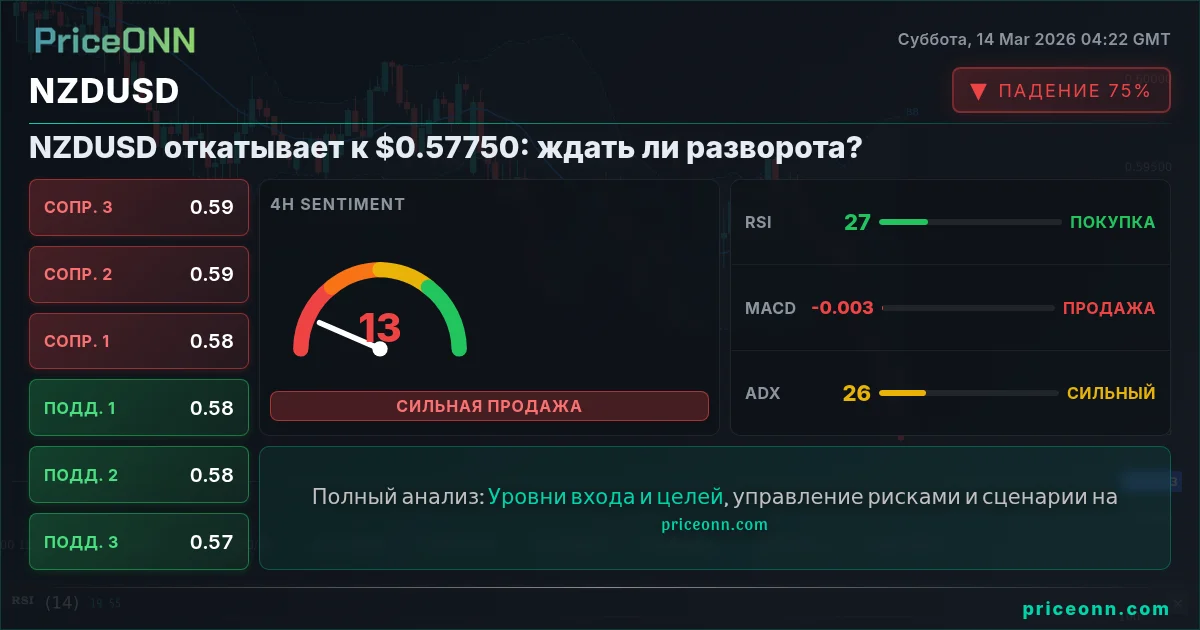
NZDUSD торгуется вблизи $0.57750 – уровня, который на этой неделе стал полем битвы между быками и медведями. Новозеландский доллар с трудом удерживает позиции против укрепляющегося доллара США, находясь под влиянием роста геополитической напряженности и изменения политики центральных банков. В преддверии закрытия недели трейдеры с нетерпением ждут публикации данных по инфляции на следующей неделе, которые могут стать катализатором движения.
- RSI на 1-часовом графике на уровне 21.82 указывает на условия перепроданности, что потенциально сигнализирует о краткосрочном отскоке.
- Критическая поддержка находится на уровне 0.57787, пробой которого может спровоцировать дальнейшее снижение.
- Гистограмма MACD демонстрирует отрицательный импульс, что говорит о преобладании медвежьего давления.
- Предстоящие данные по инфляции являются ключевым фактором для корреляции NZDUSD с DXY, определяющим направление на следующей неделе.
Часовой график показывает сильный нисходящий тренд, при этом ADX на уровне 46.62 подтверждает силу текущего медвежьего импульса. RSI(14) на уровне 21.82 предполагает, что пара находится в глубокой зоне перепроданности, что потенциально создает условия для краткосрочной коррекции. Однако MACD остается прочно в отрицательной зоне, указывая на то, что продавцы все еще контролируют ситуацию. Осциллятор Stochastic, со значениями K на уровне 3.44 и D на уровне 22.58, усиливает состояние перепроданности, но также подчеркивает риск продолжительного нисходящего движения до какого-либо значительного разворота.
Если взглянуть на 4-часовой таймфрейм, тренд выглядит более нейтральным, хотя и с медвежьим уклоном. RSI(14) находится на уровне 29.7, все еще относительно близко к зоне перепроданности. Гистограмма MACD продолжает отображать отрицательный импульс, в то время как осциллятор Stochastic показывает K на уровне 15.26 и D на уровне 7.61, что еще больше подчеркивает потенциал для отскока. Однако значение ADX 23.75 предполагает, что нисходящий тренд теряет силу, намекая на возможный период консолидации перед следующим крупным движением.
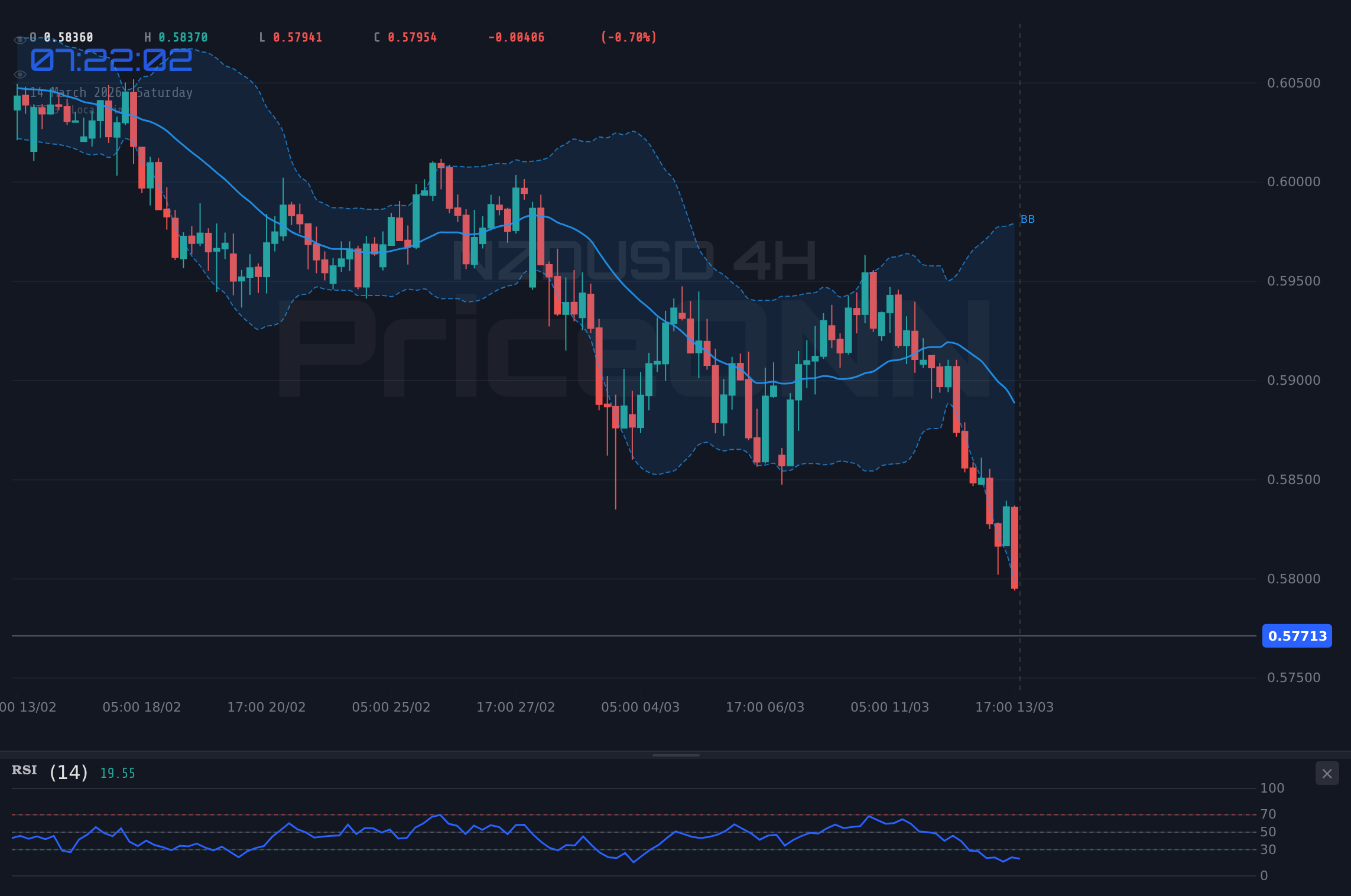
На дневном графике тренд остается нейтральным, пара торгуется ниже своей 200-дневной скользящей средней. RSI(14) на уровне 31.94 сигнализирует о возможности дальнейшего снижения, в то время как гистограмма MACD продолжает печатать отрицательные значения. Осциллятор Stochastic, со значениями K на уровне 17.9 и D на уровне 38.69, указывает на сохраняющееся медвежье давление. Значение ADX 23.64 подчеркивает отсутствие сильного тренда, предполагая, что пара, вероятно, останется в диапазоне в ближайшей перспективе.
Ключевые уровни поддержки, за которыми стоит следить, включают 0.57787 на 1H, за которым следует 0.57601 на 1D. Пробой ниже этих уровней может открыть дверь для теста следующей крупной зоны поддержки вблизи 0.5700. С другой стороны, первоначальное сопротивление находится на уровне 0.57957 на 1H, за которым следует 0.58222 на 4H. Устойчивое движение выше этих уровней будет свидетельствовать о потенциальном сдвиге в импульсе и может проложить путь для повторного тестирования отметки 0.5900.
Согласно последним новостям рынка PriceONN, новозеландский доллар находится под давлением из-за напряженности на Ближнем Востоке, поддерживающей доллар, а также из-за усиления неприятия риска в связи с продолжающейся войной. Киви изо всех сил пытается удержать завоеванные позиции, и медведи сохраняют контроль ниже 0.5900. Кроме того, новости от 12 марта показали, что новозеландский регулятор заявил, что стейблкоин NZDD не является финансовым продуктом.
С фундаментальной точки зрения, индекс доллара США (DXY) в настоящее время торгуется около 100.2, поднявшись сегодня на 0.8%. Эта сила доллара оказывает понижательное давление на NZDUSD. Все внимание сейчас приковано к данным по инфляции на следующей неделе, которые могут дать дальнейшие подсказки о будущем пути денежно-кредитной политики. Данные по инфляции, которые окажутся выше ожидаемых, могут поддержать доллар и оказать давление на NZDUSD, в то время как данные, которые окажутся слабее ожидаемых, могут привести к облегченному ралли киви.
Экономический календарь сегодня относительно пуст, но за событиями EUR и USD с высоким уровнем влияния в среду будут внимательно следить. Предыдущие публикации данных по USD в среду, 11 марта, все не имели фактических значений, поэтому их влияние в настоящее время неизвестно. За событиями GBP и USD в пятницу также будет важно следить. До тех пор трейдерам следует проявлять осторожность и сосредоточиться на ценовом действии и технических индикаторах, чтобы получить подсказки о следующем движении пары.
Учитывая текущую техническую картину и предстоящие данные по инфляции, оправдан осторожный подход. Хотя условия перепроданности предполагают потенциал для краткосрочного отскока, общая тенденция остается медвежьей. Пробой ниже 0.57787 может спровоцировать дальнейшую распродажу, в то время как устойчивое движение выше 0.57957 потребуется для подтверждения потенциального разворота.
Предстоящие данные по инфляции могут спровоцировать значительную волатильность в NZDUSD. Торгуйте с осторожностью и управляйте своими рисками соответствующим образом.
Отслеживая NZDUSD на протяжении цикла ставок 2024 года, становится ясно, что эта пара очень чувствительна к глобальным настроениям риска и политике центральных банков. Исторически, когда RSI достигает этой зоны на NZDUSD, исход был неоднозначным: за случайными отскоками следовало дальнейшее снижение. Этот паттерн в последний раз появлялся в декабре 2025 года, когда цена впоследствии выросла, прежде чем возобновить нисходящий тренд.
Торговый план: Осторожный медвежий прогноз для NZDUSD
Общая техническая картина для NZDUSD предполагает осторожный медвежий прогноз. Хотя условия перепроданности присутствуют, доминирующая тенденция остается нисходящей, и сила доллара США, вероятно, сохранится в ближайшей перспективе. Вот потенциальный торговый план:
Открывайте короткие позиции, если NZDUSD пробьет поддержку 0.57787. Цель – следующие уровни поддержки на 0.57601 и 0.5700. Этот сценарий вероятен, если доллар США продолжит укрепляться из-за геополитической напряженности или ястребиных комментариев ФРС.
Открывайте длинные позиции, если NZDUSD пробьет сопротивление 0.57957. Цель – следующие уровни сопротивления на 0.58222 и 0.5900. Этот сценарий менее вероятен, но может произойти, если данные по инфляции окажутся слабее ожидаемых, что спровоцирует распродажу доллара США.
Краткий обзор технической картины
| Индикатор | Значение | Сигнал |
|---|---|---|
| RSI (14) | 21.82 (1H) | Перепроданность |
| MACD Histogram | Отрицательная | Медвежий |
| Stochastic | K=3.44, D=22.58 (1H) | Перепроданность |
| ADX | 46.62 (1H) | Сильный тренд |
| Bollinger | Нижняя граница | Наблюдение |
Ключевые уровни
Уровни поддержки
Уровни сопротивления
Часто задаваемые вопросы: Анализ NZDUSD
Что произойдет, если NZDUSD пробьет поддержку на уровне 0.57787?
Пробой уровня поддержки 0.57787 может спровоцировать дальнейшую распродажу NZDUSD, потенциально открыв дверь для теста следующей крупной зоны поддержки вблизи 0.57601 и, в конечном итоге, 0.5700. Этот сценарий более вероятен, если доллар США продолжит укрепляться из-за геополитической напряженности или ястребиных комментариев ФРС.
Стоит ли продавать на текущих уровнях 0.57750, учитывая RSI на уровне 21.82?
Хотя RSI на уровне 21.82 указывает на условия перепроданности, важно помнить, что рынки перепроданности могут оставаться перепроданными в течение длительного времени. Более разумным подходом было бы дождаться пробоя ниже 0.57787, прежде чем открывать короткие позиции, со стоп-лоссом выше 0.57957 для управления риском.
Является ли ADX на уровне 46.62 надежным сигналом сильного нисходящего тренда в NZDUSD?
Значение ADX 46.62 подтверждает силу текущего медвежьего импульса в NZDUSD, предполагая, что нисходящий тренд, вероятно, сохранится в ближайшей перспективе. Однако важно учитывать другие факторы, такие как условия перепроданности и потенциальные уровни поддержки, прежде чем принимать какие-либо торговые решения.
Как предстоящие данные по инфляции повлияют на NZDUSD на этой неделе?
Предстоящие данные по инфляции являются ключевым катализатором для NZDUSD, поскольку они могут дать дальнейшие подсказки о будущем пути денежно-кредитной политики. Данные по инфляции, которые окажутся выше ожидаемых, могут поддержать доллар и оказать давление на NZDUSD, в то время как данные, которые окажутся слабее ожидаемых, могут привести к облегченному ралли киви. Обязательно внимательно следите за фактическими цифрами и реакцией рынка.
Отслеживайте рынки в реальном времени
ИИ-анализ и данные в реальном времени.