

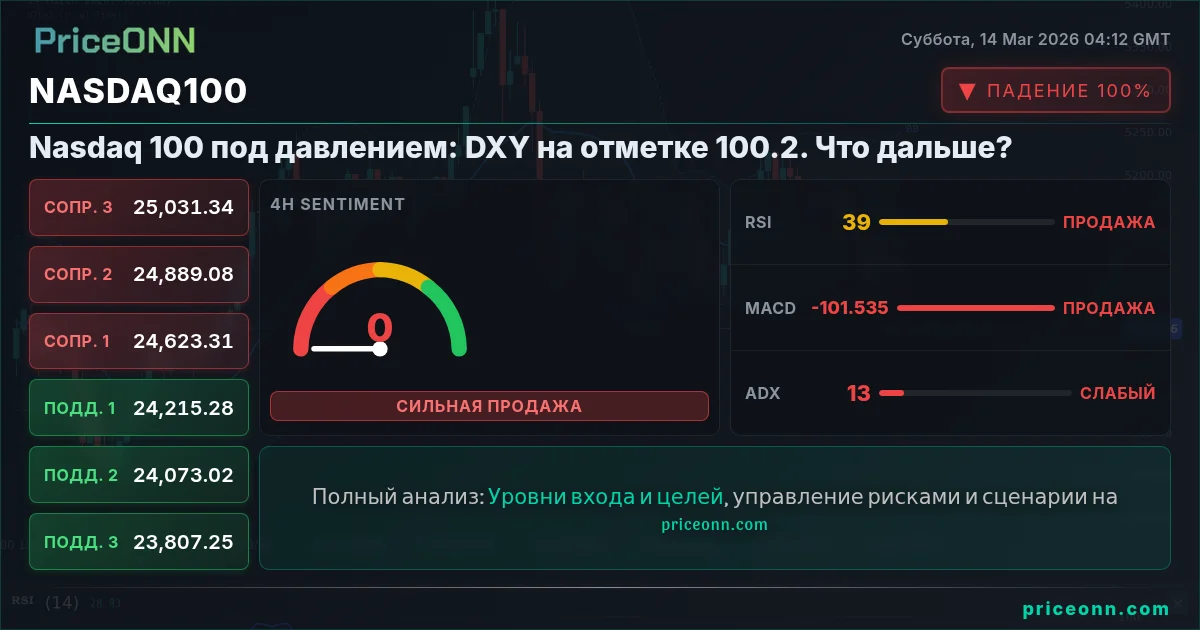
После закрытия прошлой пятницы на отметке $24 337,41, индекс Nasdaq100 оказался под давлением на фоне укрепления индекса доллара США (DXY), который сейчас находится на уровне 100.2. Главный вопрос сейчас заключается в том, сохранится ли этот медвежий импульс на предстоящей неделе, особенно с учетом предстоящих важных данных по индексу потребительских цен (CPI). Кстати, анализ nasdaq 100 сегодня показывает преобладание негативных факторов.
- RSI на дневном таймфрейме на уровне 39.83 предполагает дальнейший потенциал снижения для Nasdaq100.
- Критическая поддержка для Nasdaq100 находится на уровне 24 235.4, пробой ниже которого может спровоцировать более резкую распродажу.
- Гистограмма MACD указывает на отрицательный импульс, сигнализируя о продолжающемся медвежьем давлении.
- Рост DXY до 100.2 оказывает понижательное давление на Nasdaq100, создавая сложную среду для быков.
Укрепление доллара давит на Nasdaq100
В настоящее время наблюдается обратная зависимость между Nasdaq100 и DXY. При DXY на уровне 100.2 Nasdaq100 сталкивается со значительными встречными ветрами. Укрепление доллара подпитывается ожиданиями продолжения ястребиной денежно-кредитной политики Федеральной резервной системы, а также усилением геополитической напряженности, особенно на Ближнем Востоке. Согласно последним сообщениям, эскалация напряженности в Ормузском проливе угрожает глобальным цепочкам поставок нефти, что еще больше укрепляет доллар как актив-убежище. Эта динамика создает сложную среду для рисковых активов, таких как Nasdaq100.
Технический анализ: ключевые уровни в фокусе
С технической точки зрения, дневной график Nasdaq100 рисует медвежью картину. Индекс в настоящее время торгуется ниже своей 200-дневной скользящей средней, а RSI на уровне 39.83 указывает на дальнейший потенциал снижения. Гистограмма MACD подтверждает этот отрицательный импульс, сигнализируя о продолжающемся медвежьем давлении. Ключевые уровни поддержки, за которыми следует следить, включают 24 390.2, 24 235.4 и 23 975.09. Пробой ниже 24 235.4 может спровоцировать более резкую распродажу в направлении 23 975.09. С другой стороны, немедленное сопротивление находится на уровне 24 805.31, за которым следуют 25 065.62 и 25 220.42. Устойчивое движение выше 24 805.31 необходимо для нейтрализации текущего медвежьего уклона.
Многотаймфреймовый анализ: медвежьи сигналы сохраняются
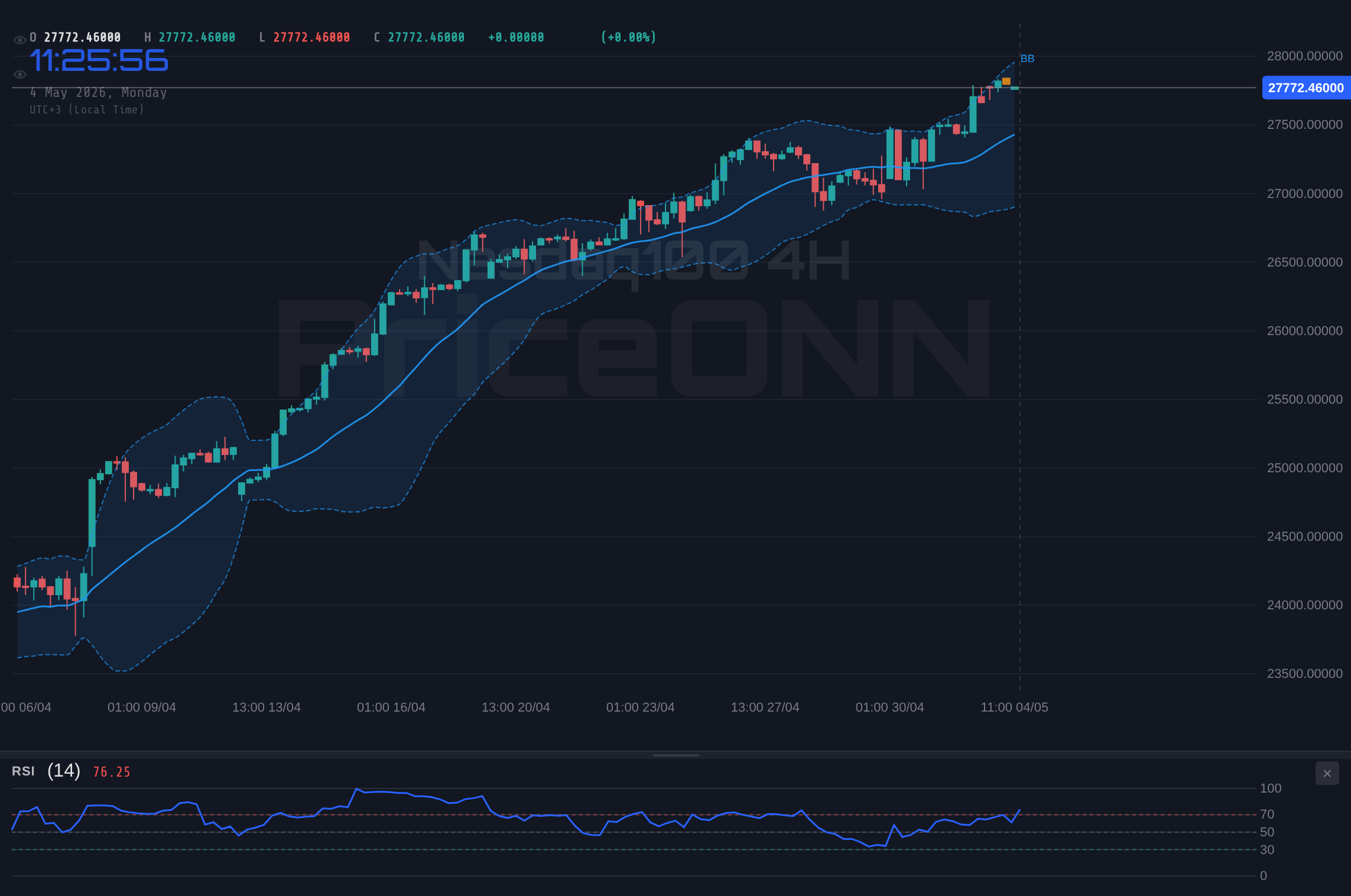
Многотаймфреймовый анализ еще больше усиливает медвежий прогноз для Nasdaq100. На 1-часовом графике индекс торгуется ниже своих 50-часовых и 200-часовых скользящих средних, а RSI на уровне 36.2 указывает на продолжающийся импульс снижения. 4-часовой график также показывает медвежьи сигналы, при этом индекс торгуется ниже своих 50-периодных и 200-периодных скользящих средних. Дневной график подтверждает эту медвежью тенденцию, при этом индекс торгуется ниже своих 50-дневных и 200-дневных скользящих средних. Стохастический осциллятор показывает значение K=51.13, D=57.7, указывая на продолжающийся медвежий сигнал с %K
Экономический календарь: данные по CPI на горизонте
Данные по CPI на следующей неделе станут критическим катализатором для Nasdaq100. Более высокий, чем ожидалось, показатель CPI, вероятно, усилит ожидания продолжения ястребиной денежно-кредитной политики Федеральной резервной системы, что еще больше укрепит доллар и окажет понижательное давление на Nasdaq100. И наоборот, более слабый, чем ожидалось, показатель CPI может ослабить опасения по поводу инфляции, потенциально ослабив доллар и обеспечив импульс для Nasdaq100. Инвесторам следует внимательно следить за экономическим календарем на предмет любых неожиданных публикаций данных, которые могут повлиять на настроения рынка. Предыдущее значение данных по индексу потребительских цен в долларах США составляло 0.4.
Корреляционный анализ: Nasdaq100 против DXY
Обратная корреляция между Nasdaq100 и DXY остается ключевым фактором, за которым следует следить. Поскольку DXY продолжает расти, Nasdaq100, вероятно, столкнется с продолжающимся понижательным давлением. Эта корреляция обусловлена тем, что более сильный доллар делает акции США менее привлекательными для иностранных инвесторов, в то время как более слабый доллар имеет тенденцию повышать спрос на акции США. Трейдерам следует внимательно следить за DXY на предмет любых признаков разворота, которые могут сигнализировать о потенциальном дне для Nasdaq100. Текущий уровень DXY в 100.2 оказывает значительное давление на Nasdaq100.
Управление рисками: ключевые соображения
Учитывая текущий медвежий прогноз для Nasdaq100, управление рисками имеет первостепенное значение. Трейдерам следует рассмотреть возможность снижения своей подверженности индексу или реализации стратегий хеджирования для защиты своих портфелей. Стоп-лосс ордера следует размещать ниже ключевых уровней поддержки, чтобы ограничить потенциальные убытки. Также важно диверсифицировать свой портфель и избегать чрезмерной концентрации в каком-либо одном классе активов. Помните, что рыночные условия могут быстро меняться, и важно соответствующим образом адаптировать свою торговую стратегию.
Контрарный взгляд: потенциал для шорт-сквиза
Хотя технические и фундаментальные факторы в настоящее время благоприятствуют медвежьему прогнозу для Nasdaq100, важно учитывать потенциал для шорт-сквиза. Если индекс столкнется с внезапным всплеском покупательского давления, это может спровоцировать быстрое ралли, поскольку продавцы в короткую спешат закрыть свои позиции. Это может привести к значительному движению вверх в краткосрочной перспективе, даже если основные фундаментальные показатели останутся слабыми. Трейдерам следует знать об этой возможности и быть готовыми соответствующим образом скорректировать свою торговую стратегию. RSI на уровне 36.2 на 1-часовом таймфрейме может указывать на то, что рынок перепродан.
Анализ тренда Nasdaq100
Текущий тренд для Nasdaq100 является медвежьим на нескольких таймфреймах. 1-часовой, 4-часовой и дневной графики показывают отрицательный импульс, и индекс торгуется ниже своих ключевых скользящих средних. Это говорит о том, что медвежий тренд, вероятно, сохранится в краткосрочной перспективе. Однако важно отметить, что тренды могут меняться, и трейдерам следует быть готовыми соответствующим образом скорректировать свою торговую стратегию. Ключевые уровни, за которыми следует следить, включают ранее упомянутые уровни поддержки и сопротивления. ADX на дневном таймфрейме находится на уровне 30.47, подтверждая сильный медвежий тренд.
Настроения рынка: страх охватывает инвесторов
Настроения рынка в отношении Nasdaq100 в настоящее время являются медвежьими, и страх охватывает инвесторов. Это отражается в высоких уровнях волатильности и повышенном спросе на активы-убежища. VIX (индекс волатильности), показатель волатильности рынка, в настоящее время повышен, что указывает на высокую степень неопределенности и страха. Эти медвежьи настроения могут еще больше усугубить понижательное давление на Nasdaq100. Однако важно отметить, что настроения рынка могут быть контр-индикатором, и экстремальные уровни страха иногда могут сигнализировать о потенциальном дне.
Защитные стратегии для медвежьего Nasdaq100
В медвежьей среде защитные торговые стратегии могут помочь защитить ваш портфель. Одна из таких стратегий - сосредоточиться на открытии коротких позиций по Nasdaq100 или покупке пут-опционов. Это позволяет вам получать прибыль от ожидаемого снижения индекса. Другая защитная стратегия - сосредоточиться на инвестировании в защитные сектора, такие как коммунальные услуги и товары первой необходимости, которые, как правило, превосходят другие сектора в периоды экономической неопределенности. Также важно поддерживать высокий уровень денежных средств в своем портфеле, что дает вам гибкость для использования любых возникающих возможностей.
Часто задаваемые вопросы: Анализ Nasdaq100
Что произойдет, если Nasdaq100 пробьет поддержку на уровне $24 235.4?
Пробой уровня поддержки $24 235.4, вероятно, спровоцирует более резкую распродажу, потенциально приведя к движению к следующему уровню поддержки на уровне $23 975.09. Этот пробой подтвердит медвежий тренд и может привлечь дальнейшее давление продаж.
Стоит ли открывать короткую позицию по Nasdaq100 на текущих уровнях $24 337.41, учитывая RSI на уровне 36.2?
Хотя RSI на уровне 36.2 предполагает условия перепроданности, это не является самостоятельным сигналом к покупке. Учитывая общую медвежью тенденцию и DXY на уровне 100.2, можно рассмотреть короткую позицию, но с жестким стоп-лоссом выше сопротивления на уровне $24 805.31.
Сигнализирует ли MACD о продолжающемся нисходящем тренде для Nasdaq100?
Да, гистограмма MACD подтверждает отрицательный импульс, указывая на продолжающееся медвежье давление. Линия MACD находится ниже сигнальной линии, а гистограмма отрицательна, что усиливает нисходящий тренд.
Как повлияют предстоящие данные по CPI на Nasdaq100 на этой неделе?
Более высокий, чем ожидалось, показатель CPI, вероятно, усилит ожидания продолжения ястребиной денежно-кредитной политики Федеральной резервной системы, что еще больше укрепит доллар и окажет понижательное давление на Nasdaq100. Более слабый, чем ожидалось, показатель CPI может ослабить опасения по поводу инфляции, потенциально ослабив доллар и обеспечив импульс для Nasdaq100.
Отслеживайте рынки в реальном времени
ИИ-анализ и данные в реальном времени.