

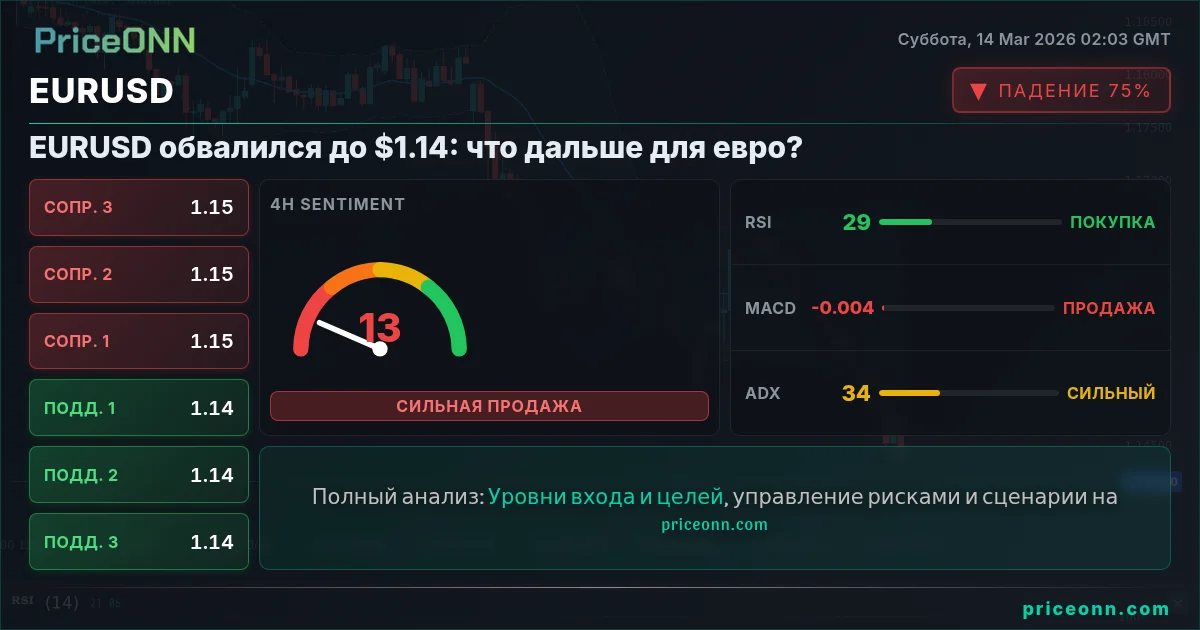
Недавнее падение EURUSD до $1.14 застало многих трейдеров врасплох. Это всего лишь временная просадка или начало более значительного медвежьего тренда? Ответ кроется в понимании сложного взаимодействия технических индикаторов, макроэкономических факторов и геополитических рисков, которые в настоящее время влияют на рынок Forex. Важно провести анализ евро доллар сегодня, чтобы понять перспективы.
- EURUSD на уровне $1.14 пробил ключевой уровень поддержки, сигнализируя о потенциальном дальнейшем снижении.
- RSI на уровне 23.05 указывает на состояние перепроданности, но сильный импульс доллара может это нивелировать.
- Следующая публикация данных по CPI имеет жизненно важное значение для подтверждения или опровержения инфляционного давления, определяющего силу USD.
- Геополитическая напряженность, особенно на Ближнем Востоке, добавляет уровень риска, подпитывая спрос на доллар как на безопасную гавань.
Индекс доллара (DXY) является критическим фактором в уравнении EURUSD. Поскольку DXY в настоящее время находится на уровне 100.2 и демонстрирует сильный восходящий тренд, евро сталкивается со значительными встречными ветрами. Одночасовой график показывает, что DXY находится в зоне перекупленности с RSI 78.75, но общая тенденция остается бычьей. Это говорит о том, что любой потенциальный рост евро может быть ограничен в краткосрочной перспективе. Ключевым моментом является наблюдение за DXY; устойчивый откат может дать EURUSD передышку, но на данный момент медведи контролируют ситуацию.
«Укрепление доллара толкает EUR/USD к многомесячным минимумам, в то время как AUD/USD сталкивается с встречными ветрами», как PriceONN сообщил только вчера. Этот заголовок отражает текущие настроения рынка, где доминирующей темой является сила доллара. Это подпитывается ростом геополитических рисков и ожиданиями продолжения ястребиной денежно-кредитной политики со стороны Федеральной резервной системы. Макроэкономические факторы EURUSD на март 2026 года в значительной степени зависят от этих факторов.
Почему $1.14 – это линия на песке
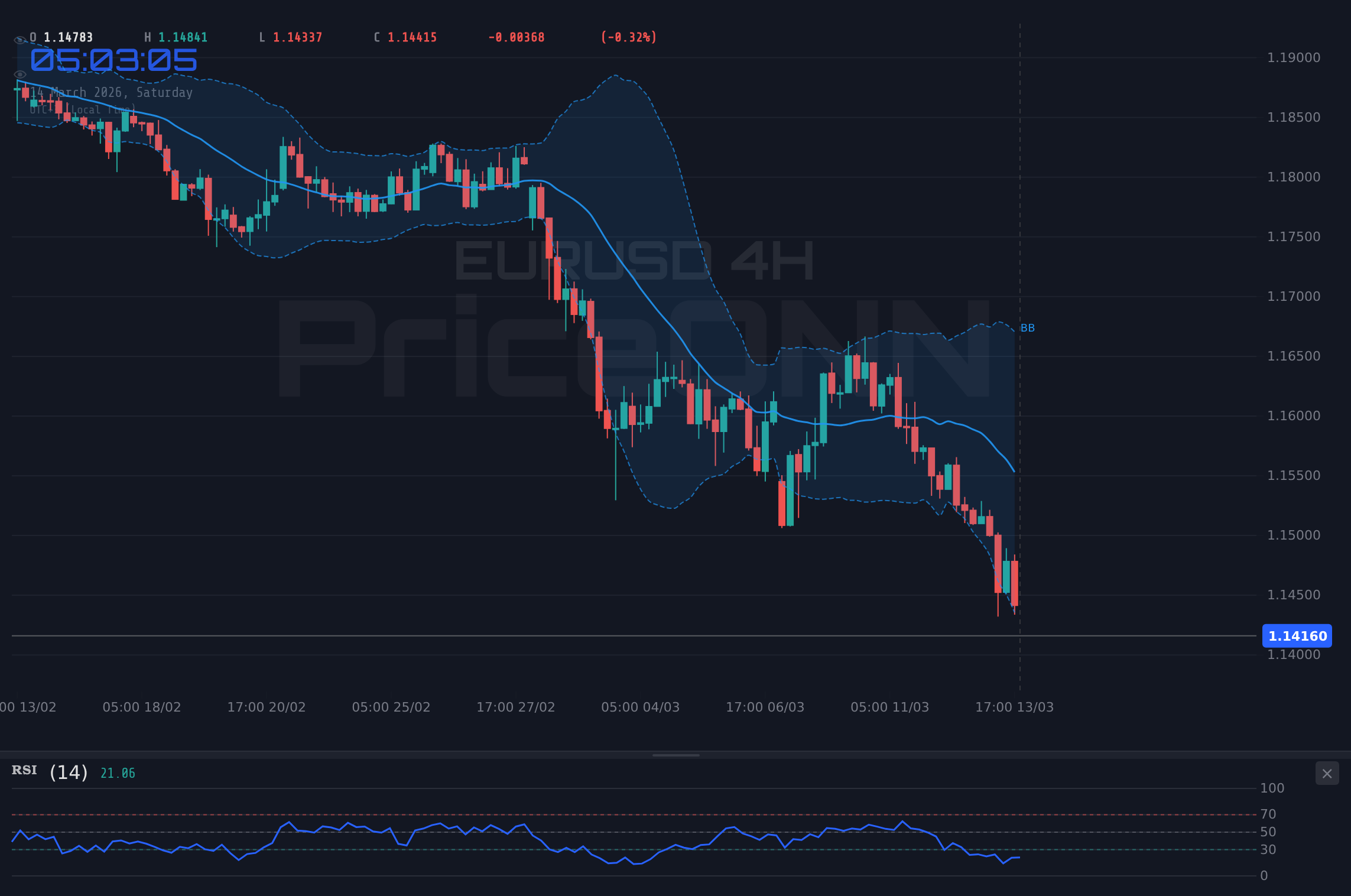
С технической точки зрения уровень $1.14 имеет решающее значение. Эта ценовая точка выступала в качестве поддержки несколько раз за последние несколько месяцев. Тот факт, что EURUSD сейчас решительно пробил этот уровень, говорит о том, что медведи набирают обороты. Дневной график показывает четкий нисходящий тренд, при этом цена торгуется ниже 200-дневной скользящей средней. Вопрос сейчас в том, приведет ли этот прорыв к более глубокой коррекции или к временному отскоку перед возобновлением нисходящего тренда.
1H таймфрейм дает четкую картину медвежьего импульса с ADX 41.97, указывающим на сильный нисходящий тренд. Однако RSI на уровне 23.05 сигнализирует о перепроданности, что может указывать на возможность краткосрочного отскока. Но гистограмма MACD продолжает показывать отрицательный импульс, подразумевая, что продавцы все еще контролируют ситуацию. Анализ EURUSD сегодня показывает перепроданный рынок, но не обязательно автоматический сигнал на покупку.
Данные по CPI – джокер
Если посмотреть на экономический календарь, то все важные события для EUR и USD являются прогнозами, запланированными на среду и пятницу следующей недели. Участники рынка будут внимательно следить за предстоящими данными по CPI. Более высокие, чем ожидалось, показатели инфляции могут еще больше укрепить доллар, толкнув EURUSD еще ниже. И наоборот, более слабые, чем ожидалось, данные могут принести некоторое облегчение евро. Еженедельный прогноз EURUSD зависит от публикации этих данных. Важно отметить, что рынок уже заложил в цену значительную долю ястребиных настроений со стороны ФРС, поэтому данные должны быть существенно выше ожидаемых, чтобы спровоцировать еще одну крупную волну снижения.
Технический анализ предполагает, что EURUSD может найти поддержку около 1.14185, уровня поддержки 4H. Однако, учитывая сильный импульс доллара, прорыв ниже этого уровня может открыть путь к дальнейшему снижению в направлении 1.14. С другой стороны, первоначальное сопротивление находится около 1.14412. Устойчивый прорыв выше этого уровня потребуется для нейтрализации медвежьего уклона. Ключевые уровни, за которыми следует следить, – 1.14185 в качестве поддержки и 1.14412 в качестве сопротивления. Уровни поддержки и сопротивления EURUSD имеют решающее значение для любого трейдера, стремящегося ориентироваться в этих неспокойных водах.
Геополитические риски и спрос на безопасные активы
Эскалация напряженности на Ближнем Востоке добавляет еще один уровень сложности в уравнение EURUSD. Как сообщает PriceONN Market News, «USD/JPY нацелен на 160.00, поскольку геополитические риски подпитывают спрос на доллар». Это подчеркивает тот факт, что доллар в настоящее время выигрывает от притока средств в безопасные активы. Продолжающийся конфликт в Персидском заливе и усиление напряженности между США и Ираном подталкивают инвесторов к безопасности доллара США, что еще больше давит на евро. Недавние новости о сокращении добычи Саудовской Аравией на фоне кризиса в Персидском заливе также добавили неопределенности на рынок. Это среда неприятия риска, и доллар является основным бенефициаром.
Геополитические риски также влияют на цены на нефть. Нефть Brent в настоящее время торгуется около $103.82, а WTI – на уровне $99.18, обе демонстрируют сильные восходящие тренды. Этот рост цен на нефть может привести к более высокой инфляции, что еще больше поддержит доллар. Поэтому крайне важно следить за развитием событий на Ближнем Востоке и их потенциальным влиянием на цены на энергоносители. Нефть является ключевым индикатором инфляционного давления, и на данный момент сигналы неоднозначны. Недавнее высвобождение резервов несколько успокоило ситуацию. Ключевые уровни для WTI – $99.25 в качестве сопротивления и $90.94 в качестве поддержки.
Что сигнал MACD говорит нам об анализе тренда EURUSD
Многопериодный анализ показывает последовательный медвежий сигнал. Дневная гистограмма MACD отрицательна, что указывает на то, что нисходящий тренд, вероятно, продолжится. 4H MACD также отрицательный, что подтверждает медвежий импульс. Хотя 1H MACD показывает некоторые признаки потенциального разворота, еще слишком рано говорить о дне. RSI находится в зоне перепроданности на 1H графике, но еще нет на 4H или дневном графиках. Это говорит о том, что состояния перепроданности может быть недостаточно для запуска устойчивого ралли. Нам нужно увидеть четкую модель разворота на более высоких таймфреймах, чтобы подтвердить дно. EURUSD RSI должен пробить уровень 50, чтобы сигнализировать о развороте тренда.
Стохастический осциллятор также предоставляет ценную информацию. Дневной стохастик показывает нисходящий тренд, с %K
Торговый план: оседлать медвежью волну
EURUSD продолжает свой нисходящий тренд, пробивая уровень 1.14185 и нацеливаясь на 1.14 и, в конечном итоге, на 1.1350. Этот сценарий весьма вероятен, учитывая сильный импульс доллара.
EURUSD отскакивает выше 1.14412, нацеливаясь на 1.14947 и потенциально на 1.15525. Этот сценарий менее вероятен, но возможен, если данные по CPI разочаруют.
Учитывая техническую и фундаментальную основу, наиболее вероятным сценарием является продолжение нисходящего тренда. Торговая установка с высокой вероятностью (65-70%) заключалась бы в открытии коротких позиций на любых ралли в направлении 1.14412, со стоп-лоссом выше 1.14524. Первоначальная цель будет 1.14, с вторичной целью 1.1350. Однако трейдеры должны знать о предстоящей публикации данных по CPI, которые могут существенно повлиять на пару. Управление рисками имеет решающее значение в этой нестабильной среде. Торговые сигналы EURUSD в настоящее время являются медвежьими, но рекомендуется соблюдать осторожность.
Часто задаваемые вопросы: Анализ EURUSD
Что произойдет, если EURUSD пробьет поддержку 1.14185?
Если EURUSD пробьет уровень поддержки 1.14185, вероятно, это ускорит снижение к следующему уровню поддержки на 1.14. Этот прорыв подтвердит медвежий импульс и потенциально вызовет дальнейшее давление продаж. Трейдерам следует следить за увеличением объема при прорыве, чтобы подтвердить движение.
Стоит ли мне открывать Short позицию по EURUSD на текущих уровнях $1.14, учитывая RSI на уровне 23.05?
Хотя RSI на уровне 23.05 предполагает условия перепроданности, открытие Short позиции на текущих уровнях рискованно без подтверждения. Лучшей стратегией было бы дождаться ралли в направлении 1.14412, а затем открыть Short позиции с жестким стоп-лоссом выше 1.14524. Это обеспечит лучшее соотношение риска и вознаграждения.
Что говорит нам отрицательный сигнал MACD о тренде EURUSD?
Отрицательный сигнал MACD подтверждает медвежий тренд в EURUSD. Гистограмма MACD находится ниже нуля, что указывает на то, что давление продаж все еще доминирует. Это говорит о том, что нисходящий тренд, вероятно, продолжится, несмотря на любые краткосрочные отскоки.
Как предстоящие данные по CPI повлияют на EURUSD на этой неделе?
Предстоящие данные по CPI являются основным катализатором для EURUSD. Более высокие, чем ожидалось, показатели инфляции, вероятно, укрепят доллар, толкнув EURUSD ниже. И наоборот, более слабые, чем ожидалось, данные по инфляции могут принести некоторое облегчение евро, что приведет к краткосрочному ралли. Трейдерам следует быть готовыми к повышенной волатильности во время публикации данных.
Пара EURUSD в настоящее время находится под значительным давлением, вызванным укреплением доллара, геополитическими рисками и отрицательными техническими индикаторами. Хотя условия перепроданности могут указывать на потенциальный отскок, общий уклон остается медвежьим. Трейдерам следует проявлять осторожность и дождаться подтверждения, прежде чем открывать какие-либо позиции. Предстоящие данные по CPI станут ключевым фактором в определении следующего направления пары. Терпение будет вознаграждено здесь.
Краткий обзор технического анализа
| Индикатор | Значение | Сигнал |
|---|---|---|
| RSI (14) | 23.05 | Перепроданность |
| Гистограмма MACD | Отрицательная | Медвежий |
| Стохастик | 8.21/25.03 | Нисходящий тренд |
| ADX | 41.97 | Сильный тренд |
| Bollinger | Нижняя граница | Наблюдение |
Ключевые уровни
Уровни поддержки
Уровни сопротивления
Отслеживайте рынки в реальном времени
ИИ-анализ и данные в реальном времени.