
WTI штурмует $99.18: геополитика накаляет обстановку
Нефть WTI торгуется около $99.18, сталкиваясь с сопротивлением на фоне эскалации напряженности на Ближнем Востоке и потенциальных перебоев с поставками, что усиливает волатильность рынка.
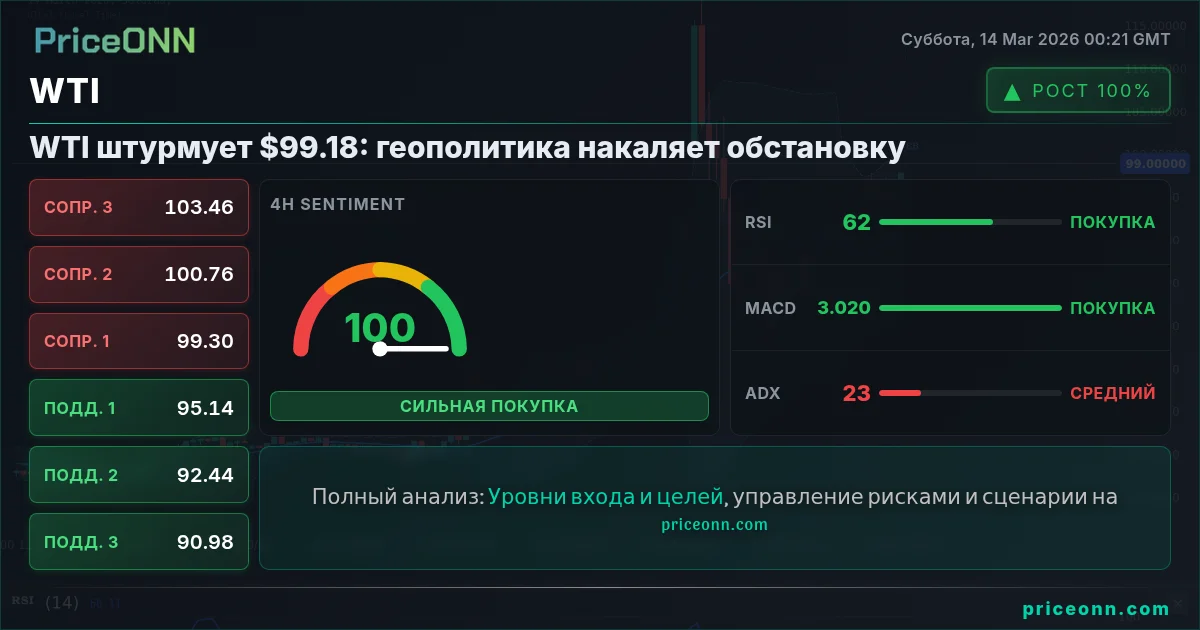
Нефть WTI в настоящее время движется в сложных условиях, торгуясь около $99.18, поскольку "быки" и "медведи" борются за контроль на фоне сочетания геополитической неопределенности и меняющейся динамики спроса и предложения. Рыночная напряженность ощутима, трейдеры внимательно следят за развитием событий на Ближнем Востоке, а также за публикацией ключевых экономических данных, которые могут повлиять на краткосрочную траекторию цен на нефть. Решительный прорыв выше этого уровня может сигнализировать о дальнейшем росте, в то время как неспособность преодолеть это препятствие может проложить путь к более глубокой коррекции. Сейчас самое время для анализа нефть wti сегодня.
- WTI тестирует сопротивление в районе $99.18, что является критическим уровнем для определения краткосрочного направления.
- Наблюдается сильный "бычий" импульс на 1D таймфрейме, при этом RSI на уровне 82.87 указывает на состояние перекупленности.
- Геополитическая напряженность на Ближнем Востоке, особенно вокруг Ормузского пролива, добавляет премию за риск к ценам на нефть.
- Данные по индексу потребительских цен (CPI) на следующей неделе будут иметь решающее значение для определения перспектив политики Федеральной резервной системы и ее влияния на доллар и цены на сырьевые товары.
"Бычий" сценарий для WTI: риски со стороны предложения и геополитические премии
"Бычий" аргумент для WTI основывается на эскалации геополитических рисков на Ближнем Востоке. Согласно последним сообщениям, продолжающийся конфликт в Персидском заливе привел к опасениям по поводу потенциальных перебоев с поставками нефти, особенно через Ормузский пролив, критически важный пункт для глобальных потоков нефти. Как сообщает Reuters, усиление напряженности уже побудило Саудовскую Аравию сократить добычу на 20%, усугубляя опасения по поводу предложения. Этот риск со стороны предложения усугубляется возможностью дальнейшей эскалации, которая может привести к еще более значительным сбоям и скачку цен на нефть. "Бычий" импульс также поддерживается сильными техническими индикаторами. 1D таймфрейм показывает мощный восходящий тренд, при этом ADX на уровне 49.88 указывает на сильную силу тренда. Хотя RSI на уровне 82.87 предполагает условия перекупленности, он также отражает базовое давление покупателей на рынке. Устойчивый прорыв выше уровня сопротивления $99.25 может открыть дверь для тестирования более высоких целей, потенциально достигнув $102.3 или даже $107.56 в ближайшие недели.
Кроме того, недавнее решение Австралии и Японии высвободить нефтяные резервы, о чем сообщалось в новостях рынка PriceONN, мало что сделало для подавления "бычьих" настроений, что указывает на силу базового спроса и геополитических опасений. Похоже, что рынок игнорирует эти усилия по увеличению предложения, что говорит о том, что премия за геополитический риск перевешивает влияние высвобождения резервов. Это классический пример того, как геополитические факторы могут перекрывать фундаментальную динамику спроса и предложения, создавая возможности для трейдеров, которые настроены на эти сдвиги. Свинг-трейдеры могут искать откаты к ключевым уровням поддержки, таким как $97.31, чтобы инициировать Long позиции, в то время как долгосрочные инвесторы могут рассматривать это как возможность увеличить свои активы, делая ставку на продолжающуюся геополитическую нестабильность и ограничения предложения.
"Медвежий" сценарий для WTI: опасения по поводу спроса и условия перекупленности
И наоборот, "медвежий" аргумент для WTI фокусируется на потенциальных опасениях по поводу спроса и технических условиях перекупленности. Недавняя сила индекса доллара США (DXY), который в настоящее время торгуется около 100.2, оказывает понижательное давление на цены на сырьевые товары, включая WTI. Более сильный доллар делает нефть более дорогой для международных покупателей, что потенциально снижает спрос. Более того, поскольку RSI на дневном графике колеблется около 82.87, WTI технически перекуплен, что предполагает неизбежность коррекции. Это состояние перекупленности может спровоцировать фиксацию прибыли, что приведет к откату к ключевым уровням поддержки. SP500 и Nasdaq также демонстрируют признаки слабости, при этом оба индекса испытывают ежедневное снижение. Эти настроения неприятия риска могут еще больше повлиять на цены на нефть, поскольку инвесторы ищут активы-убежища и сокращают подверженность более рискованным сырьевым товарам. Негативный импульс на фондовом рынке может перекинуться на нефтяной рынок, усугубляя понижательное давление.
"Медвежий" сценарий также учитывает возможность увеличения добычи нефти из других источников. Хотя ОПЕК+ сохранила свою текущую политику добычи, всегда есть вероятность изменения стратегии, особенно если цены продолжат расти. Увеличение добычи из стран, не входящих в ОПЕК, таких как Соединенные Штаты, также может ослабить опасения по поводу предложения и оказать понижательное давление на цены. Скальперы и дневные трейдеры могут искать возможности для Short позиций на ралли, нацеливаясь на внутридневные уровни поддержки, в то время как свинг-трейдеры могут дождаться подтвержденного прорыва ниже ключевых уровней поддержки, таких как $97.31, прежде чем инициировать Short позиции. Долгосрочным инвесторам следует внимательно следить за данными о глобальном экономическом росте и потенциальными изменениями в политике ОПЕК+, поскольку эти факторы могут существенно повлиять на долгосрочные перспективы цен на нефть.
Технические факторы как решающий фактор: изучение ключевых уровней и индикаторов WTI
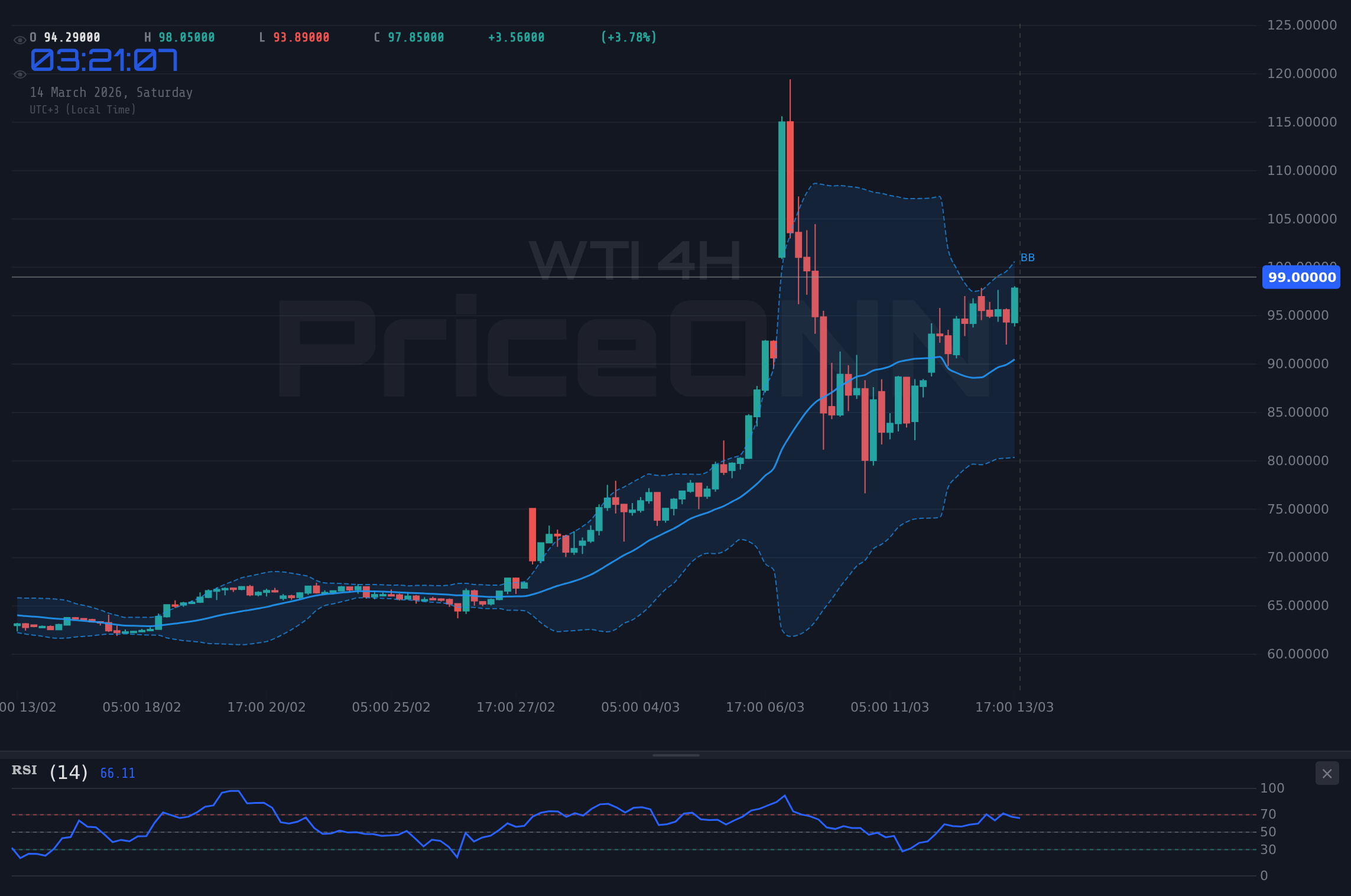
С технической точки зрения, краткосрочное направление WTI зависит от ее способности преодолеть уровень сопротивления $99.25. Устойчивый прорыв выше этого уровня, подтвержденный сильным объемом, вероятно, опровергнет "медвежий" тезис и проложит путь к дальнейшему росту. И наоборот, неспособность прорваться выше $99.25 и последующий прорыв ниже уровня поддержки $97.31 может спровоцировать более глубокую коррекцию в направлении $92.95. MACD на дневном графике в настоящее время является положительным, что указывает на "бычий" импульс, но потенциальное пересечение ниже сигнальной линии может сигнализировать об изменении импульса и благоприятствовать "медведям". Стохастический осциллятор, в настоящее время находящийся на уровне 51.72, имеет тенденцию к снижению, что говорит о том, что "бычий" импульс может ослабевать.
Анализ WTI на нескольких таймфреймах показывает неоднозначную картину. На 1-часовом графике RSI на уровне 66.96 предполагает нейтральные условия, в то время как ADX на уровне 19.71 указывает на слабый тренд. Это говорит о том, что краткосрочное направление является неопределенным, и трейдерам следует проявлять осторожность. На 4-часовом графике RSI на уровне 61.89 также указывает на нейтральные условия, в то время как ADX на уровне 23.08 предполагает умеренный восходящий тренд. Это говорит о том, что среднесрочный тренд все еще является "бычьим", но импульс может замедляться. Ключ для трейдеров - следить за сигналами подтверждения как в сторону повышения, так и в сторону понижения, и соответствующим образом корректировать свои стратегии. Скальперы могут использовать более короткие таймфреймы для выявления внутридневных торговых возможностей, в то время как свинг-трейдеры должны сосредоточиться на более долгосрочных графиках для выявления потенциальных разворотов тренда.
На недавние ценовые действия WTI повлияло несколько факторов. Высвобождение резервов IEA первоначально оказало понижательное давление на цены, но эскалация геополитической напряженности быстро изменила эту тенденцию. Реакция рынка на эти события подчеркивает важность сохранения гибкости и адаптации к меняющимся рыночным условиям. Трейдерам следует внимательно следить за новостными заголовками и публикацией экономических данных, поскольку эти события могут спровоцировать значительные колебания цен. Предстоящие данные по индексу потребительских цен (CPI) на следующей неделе будут особенно важны, поскольку они могут повлиять на перспективы политики Федеральной резервной системы и ее влияние на доллар и цены на сырьевые товары. Если данные по индексу потребительских цен окажутся выше ожидаемых, это может привести к более "ястребиной" позиции ФРС, укреплению доллара и оказанию понижательного давления на WTI. И наоборот, более слабые, чем ожидалось, данные по индексу потребительских цен могут привести к более "голубиной" позиции ФРС, ослаблению доллара и поддержке цен на WTI.
Торговый план по WTI: сценарий "бычьего" прорыва
Учитывая технические и фундаментальные факторы, "бычий" торговый план кажется более вероятным. Однако крайне важно управлять рисками и дождаться подтверждения, прежде чем инициировать позицию. Потенциальная торговая установка предполагает ожидание подтвержденного прорыва выше уровня сопротивления $99.25, при этом стоп-лосс ордер размещается ниже уровня поддержки $97.31. Первая ценовая цель будет $102.3, а вторая цель - $107.56. Эта установка предлагает благоприятное соотношение риска и вознаграждения, с потенциалом значительного роста, если "бычий" импульс сохранится. Вероятность реализации этого сценария оценивается в 60%, учитывая сильный "бычий" импульс и геополитические риски.
WTI прорывается выше сопротивления $99.25 и поддерживает движение, нацеливаясь на $102.3, а затем на $107.56. Продолжающаяся геополитическая напряженность и перебои с поставками поддерживают рост.
WTI не может прорваться выше $99.25 и падает ниже поддержки $97.31, нацеливаясь на $92.95. Опасения по поводу спроса и более сильный доллар оказывают давление на цены.
Крайне важно признать, что предстоящие данные по индексу потребительских цен и любые неожиданные новостные заголовки могут существенно повлиять на рынок. Поэтому трейдерам следует внимательно следить за этими событиями и быть готовыми скорректировать свои позиции соответствующим образом. Более высокий, чем ожидалось, показатель CPI может спровоцировать резкую распродажу WTI, в то время как более слабый, чем ожидалось, показатель может спровоцировать ралли. Управление рисками имеет первостепенное значение в этой нестабильной среде. Всегда используйте стоп-лосс ордера и избегайте чрезмерного использования кредитного плеча в своих позициях. Терпение - это ключ к успеху - дождитесь, пока ваша установка материализуется, прежде чем входить в сделку.
Часто задаваемые вопросы: Анализ WTI
Что произойдет, если WTI пробьет сопротивление на уровне $99.25?
Если WTI решительно пробьет сопротивление на уровне $99.25, это, вероятно, будет сигнализировать о продолжении "бычьего" тренда с потенциальными целями на уровне $102.3 и $107.56. Этот сценарий будет поддержан сильным объемом и продолжающейся геополитической напряженностью.
Стоит ли покупать WTI на текущих уровнях $99.18, учитывая RSI на уровне 82.87?
Учитывая показания перекупленности RSI на уровне 82.87 на дневном графике, возможно, было бы разумно дождаться отката, прежде чем инициировать Long позицию. Потенциальной точкой входа может быть район уровня поддержки $97.31, который предложит более благоприятное соотношение риска и вознаграждения. Будьте осторожны, так как скоро выйдут данные по индексу потребительских цен.
Является ли положительный сигнал MACD надежным индикатором продолжения роста WTI?
Хотя MACD в настоящее время является положительным, трейдерам следует следить за потенциальным пересечением ниже сигнальной линии, что может сигнализировать об изменении импульса и благоприятствовать "медведям". Подтверждение от других индикаторов, таких как прорыв ниже уровня поддержки $97.31, усилит этот "медвежий" сигнал.
Как предстоящие данные по индексу потребительских цен повлияют на WTI на этой неделе?
Предстоящие данные по индексу потребительских цен будут иметь решающее значение для определения перспектив политики Федеральной резервной системы и ее влияния на доллар и цены на сырьевые товары. Более высокие, чем ожидалось, данные по индексу потребительских цен могут привести к более "ястребиной" позиции ФРС, укреплению доллара и оказанию понижательного давления на WTI, в то время как более слабые, чем ожидалось, данные могут иметь противоположный эффект.
В заключение, рынок WTI в настоящее время находится в состоянии перетягивания каната между "бычьими" и "медвежьими" силами. Геополитическая напряженность и риски со стороны предложения поддерживают рост, в то время как опасения по поводу спроса и технические условия перекупленности оказывают давление на цены. Краткосрочное направление, вероятно, будет зависеть от исхода битвы вокруг уровня сопротивления $99.25 и влияния данных по индексу потребительских цен на следующей неделе.
Краткое изложение технического прогноза
| Индикатор | Значение | Сигнал |
|---|---|---|
| RSI (14) | 82.87 | Перекупленность |
| Гистограмма MACD | Положительная | "Бычий" |
| Стохастик | 51.72 | Нейтральный |
| ADX | 49.88 | Сильный тренд |
| Bollinger | Верхняя граница | Наблюдение |
Ключевые уровни
Уровни поддержки
Уровни сопротивления
Отслеживайте рынки в реальном времени
ИИ-анализ и данные в реальном времени.