

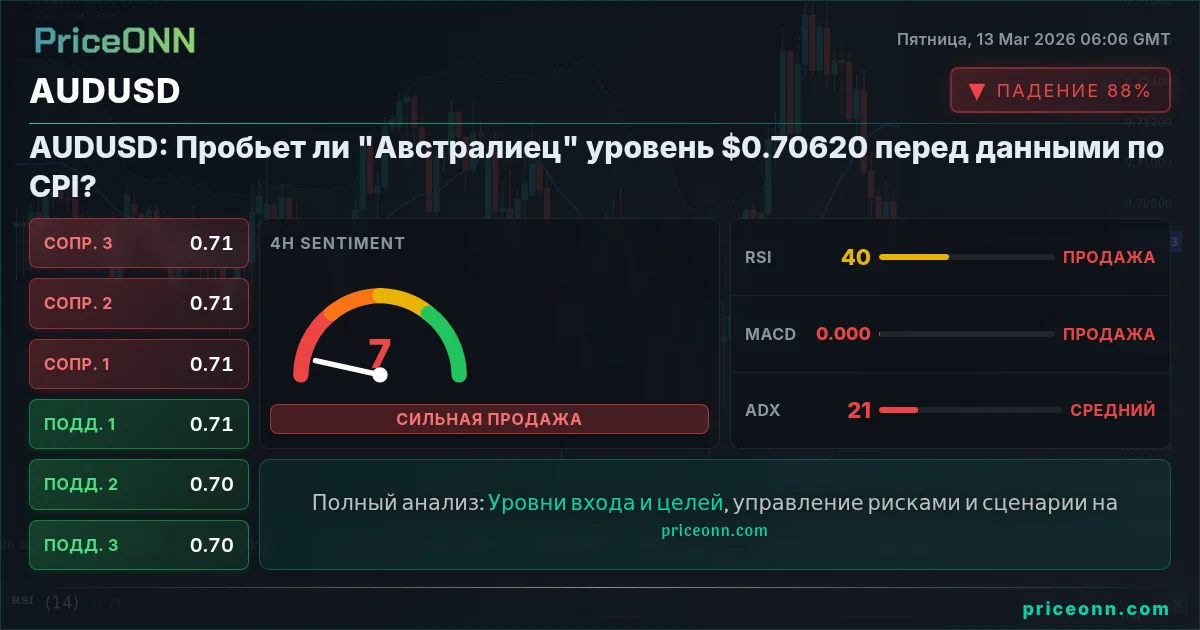
AUDUSD торгуется вблизи уровня $0.70620, испытывая давление в преддверии публикации данных по CPI. Этот уровень критичен для "Австралийца", и его пробой может сигнализировать о дальнейшем снижении. Некоторые аналитики считают, что анализ австралийский доллар сегодня указывает на возможность дальнейшего снижения.
- RSI на 1H графике на уровне 28.37 сигнализирует о перепроданности, что потенциально может привести к краткосрочному отскоку.
- Ключевая поддержка находится на уровне 0.70563, который тестировался несколько раз, и его пробой откроет путь к дальнейшим потерям.
- Гистограмма MACD показывает отрицательный импульс, указывая на преобладание медвежьего давления.
- Укрепление DXY оказывает давление на AUDUSD, что коррелирует с недавним ростом индекса доллара.
Австралийский доллар находится под давлением по отношению к доллару США, находясь вблизи нижней границы своего недавнего торгового диапазона. Пара AUDUSD колеблется около $0.70620, и участники рынка внимательно следят за потенциальным пробоем или прорывом. Укрепление доллара США, на что указывает восходящая траектория DXY до 99.61, способствует понижательному давлению на AUDUSD. Эта обратная корреляция между индексом доллара и AUDUSD является ключевым фактором, влияющим на движения пары. Рост DXY предполагает увеличение спроса на доллар США как на актив-убежище, что потенциально вызвано глобальной экономической неопределенностью или геополитической напряженностью, как недавно было подчеркнуто эскалацией напряженности на Ближнем Востоке.
Технический анализ AUDUSD
Многопериодный анализ AUDUSD показывает смешанную картину. На 1-часовом графике тренд медвежий, с силой 99%, что указано ADX на уровне 28.7. RSI(14) находится на уровне 28.37, сигнализируя о перепроданности, что может привести к краткосрочному отскоку. Однако гистограмма MACD отрицательная, что говорит о том, что медвежий импульс все еще в игре. Индикатор Stochastic также указывает на нисходящий тренд, где %K меньше %D. Ключевая поддержка на этом таймфрейме находится на уровне 0.70563, уровне, который тестировался несколько раз. Пробой ниже этой поддержки может спровоцировать дальнейшее снижение.
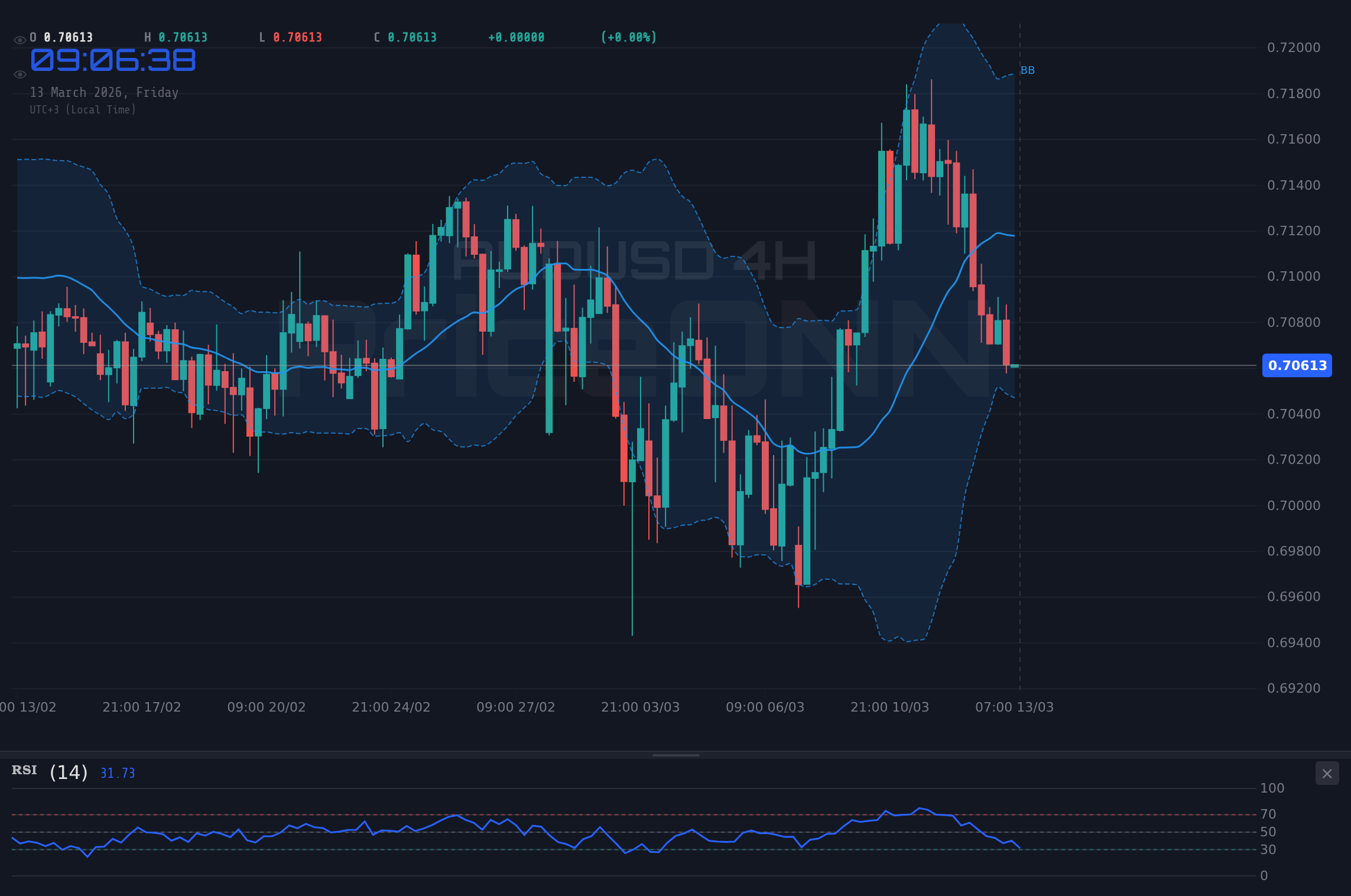
4-часовой график представляет собой несколько иную перспективу. Хотя тренд нейтральный, ADX остается на уровне 20.51, указывая на умеренный нисходящий тренд. RSI(14) находится на уровне 43.66, все еще на нейтральной территории, но имеет тенденцию к снижению. Индикатор Stochastic глубоко перепродан, с %K на уровне 4.32 и %D на уровне 13.57. Это может говорить о том, что пара готовится к коррекции. Сопротивление на этом таймфрейме находится на уровне 0.70912.
Глядя на дневной таймфрейм, тренд также нейтральный. RSI(14) находится на уровне 51.99, не указывая ни на перекупленность, ни на перепроданность. Однако гистограмма MACD отрицательная, и индикатор Stochastic сигнализирует о нисходящем тренде. Ключевая поддержка на этом таймфрейме находится на уровне 0.70409, а сопротивление - на уровне 0.71302. Общий сигнал смешанный, но преобладающие медвежьи настроения предполагают осторожность.
Фундаментальные факторы и настроения рынка
Фундаментальные факторы, лежащие в основе AUDUSD, в основном сосредоточены вокруг силы доллара США и чувствительности австралийской экономики к глобальным торговым условиям. Поскольку DXY демонстрирует значительную силу, "Австралиец" сталкивается со значительными встречными ветрами. Более того, как сообщает Reuters, ожидается, что ФРС сохранит свою ястребиную позицию, что еще больше поддержит доллар. Предстоящие публикации данных по CPI будут иметь решающее значение для определения направления AUDUSD. Данные по CPI, которые окажутся сильнее ожидаемых, могут усилить ястребиную позицию ФРС и привести к дальнейшему укреплению доллара, в то время как более слабые данные могут смягчить ожидания и предоставить некоторое облегчение для "Австралийца". Внимательно следите за экономическим календарем; публикации в пятницу могут иметь решающее значение.
Эскалация напряженности на Ближнем Востоке, особенно угроза Ирана Ормузскому проливу, добавляет еще один уровень сложности. Как подчеркивается в последних новостях, скачок цен на сырую нефть может усилить опасения по поводу инфляции, что повлияет на валютные оценки. Учитывая зависимость Австралии от экспорта сырьевых товаров, любое нарушение в мировой торговле или ценах на сырьевые товары может иметь серьезные последствия для "Австралийца".
Торговый план для AUDUSD
Учитывая технические и фундаментальные факторы, для AUDUSD оправдан осторожный подход. Хотя условия перепроданности на краткосрочных графиках могут указывать на потенциальный отскок, преобладающие медвежьи настроения и сила доллара США указывают на то, что риски снижения значительны.
AUDUSD пробивает уровень поддержки 0.70563, вызывая дальнейшее снижение к 0.70409 и, возможно, к 0.7011. Этот сценарий набирает обороты, если предстоящие данные по CPI усилят ястребиную позицию ФРС.
AUDUSD находит поддержку на уровне 0.70563 и отскакивает обратно к 0.70912 и 0.71302. Этот сценарий становится более вероятным, если данные по CPI окажутся слабее ожидаемых, смягчая ожидания дальнейшего повышения ставок ФРС.
Торговая рекомендация: Рассмотрите возможность открытия Short позиции, если AUDUSD пробьет уровень 0.70563, со стоп-лоссом на уровне 0.70757 (выше 1H сопротивления) и целевыми уровнями на 0.70409 и 0.7011. Вероятность этой сделки составляет 60% с учетом текущих медвежьих настроений. И наоборот, Long позицию можно рассмотреть, если AUDUSD отскочит от 0.70563, со стоп-лоссом на уровне 0.7044 и целевыми уровнями на 0.70912 и 0.71302. Однако эта сделка сопряжена с более высоким риском из-за преобладающего медвежьего давления, и вероятность оценивается в 40%.
Предстоящие публикации данных по CPI в пятницу могут вызвать значительную волатильность в AUDUSD. Соблюдайте осторожность и управляйте своими рисками соответствующим образом. Данные, которые окажутся сильнее ожидаемых, могут привести к дальнейшему снижению, в то время как более слабые данные могут спровоцировать ралли.
Часто задаваемые вопросы: Анализ AUDUSD
Что произойдет, если AUDUSD пробьет поддержку на уровне 0.70563?
Если AUDUSD пробьет уровень поддержки 0.70563, это может спровоцировать дальнейшее снижение к 0.70409 и, возможно, к 0.7011. Этот сценарий более вероятен, если предстоящие данные по CPI усилят ястребиную позицию ФРС.
Стоит ли покупать AUDUSD на текущих уровнях $0.70620, учитывая RSI на уровне 28.37?
Хотя RSI на уровне 28.37 на 1H графике сигнализирует о перепроданности, важно учитывать преобладающие медвежьи настроения и силу доллара США. Оправдан осторожный подход, и Long позицию следует рассматривать только в том случае, если AUDUSD покажет явный отскок от 0.70563 с подтверждением от других индикаторов.
Является ли отрицательная гистограмма MACD сигналом к продаже AUDUSD?
Отрицательная гистограмма MACD указывает на то, что медвежий импульс в игре, но это следует рассматривать в сочетании с другими индикаторами. Перепроданность RSI предполагает возможность краткосрочного отскока, поэтому позиция на продажу должна быть подтверждена пробоем ниже уровня поддержки 0.70563.
Как повлияют предстоящие данные по CPI на AUDUSD на этой неделе?
Предстоящие публикации данных по CPI будут иметь решающее значение для определения направления AUDUSD. Данные, которые окажутся сильнее ожидаемых, могут усилить ястребиную позицию ФРС и привести к дальнейшему укреплению доллара, в то время как более слабые данные могут смягчить ожидания и предоставить некоторое облегчение для "Австралийца". Как отреагирует курс AUDUSD на решение ЦБ Австралии по процентной ставке?
Отслеживая AUDUSD на протяжении всего цикла ставок 2024 года, я заметил, что геополитическая напряженность на Ближнем Востоке может привести к неожиданным ралли нефти. Если ситуация с Ираном обострится, это может подтолкнуть цены на нефть вверх, повлияв на инфляционные ожидания и потенциально изменив позицию ФРС. Исторически, когда RSI достигает этой зоны на AUDUSD, результатом был краткосрочный отскок с последующим продолжением преобладающего тренда. Этот паттерн последний раз появлялся в феврале 2026 года, когда цена впоследствии пробила уровень поддержки.
На фоне текущей силы DXY и неприятия риска, коррелированная более широкая распродажа акций предполагает, что инвесторы ищут активы-убежища. Учитывая текущий технический и фундаментальный прогноз, рекомендуется осторожный подход. Ключевой уровень, за которым следует следить, - 0.70563. Пробой ниже этого уровня может открыть путь к дальнейшему снижению, в то время как отскок может предложить краткосрочную возможность для покупки.
Отслеживайте рынки в реальном времени
ИИ-анализ и данные в реальном времени.