

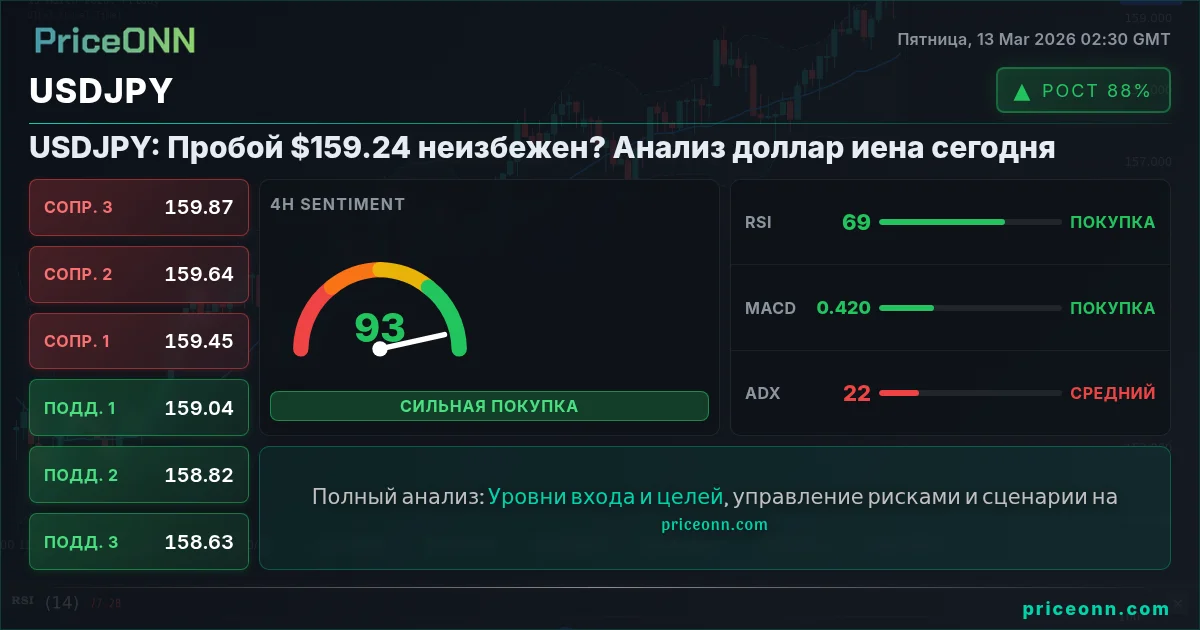
USDJPY в настоящее время тестирует сопротивление в районе $159.24, уровень, который оказалось трудно пробить в последние сессии. Индекс доллара (DXY) набирает силу, оказывая давление на иену. Является ли это прелюдией к значительному прорыву, или медведи защитят этот ключевой уровень? Ответ кроется в сочетании технических индикаторов и фундаментальных факторов, которые требуют пристального внимания трейдеров прямо сейчас. Проведем анализ доллар иена сегодня.
- RSI на уровне 61.09 на 1-часовом графике предполагает усиление бычьего импульса.
- Ключевой уровень сопротивления вблизи $159.24, устойчивый прорыв выше которого может спровоцировать дальнейший рост.
- ADX на уровне 16.66 на 1-часовом таймфрейме указывает на слабую тенденцию, предполагая потенциальную консолидацию перед следующим движением.
- Укрепление DXY оказывает понижательное давление на USDJPY, создавая потенциальную установку для прорыва.
Почему $159.24 – это линия фронта
Уровень $159.24 представляет собой критический момент для USDJPY. Наблюдая за USDJPY на протяжении всего цикла ставок 2024 года, мы видели, как этот уровень действует как магнит для ценового действия, привлекая как покупателей, так и продавцов. Решительный прорыв выше этого сопротивления сигнализирует о потенциальном изменении настроений на рынке, открывая дверь для дальнейшего роста. Однако неспособность преодолеть это препятствие может привести к повторному тестированию уровней поддержки и периоду консолидации. Ключ здесь – терпение и ожидание подтверждения, прежде чем принимать решение о направленной предвзятости.
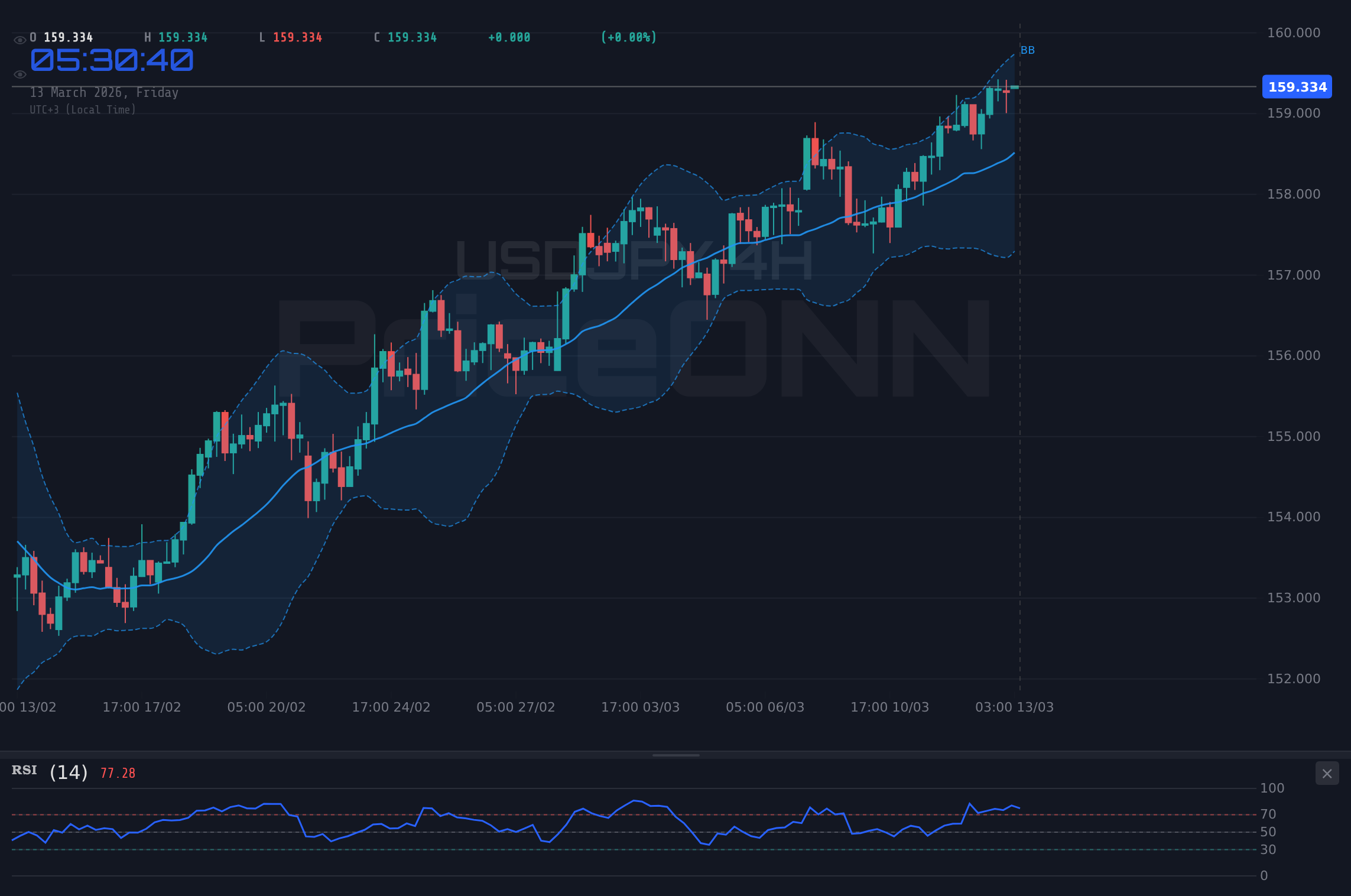
На 1-часовом таймфрейме USDJPY торгуется выше своей средней полосы Боллинджера, которая часто действует как динамическая поддержка, в настоящее время вблизи $159.10. RSI на уровне 61.09 указывает на то, что рынок еще не перекуплен, что обеспечивает пространство для дальнейшего роста. Однако осциллятор Stochastic показывает потенциальное состояние перекупленности с %K на уровне 45.14 и %D на уровне 67.53, что предполагает необходимость соблюдать осторожность. Трейдер может дождаться отката к средней полосе Боллинджера, прежде чем открывать длинную позицию. Этот подход соответствует стратегии избегания риска, обеспечивая более выгодную точку входа и более жесткий стоп-лосс.
Многопериодный анализ: какие сигналы мы видим?
Многопериодный анализ обеспечивает более полное представление об USDJPY. На 4-часовом графике пара демонстрирует бычий тренд, при этом ADX на уровне 21.46 указывает на умеренную силу. RSI на уровне 68.41, хотя и не находится в зоне перекупленности, предполагает, что быки контролируют ситуацию. Гистограмма MACD положительная, что еще больше поддерживает бычий сценарий. Однако осциллятор Stochastic сигнализирует о перекупленности с %K на уровне 93.08 и %D на уровне 85.26, что может спровоцировать краткосрочный откат. Именно здесь вам нужно обратить внимание. 1-дневный график показывает смешанную картину, при этом ADX на слабом уровне 19.9 предполагает отсутствие сильного тренда. RSI на уровне 68.38 нейтрален, а MACD положителен. Осциллятор Stochastic также перекуплен с %K на уровне 89.49 и %D на уровне 83.39. Это расхождение между различными таймфреймами подчеркивает необходимость тщательного управления рисками и подтверждения перед инициированием сделки.
Скальперы могут искать краткосрочные возможности для покупки откатов к средней полосе Боллинджера на 1-часовом графике, нацеливаясь на быструю прибыль вблизи сопротивления $159.24. Свинг-трейдеры могут дождаться решительного прорыва выше этого уровня, прежде чем открывать длинную позицию, нацеливаясь на более высокие уровни сопротивления. Долгосрочные инвесторы могут использовать откаты для накопления USDJPY, ожидая дальнейшего ослабления иены из-за расходящейся денежно-кредитной политики между Федеральной резервной системой и Банком Японии. Каждый стиль торговли требует уникального подхода к управлению рисками и исполнению сделок.
Эффект DXY: как сила доллара влияет на USDJPY
Индекс доллара (DXY) играет решающую роль в влиянии на USDJPY. По мере укрепления DXY он оказывает понижательное давление на USDJPY, поскольку иена ослабевает по отношению к доллару. В настоящее время DXY торгуется на уровне 99.46 с дневным изменением 0.58%. 1-часовой, 4-часовой и 1-дневный таймфреймы показывают бычий тренд для DXY, при этом ADX указывает на сильный импульс. Эта сила DXY обеспечивает попутный ветер для USDJPY, потенциально подпитывая прорыв выше сопротивления $159.24. Исторически, когда DXY демонстрирует такую силу, мы часто видим соответствующее ослабление иены. Однако трейдерам также следует следить за настроениями риска и потенциальными потоками безопасной гавани, которые могут временно поддержать иену, несмотря на силу DXY.
Корреляция между DXY и USDJPY не всегда идеальна. Геополитические события, изменения в склонности к риску и внутренние японские экономические данные могут влиять на пару независимо от индекса доллара. Например, любое неожиданное объявление от Банка Японии относительно его денежно-кредитной политики может спровоцировать резкое движение в USDJPY, независимо от траектории DXY. Поэтому трейдерам следует учитывать широкий спектр факторов, прежде чем принимать торговое решение.
Геополитическая напряженность и скачок цен на нефть
Эскалация геополитической напряженности, особенно на Ближнем Востоке, оказывает значительное влияние на мировые рынки. Скачок цен на нефть, при этом нефть Brent в настоящее время составляет $100.73, а нефть WTI – $95.75, подпитывает опасения по поводу инфляции и потенциально подталкивает Федеральную резервную систему к более ястребиной позиции. По данным Reuters, представители ФРС выразили обеспокоенность по поводу «упорной» инфляции, предполагая, что может потребоваться дальнейшее повышение процентных ставок. Этот ястребиный нарратив ФРС поддерживает доллар и усиливает понижательное давление на USDJPY. Скачок цен на нефть также создает сложную динамику, поскольку он может негативно повлиять на японскую экономику, которая в значительной степени зависит от импортируемой энергии. Этот экономический встречный ветер может еще больше ослабить иену, усиливая влияние укрепляющегося доллара.
Реакция рынка на эти геополитические риски очевидна в отступлении азиатских рынков и падении промышленного индекса Доу-Джонса. Это неприятие риска обычно поддерживает валюты-убежища, такие как иена. Однако противодействующая сила укрепляющегося доллара в настоящее время доминирует в ценовом действии в USDJPY. Трейдерам следует внимательно следить за этими геополитическими событиями, поскольку они могут спровоцировать внезапные изменения в настроениях рынка и волатильности.
Японские экономические данные и политика Банка Японии
Хотя внешние факторы оказывают значительное влияние, крайне важно не упускать из виду внутренний японский экономический ландшафт и политику Банка Японии (BOJ). BOJ сохранил свою сверхмягкую денежно-кредитную политику, несмотря на рост инфляции, создавая резкий контраст с ужесточением позиции ФРС. Это расхождение в политике является основной причиной слабости иены. По данным Bloomberg, институциональные инвесторы все чаще делают ставку на дальнейшее обесценивание иены, ссылаясь на нежелание BOJ отклоняться от своего текущего курса. Однако любые намеки на потенциальный сдвиг в политике BOJ могут спровоцировать резкий разворот в USDJPY. Исторически сюрпризы от BOJ часто приводили к значительной волатильности на рынке, застигая многих трейдеров врасплох.
Предстоящие японские экономические данные, включая показатели инфляции и рост ВВП, будут внимательно отслеживаться на предмет каких-либо признаков изменений. Данные, которые окажутся сильнее, чем ожидалось, могут оказать давление на BOJ, чтобы он пересмотрел свою политическую позицию, потенциально оказывая поддержку иене. И наоборот, более слабые данные могут укрепить текущую политику BOJ и еще больше ослабить иену. Трейдерам следует сохранять бдительность и быть готовыми корректировать свои позиции на основе этих выпусков данных. Следующие несколько недель могут оказаться решающими для USDJPY, поскольку рынок борется с этими конкурирующими силами.
Торговый план: оседлать бычью волну?
Основываясь на текущих технических и фундаментальных перспективах, стоит рассмотреть бычью торговую установку для USDJPY, но с тщательным управлением рисками. 1-часовой и 4-часовой графики показывают бычий тренд, в то время как сила DXY обеспечивает поддерживающий попутный ветер. Однако перекупленный осциллятор Stochastic и потенциал геополитических рисков требуют осторожности. Похоже, что терпение здесь будет вознаграждено.
Устойчивый прорыв выше сопротивления $159.24 откроет дверь для дальнейшего роста, нацеливаясь на $159.43 и $159.56. Этот сценарий зависит от продолжающейся силы DXY и отсутствия неожиданных заявлений от BOJ.
Неспособность прорваться выше $159.24 может привести к повторному тестированию поддержки вблизи $158.98 и $158.88. Этот сценарий, вероятно, разыграется, если настроения риска ухудшатся или если BOJ намекнет на изменение политики.
Вероятность реализации бычьего сценария оценивается в 60%, учитывая силу DXY и преобладающие настроения на рынке. Однако 40% вероятность медвежьего сценария подчеркивает необходимость бдительности и тщательного управления рисками. Не забывайте управлять своим риском, дождитесь своей установки - рынок всегда дает второй шанс. Здесь нужно обратить внимание.
Часто задаваемые вопросы: Анализ USDJPY
Что произойдет, если USDJPY пробьет сопротивление на уровне $159.24?
Устойчивый прорыв выше $159.24, вероятно, вызовет дальнейший восходящий импульс, нацеливаясь на следующие уровни сопротивления на $159.43 и $159.56. Этот сценарий зависит от продолжающейся силы DXY и отсутствия неожиданных заявлений от BOJ.
Стоит ли покупать USDJPY на текущих уровнях $159.33, учитывая перекупленность Stochastic?
Хотя 1-часовой график показывает бычий импульс, перекупленный осциллятор Stochastic предполагает осторожность. Более консервативным подходом было бы дождаться отката к средней полосе Боллинджера вблизи $159.10, прежде чем открывать длинную позицию, что позволит получить более выгодную точку входа и более жесткий стоп-лосс.
Является ли RSI на уровне 61.09 сильным сигналом к покупке USDJPY прямо сейчас?
RSI на уровне 61.09 на 1-часовом графике указывает на усиление бычьего импульса, но еще не находится в зоне перекупленности. Хотя это поддерживает бычий прогноз, трейдерам также следует учитывать другие факторы, такие как сила DXY и потенциал геополитических рисков, прежде чем инициировать сделку.
Как повлияют предстоящие данные по инфляции в России на USDJPY на этой неделе?
Предстоящие данные по инфляции в России вряд ли окажут прямое влияние на USDJPY. Основными драйверами для USDJPY остаются сила DXY, политика BOJ и геополитические риски. Тем не менее, любой сюрприз в данных по инфляции в России может косвенно повлиять на настроения риска и потоки безопасной гавани, потенциально влияя на USDJPY.
Отслеживайте рынки в реальном времени
ИИ-анализ и данные в реальном времени.