

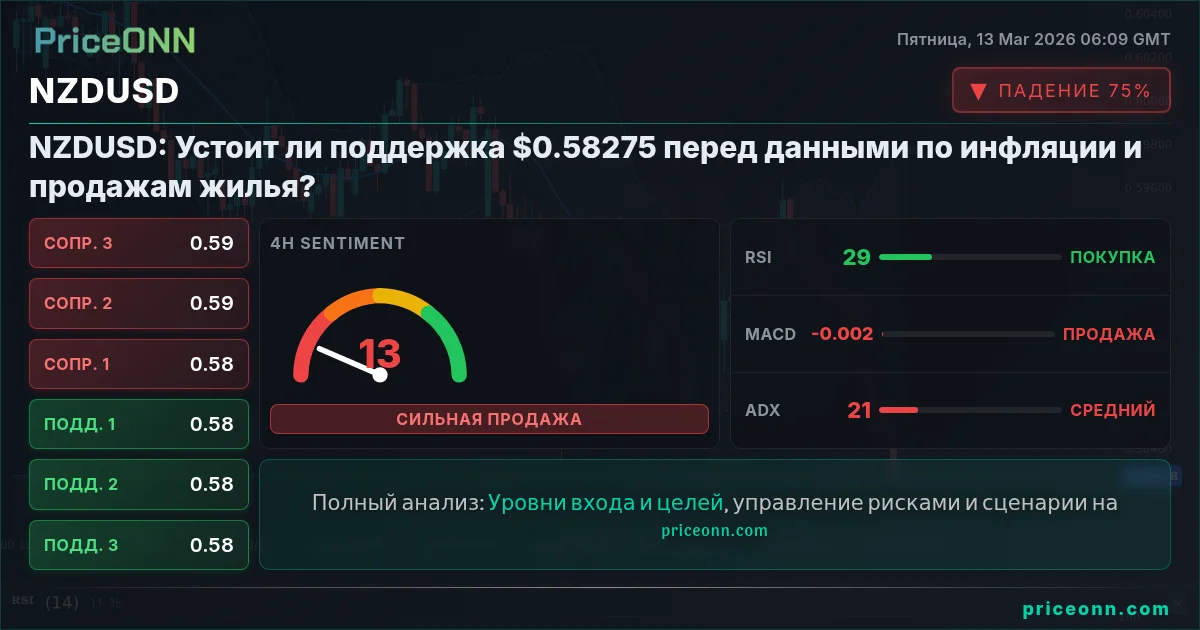
NZDUSD в настоящее время торгуется на уровне $0.58275, за которым внимательно следят трейдеры. Новозеландский доллар находится под давлением из-за укрепления доллара США и неприятия риска на глобальных рынках. Ключевой вопрос сейчас заключается в том, устоит ли эта поддержка, или пара готова к дальнейшему снижению. Важно провести тщательный анализ новозеландский доллар, чтобы понять дальнейшее направление движения.
- RSI на уровне 36.29 на дневном графике сигнализирует о потенциальном дальнейшем давлении вниз.
- Критический уровень поддержки находится на отметке $0.5826, пробой ниже может спровоцировать распродажу.
- Гистограмма MACD показывает отрицательный импульс, указывая на усиление медвежьих настроений.
- Предстоящие данные по инфляции и продажам жилья из США определяют корреляцию NZDUSD с DXY.
Отслеживая NZDUSD на протяжении цикла ставок 2024 года, становится ясно, что пара очень чувствительна к изменениям в глобальных настроениях риска и силе доллара США. Текущая среда благоприятствует доллару, индекс DXY находится на уровне 99.61, показывая дневной прирост на 0.21%. Это оказывает прямое давление на NZDUSD.
Бычий сценарий: Путь к восстановлению
Несмотря на текущее медвежье давление, бычий сценарий остается возможным. Если NZDUSD сможет удержаться выше ближайшей поддержки на уровне $0.58238 на 1-часовом графике, восстановление может быть вполне вероятным. Устойчивый пробой выше 1-часового сопротивления на уровне $0.58394 сигнализирует о возобновлении бычьего импульса. Первой целью для быков будет $0.58498, за которой следует $0.5855. Этот сценарий зависит от ослабления доллара США и улучшения аппетита к риску на глобальных рынках. Положительный сюрприз в предстоящих экономических данных, таких как более слабый, чем ожидалось, индекс потребительских цен, может стать катализатором для такого движения. Однако, учитывая текущие рыночные условия, этот сценарий имеет более низкую вероятность.
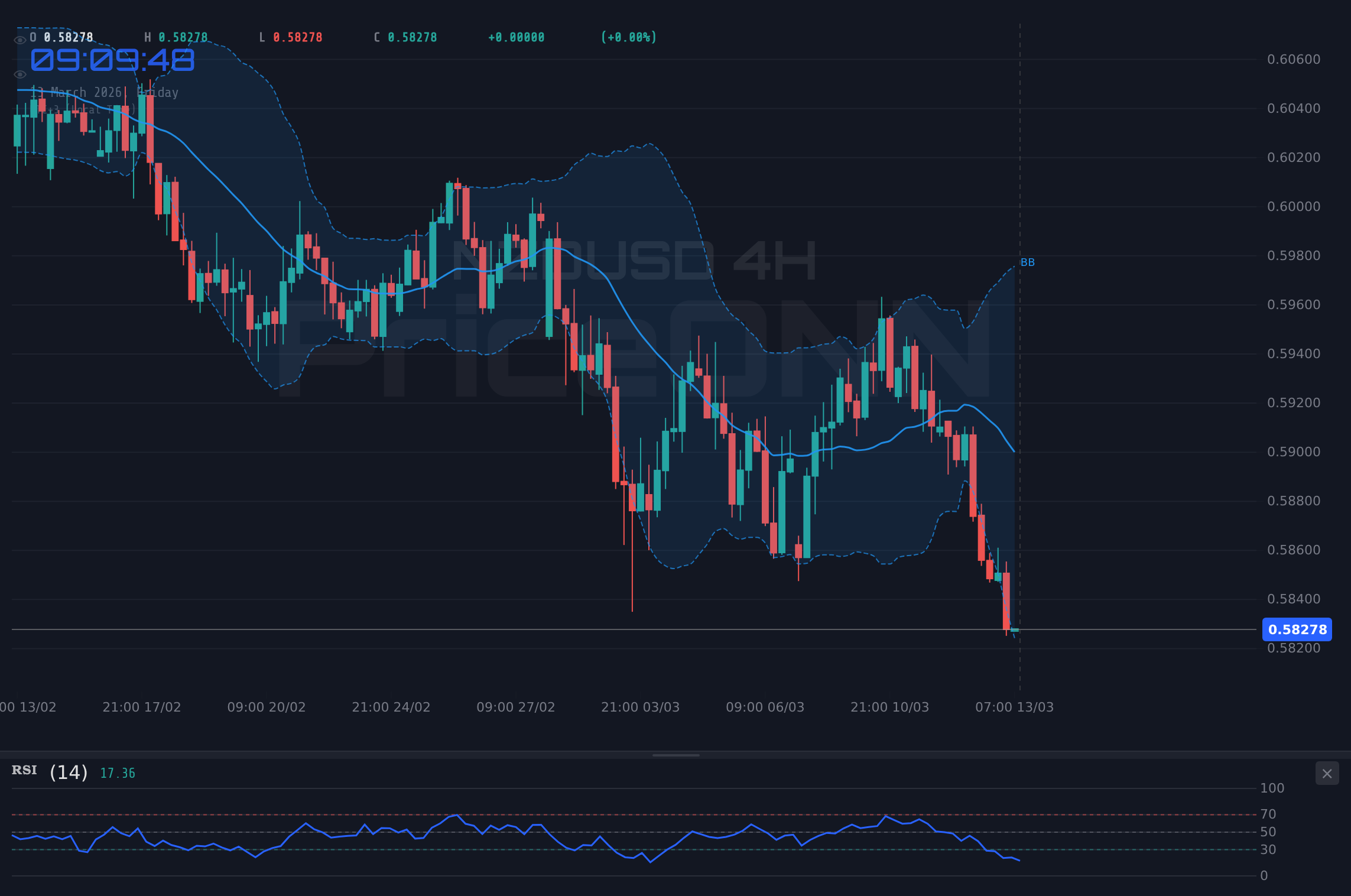
Ключевым триггером для этого бычьего сценария станет пробой выше 20-дневной EMA, которая в настоящее время находится около $0.5840. Этот уровень выступал в качестве значительного сопротивления в последние дни, и успешный прорыв может привлечь дальнейший интерес к покупкам.
Медведи берут контроль: Сценарий снижения
Медвежий сценарий кажется более вероятным, учитывая текущий технический и фундаментальный фон. 1-часовой график показывает сильный нисходящий тренд с ADX 43.22, что указывает на значительный медвежий импульс. Если NZDUSD пробьет ближайшую поддержку на уровне $0.58238, следующей целью для медведей будет $0.58186, за которой следует $0.58082. Устойчивый пробой ниже $0.58082 может спровоцировать более значительную распродажу, потенциально подтолкнув пару к дневному уровню поддержки на $0.5826. RSI на 1-часовом графике в настоящее время находится в зоне перепроданности на уровне 18.2, что предполагает, что пара может быть готова к краткосрочному отскоку. Однако общая тенденция остается медвежьей, и любой такой отскок, вероятно, будет недолгим.
Ключевым триггером для медвежьего сценария станет негативный сюрприз в предстоящих данных по продажам жилья. Это может еще больше усилить опасения по поводу экономики США и укрепить доллар США, оказывая дополнительное давление на NZDUSD.
В ожидании: Сценарий торговли в диапазоне
Третий, менее вероятный, сценарий - это период консолидации в пределах определенного диапазона. Это может произойти, если рынок ожидает дальнейшей ясности от предстоящих публикаций экономических данных. В этом сценарии NZDUSD, вероятно, будет торговаться между 1-часовой поддержкой на уровне $0.58238 и 1-часовым сопротивлением на уровне $0.58394. ADX на уровне 18.85 усиливает этот потенциал для движения в диапазоне, поскольку такое значение предполагает слабую тенденцию.
Чтобы этот сценарий реализовался, нам нужно увидеть период относительного спокойствия на глобальных рынках, без каких-либо серьезных сюрпризов от публикаций экономических данных или геополитических событий. Однако, учитывая текущий уровень неопределенности, этот сценарий кажется менее вероятным.
Наиболее вероятный сценарий: Медвежий прогноз (вероятность 60%)
Учитывая технические и фундаментальные факторы, медвежий сценарий кажется наиболее вероятным с оценочной вероятностью 60%. Сильный нисходящий тренд на 1-часовом графике, укрепление доллара США и предстоящие публикации экономических данных - все это указывает на дальнейшее давление вниз на NZDUSD. 1-часовой RSI находится в зоне перепроданности на уровне 18.2, однако это не обязательно означает, что разворот неизбежен. Это просто предполагает, что пара готова к краткосрочному отскоку. Общая тенденция остается медвежьей, и любой такой отскок, вероятно, будет недолгим.
Вероятность бычьего сценария оценивается в 25%, а вероятность сценария торговли в диапазоне - в 15%. Эти вероятности основаны на всестороннем анализе технических индикаторов, фундаментальных факторов и настроений рынка.
Ключевые триггеры, за которыми стоит следить на этой неделе
Несколько ключевых триггеров могут повлиять на направление NZDUSD на этой неделе:
- Данные по индексу потребительских цен в США: Более сильный, чем ожидалось, индекс потребительских цен может еще больше усилить опасения по поводу инфляции и укрепить доллар США, оказывая дополнительное давление на NZDUSD.
- Данные по продажам жилья в США: Более слабый, чем ожидалось, показатель продаж жилья может сигнализировать о замедлении экономики США и ослабить доллар США, оказав некоторую поддержку NZDUSD.
- Геополитические события: Эскалация напряженности на Ближнем Востоке может привести к бегству в безопасные активы, что принесет пользу доллару США и окажет давление на более рискованные активы, такие как NZDUSD. Согласно Reuters, напряженность остается высокой после недавних событий.
Ключевые уровни
Уровни поддержки
Уровни сопротивления
Технический Обзор
| Индикатор | Значение | Сигнал |
|---|---|---|
| RSI (14) | 36.29 | Медвежий |
| Гистограмма MACD | Отрицательная | Медвежий |
| Stochastic | 11.23 | Медвежий |
| ADX | 43.22 | Сильный нисходящий тренд |
| Bollinger | Средняя полоса | Ниже |
Часто Задаваемые Вопросы: Анализ NZDUSD
Что произойдет, если NZDUSD пробьет поддержку на уровне $0.58238?
Если NZDUSD пробьет поддержку на уровне $0.58238, мы можем увидеть движение вниз к $0.58186, а затем к $0.58082. 1-часовой график показывает сильный нисходящий тренд, поэтому пробой этой поддержки может спровоцировать дальнейшие продажи.
Стоит ли продавать NZDUSD на текущих уровнях $0.58275, учитывая RSI на уровне 36.29?
Хотя RSI на уровне 36.29 предполагает условия перепроданности, это не обязательно сигнал к покупке. Общая тенденция медвежья, поэтому продажа на росте может быть более разумным подходом, со стоп-лоссом выше $0.58394.
ADX на уровне 43.22 является сильным сигналом нисходящего тренда для NZDUSD?
Да, ADX на уровне 43.22 указывает на сильный нисходящий тренд на 1-часовом графике. Это говорит о том, что медвежий импульс, вероятно, сохранится, и трейдерам следует проявлять осторожность при покупке во время любых краткосрочных ралли.
Как данные по инфляции в США повлияют на NZDUSD на этой неделе?
Если данные по инфляции в США окажутся сильнее, чем ожидалось, это может усилить опасения по поводу инфляции и укрепить доллар США. Это, вероятно, окажет дальнейшее понижательное давление на NZDUSD. Более слабый индекс потребительских цен может принести некоторое облегчение новозеландскому доллару.
Отслеживайте рынки в реальном времени
ИИ-анализ и данные в реальном времени.