

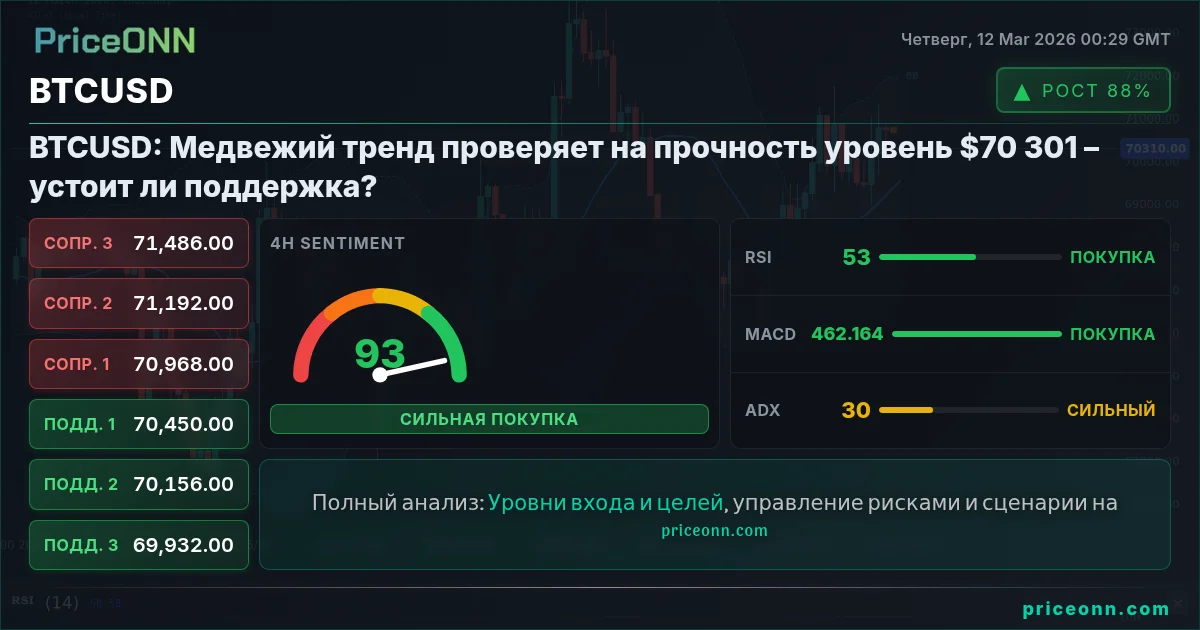
Bitcoin только что сделал то, что воодушевило медведей, протестировав критический уровень $70 301. Это не просто незначительное снижение; это проверка на прочность, при этом как технические индикаторы, так и общее настроение рынка указывают на потенциальный сдвиг в динамике. Сейчас вопрос в том, удержится ли этот уровень или мы увидим более глубокую коррекцию. Многие трейдеры сейчас активно проводят анализ биткоин сегодня, чтобы понять дальнейшее движение.
- RSI на уровне 51.74 указывает на нейтральный импульс, но склоняется к потенциальному бычьему отскоку.
- Критическая поддержка находится на уровне $70 096.33, прорыв ниже которого может спровоцировать дальнейшие продажи.
- MACD показывает положительный импульс, предполагая возможное продолжение бычьего движения, если ключевые уровни удержатся.
- Укрепление DXY оказывает давление на BTCUSD, подчеркивая обратную корреляцию.
Анализ BTCUSD сегодня показывает рынок на перепутье. Уровень $70 301 – это не просто психологический барьер; это поле битвы, где быки пытаются защитить свои достижения от усиливающегося медвежьего давления. Недавнее снижение заставляет многих переоценивать свои позиции, особенно учитывая смешанные сигналы от различных технических индикаторов. Ключ в том, чтобы дождаться подтверждения, а не просто реагировать на первоначальное движение.
Почему $70 096 – это линия обороны
Смотрите, этот уровень абсолютно критичен. Поддержка на уровне $70 096.33 – это первая линия обороны. Устойчивый прорыв ниже этого уровня может открыть шлюзы, потенциально приведя к тестированию более низких уровней поддержки на $69 816.67 и $69 388.33. Трейдерам нужно быть бдительными здесь. Четырехчасовой график показывает четкую медвежью поглощающую модель, что является еще одним тревожным сигналом для быков. Общий тренд на дневном таймфрейме остается бычьим, но эту краткосрочную слабость нельзя игнорировать.
Что сигнал MACD говорит нам об анализе тренда BTCUSD
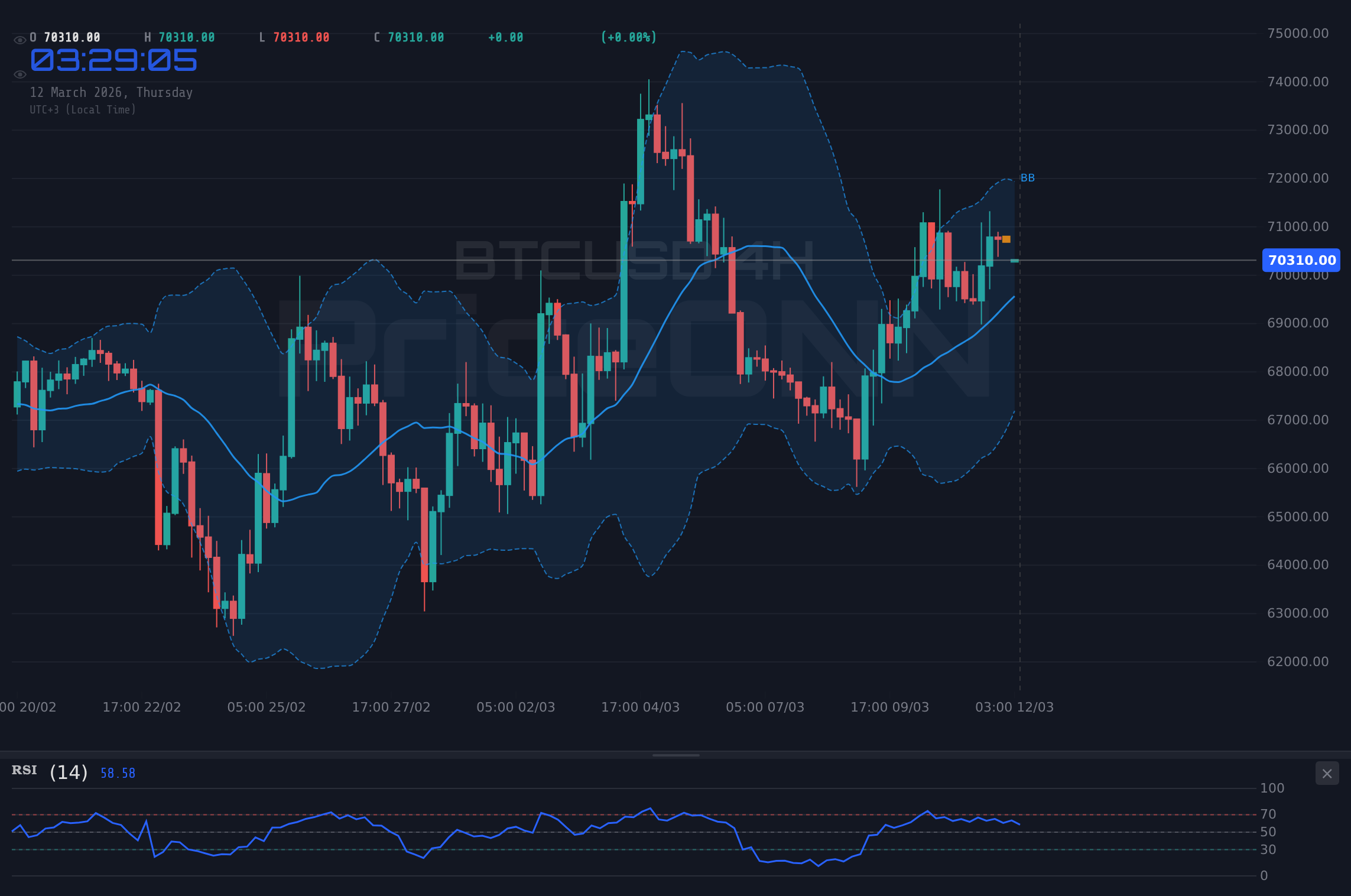
Гистограмма MACD в настоящее время показывает положительный импульс, но он ослабевает. Эта дивергенция является предупреждающим знаком, предполагающим, что бычий тренд может терять силу. Положительный импульс MACD противоречит нисходящему движению цены. Это создает необходимость в подтверждении, либо через стабилизацию цены на текущих уровнях и возобновление ее восходящей траектории, либо через прорыв ниже поддержки, подтверждая медвежью дивергенцию. Этот индикатор может быть немного обманчивым; терпение, похоже, будет вознаграждено здесь.
Влияние силы DXY на прогноз цены BTCUSD
При DXY на уровне 99.25 сила индекса доллара оказывает давление на BTCUSD. Исторически существует обратная корреляция между ними. Растущий DXY часто приводит к ослаблению BTCUSD, поскольку это делает Bitcoin относительно более дорогим для международных покупателей. Управляйте своим риском, ждите своей установки – рынок всегда дает второй шанс. Новости от 11 марта подчеркивают потенциал волатильности USD, учитывая наблюдение за инфляцией в США. Именно здесь вам нужно обратить внимание...
Анализ нескольких таймфреймов: Противоречивые сигналы
Анализ нескольких таймфреймов рисует смешанную картину. На часовом графике тренд медвежий, с RSI на уровне 51.74, указывающим на нейтральный импульс. Однако четырехчасовой график показывает более выраженный медвежий тренд с RSI на уровне 55.99, в то время как дневной график все еще поддерживает бычий прогноз с RSI на уровне 51.38. Это расхождение в сигналах подчеркивает необходимость осторожности и подтверждения перед принятием каких-либо решительных действий. ADX на часовом графике находится всего на уровне 18.46, указывая на слабый тренд, поэтому медвежье движение, возможно, еще не зафиксировалось.
Ончейн-метрики и тенденции институционального принятия
Помимо технических аспектов, крайне важно учитывать ончейн-метрики и тенденции институционального принятия. Движения китов всегда являются ключевым индикатором. Крупные переводы на биржи часто предшествуют распродажам, в то время как оттоки с бирж могут сигнализировать о накоплении. Кроме того, рост экосистем DeFi и NFT, новости регулирования, доминирование Bitcoin, корреляции альткоинов и тенденции институционального принятия – все это играет значительную роль в ценовом движении Bitcoin. Новости о потенциальных притоках ETF или репрессиях со стороны регулирующих органов могут спровоцировать резкие движения, поэтому оставаться в курсе событий крайне важно.
Нефть марки Crude нацелена на $90: Что это значит для Bitcoin
Недавние новости о том, что нефть марки Crude нацелена на $90, поскольку напряженность в отношениях с Ираном угрожает стабильности еврозоны, добавляют еще один уровень сложности. Рост цен на нефть может подпитывать опасения по поводу инфляции, что, в свою очередь, может повлиять на привлекательность Bitcoin в качестве защиты от инфляции. Если нарратив об инфляции наберет обороты, мы можем увидеть увеличение спроса на Bitcoin. Однако взаимосвязь не всегда однозначна, и другие факторы, такие как ожидания процентных ставок и общее настроение риска, также могут играть значительную роль.
Торговые сигналы и оповещения о ключевых уровнях
Оповещения о ключевых уровнях имеют решающее значение для любого трейдера BTCUSD. Дневное закрытие выше $70 804.33 откроет дверь для повторного тестирования более высоких уровней сопротивления на $71 232.67 и $71 512.33. И наоборот, прорыв ниже $70 096.33 может спровоцировать движение к $69 816.67 и $69 388.33. Стохастик на часовом графике показывает потенциальное состояние перепроданности, с K=49.6 и D=66.49. Четырехчасовой график показывает стохастик K на уровне 51.75 и D на уровне 47.63, указывая на бычье пересечение.
Анализ волатильности: Почему прорыв неизбежен
Почему анализ волатильности BTCUSD указывает на прорыв: Полосы Боллинджера в настоящее время сужаются, что часто предшествует периоду повышенной волатильности. Эта фаза консолидации предполагает, что значительное движение не за горами. Вопрос в том, будет ли это бычий прорыв или медвежий пробой. Ключ в том, чтобы следить за решительным прорывом либо верхней, либо нижней полосы Боллинджера, сопровождаемым всплеском объема.
Часто задаваемые вопросы: Анализ BTCUSD
Что произойдет, если BTCUSD пробьет поддержку на уровне $70 096.33?
Если BTCUSD решительно пробьет уровень поддержки $70 096.33, мы можем увидеть быстрое движение вниз к следующим уровням поддержки на $69 816.67 и, возможно, $69 388.33. Этот пробой, вероятно, подтвердит медвежью дивергенцию, указанную ослабляющейся гистограммой MACD, вызвав дальнейшее давление продаж.
Стоит ли покупать BTCUSD на текущих уровнях $70 301, учитывая нейтральный RSI?
Учитывая нейтральный RSI на уровне 51.74 и противоречивые сигналы от других индикаторов, покупка BTCUSD на уровне $70 301 – это шаг с высоким риском. Лучше дождаться подтверждения, либо через устойчивый прорыв выше сопротивления на уровне $70 804.33, либо удержание выше поддержки на уровне $70 096.33. Необходим четкий сигнал перед тем, как вкладывать капитал.
Является ли ослабление гистограммы MACD сигналом к продаже BTCUSD?
Ослабление гистограммы MACD не является окончательным сигналом к продаже, но это предупреждающий знак о том, что бычий импульс ослабевает. Сигнал к продаже будет подтвержден прорывом ниже поддержки на уровне $70 096.33, что, вероятно, приведет к дальнейшему снижению.
Как данные по инфляции в США повлияют на BTCUSD на этой неделе?
Публикация данных по инфляции в США 11 марта может оказать значительное влияние на BTCUSD. Если инфляция окажется выше ожидаемой, это может укрепить доллар, оказав понижательное давление на BTCUSD. И наоборот, более слабая, чем ожидалось, инфляция может ослабить доллар, обеспечив поддержку BTCUSD.
Суть: Управляйте риском, следите за ключевыми уровнями
Волатильность создает возможности – те, кто подготовлен, будут вознаграждены. Рынки цикличны; каждый спад закладывает семена для следующего ралли. Терпеливые инвесторы всегда находят возможности – главное – дождаться подходящего момента. Будьте смелыми, когда рынок боится, осторожными, когда он в эйфории – это золотое правило применимо и сегодня.
Краткий обзор технического анализа
| Индикатор | Значение | Сигнал |
|---|---|---|
| RSI (14) | 51.74 | Нейтральный |
| Гистограмма MACD | Положительный | Бычий |
| Стохастик | K=49.6, D=66.49 | Медвежий |
| ADX | 18.46 | Слабый тренд |
| Bollinger | Сужается | Сжатие волатильности |
Ключевые уровни
Уровни поддержки
Уровни сопротивления
Отслеживайте рынки в реальном времени
ИИ-анализ и данные в реальном времени.