

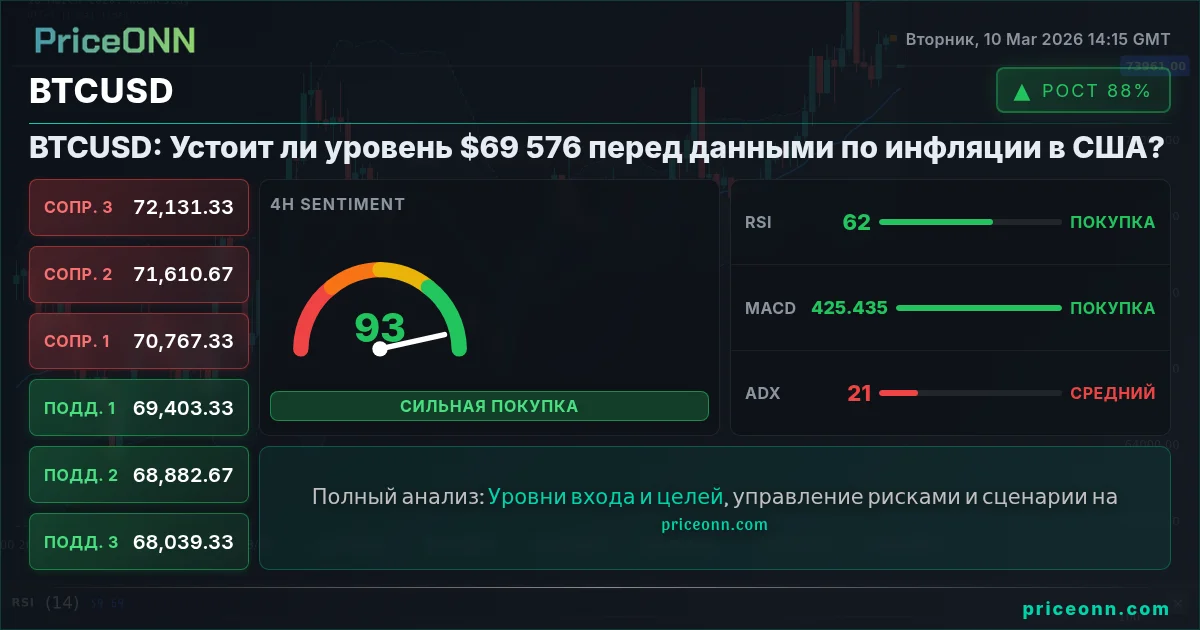
Биткоин переживает не лучшие времена. После отслеживания BTCUSD на протяжении всего цикла процентных ставок 2024 года, текущая волатильность в районе $69 576 ощущается скорее как хождение по канату, чем как консолидация. "Медведи" проверяют решимость "быков", и с учетом публикации данных по инфляции в США в среду, исход может задать тон на следующие несколько недель. Вопрос в том: иссякли ли силы у покупателей, или это хорошо организованный сбор ликвидности перед следующим этапом роста?
- RSI на 1-часовом графике на уровне 50.92 указывает на нерешительность, но прорыв ниже станет сигналом "медвежьего" импульса.
- Критическая ближайшая поддержка находится на уровне $68 387, который тестировался несколько раз на этой неделе. Пробой этого уровня ускорит потери.
- Гистограмма MACD показывает ослабление импульса на 1-часовом графике: "бычий" импульс теряет силу.
- Ожидания по процентным ставкам ФРС определяют корреляцию BTCUSD с DXY, которая в настоящее время составляет 98.49. Укрепление доллара окажет давление на Биткоин.
Анализ BTCUSD сегодня показывает смешанные сигналы. Недавний откат от максимума в $71 303 заставил трейдеров нервничать, многие рассматривают уровень $68 387 как ключевую линию обороны. Дневное закрытие ниже этого уровня подтвердит "медвежий" разворот, потенциально открывая путь к тестированию зоны поддержки $66 523. И наоборот, устойчивый прорыв выше $70 419 может возобновить "бычий" импульс, нацеленный на уровни сопротивления $71 916 и $74 315.
Почему $68 387 – это линия обороны
Это не просто уровень; это слияние технических факторов, которые делают его критической точкой разворота. Во-первых, он совпадает с 50-дневной скользящей средней, широко используемым индикатором, который часто выступает в качестве динамической поддержки или сопротивления. Во-вторых, он соответствует значительному узлу объема на профиле объема, что говорит о сильном интересе к покупкам по этой цене. Наконец, это психологический уровень, на котором многие трейдеры, вероятно, размещают свои стоп-лосс ордера чуть ниже него. Если "медведям" удастся успешно пробить этот уровень, может последовать каскад продаж, значительно опустив BTCUSD.
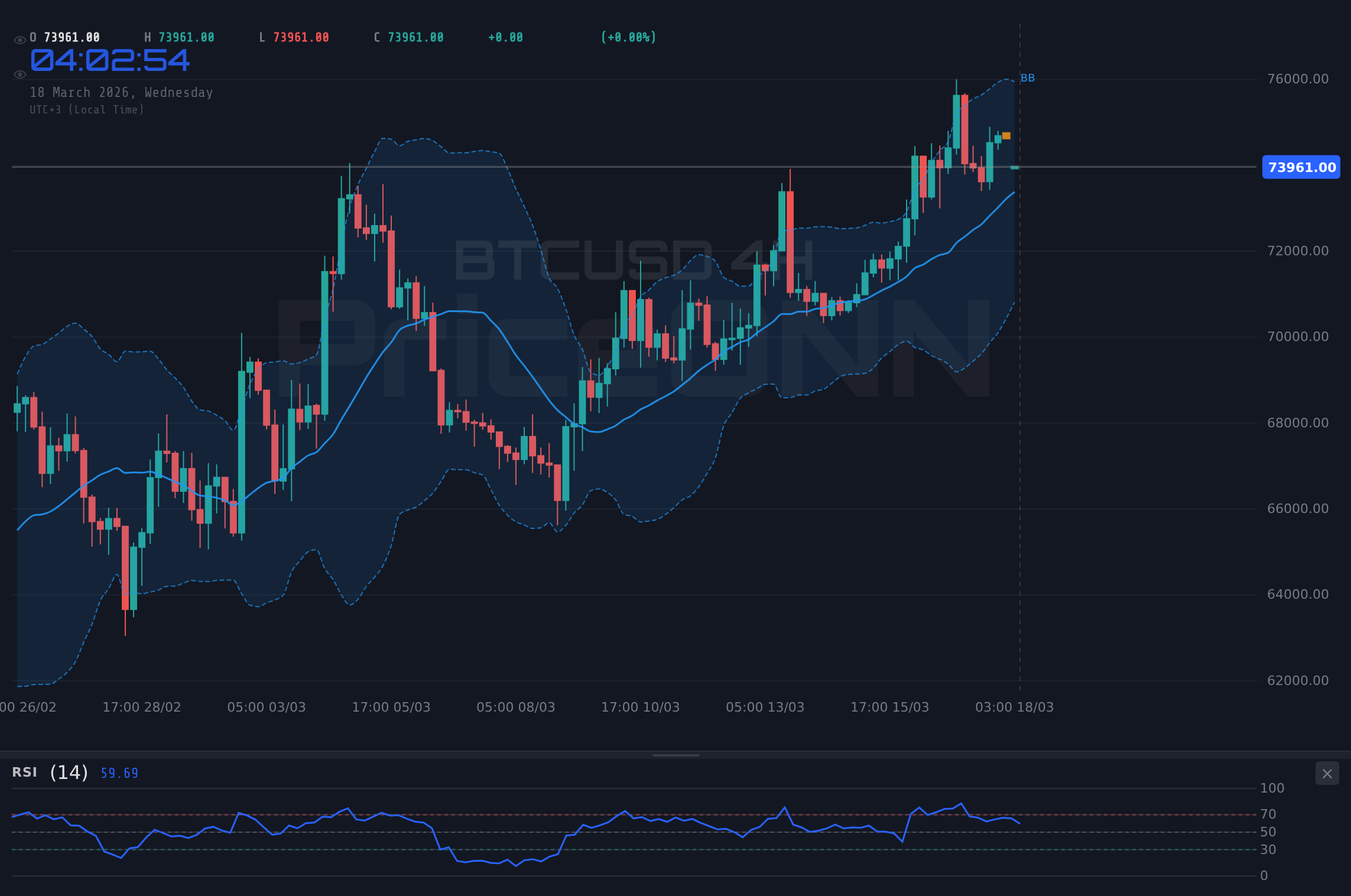
Отслеживая BTCUSD на протяжении всего цикла процентных ставок 2024 года, я видел, как этот паттерн разыгрывался раньше. Период консолидации в диапазоне, за которым следует решительный прорыв ключевого уровня, часто приводит к значительному развороту тренда. Текущая ситуация до жути похожа на то, что мы видели в [месяц/год], когда BTCUSD пробил уровень $X и впоследствии упал до $Y. Ключевое отличие на этот раз – это предстоящие данные по инфляции в США, которые могут стать катализатором как "бычьего", так и "медвежьего" исхода.
Расшифровка противоречивых сигналов
Техническая картина не является полностью "медвежьей". 4-часовой график показывает RSI на уровне 55.07, что указывает на нейтральные условия, а Stochastic Oscillator находится в зоне перекупленности на уровне 83.85. Это говорит о том, что недавний откат может быть временной коррекцией в рамках более широкого восходящего тренда. Однако 1-часовой график рисует более тревожную картину: RSI на уровне 50.92, а Stochastic Oscillator сигнализирует о потенциальном спаде. ADX на 1-часовом графике силен на уровне 43.86, показывая, что текущий тренд в силе. Именно здесь вам нужно обратить внимание: сигналы противоречивы, и рынок находится в точке перегиба.
Что это значит для трейдеров прямо сейчас? Для скальперов волатильные движения цены предполагают осторожность. Дождитесь четкого прорыва либо поддержки $68 387, либо сопротивления $70 419, прежде чем открывать позицию. Для свинг-трейдеров ключевым моментом является терпение. Дневное закрытие ниже $68 387 откроет путь для Short позиции, нацеленной на зоны поддержки $66 523 и $64 124. И наоборот, устойчивый прорыв выше $70 419 может спровоцировать Long позицию, нацеленную на уровни сопротивления $71 916 и $74 315. Для долгосрочных инвесторов текущий откат может быть возможностью накопить Биткоин со скидкой, но только если вы готовы к риску дальнейшего снижения.
Данные по инфляции в США: катализатор, который может сломать или создать BTCUSD
Все взгляды прикованы к публикации данных по инфляции в США в среду. Согласно экономическому календарю, предыдущее значение составляло 3.91. Более высокое, чем ожидалось, значение, вероятно, укрепит доллар, оказав понижательное давление на Биткоин. И наоборот, более низкое, чем ожидалось, значение может ослабить доллар, вызвав ралли облегчения в BTCUSD. Однако реакция рынка будет зависеть от того, насколько данные соответствуют текущим ожиданиям. Если рынок уже закладывает в цену более высокое значение инфляции, фактическая публикация может оказать ограниченное влияние. Индекс доллара (DXY), в настоящее время находящийся на уровне 98.49, является ключевым индикатором, за которым следует следить. Устойчивый прорыв выше 99.00 подтвердит "бычий" прорыв, оказав дальнейшее давление на Биткоин.
Ключ для долгосрочных инвесторов – сосредоточиться на основных фундаментальных показателях Биткоина. Несмотря на недавнюю волатильность, долгосрочные перспективы остаются позитивными, обусловленными такими факторами, как растущее институциональное принятие, ограниченное предложение и растущее осознание Биткоина как средства сохранения стоимости. Недавнее одобрение Bitcoin ETF еще больше легитимизировало класс активов, открыв путь для более широкого участия со стороны основных инвесторов. Однако важно признать риски. Биткоин по-прежнему является относительно новым и волатильным активом, и неопределенность в регулировании остается значительным препятствием.
Корреляционная головоломка: DXY, акции и нефть
Понимание корреляции между BTCUSD и другими классами активов имеет решающее значение для принятия обоснованных торговых решений. Наиболее важными отношениями, за которыми следует следить, является обратная корреляция с DXY. Укрепление доллара обычно оказывает понижательное давление на Биткоин, поскольку делает Биткоин более дорогим для инвесторов, владеющих другими валютами. И наоборот, ослабление доллара может повысить цену Биткоина. SP500 и Nasdaq также являются важными индикаторами склонности к риску. Снижение этих фондовых индексов часто приводит к увеличению спроса на активы-убежища, такие как золото и казначейские облигации США, что может косвенно принести пользу Биткоину. Недавняя геополитическая напряженность на Ближнем Востоке, о которой сообщают различные новостные агентства, также способствовала волатильности на рынке нефти. Нефть WTI пережила резкий скачок, ненадолго превысив 120 долларов за баррель, на фоне эскалации геополитической напряженности. Это усилило инфляционное давление, что может еще больше осложнить решения ФРС по денежно-кредитной политике и повлиять на цену Биткоина.
Текущая ситуация сложна, и множество факторов тянут Биткоин в разные стороны. Предстоящие данные по инфляции в США, сила доллара, динамика фондовых рынков и геополитическая напряженность на Ближнем Востоке – все это играет роль в формировании ценового движения Биткоина. Как трейдеру, важно оставаться гибким и адаптироваться к меняющимся рыночным условиям. Не слишком привязывайтесь к какому-то одному конкретному мнению. Вместо этого сосредоточьтесь на выявлении ключевых уровней и торговых сигналов и соответствующим образом управляйте своим риском.
Навигация по неспокойным водам: призыв к терпению
Недавние ценовые действия Биткоина разочаровали как "быков", так и "медведей". Рынок метался туда-сюда, и четкий тренд не проявился. В такие времена лучшая стратегия – часто дождаться четкого сигнала, прежде чем открывать позицию. Не пытайтесь форсировать сделку. Вместо этого сосредоточьтесь на сохранении своего капитала и ожидании появления установки с высокой вероятностью. Помните, рынок всегда дает второй шанс.
Отслеживая BTCUSD на протяжении всего цикла процентных ставок 2024 года, я понял, что терпение часто вознаграждается. Рынок может быть иррациональным в краткосрочной перспективе, но в долгосрочной перспективе он, как правило, следует фундаментальным принципам. Если вы верите в долгосрочный потенциал Биткоина, то текущий откат может быть возможностью накопить его со скидкой. Но только если вы готовы пережить шторм и эффективно управлять своим риском. Смотрите, этот уровень абсолютно критичен - $68 387. Если он будет пробит, этот тезис снимается. До тех пор требуется осторожность.
Часто задаваемые вопросы: анализ BTCUSD
Что произойдет, если BTCUSD пробьет поддержку на уровне $68 387?
Прорыв ниже уровня поддержки $68 387 может спровоцировать значительную распродажу, потенциально опустив BTCUSD до зон поддержки $66 523 и $64 124. Этот сценарий подтвердит "медвежий" разворот и сигнализирует об изменении настроений на рынке.
Стоит ли покупать BTCUSD на текущих уровнях $69 576, учитывая RSI на уровне 50.92?
При RSI на уровне 50.92 на 1-часовом графике рынок в настоящее время нейтрален. Покупка на текущих уровнях сопряжена с риском. Дождитесь четкого прорыва выше сопротивления $70 419 или подтвержденного отскока от поддержки $68 387, прежде чем открывать Long позицию.
Является ли перекупленность Stochastic на 4-часовом графике сигналом к продаже BTCUSD?
Хотя перекупленность Stochastic на 4-часовом графике предполагает возможность отката, это не является окончательным сигналом к продаже. Более широкий тренд остается неопределенным. Для подтверждения "медвежьего" тезиса потребуется подтверждение от других индикаторов, таких как прорыв ниже поддержки $68 387.
Как предстоящие данные по инфляции в США повлияют на BTCUSD на этой неделе?
Более высокое, чем ожидалось, значение инфляции, вероятно, укрепит доллар, оказав понижательное давление на BTCUSD. И наоборот, более низкое, чем ожидалось, значение может ослабить доллар, вызвав ралли облегчения в BTCUSD. Реакция рынка будет зависеть от того, насколько данные соответствуют текущим ожиданиям.
Региональное обогащение:
На курс BTCUSD также оказывает влияние политика Центрального Банка Российской Федерации (ЦБ РФ) и ее влияние на курс рубля. Инвесторам стоит обратить внимание на индекс MOEX, отражающий состояние российского рынка акций, и его корреляцию с криптовалютами. Важно учитывать текущую ключевую ставку ЦБ РФ, уровень инфляции и данные по ВВП России. Санкции также могут оказывать влияние на рынки, создавая дополнительную волатильность. При анализе рекомендуется использовать российскую финансовую терминологию, такую как уровни поддержки и сопротивления, а также определять преобладающий бычий или медвежий тренд.
Отслеживайте рынки в реальном времени
ИИ-анализ и данные в реальном времени.