

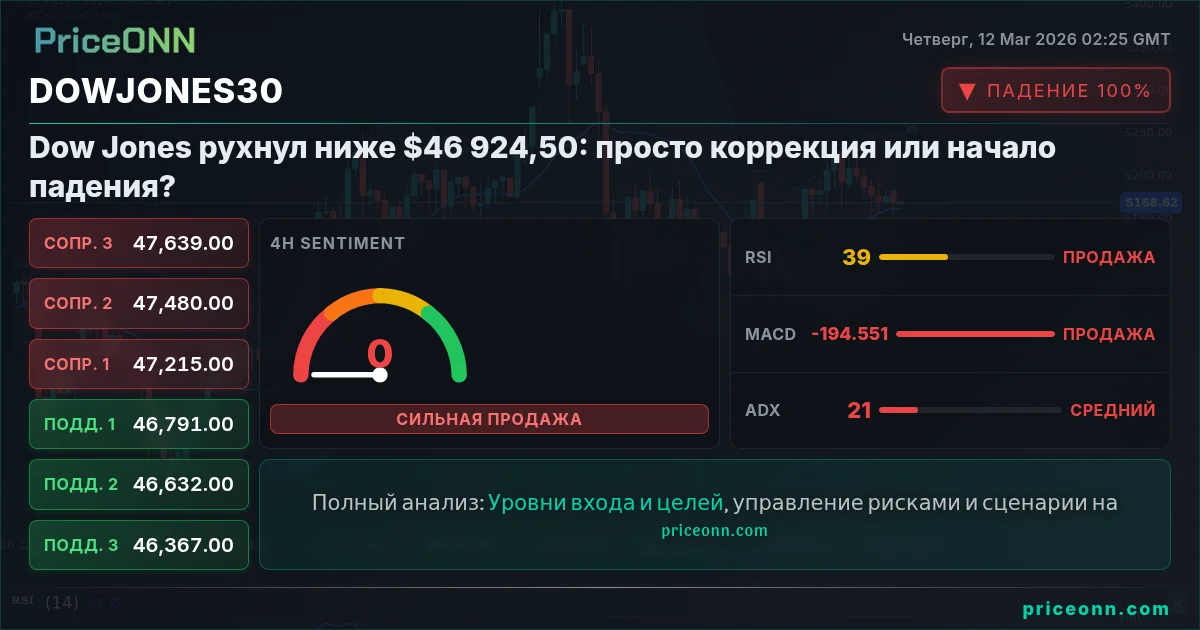
Индекс Dow Jones Industrial Average (DowJones30) значительно упал, опустившись ниже $46 924,50 на фоне усиления опасений по поводу инфляции. Этот шаг поднимает важные вопросы об устойчивости рынка и о том, является ли это временным откатом или началом более продолжительного медвежьего тренда.
- DowJones30 упал ниже $46 924,50 на фоне растущих опасений по поводу инфляции, что ознаменовало значительный спад.
- RSI на уровне 31,62 на 1-часовом графике предполагает условия перепроданности, но сильный нисходящий тренд может сохраниться.
- Ключевая поддержка находится на уровне 46 906,67, прорыв ниже которого может спровоцировать дальнейшие потери.
- Укрепление DXY на уровне 99,17 оказывает давление на DowJones30, что коррелирует с более широкой распродажей акций.
Наблюдая за DowJones30 на протяжении различных экономических циклов, можно сказать, что текущая ситуация представляет собой уникальный вызов. Сочетание устойчивой инфляции, растущих ожиданий повышения процентных ставок и геополитической напряженности создает идеальный шторм для волатильности рынка. Вопрос сейчас в том, сможет ли DowJones30 найти точку опоры и восстановиться, или же медведи продолжат доминировать.
Инфляционные опасения охватывают рынок: что движет распродажей?
Основным катализатором недавнего снижения Dow Jones является растущая обеспокоенность по поводу инфляции. Последние экономические данные показали, что инфляция остается на удивление высокой, не оправдывая ожиданий быстрого снижения. Это привело к усилению спекуляций о том, что Федеральной резервной системе, возможно, придется принять более агрессивные меры для сдерживания роста цен, потенциально включая дальнейшее повышение процентных ставок. По данным Reuters, представители ФРС подчеркнули, что инфляция остается «слишком высокой», сигнализируя о ястребиной позиции.
Энергетический сектор также играет значительную роль. Как сообщалось 11 марта, нефть WTI торгуется вблизи $93,70, что обусловлено ростом геополитической напряженности и опасениями, что энергетические ценовые шоки усугубят инфляционные опасения. Это оказывает непосредственное влияние на компании, входящие в DowJones30, особенно на компании в транспортном и производственном секторах, поскольку более высокие затраты на энергию снижают размер прибыли.
Технический анализ: ключевые уровни для наблюдения
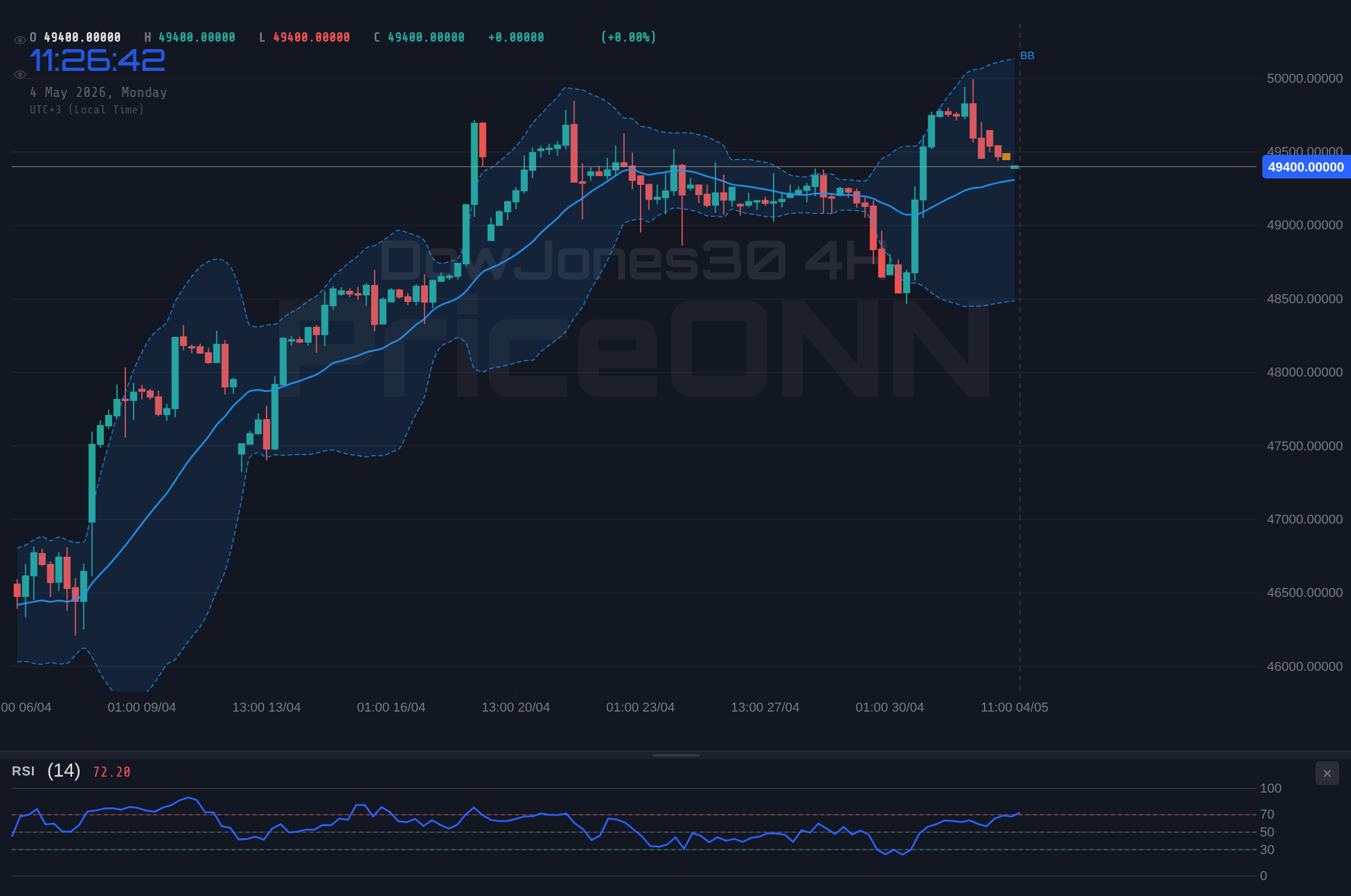
С технической точки зрения, прорыв DowJones30 ниже $46 924,50 является медвежьим сигналом. Индекс сейчас торгуется ниже своей 200-дневной скользящей средней, что является ключевым индикатором долгосрочного направления тренда. 1-часовой график показывает сильный нисходящий тренд, при этом ADX на уровне 23,52 указывает на умеренную силу тренда. RSI на уровне 31,62 предполагает, что рынок приближается к условиям перепроданности, что может привести к краткосрочному отскоку. Однако общий тренд остается медвежьим.
Ключевые уровни поддержки, за которыми следует следить, - 46 906,67, 46 835,33 и 46 773,67. Прорыв ниже 46 906,67 может спровоцировать дальнейшее давление продаж, потенциально приведя к тестированию более низких уровней поддержки. С другой стороны, немедленное сопротивление находится на уровне 47 039,67, за которым следуют 47 101,33 и 47 172,67. Чтобы быки восстановили контроль, им необходимо подтолкнуть цену обратно выше 47 172,67 и удержать этот уровень.
Укрепление DXY оказывает дополнительное давление
Укрепление доллара США также способствует проблемам Dow Jones. Индекс DXY (индекс доллара) в настоящее время торгуется на уровне 99,17, что на 0,64% выше, чем днем ранее. Более сильный доллар делает экспорт США более дорогим, что потенциально наносит ущерб доходам многонациональных компаний, входящих в DowJones30. Исторически существует обратная корреляция: по мере укрепления доллара DowJones30 имеет тенденцию к ослаблению, и наоборот. При DXY на уровне 99,17 DowJones30 находится под давлением.
1-часовой график для DXY показывает RSI в зоне перекупленности на уровне 72,53, что может привести к краткосрочному откату. Однако общий тренд для доллара остается бычьим, что может продолжать оказывать давление на Dow Jones.
Медвежий сценарий: пробой и целевые уровни
Медвежий сценарий для DowJones30 предполагает продолжение распродажи, вызванной опасениями по поводу инфляции и сильным долларом. Если индекс пробьет немедленную поддержку на уровне 46 906,67, следующей целью будет 46 835,33, за которой следует 46 773,67. Решительный прорыв ниже 46 773,67 может открыть путь для тестирования более низких уровней, потенциально достигнув 46 568,33, дневной поддержки 2. Вероятность этого сценария составляет 60% с учетом текущих рыночных условий.
Продолжение распродажи, вызванной опасениями по поводу инфляции и сильным долларом. Если индекс пробьет немедленную поддержку на уровне 46 906,67, следующей целью будет 46 835,33, за которой следует 46 773,67.
Бычий сценарий: потенциальный отскок
Несмотря на текущие медвежьи настроения, существует вероятность отскока. RSI на 1-часовом графике приближается к зоне перепроданности, что может привести к краткосрочному отскоку. Если быки смогут подтолкнуть цену обратно выше 47 039,67, следующей целью будет 47 101,33, за которой следует 47 172,67. Однако для реализации этого сценария необходимо изменение настроений на рынке, потенциально вызванное положительными экономическими данными или голубиным сигналом от Федеральной резервной системы. Вероятность этого сценария составляет 40%.
Отскок, вызванный условиями перепроданности и потенциальным изменением настроений на рынке. Если быки смогут подтолкнуть цену обратно выше 47 039,67, следующей целью будет 47 101,33, за которой следует 47 172,67.
Торговый план: навигация по волатильности
Учитывая текущие рыночные условия, оправдан осторожный подход. Трейдерам следует дождаться подтверждения либо бычьего, либо медвежьего сценария, прежде чем открывать позицию. Для медвежьей торговли триггером входа будет подтвержденный прорыв ниже 46 906,67 с первоначальными целями на 46 835,33 и 46 773,67. Уровнем аннулирования для этой сделки будет возврат выше 47 039,67.
Экономический календарь: ключевые события, за которыми следует следить
Несколько ключевых экономических событий могут повлиять на DowJones30 в ближайшие дни. 13 марта (в пятницу) запланировано несколько событий в долларах США. Эти данные могут предоставить дополнительные сведения о состоянии экономики США и будущих политических решениях Федеральной резервной системы. Трейдерам следует внимательно следить за этими событиями и быть готовыми скорректировать свои позиции соответствующим образом.
Предстоящие события в долларах США 13 марта (в пятницу) могут вызвать значительную волатильность в DowJones30. Трейдерам следует проявлять осторожность и соответствующим образом управлять своим риском.
Ключевые уровни
Уровни поддержки
Уровни сопротивления
Часто задаваемые вопросы: анализ DowJones30
Что произойдет, если DowJones30 пробьет поддержку на уровне $46 906,67?
Если DowJones30 решительно пробьет немедленную поддержку на уровне $46 906,67, мы можем ожидать дальнейшего давления продаж, потенциально ведущего к тестированию более низких уровней поддержки на уровне $46 835,33 и $46 773,67. Этот пробой подтвердит медвежий сценарий, вызванный опасениями по поводу инфляции.
Стоит ли мне продавать DowJones30 на текущих уровнях $46 924,50, учитывая RSI на уровне 31,62?
Хотя RSI на уровне 31,62 на 1-часовом графике предполагает условия перепроданности, это не является самостоятельным сигналом к продаже. Более разумным подходом было бы дождаться подтвержденного прорыва ниже $46 906,67, прежде чем открывать короткую позицию, управляя риском со стоп-лоссом выше $47 039,67.
Подтверждает ли сигнал MACD на 1-часовом графике медвежий тренд для DowJones30?
Да, MACD на 1-часовом графике показывает отрицательную динамику, при этом линия MACD находится ниже сигнальной линии, что еще больше подтверждает медвежий тренд. Это добавляет слияния к сценарию пробоя, предполагая, что медведи в настоящее время контролируют ситуацию.
Как предстоящие события в долларах США 13 марта повлияют на DowJones30 на этой неделе?
Предстоящие события в долларах США 13 марта, особенно те, которые связаны с инфляцией, могут оказать существенное влияние на DowJones30. Более сильные, чем ожидалось, данные по инфляции могут усилить ястребиный настрой ФРС, что приведет к дальнейшему понижательному давлению на индекс, в то время как более слабые данные могут спровоцировать восстановительное ралли.
Отслеживайте рынки в реальном времени
ИИ-анализ и данные в реальном времени.