

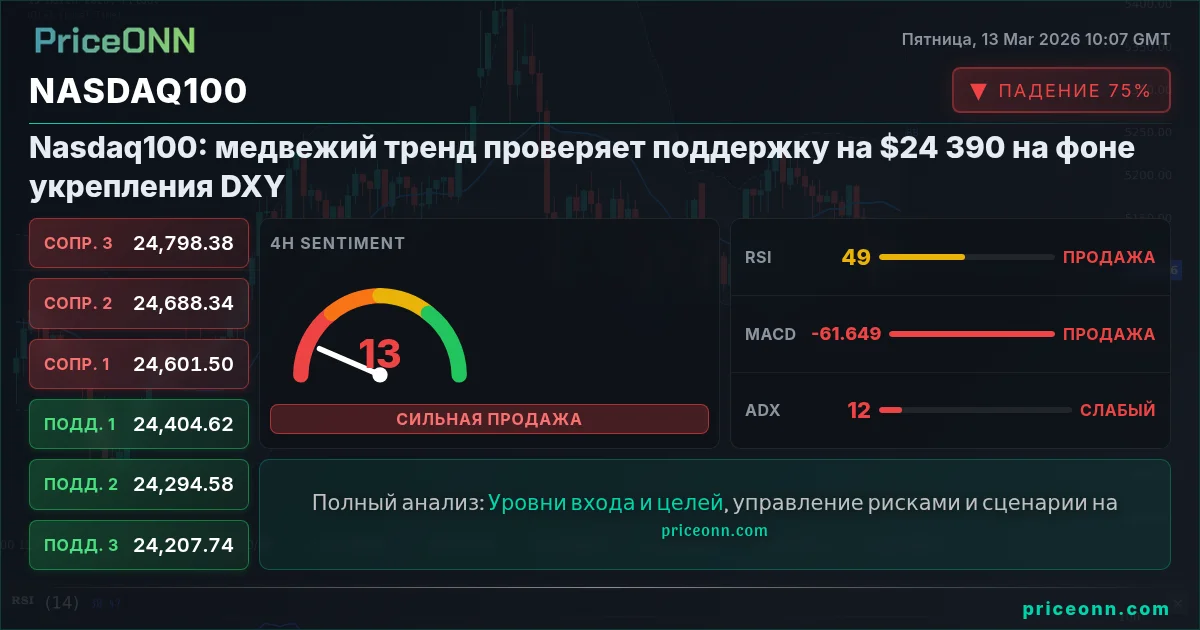
На фоне роста индекса доллара (DXY) до 99,88, уровня, невиданного неделями, анализ Nasdaq100 сегодня показывает медвежий тренд, тестирующий ключевую поддержку на $24 390. Это сочетание укрепления доллара и ослабления склонности к риску, подпитываемое эскалацией напряженности на Ближнем Востоке, создает сложную среду для технологических акций и рынка в целом.
- Nasdaq100 тестирует критическую поддержку на $24 390 после дневного снижения на -0,01%.
- Индекс доллара (DXY) на уровне 99,88 оказывает понижательное давление на Nasdaq100 и другие рисковые активы.
- ADX на уровне 38,15 предполагает сильный медвежий тренд, но Stochastic на уровне 39,88 сигнализирует о потенциальной перепроданности.
- Геополитические риски, особенно напряженность в Ормузском проливе, усиливают неопределенность на рынке.
Расшифровка обратной зависимости DXY-Nasdaq100
Обратная корреляция между индексом доллара (DXY) и Nasdaq100 является ключевой динамикой, за которой следует следить. По мере укрепления доллара, как правило, оказывается понижательное давление на рисковые активы, такие как технологические акции. Поскольку DXY в настоящее время находится на уровне 99,88 и демонстрирует сильный восходящий тренд (ADX: 38,89 на 1-часовом графике), Nasdaq100 сталкивается с встречными ветрами. Это еще больше усугубляется ростом цен на нефть, при этом цена на нефть WTI торгуется выше 95 долларов за баррель из-за эскалации напряженности на Ближнем Востоке. Это инфляционное давление может побудить Федеральную резервную систему сохранить ястребиную позицию, что еще больше поддержит доллар и окажет давление на акции.
Технический анализ: накапливаются медвежьи сигналы
Техническая картина для Nasdaq100 рисует осторожный прогноз. Индекс в настоящее время торгуется на уровне $24 541,63, и 1-часовой график показывает четкий нисходящий тренд со 100% силой. Ключевые уровни поддержки, за которыми следует следить, - $24 416,46, $24 336,38 и $24 291,34. Уровни сопротивления находятся на $24 541,58, $24 586,62 и $24 666,7. RSI(14) на уровне 43,08 указывает на нейтральные условия, но гистограмма MACD показывает отрицательный импульс, что предполагает дальнейший потенциал снижения. Осциллятор Stochastic, с K=39,88 и D=39,53, дает сигнал на покупку, но это может быть временная передышка в более широком медвежьем тренде.
Рисковые настроения и геополитические течения
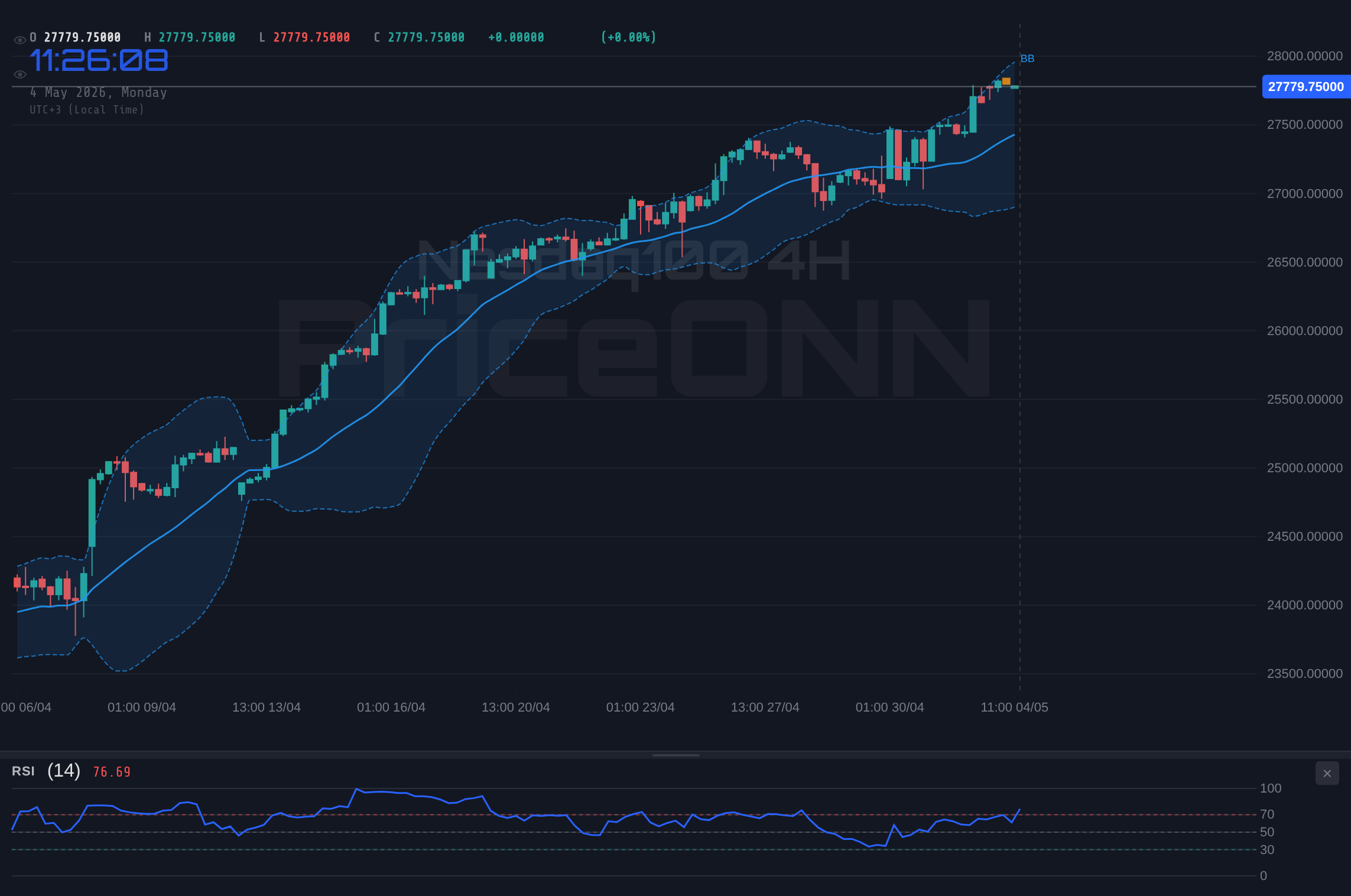
На настроения рынка сильно влияют геополитические риски, особенно растущая напряженность в Ормузском проливе. Согласно последним сообщениям, Иран пригрозил ответить на любые нападения на свою энергетическую инфраструктуру, что привело к скачку цен на нефть. Это создало среду неприятия риска, когда инвесторы стекаются в активы-убежища, такие как доллар США и казначейские облигации США. SP500 также демонстрирует признаки слабости, в настоящее время торгуясь на уровне 6677,45, а DowJones30 находится на уровне 46714,5, что отражает общее беспокойство рынка. 1-дневный график для Nasdaq100 показывает медвежий тренд с 90% силой, что говорит о том, что это давление, вероятно, сохранится.
Анализ нескольких таймфреймов: необходимо подтверждение для разворота
Анализ нескольких таймфреймов показывает смешанную картину. В то время как 1-часовой и 1-дневной графики показывают медвежьи тренды, 4-часовой график более нейтрален. Однако даже на 4-часовом графике RSI(14) на уровне 42,56 и гистограмма MACD подтверждают отрицательный импульс. ADX на 4-часовом графике слаб и составляет 12,78, что говорит о том, что тренд еще не устоялся. Это означает, что прорыв ниже поддержки $24 390 может спровоцировать более значительную распродажу. Трейдерам следует следить за подтверждением от других индикаторов, таких как прорыв ниже нижней полосы Боллинджера или устойчивое движение ниже 200-дневной скользящей средней.
Плейбук трейдера: наблюдаем за прорывом
Учитывая текущий технический и фундаментальный фон, оправдан осторожный подход. ADX на уровне 12,78 указывает на нестабильный рынок, что делает агрессивные торговые стратегии рискованными. RSI и гистограмма MACD выровнены, обеспечивая четкий направленный сигнал, но осциллятор Stochastic находится в торгуемой зоне, еще не на экстремальных уровнях перепроданности. Поэтому ключевым моментом является наблюдение за подтвержденным прорывом ниже поддержки $24 390. Дневное закрытие ниже этого уровня откроет дверь для тестирования следующих уровней поддержки на $24 235,4 и $23 975,09. Управляйте своим риском, ждите своей установки - рынок всегда дает второй шанс.
Ключевые уровни для наблюдения
Для краткосрочных трейдеров ближайший уровень сопротивления составляет $24 541,58. Прорыв выше этого уровня может привести к тестированию $24 586,62 и $24 666,7. Однако, учитывая общие медвежьи настроения, эти ралли, вероятно, будут недолгими. Долгосрочным инвесторам следует сосредоточиться на ключевых уровнях поддержки на $24 390, $24 235,4 и $23 975,09. Прорыв ниже этих уровней может сигнализировать о более значительной коррекции в Nasdaq100.
Управление рисками: защита вашего капитала
В текущей нестабильной рыночной среде управление рисками имеет первостепенное значение. Трейдерам следует использовать стоп-лосс ордера для защиты своего капитала и избегать чрезмерного использования кредитного плеча в своих позициях. Также важно диверсифицировать свой портфель и не складывать все яйца в одну корзину. Текущие геополитические риски и экономическая неопределенность делают необходимым быть готовым к неожиданным движениям рынка. Рассмотрите возможность использования опционных стратегий для хеджирования своих позиций и ограничения риска снижения.
Ключевые уровни
Уровни поддержки
Уровни сопротивления
Сводка технического анализа
| Индикатор | Значение | Сигнал |
|---|---|---|
| RSI (14) | 43.08 | Нейтральный |
| Гистограмма MACD | Отрицательная | Медвежий |
| Stochastic | 39.88/39.53 | Покупка |
| ADX | 38.15 | Сильный нисходящий тренд |
| Bollinger | Средняя полоса | Ниже |
Часто задаваемые вопросы: анализ Nasdaq100
Что произойдет, если Nasdaq100 пробьет поддержку на уровне $24 390?
Если Nasdaq100 пробьет уровень поддержки $24 390, следующими целями станут $24 235,4 и $23 975,09, что потенциально сигнализирует о более глубокой коррекции. Этот медвежий сценарий поддерживается сильным нисходящим трендом, указанным ADX на уровне 38,15 на 1-часовом графике.
Стоит ли покупать Nasdaq100 на текущих уровнях $24 541,63, учитывая DXY на уровне 99,88?
Учитывая текущие уровни $24 541,63 для Nasdaq100 и DXY на уровне 99,88, благоразумно проявлять осторожность. Обратная корреляция предполагает, что дальнейшее укрепление DXY может оказать давление на Nasdaq100, что сделает вход в Long рискованным, если только поддержка $24 390 не устоит.
Является ли RSI на уровне 43,08 сигналом к продаже для Nasdaq100 прямо сейчас?
RSI на уровне 43,08 для Nasdaq100 не является прямым сигналом к продаже, поскольку он находится на нейтральной территории. Однако в сочетании с гистограммой MACD, показывающей отрицательный импульс, и сильным нисходящим трендом, указанным ADX, это говорит о том, что медвежье давление нарастает, что требует осторожности.
Как напряженность в Ормузском проливе повлияет на Nasdaq100 на этой неделе?
Напряженность в Ормузском проливе, вероятно, создаст среду неприятия риска, потенциально оказывая давление на Nasdaq100, поскольку инвесторы ищут активы-убежища. Рост цен на нефть из-за этой напряженности также может привести к инфляционному давлению, что побудит Федеральную резервную систему занять ястребиную позицию, что еще больше поддержит доллар и окажет давление на акции.
Отслеживайте рынки в реальном времени
ИИ-анализ и данные в реальном времени.