

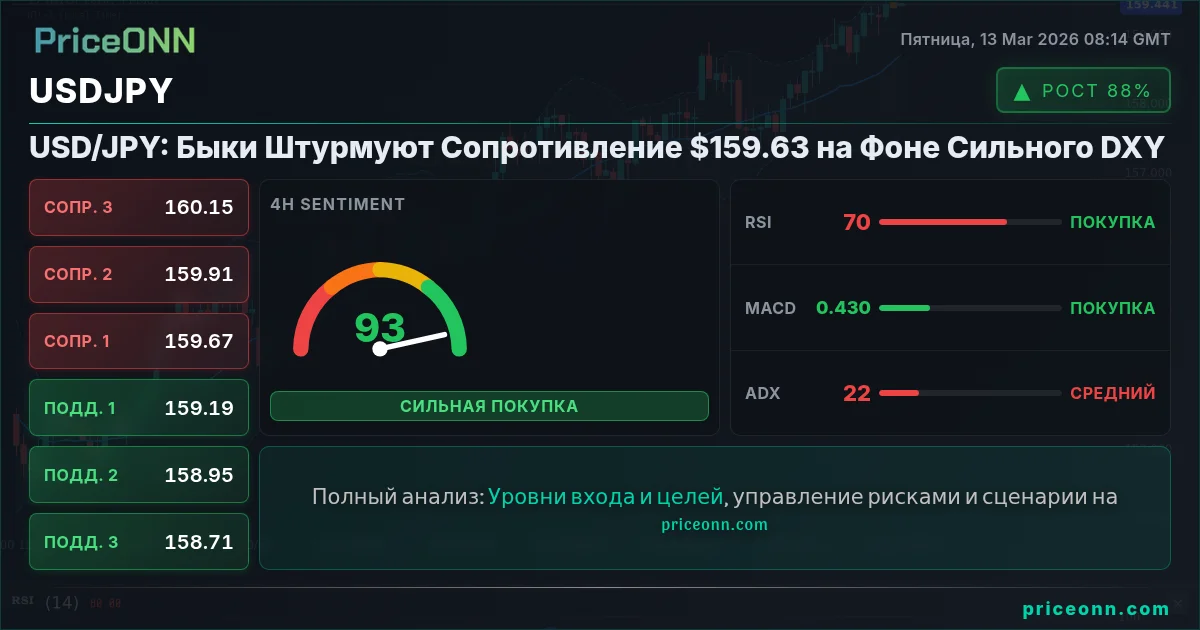
USD/JPY в настоящее время находится в критической точке, торгуясь на уровне $159.38 и сталкиваясь с ближайшим сопротивлением на $159.63. Укрепление индекса доллара США (DXY), который сейчас находится на уровне 99.98 и демонстрирует сильную восходящую тенденцию, является важным фактором, влияющим на эту пару. Эскалация напряженности в Ормузском проливе, о которой сообщают последние новости энергетического сектора, еще больше способствует волатильности рынка, добавляя еще один уровень сложности к технической картине. Кстати, анализ доллар иена сегодня показывает повышенную волатильность.
- RSI на уровне 60.01 на 1-часовом графике предполагает потенциал для продолжения восходящего импульса.
- Ключевой уровень сопротивления на $159.63 должен быть пробит для дальнейшего роста.
- Укрепление DXY на уровне 99.98 является попутным ветром для USD/JPY.
- Рост напряженности в Ормузском проливе добавляет геополитический риск.
Главный вопрос: смогут ли быки преодолеть это сопротивление, или медведи вернут контроль, оттолкнув пару обратно вниз? Чтобы понять потенциальные сценарии, нам необходимо проанализировать технические индикаторы, более широкий контекст рынка и предстоящие экономические события. Недавние новости о том, что цена на нефть WTI взлетела выше $95 из-за напряженности на Ближнем Востоке, еще больше усложняют ситуацию, поскольку это может повлиять на склонность к риску и валютные оценки.
Бычий Сценарий: Цель $160.50
Для реализации бычьего сценария USD/JPY должна убедительно пробить уровень сопротивления $159.63. В этом случае следующей целью будет $159.96, за которой последует более амбициозная цель в $160.50. Этот сценарий поддерживается 4-часовым графиком, где RSI находится на уровне 68.57, что указывает на потенциал для продолжения восходящего движения. Гистограмма MACD также показывает положительный импульс, что еще больше усиливает бычий прогноз. Однако осциллятор Stochastic находится в зоне перекупленности на K=83.05 и D=84.16, что предполагает возможность отката. Скальперы могут искать возможности для открытия длинных позиций на откатах к уровню поддержки $159.33, в то время как свинг-трейдеры могут дождаться подтвержденного прорыва выше $159.63, прежде чем добавлять к своим позициям. Долгосрочные инвесторы могут рассматривать это как возможность для накопления USD/JPY на текущих уровнях, ожидая дальнейшего роста из-за продолжающегося укрепления экономики США и потенциала для дальнейшего повышения процентных ставок Федеральной резервной системой.
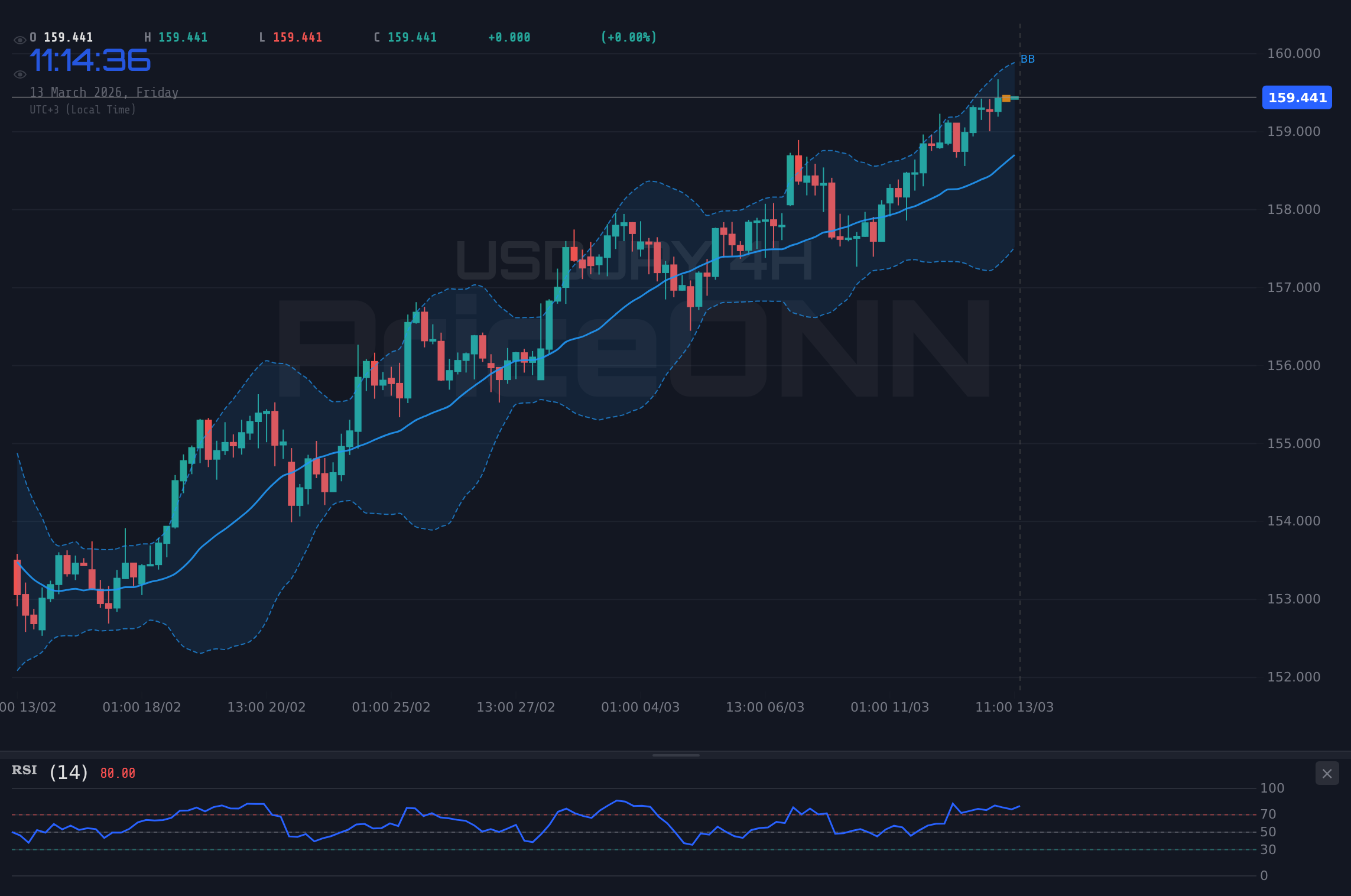
Исторически USD/JPY демонстрировала тенденцию к сильному росту, когда DXY силен и аппетит к риску высок. Текущая ситуация соответствует этой исторической закономерности, поскольку DXY торгуется вблизи своих недавних максимумов, а мировые фондовые рынки были относительно устойчивыми. Однако важно отметить, что Банк Японии (BoJ) может вмешаться в валютный рынок, чтобы остановить быстрое обесценивание иены, что может ограничить ралли. Предстоящие публикации экономических данных, особенно данные по инфляции в США, будут иметь решающее значение для определения направления USD/JPY. Если данные по инфляции окажутся сильнее, чем ожидалось, это может еще больше укрепить DXY и подтолкнуть USD/JPY вверх. И наоборот, если данные по инфляции окажутся слабее, чем ожидалось, это может вызвать откат в DXY и соответствующее снижение USD/JPY.
Медведи Берут Контроль: Ниже $159.19
Медвежий сценарий вступит в силу, если USD/JPY не сможет пробить $159.63 и вместо этого пробьет ближайший уровень поддержки на $159.33. Устойчивое движение ниже этого уровня может вызвать более глубокую коррекцию к следующему уровню поддержки на $159.19. Если эта поддержка также не удержится, медведи могут нацелиться на уровень $158.76 в качестве следующей значительной цели снижения. На 1-часовом графике ADX относительно слаб и составляет 18.67, что говорит о том, что текущий восходящий тренд не особенно силен и может быть уязвим для разворота. Осциллятор Stochastic также поддерживает эту точку зрения, поскольку он сигнализирует о возможности отката. Скальперы могут искать возможности для открытия коротких позиций на ралли к уровню сопротивления $159.48, в то время как свинг-трейдеры могут дождаться подтвержденного прорыва ниже $159.33, прежде чем открывать короткие позиции. Долгосрочные инвесторы могут рассматривать это как возможность для снижения своей подверженности USD/JPY, ожидая потенциального периода укрепления иены из-за изменения политики BoJ или снижения глобального аппетита к риску.
Исторически USD/JPY была чувствительна к изменениям в настроениях риска. В периоды повышенного неприятия риска инвесторы, как правило, стекаются в безопасную иену, оказывая понижательное давление на USD/JPY. Недавняя эскалация напряженности на Ближнем Востоке может спровоцировать бегство в безопасные активы, что пойдет на пользу иене и окажет давление на USD/JPY. Однако важно отметить, что сверхмягкая денежно-кредитная политика BoJ является значительным препятствием для иены, что может ограничить масштабы любой нисходящей коррекции в USD/JPY. Предстоящие публикации экономических данных, особенно данные по занятости в США, будут иметь решающее значение для определения направления USD/JPY. Если данные по занятости окажутся слабее, чем ожидалось, это может спровоцировать бегство в безопасные активы и соответствующее снижение USD/JPY. И наоборот, если данные по занятости окажутся сильнее, чем ожидалось, это может повысить аппетит к риску и подтолкнуть USD/JPY вверх.
В Ожидании: Застряли Между $159.19 и $159.63
Третий сценарий - консолидация в диапазоне между поддержкой $159.19 и сопротивлением $159.63. Это может произойти, если рынок ждет катализатора, такого как публикация важных экономических данных или значительное геополитическое событие, чтобы обеспечить четкое направление. В этом сценарии USD/JPY может колебаться в пределах этого диапазона, причем ни быки, ни медведи не смогут получить решающее преимущество. 1-часовой график показывает нейтральный тренд, при этом RSI колеблется около 60.01, что указывает на отсутствие сильного импульса в любом направлении. ADX также слаб, что говорит о том, что рынок находится в фазе консолидации. Скальперы могут искать возможности для торговли в диапазоне, покупая вблизи уровня поддержки и продавая вблизи уровня сопротивления. Свинг-трейдеры могут оставаться в стороне, ожидая подтвержденного прорыва или пробоя, прежде чем занять позицию. Долгосрочные инвесторы могут использовать этот период консолидации для переоценки своих перспектив по USD/JPY, принимая во внимание меняющуюся макроэкономическую и геополитическую ситуацию.
Недавние комментарии представителей ФРС, о которых сообщает Reuters, подчеркивающие, что инфляция остается "упорной", могут усилить доллар, удерживая USD/JPY на высоком уровне. Однако возможность интервенции со стороны Банка Японии остается непредсказуемым фактором. Неожиданный шаг со стороны BoJ может быстро опровергнуть бычий тезис и вызвать резкое снижение USD/JPY.
Наиболее Вероятный Сценарий и Почему
Учитывая текущую техническую картину и преобладающие настроения на рынке, наиболее вероятным сценарием является бычий прорыв выше $159.63 (вероятность 60%). Сила DXY, положительный импульс на 4-часовом графике и общая среда риска предполагают, что USD/JPY, вероятно, продолжит свою восходящую траекторию. Однако условия перекупленности на осцилляторе Stochastic и возможность интервенции BoJ требуют осторожности. Закрытие выше $159.63 на 4-часовом графике обеспечит дальнейшее подтверждение бычьего прорыва. Прорыв ниже $159.19 опровергнет бычий тезис и увеличит вероятность медвежьей коррекции.
Этот анализ учитывает многовременной подход, рассматривая 1-часовой, 4-часовой и 1-дневный графики. 1-часовой график дает представление о краткосрочном движении цены, в то время как 4-часовой и 1-дневный графики предлагают более широкую перспективу общего тренда. Анализ также включает различные технические индикаторы, включая RSI, MACD, осциллятор Stochastic и ADX, чтобы обеспечить всестороннюю оценку рыночных условий. Он также учитывает более широкий контекст рынка, включая движения DXY, фондовых рынков и цен на сырьевые товары, чтобы выявить потенциальные корреляции и влияния. Недавние новости о том, что AUD/USD защищает ключевые уровни поддержки, добавляют еще один уровень сложности, поскольку это говорит о том, что общее укрепление доллара может быть неравномерным по всем валютным парам.
Ключевые Триггеры, за Которыми Следует Следить на Этой Неделе
Несколько ключевых триггеров могут повлиять на направление USD/JPY на этой неделе. Во-первых, рынок будет внимательно следить за предстоящими данными по инфляции в США. Более сильный, чем ожидалось, показатель инфляции может еще больше укрепить DXY и подтолкнуть USD/JPY вверх. И наоборот, более слабый, чем ожидалось, показатель инфляции может вызвать откат в DXY и соответствующее снижение USD/JPY. Во-вторых, любые комментарии или действия со стороны BoJ относительно потенциальной интервенции на валютном рынке могут оказать значительное влияние на USD/JPY. Неожиданный шаг со стороны BoJ может быстро опровергнуть бычий тезис и вызвать резкое снижение USD/JPY. В-третьих, продолжающаяся напряженность на Ближнем Востоке может продолжать влиять на настроения риска и валютные оценки. Эскалация конфликта может спровоцировать бегство в безопасные активы, что пойдет на пользу иене и окажет давление на USD/JPY.
Технический Обзор
| Индикатор | Значение | Сигнал |
|---|---|---|
| RSI (14) | 60.01 | Нейтральный |
| Гистограмма MACD | Отрицательная | Медвежий |
| Stochastic | 60.59 | Медвежий |
| ADX | 18.67 | Слабый Тренд |
| Bollinger | Средняя Полоса | Бычий |
Ключевые Уровни
Уровни Поддержки
Уровни Сопротивления
ЕСЛИ USDJPY пробивает $159.63, ТО цель $159.96 и $160.50. Этот сценарий сохраняется, если DXY продолжит восходящий тренд и аппетит к риску останется повышенным. Временной горизонт: Эта неделя.
ЕСЛИ USDJPY закрывается ниже $159.33, ТО цель $159.19 и $158.76. Этот сценарий разворачивается, если неприятие риска возрастает из-за геополитической напряженности или более слабых, чем ожидалось, экономических данных США. Временной горизонт: Эта неделя.
Часто Задаваемые Вопросы: Анализ USDJPY
Что произойдет, если USDJPY пробьет сопротивление на уровне $159.63?
Если USDJPY уверенно пробьет уровень сопротивления $159.63, мы можем ожидать дальнейшего роста к $159.96 и, возможно, к $160.50. Этот прорыв, вероятно, будет вызван продолжающимся укреплением доллара, как показывает рост DXY до 99.98.
Стоит ли сейчас покупать USDJPY на текущих уровнях $159.38, учитывая RSI на уровне 60.01?
Хотя RSI на уровне 60.01 на 1-часовом графике предполагает потенциал для дальнейшего роста, разумно дождаться подтвержденного прорыва выше $159.63, прежде чем открывать длинную позицию. Для управления риском следует разместить стоп-лосс ордер ниже $159.33.
Является ли значение Stochastic 60.59 сигналом к продаже USDJPY прямо сейчас?
Осциллятор Stochastic на уровне 60.59 сам по себе не обязательно является сигналом к продаже. Это говорит о том, что пара еще не перекуплена. Однако это требует осторожности и пристального наблюдения за движением цены вблизи уровня сопротивления $159.63.
Как предстоящие данные по инфляции в США повлияют на USDJPY на этой неделе?
Более сильные, чем ожидалось, данные по инфляции в США, вероятно, укрепят DXY и подтолкнут USDJPY выше, потенциально нацеливаясь на $159.96. И наоборот, более слабые, чем ожидалось, данные по инфляции могут вызвать откат в DXY и соответствующее снижение USDJPY к $159.19.
Отслеживайте рынки в реальном времени
ИИ-анализ и данные в реальном времени.