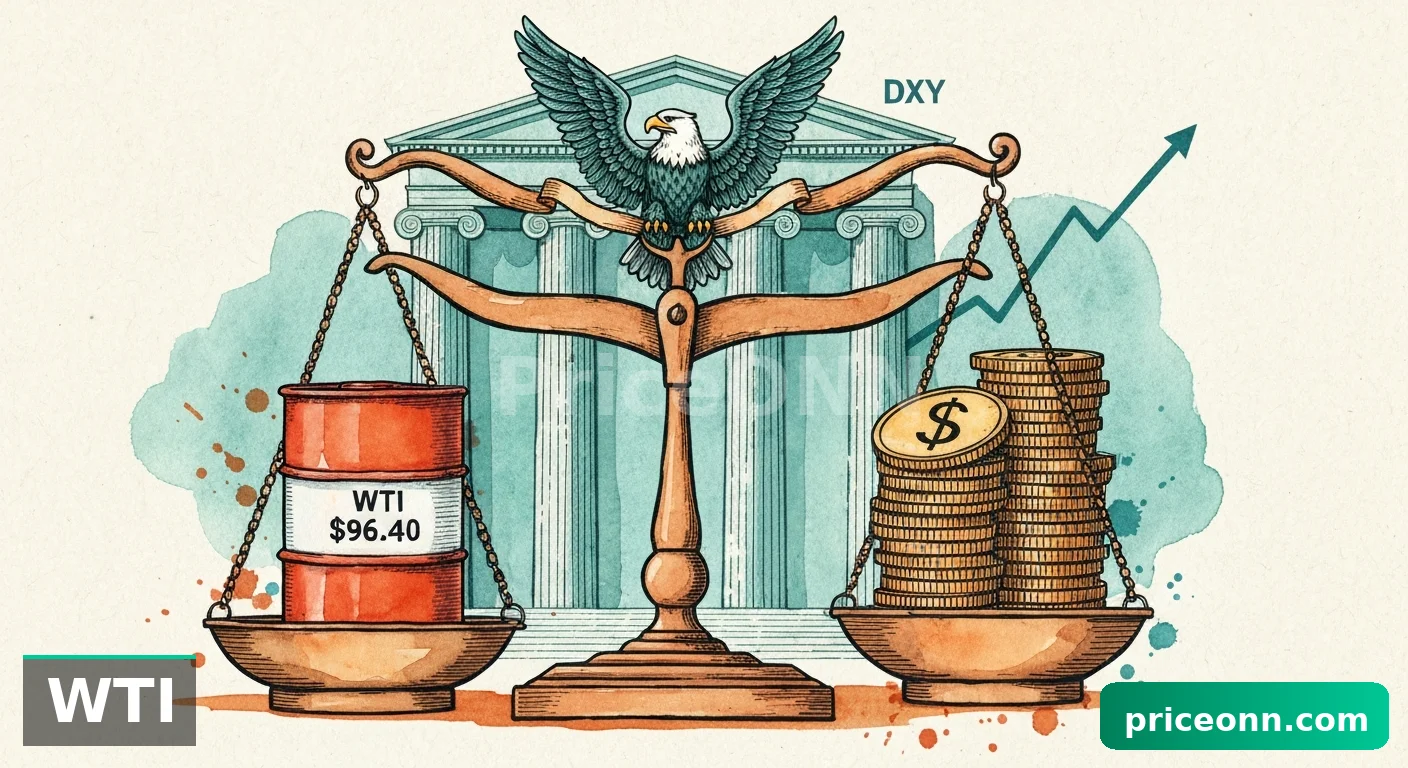
EURUSD Tests $1.15: Dollar Strength Puts Key Levels Under Pressure
EURUSD hovers around $1.15 as the DXY strengthens. Technical indicators show mixed signals, with the 4H chart indicating potential downside.
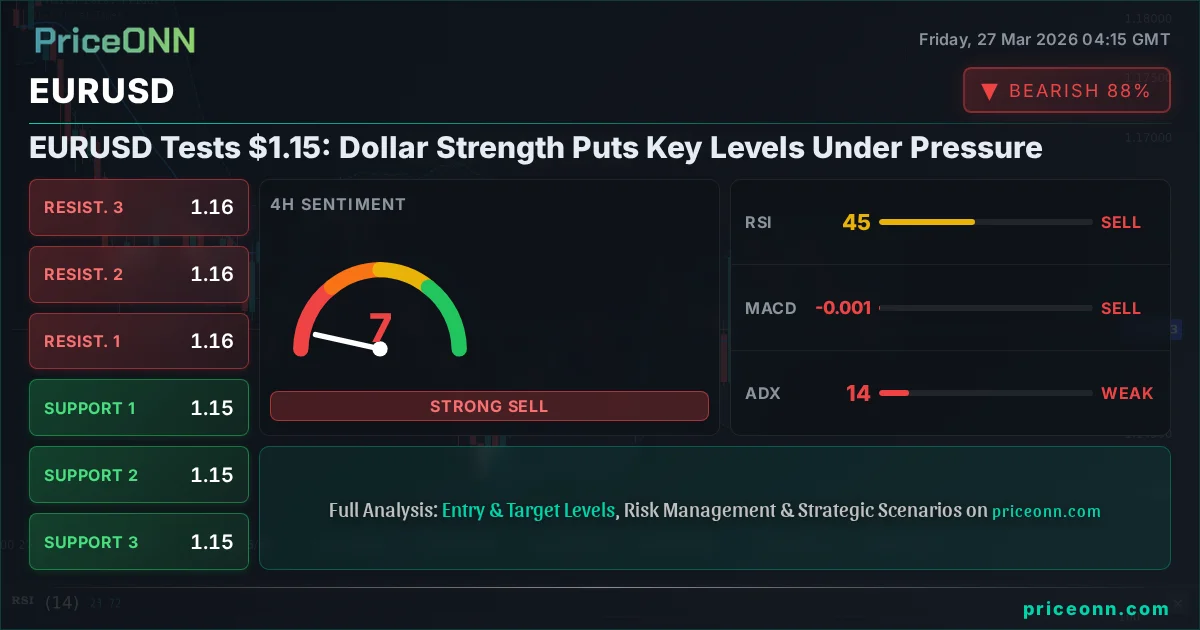
The tug-of-war between the Euro and the US Dollar is intensifying, with EURUSD currently finding itself in a critical zone around the $1.15 mark. This pivotal level is being tested as the US Dollar Index (DXY) shows renewed strength, a move that often casts a shadow over major currency pairs. Traders are closely watching to see if the dollar's upward momentum can break through established support for the Euro, or if broader market sentiment will force a shift in this narrative. The interplay between macroeconomic drivers, central bank policy expectations, and technical chart patterns is creating a complex environment, demanding a nuanced approach from market participants.
The recent climb in the US Dollar Index (DXY), now hovering near 99.63, has been a significant factor influencing EURUSD's price action. This strengthening dollar narrative is not just a forex market phenomenon; it echoes through commodities and global risk appetite indicators. As the DXY gains ground, it typically exerts downward pressure on assets priced in dollars, including gold and, by extension, can signal a risk-off sentiment that impacts currency valuations. The current DXY trend, supported by a strong daily ADX of 31.64, suggests that dollar bulls are in control, at least in the short to medium term. This backdrop is crucial for understanding the challenges facing the Euro.
- EURUSD is trading at $1.15397, with the DXY nearing 99.63, indicating dollar strength.
- Key support for EURUSD lies at $1.15348 on the 1-hour chart, with resistance at $1.15413.
- The 4-hour chart shows a bearish trend with RSI at 44.06 and ADX at 33.13, suggesting potential downside.
- The strength of the US Dollar, reflected in the DXY's upward trend, is a primary driver pressuring EURUSD.
On the technical front, the EURUSD pair presents a mixed yet cautious picture across different timeframes. The 1-hour chart shows a neutral trend with an ADX of just 16.94, indicating a lack of strong directional conviction in this immediate timeframe. However, the RSI at 46.67 is leaning towards a bearish sentiment, and the Stochastic oscillator is showing a bullish signal (%K > %D). This short-term indecision is overshadowed by the longer timeframes. The 4-hour chart paints a more defined bearish picture, with the trend identified as down (Power 92%) and an ADX of 33.13 reinforcing a strong trend. Here, RSI at 44.06 and Stochastic's bearish signal (%K < %D) align with the prevailing downward pressure.
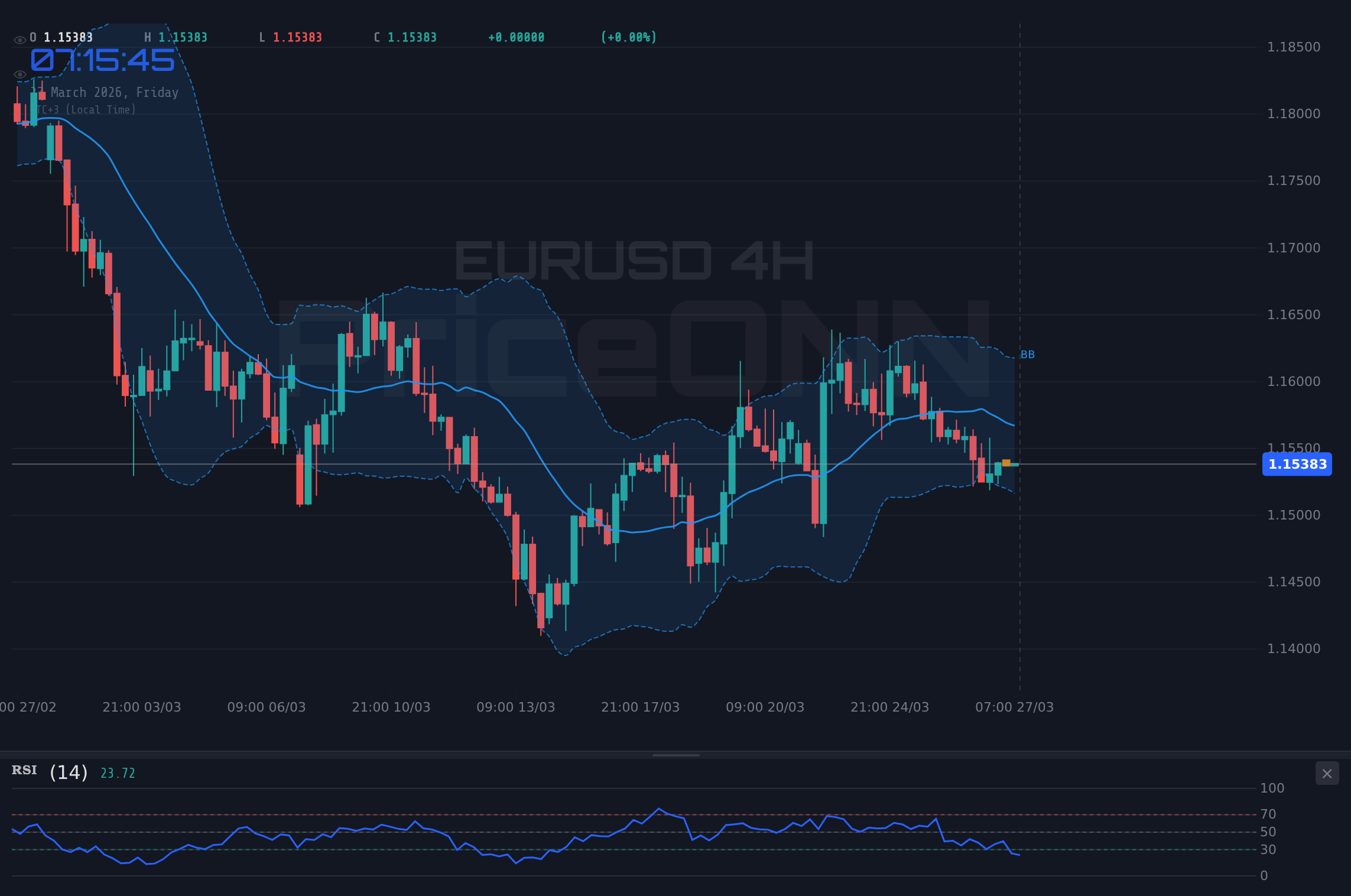
Diving deeper into the daily timeframe, the EURUSD picture remains predominantly bearish. The trend is classified as neutral, but with a significant downward bias, and the ADX at 33.86 continues to signal a strong trend, albeit one that is currently favoring sellers. The RSI reading of 44.65 suggests room for further downside before hitting oversold territory, while the MACD histogram remains in negative territory, indicating persistent selling momentum. The Bollinger Bands are positioned below the middle band, a classic sign of bearish pressure. This daily perspective suggests that any upward retracements might be met with selling interest, especially if the broader dollar strength narrative continues to dominate market sentiment.
The macroeconomic landscape provides a compelling backdrop to these technical readings. Recent economic data releases have offered mixed signals, but the underlying narrative often favors the US dollar. For instance, the US ISM Manufacturing PMI data, coming in at 52.4 actual versus a forecast of 51.5, points to a healthier manufacturing sector than anticipated. This suggests underlying economic resilience in the US, which typically bolsters demand for the dollar. Conversely, the Eurozone's economic indicators, while showing some stabilization, have not consistently outperformed US data, leading to a divergence in economic outlook that benefits the dollar.
Looking at the economic calendar, the release of the US Average Hourly Earnings data, which showed an actual of 6.926% against a forecast of -1.3%, is a significant upward surprise. While the forecast seems unusually low, the actual reading indicates stronger wage growth than expected. Historically, robust wage growth can fuel inflation concerns, potentially leading the Federal Reserve to maintain a hawkish stance or delay rate cuts. This expectation of higher-for-longer interest rates in the US compared to the Eurozone is a fundamental driver for currency pair movements, often leading to sustained dollar strength against the Euro.
Navigating the Dollar's Strength
The current market environment is characterized by a clear strengthening of the US Dollar, driven by a combination of factors including relative interest rate differentials and a cautious global risk sentiment. The DXY's ascent towards the 100.00 level is a testament to this. This trend has significant implications for EURUSD. As the dollar strengthens, it becomes more expensive for holders of other currencies to acquire, reducing demand for assets priced in dollars. For EURUSD, this means that even minor dips in the dollar's strength might be short-lived if the underlying fundamental drivers remain in place. The 4-hour ADX at 33.13 and the daily ADX at 33.86 underscore the strength and persistence of the current trend, suggesting that reversing this momentum will require a significant shift in market expectations.
The correlation between the DXY and EURUSD is a critical element for traders to monitor. Typically, a rising DXY suggests a falling EURUSD, and vice-versa. With the DXY currently showing upward momentum, the path of least resistance for EURUSD appears to be downwards. The 1-hour chart, while showing some indecision with an ADX of 16.94, is still contained within the broader bearish context established by the 4-hour and daily charts. Any rallies in EURUSD are likely to face significant headwinds from the strong dollar, especially if key resistance levels like $1.15413 on the 1-hour chart fail to break with conviction and volume. The prevailing market sentiment, influenced by geopolitical tensions and the differing paces of economic recovery and monetary policy, favors the dollar.
Geopolitical tensions in the Middle East, including the ongoing situation involving Iraq's economy and the Hormuz blockade, are contributing to global energy market volatility and a general increase in risk aversion. This environment often sees investors flocking to safe-haven assets, with the US dollar being a primary beneficiary. While Brent crude prices have surged to $104.77, reflecting supply concerns, this broader risk-off mood can paradoxically strengthen the dollar as global capital seeks perceived safety. Such events can override purely economic data, creating unpredictable swings in currency markets. The EURUSD pair, being a reflection of relative economic and political stability, is highly susceptible to these global risk flows.
The technical indicators on the 4-hour chart offer a clear bearish signal. The RSI at 44.06 indicates that the pair is not yet oversold, leaving room for further declines. The Stochastic oscillator, with %K at 18.17 and %D at 24.34, is firmly in oversold territory but showing a bearish crossover (%K < %D), reinforcing the downside potential. The ADX reading of 33.13 confirms a strong existing trend, which, in this context, is a downtrend. This confluence of indicators suggests that sellers have the upper hand and that any attempts at recovery might be short-lived unless significant counter-signals emerge from either technical or fundamental fronts. The support level at 43.46 on Gold (XAUUSD) shows a similar bearish trend, highlighting a broader commodity weakness.
Trade Scenarios and Outlook
Given the current technical and fundamental landscape, several scenarios can unfold for EURUSD. The prevailing narrative suggests a continuation of dollar strength, but market dynamics are complex. A key level to watch is the $1.15348 support on the 1-hour chart. A decisive break below this level, especially with increasing volume, would likely confirm the bearish bias indicated by the longer timeframes and open the door for further declines towards the next significant support.
Bearish Scenario: Dollar Dominance Continues
65% ProbabilityNeutral Scenario: Range-Bound Consolidation
25% ProbabilityBullish Scenario: Reversal Attempt
10% ProbabilityThe potential for a bearish continuation is supported by the persistent strength in the US Dollar Index (DXY), currently trading near 99.63. A daily close above this level could further solidify the dollar's upward trajectory, adding pressure on EURUSD. Conversely, a significant shift in risk sentiment or a change in Federal Reserve policy expectations could alter this outlook. For instance, if upcoming inflation data surprises to the downside, it might cool Fed rate hike expectations, weakening the dollar and providing a potential reprieve for EURUSD.
Considering the economic calendar, the upcoming US data releases will be critical. While past data like the ISM Manufacturing PMI (52.4 actual vs 51.5 forecast) and Average Hourly Earnings (6.926% actual) have supported dollar strength, any deviation in future releases could change the game. A weaker-than-expected inflation report or employment figures could prompt a reassessment of Fed policy, potentially leading to a short-term correction in EURUSD. However, based on the current trend strength indicated by the ADX across multiple timeframes (1H: 16.94, 4H: 33.13, 1D: 33.86), such a correction would need to overcome substantial technical resistance.
The current technical setup on EURUSD, particularly on the 4-hour and daily charts, leans towards further downside. The RSI readings are not yet in extreme oversold territory, and the ADX confirms a strong prevailing trend. Therefore, the probability of a bearish continuation scenario remains higher. A break below the $1.15348 support level on the 1-hour chart would be a key confirmation signal for this outlook. Traders should remain vigilant for any signs of momentum fading or divergence appearing on higher timeframes, which could signal a potential turning point. However, until then, the path of least resistance appears to be lower.
The broader market context, including the performance of indices like SP500 (currently at 6503.45) and Nasdaq100 (at 23692.69), also plays a role. A sustained decline in these risk assets could further bolster demand for the US dollar as a safe haven, reinforcing the bearish case for EURUSD. Conversely, a rebound in equities might signal increased risk appetite, which could benefit the Euro. Currently, both SP500 and Nasdaq100 show bearish trends on their 4-hour and daily charts, aligning with the dollar's strength narrative and adding another layer of confirmation to the potential downside for EURUSD.
Concluding Thoughts on EURUSD
The EURUSD pair is at a critical juncture, with the prevailing strength of the US Dollar creating significant headwinds. Technical indicators across multiple timeframes, particularly the 4-hour and daily charts, point towards potential further downside, with support levels at $1.15348 and $1.14966 being key areas to watch. While the 1-hour chart shows some indecision, it is largely contained within the broader bearish trend. Macroeconomic data and geopolitical events continue to favor the dollar, reinforcing this outlook. However, markets are dynamic, and a significant shift in central bank policy expectations or a sudden change in global risk sentiment could trigger a reversal.
Frequently Asked Questions: EURUSD Analysis
What happens if EURUSD breaks below the $1.15348 support level?
A decisive break below $1.15348, especially with increased volume, would confirm the bearish trend indicated by the 4-hour and daily charts. This could lead to further declines, with potential targets at $1.15283 and then $1.14966, aligning with the prevailing dollar strength.
Should I consider buying EURUSD at current levels around $1.15397 given the mixed signals?
Given the strong bearish signals on longer timeframes and the persistent dollar strength, buying EURUSD at current levels carries significant risk. A more prudent approach would be to wait for confirmation of a bullish reversal, such as a sustained break above $1.15621 resistance, before considering long positions.
Is the RSI at 44.06 on the 4-hour chart a sell signal for EURUSD?
An RSI of 44.06 on the 4-hour chart indicates that the pair is in neutral territory but trending downwards, with room for further decline before reaching oversold conditions. Combined with other bearish indicators like the ADX at 33.13, it reinforces the view that current conditions are not favorable for buying.
How might upcoming US economic data impact EURUSD this week?
Upcoming US data, particularly inflation and employment figures, will be crucial. Stronger-than-expected data could further bolster the dollar, pushing EURUSD lower, while weaker data might lead to a dollar pullback and a potential short-term rally for EURUSD, though significant technical resistance remains.
Track markets in real-time
AI-powered analysis, technical indicators and real-time price data.
Join Our Telegram Channel
Breaking market news, AI analysis and trading signals instantly.
Join Channel