XAUUSD Weekly Outlook: $4,501.45 Price Tested Amidst Neutral Signals
Gold (XAUUSD) experienced a significant 3.2% decline, closing the week at $4,501.45. Analysis suggests a neutral outlook as key indicators present conflicting signals, warranting caution.
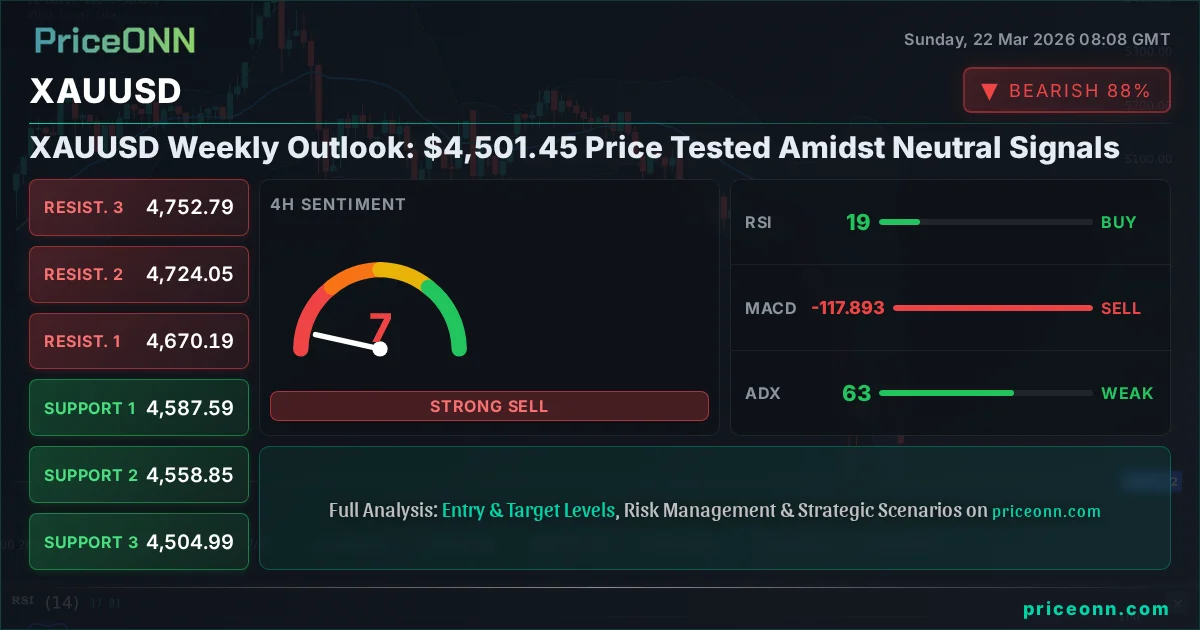
The past week has seen gold, XAUUSD, undergo a substantial downturn, shedding 3.2% of its value and closing Friday's trading session at precisely $4,501.45. This sharp decline, marking a significant departure from recent bullish sentiment, prompts a critical examination of the underlying market dynamics. While the immediate price action points towards a bearish sentiment on shorter timeframes, a deeper dive into the technical indicators and broader macroeconomic context reveals a more nuanced, perhaps even neutral, outlook for the precious metal. The question on many traders' minds is whether this dip represents a healthy correction within a larger uptrend, or the beginning of a more significant reversal. Understanding the interplay between geopolitical tensions, central bank policies, and the dollar's strength will be crucial in navigating the path forward.
- XAUUSD closed the week at $4,501.45, down 3.2% after testing lower levels.
- On the 1-day chart, RSI stands at 29.67, signaling oversold conditions and a potential buying opportunity.
- However, 4-hour ADX at 62.89 indicates a very strong downtrend, contradicting the oversold signal.
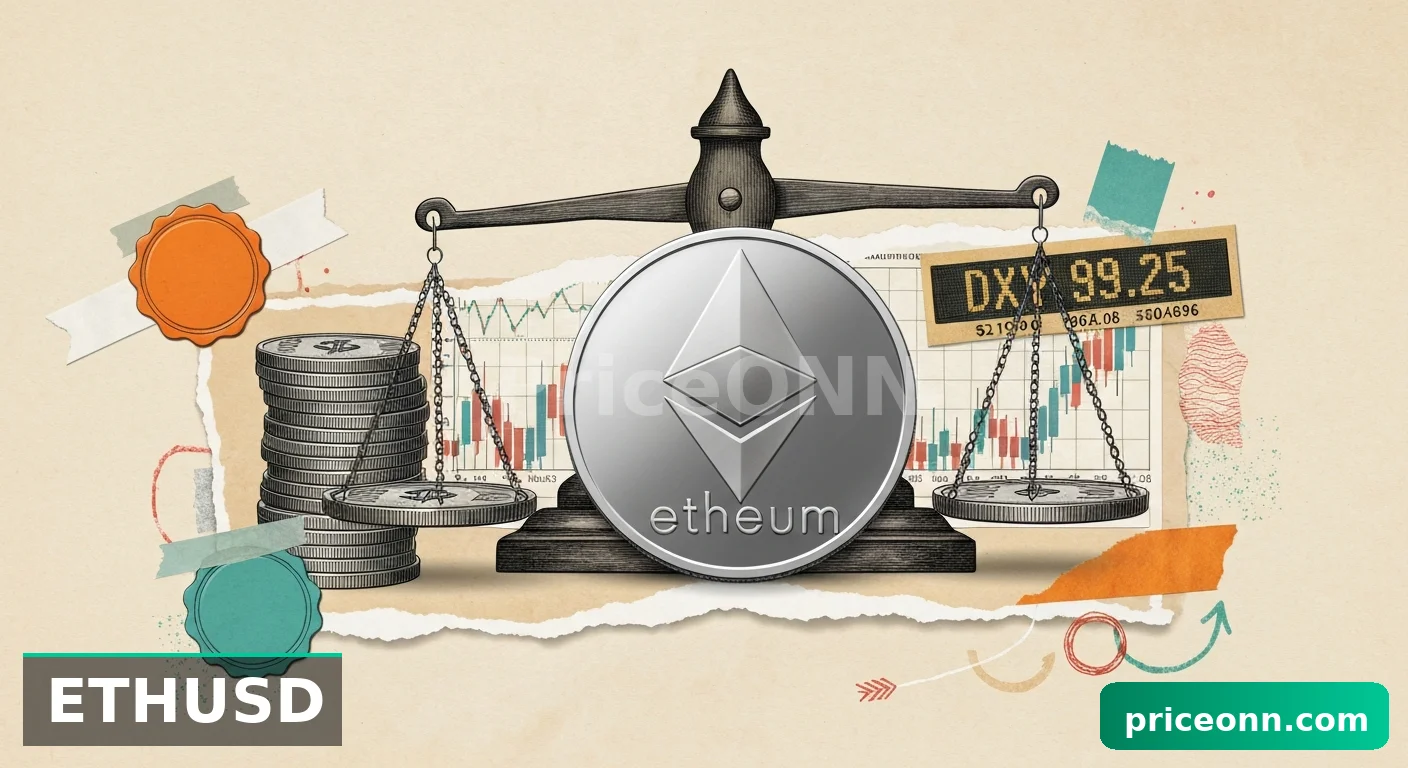
- The DXY is trading at 99.25, showing strength that typically puts pressure on gold prices.
The dramatic 3.2% slide in gold prices last week, bringing the benchmark XAUUSD to $4,501.45, has certainly captured market attention. This move comes after a period of considerable strength, driven by a confluence of factors including persistent geopolitical risks and ongoing concerns about inflation. However, the recent price action suggests that the market may be recalibrating its expectations, perhaps factoring in a more resilient global economy or a less dovish stance from major central banks. The sheer magnitude of the weekly drop, particularly on Friday, indicates significant selling pressure that cannot be ignored. Traders are now grappling with whether this is a temporary pullback or a more fundamental shift in market sentiment. The interplay between safe-haven demand and the impact of rising interest rate expectations creates a complex environment for gold.
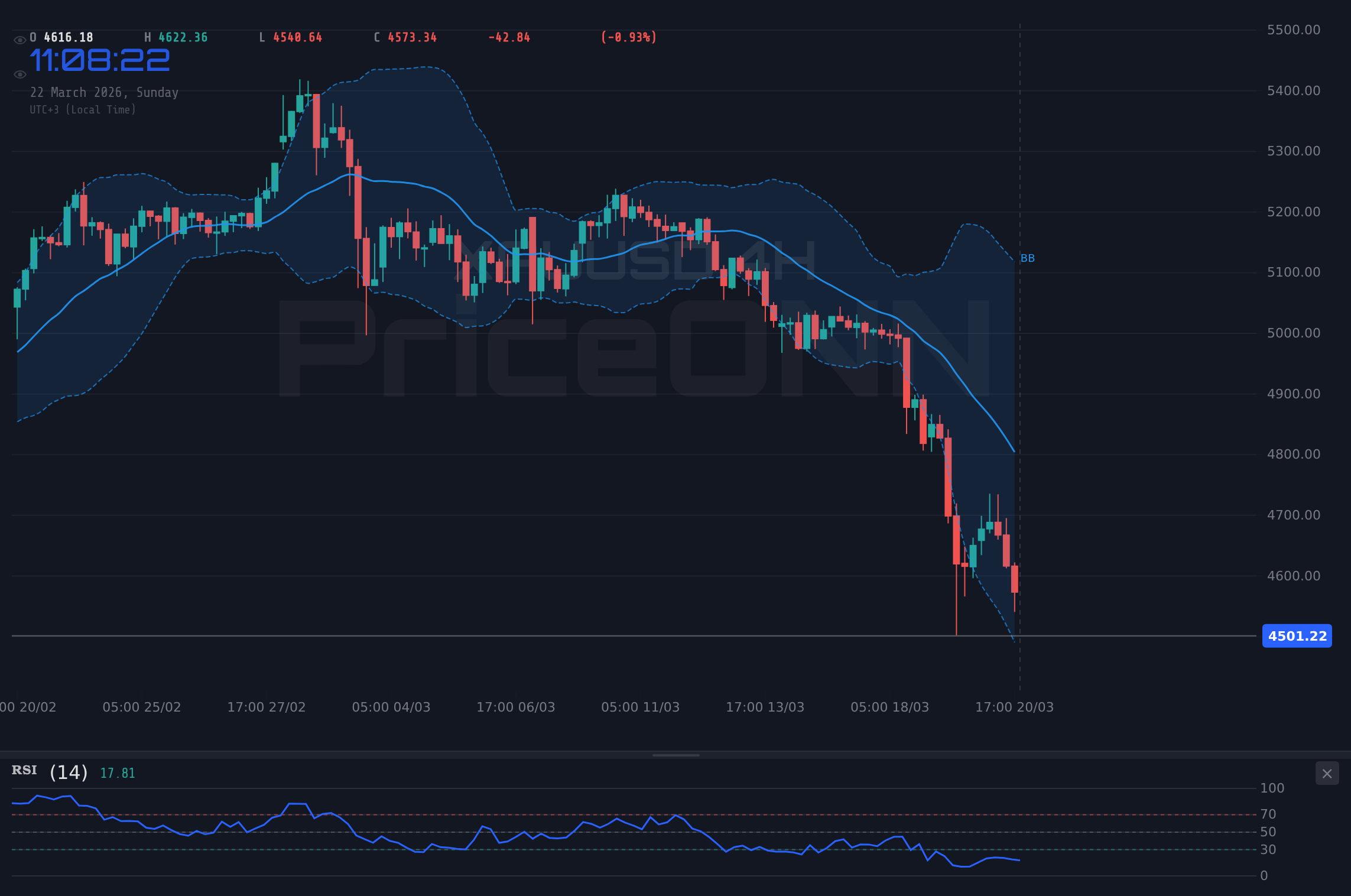
From a multi-timeframe perspective, the signals are decidedly mixed, painting a picture of a market at a potential crossroads. On the 1-hour chart, gold shows a strong downtrend with an ADX of 31.58, suggesting momentum is firmly with the sellers. Yet, the RSI(14) sits at a mere 29.46, deep in oversold territory. This divergence between strong trend strength and extreme oversold conditions is a classic signal of indecision, where a strong trend is facing exhaustion. The MACD is also firmly below its signal line, reinforcing the bearish momentum on this timeframe. However, such oversold readings often precede a corrective bounce, making shorting into weakness a risky proposition without further confirmation. The Stochastic Oscillator, with K at 13.94 and D at 13.94, also screams oversold, further complicating the immediate outlook.
Navigating the Conflicting Signals: A Deeper Dive
The 4-hour timeframe offers an even starker contrast. Here, the trend strength is overwhelming, with ADX reading a formidable 62.89 – indicative of a very strong downtrend. Yet, the RSI(14) plunges to an even lower 19.3, suggesting that gold is technically oversold to an extreme degree. This is where market participants must exercise caution. A very strong trend accompanied by extreme oversold conditions on shorter timeframes can sometimes lead to sharp, albeit potentially short-lived, reversals. The MACD remains bearish, and the Stochastic Oscillator (K=25.57, D=34.97) also points downwards, aligning with the prevailing trend. However, the sheer depth of the oversold readings on RSI and Stochastic cannot be dismissed. It signals that the selling pressure might be overextended, creating a setup for a potential short-covering rally if market conditions shift.
The daily chart, often considered the most reliable for long-term trend identification, presents a neutral picture for gold, with its trend strength at 50%. This suggests a consolidation phase or a lack of decisive direction on a broader scale, despite the significant intraday volatility. The RSI(14) here is 29.67, again firmly in oversold territory, and the Stochastic Oscillator (K=8.67, D=13.12) is even more deeply oversold than on the hourly chart. This daily oversold condition, especially when combined with the sharp weekly decline, could be interpreted as a potential buying opportunity for longer-term investors looking for value. However, the ADX at 19.51 indicates a weak trend, reinforcing the neutral stance. This means that while oversold conditions might tempt buyers, the lack of a strong trend suggests that any upward move could be met with immediate resistance.
The current price of $4,501.45 for XAUUSD sits precariously close to the 1-day support level of $4,479.29. Breaking below this level on the daily chart could trigger further selling pressure, potentially targeting the next support at $4,308.39. Conversely, a failure to break lower and a subsequent bounce could see gold retesting the resistance levels, starting with $4,844.03. The proximity of the current price to significant support levels, coupled with the extreme oversold conditions on longer timeframes, creates a critical juncture. The market is essentially at a tipping point, where a decisive move in either direction could be amplified by the existing technical conditions.
Conflicting Signals: The strong downtrend on 1H and 4H charts (ADX > 30) clashes with the deeply oversold RSI and Stochastic readings on the 1D chart. This indecision suggests caution is paramount. A break below 1-day support at $4,479.29 could accelerate declines, while failure to do so might precede a sharp technical bounce.
The broader market context, particularly the movement of the US Dollar Index (DXY), plays a pivotal role in gold's price action. The DXY is currently trading at 99.25, showing a degree of strength. A rising dollar typically exerts downward pressure on gold, as it makes the precious metal more expensive for holders of other currencies. The 1-day chart for DXY shows a strong uptrend (ADX: 34.64) with RSI at 57.21, indicating room for further appreciation. This strengthens the bearish case for gold in the short to medium term. If the DXY continues its upward trajectory, it could easily drag XAUUSD lower, potentially testing the lower support levels identified. The correlation between gold and the dollar is a long-standing one, and current indicators suggest this relationship is actively influencing the precious metal's price.
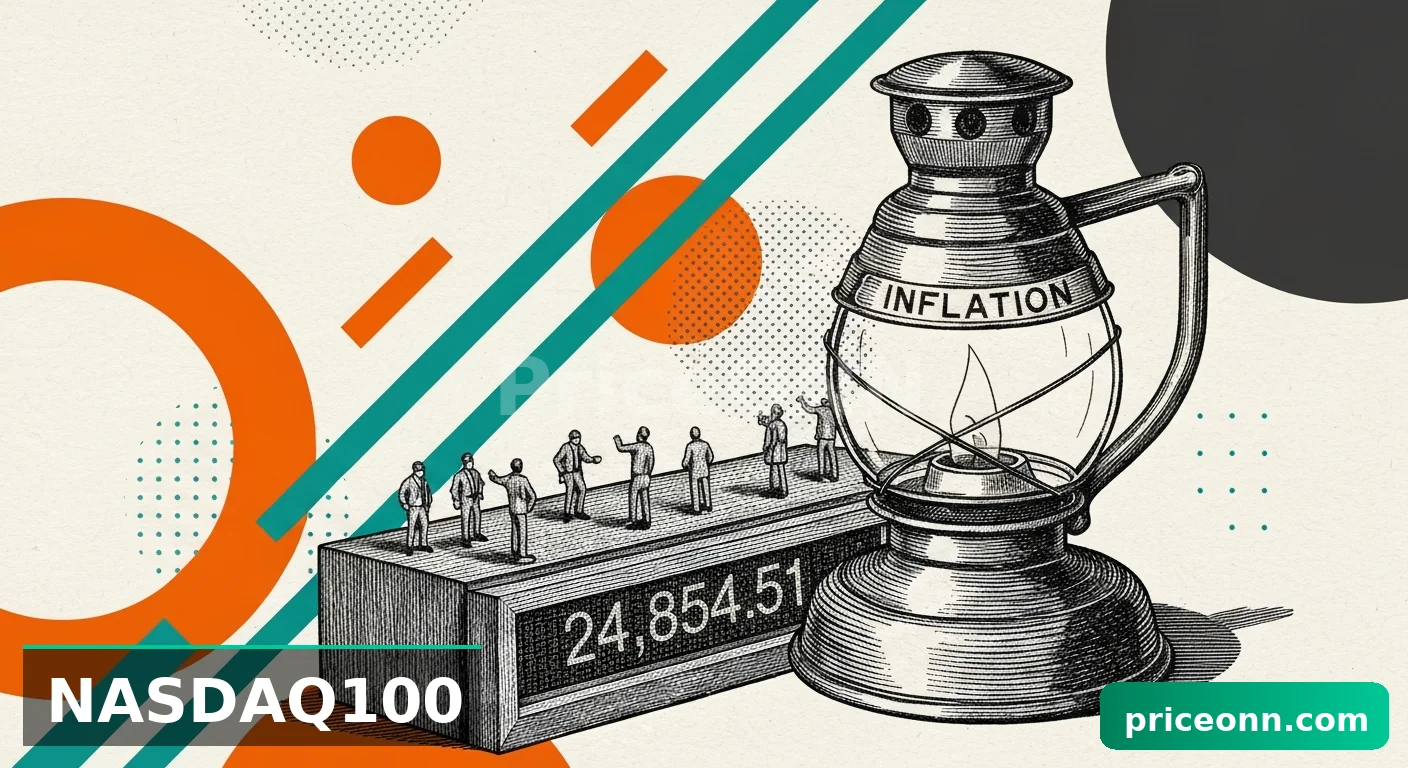
Furthermore, the performance of major equity indices like the S&P 500 and Nasdaq 100 cannot be overlooked. Both indices experienced significant declines last week, with the S&P 500 down 1.2% to 6,536.67 and the Nasdaq 100 down 1.67% to 23,986.8. This risk-off sentiment in equities often correlates with increased demand for safe-haven assets like gold. However, the recent price action in gold suggests that this correlation might be weakening, or that other factors are currently overriding the safe-haven appeal. The fact that gold sold off sharply *despite* falling equities indicates that the dominant narrative might be shifting away from pure risk aversion towards other drivers, such as rising real yields or a strengthening dollar.
The energy markets, particularly Brent crude oil, have been a significant factor influencing inflation expectations. Brent crude saw a substantial rise of 4.58% last week, closing around $112.54. This surge in oil prices typically fuels inflation concerns, which historically benefits gold as an inflation hedge. However, the simultaneous sharp decline in gold prices suggests that the market is perhaps discounting the inflationary impact of higher energy costs, or that the Federal Reserve's aggressive stance on interest rates is overshadowing these concerns. The daily chart for Brent shows a very strong uptrend (ADX: 65.23), with RSI at 82.44 – indicating extreme overbought conditions. This could foreshadow a pullback in oil prices, which might, in turn, offer some relief to gold by reducing inflation fears.
Economic Calendar and Central Bank Watch
Looking ahead, the economic calendar is packed with events that could significantly influence gold's trajectory. The upcoming releases of key inflation data, such as CPI and PCE reports, will be closely watched. Any indication that inflation is proving more persistent than expected could bolster gold's appeal as an inflation hedge. Conversely, data suggesting a faster-than-anticipated cooling of inflation might strengthen the case for central banks, particularly the Federal Reserve, to maintain or even increase interest rates, which would likely be bearish for gold.
Central bank policy remains a dominant theme. The Federal Reserve's stance on interest rates is paramount. Recent commentary from Fed officials has been mixed, with some signaling a readiness to pause rate hikes if inflation cools, while others emphasize the need for continued vigilance. The market is currently pricing in a certain probability of future rate cuts, but any hawkish shift in tone from the Fed could lead to a significant repricing of assets, potentially pressuring gold. Investors will be scrutinizing any speeches or meeting minutes from central bank officials for clues about future monetary policy direction. The current DXY strength at 99.25 suggests that the market is still leaning towards a more hawkish outlook, or at least a 'higher for longer' interest rate scenario, which is a headwind for non-yielding assets like gold.
The geopolitical landscape continues to be a major driver for gold's safe-haven appeal. While specific details from recent energy sector news, such as the reported attack on Qatar's Ras Laffan energy hub, might not directly correlate with immediate gold price movements, the overarching theme of geopolitical instability remains a supportive factor for the precious metal. Any escalation in global conflicts or heightened tensions in key regions can trigger flight-to-safety flows into gold. However, as seen last week, these geopolitical risks do not always translate into sustained gold rallies if other macro factors, like rising yields or a strong dollar, dominate market sentiment. The market's reaction to these events often depends on the perceived severity and duration of the geopolitical risk.
The correlation between gold and bond yields is another critical aspect. As yields on US Treasuries rise, the opportunity cost of holding non-yielding gold increases, making it less attractive. The recent uptick in yields, driven by inflation and interest rate expectations, has likely contributed to the pressure on gold prices. The 1-day chart for the 10-year Treasury yield would be essential here to gauge the trend. If yields continue to climb, it will likely act as a significant headwind for gold. Conversely, a retreat in yields, perhaps triggered by a Fed pivot or a significant economic slowdown, could provide a much-needed tailwind for gold.
Potential Bounce Zone: The daily RSI at 29.67 and Stochastic at 8.67/13.12 indicate extreme oversold conditions. While the short-term trend remains bearish, a bounce from current levels around $4,501.45 towards the 1-day resistance at $4,844.03 is technically plausible if key support holds. This presents a potential risk/reward opportunity for nimble traders, but confirmation is key.
The current technical setup for XAUUSD, with its price at $4,501.45, presents a fascinating dichotomy. The short-term charts (1H, 4H) are screaming 'sell' with strong downtrend signals and bearish momentum. The ADX readings above 30 on these timeframes reinforce the conviction of the current downward move. However, the longer-term daily chart paints a different picture, showing extreme oversold conditions that have historically preceded significant bounces. This conflict suggests that while the immediate path of least resistance might be downwards, the potential for a sharp reversal is growing. Traders must be acutely aware of the key support at $4,479.29. A decisive break below this level could invalidate the oversold thesis and signal a deeper correction. Conversely, holding this level and seeing a confirmed bullish divergence or a break above the 1-hour resistance at $4,559.54 could signal the start of a recovery.
The overall market sentiment appears to be shifting, with a potential recalibration of expectations regarding inflation and central bank policies. While geopolitical tensions continue to provide a baseline level of support for gold as a safe-haven asset, the strength of the US dollar and the prospect of higher-for-longer interest rates are significant headwinds. The sharp decline last week has brought gold to a critical technical juncture. The oversold conditions on longer timeframes suggest that the downside might be limited, but the prevailing bearish momentum on shorter timeframes cannot be ignored. Therefore, a neutral stance seems appropriate for now, emphasizing caution and a focus on confirming signals before committing to a significant directional trade.
The price action around $4,501.45 is crucial. If gold can hold this level and show signs of stabilization, we might see a test of the intraday resistances, starting with $4,559.54. A break above this level, coupled with positive shifts in sentiment or macroeconomic data, could open the door for a move towards the daily resistance at $4,844.03. However, if $4,501.45 gives way, particularly if accompanied by a strong dollar and rising yields, the next target could be the daily support at $4,479.29, and potentially lower. The market is currently balanced on a knife's edge, and the coming week's economic data and central bank commentary will likely be the deciding factors.
Scenario Analysis: Charting the Possible Paths Forward
Bearish Scenario: Downside Acceleration
65% ProbabilityNeutral Scenario: Consolidation & Volatility
25% ProbabilityBullish Scenario: Oversold Bounce
10% ProbabilityThe technical indicators present a conflicting picture for XAUUSD. On the 1-hour and 4-hour charts, the ADX readings (31.58 and 62.89 respectively) strongly suggest a bearish trend. However, the RSI values (29.46 and 19.3) and Stochastic Oscillator levels (K=13.94, D=13.94 on 1H; K=25.57, D=34.97 on 4H) are deeply oversold. The daily chart (RSI: 29.67, Stochastic: K=8.67, D=13.12) also shows extreme oversold conditions, contradicting the short-term trend strength. This suggests that while selling pressure is strong, the market may be approaching a point of exhaustion, potentially leading to a corrective bounce. Confirmation of a sustained move above the immediate hourly resistance at $4,559.54 would be needed to validate any bullish reversal, while a breach of the daily support at $4,479.29 would reinforce the bearish outlook.
The macroeconomic environment continues to be a significant factor. The DXY's current level of 99.25 and its 1-day uptrend suggest ongoing dollar strength, which typically acts as a headwind for gold. Inflation expectations, influenced by the surge in Brent crude oil prices (currently $112.54), remain elevated. However, the market seems more focused on the potential for sustained higher interest rates from central banks, particularly the Federal Reserve, than on inflation hedging. This dynamic creates a tug-of-war for gold: geopolitical risks and inflation fears support it, while a strong dollar and hawkish rate expectations pressure it. The outcome of upcoming economic data releases, especially inflation figures and central bank commentary, will be crucial in determining which factor dominates.
The equity markets, S&P 500 at 6,536.67 and Nasdaq 100 at 23,986.8, have shown weakness, which usually boosts safe-haven demand for gold. However, gold's recent decline despite falling stocks indicates that this typical correlation might be temporarily broken or overridden by other macro drivers. This suggests that investors are prioritizing the impact of interest rates and dollar strength over immediate risk aversion. The current price of $4,501.45 is a critical level to watch. A hold here could signal a short-term bottom, but a break lower would likely exacerbate the sell-off, especially if the DXY continues to climb and yields remain elevated. Patience and a focus on confirming technical signals will be key for traders navigating this complex environment.
Frequently Asked Questions: XAUUSD Analysis
What happens if XAUUSD breaks below the $4,479.29 support level?
A break below the daily support at $4,479.29 would likely invalidate the oversold bounce thesis and could trigger further downside acceleration. This scenario would bring the next support level at $4,308.39 into focus, especially if the DXY continues to strengthen or Fed rate hike expectations intensify.
Should I buy XAUUSD at current levels around $4,501.45 given the oversold RSI?
While the daily RSI at 29.67 suggests oversold conditions, the strong bearish trend on shorter timeframes (ADX > 30) warrants caution. A potential buying opportunity exists if $4,479.29 holds and bullish divergence forms, but confirmation through a break of hourly resistance at $4,559.54 is advisable. Trading against a strong trend carries significant risk.
Is the RSI at 29.67 a definitive buy signal for XAUUSD on the daily chart?
An RSI reading of 29.67 on the daily chart is deeply oversold and historically has often preceded price reversals. However, it is not a definitive buy signal on its own. The strong bearish momentum on shorter timeframes (1H and 4H) and the persistent strength of the DXY at 99.25 suggest that oversold conditions could persist or lead to further downside before a sustainable recovery.
How will the upcoming inflation data affect XAUUSD this week, given the current $4,501.45 price?
If upcoming inflation data comes in hotter than expected, it could bolster gold's appeal as an inflation hedge, potentially supporting a move back towards resistance levels like $4,844.03. Conversely, cooler-than-expected data might reinforce expectations of sustained higher interest rates, pressuring gold further towards support levels like $4,479.29.
The past week has presented a challenging environment for gold traders, marked by a significant price decline to $4,501.45 and conflicting technical signals. While the strong downtrend on shorter timeframes suggests further weakness, the extreme oversold conditions on the daily chart hint at a potential bottoming process. The interplay between geopolitical risks, inflation concerns, dollar strength, and central bank policy expectations will continue to dictate gold's direction. For now, patience appears to be the most prudent strategy. Traders should look for clear confirmation signals – either a decisive break of support or a sustained move above key resistance levels – before committing to significant positions. The market is at a critical juncture, and the coming week's economic data will be pivotal in shaping the next move.
| Indicator | Value | Signal | Interpretation |
|---|---|---|---|
| RSI (14) | 29.67 | Oversold | Daily chart shows extreme oversold conditions, potential for bounce. |
| MACD Histogram | -3.15 | Negative Momentum | Bearish momentum persists on daily chart, indicating selling pressure. |
| Stochastic | 8.67 / 13.12 | Oversold | Deeply oversold on daily, suggesting potential reversal but needs confirmation. |
| ADX | 19.51 | Weak Trend | Daily trend strength is weak, indicating consolidation or lack of clear direction. |
| Bollinger Bands | Lower Band | Breakdown | Price is below the lower band on daily, indicating oversold pressure. |
Track markets in real-time
AI-powered analysis, technical indicators and real-time price data.
Join Our Telegram Channel
Breaking market news, AI analysis and trading signals instantly.
Join Channel