

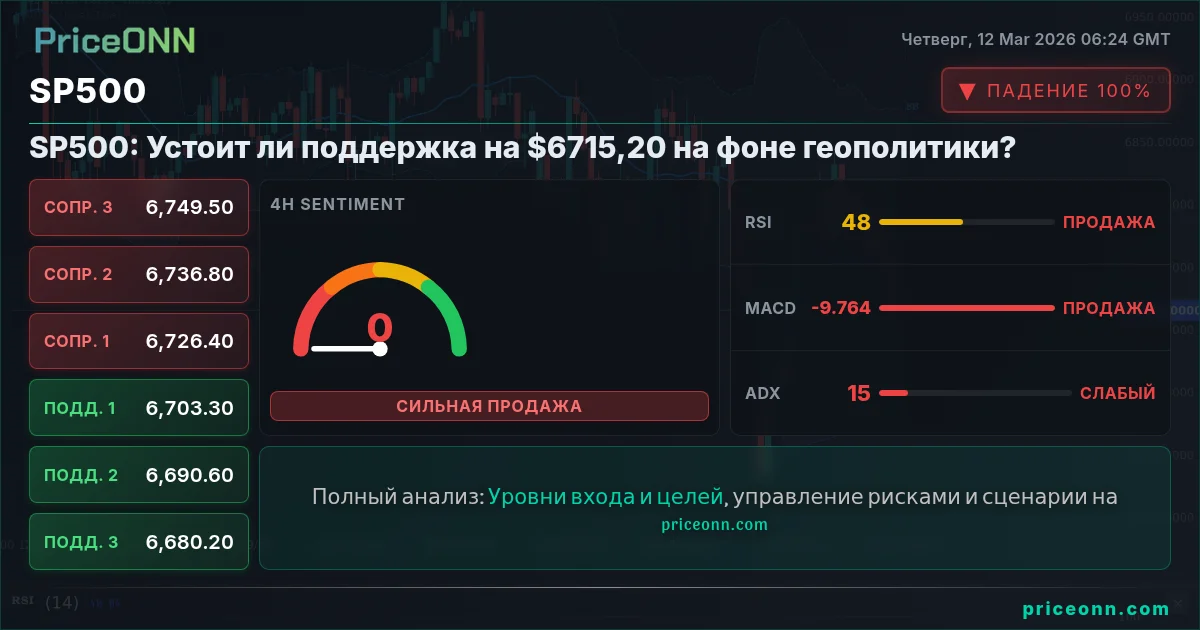
SP500 в настоящее время торгуется вблизи критической отметки $6715,20, уровня, который может определить краткосрочную траекторию рынка. Индекс находится под давлением из-за сочетания факторов, включая эскалацию геополитической напряженности и сохраняющиеся опасения по поводу инфляции. Вопрос сейчас в том, удержится ли этот уровень поддержки, или медведи возьмут контроль и опустят индекс ниже. Анализ SP500 сегодня показывает, что рынок изо всех сил пытается найти опору в условиях глобальной неопределенности.
- RSI на уровне 37,5 на 1-часовом графике предполагает усиление давления продаж.
- Критический уровень поддержки на $6701,73 тестируется, прорыв ниже может спровоцировать дальнейшее снижение.
- Гистограмма MACD указывает на нарастание негативного импульса, что благоприятствует медвежьим настроениям.
- Геополитическая напряженность на Ближнем Востоке вызывает неприятие риска и влияет на корреляцию SP500 с DXY.
Текущая рыночная среда характеризуется повышенным неприятием риска, вызванным эскалацией напряженности на Ближнем Востоке. По данным Reuters, атаки подпитывают опасения по поводу поставок. Это привело к скачку цен на нефть, что, в свою очередь, усугубляет опасения по поводу инфляции. SP500, будучи широким рыночным индексом, особенно уязвим для этих макроэкономических препятствий. DowJones30 испытывает такое же давление, снизившись сегодня на -0,9%.
Для инвесторов и трейдеров понимание потенциальных сценариев и связанных с ними триггеров имеет решающее значение для навигации на этом волатильном рынке. Давайте рассмотрим возможные пути, по которым SP500 может пойти в ближайшей перспективе.
Бычий сценарий: сценарий восстановления
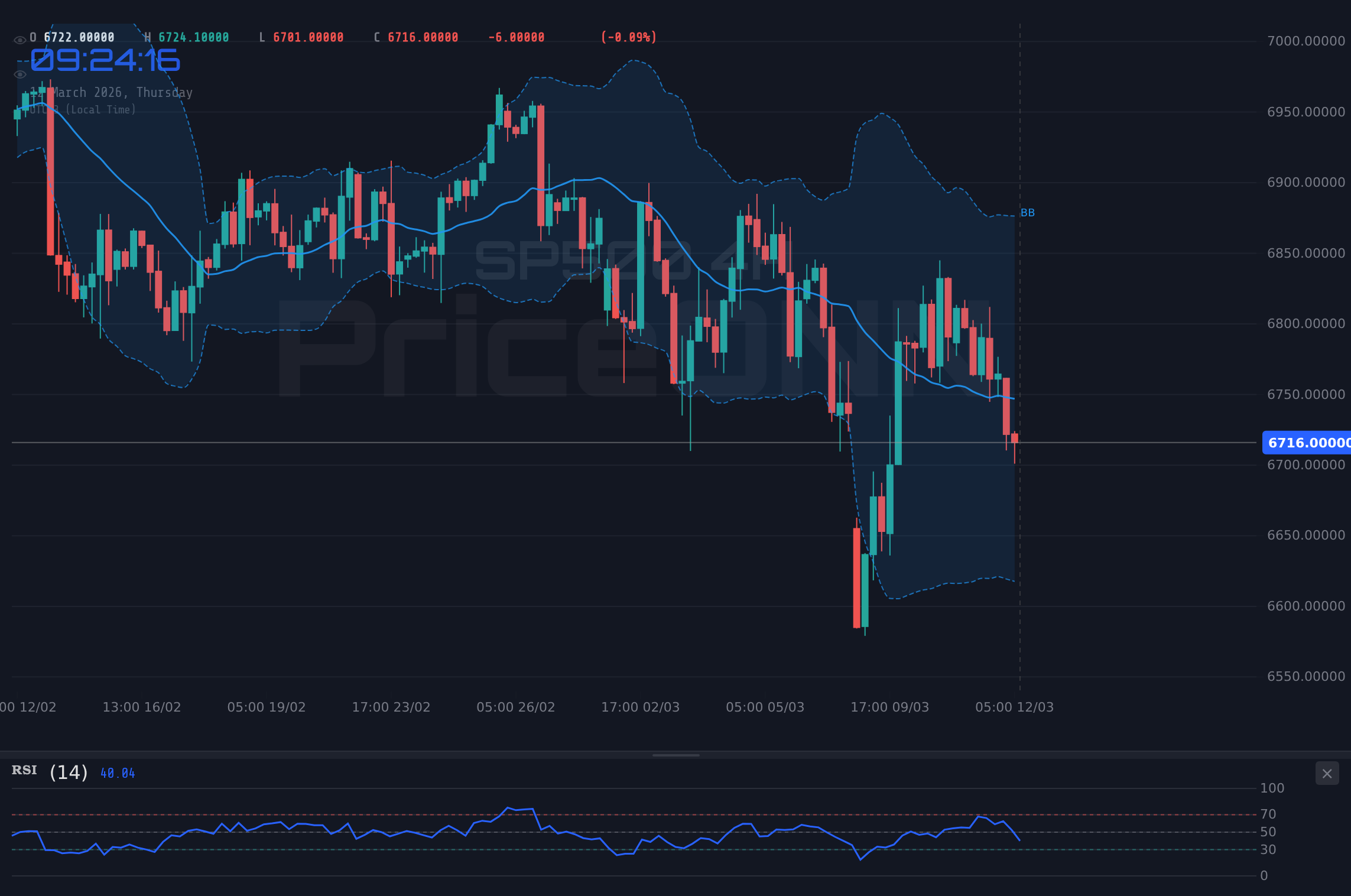
В бычьем сценарии SP500 необходимо прочно закрепиться выше ближайшего сопротивления на уровне $6712,03. Это потребует значительного изменения рыночных настроений, потенциально вызванного ослаблением геополитической напряженности или положительным сюрпризом в предстоящих экономических данных. Успешный прорыв выше этого уровня может проложить путь к тестированию следующего сопротивления на уровне $6718,57. Если SP500 сможет удержать импульс выше этого уровня, быки смогут нацелиться на $6722,33 в качестве следующей цели роста. Этот сценарий зависит от возвращения аппетита к риску и ослабления индекса доллара (DXY), который в настоящее время демонстрирует силу. Движение выше уровня коррекции Фибоначчи 61,8%, примерно на уровне $6730, может сигнализировать о начале новой бычьей волны.
С точки зрения анализа нескольких таймфреймов, 1-дневный график показывает, что SP500 в настоящее время торгуется ниже своей 200-дневной скользящей средней, ключевого технического индикатора, который часто выступает в качестве динамического уровня поддержки или сопротивления. Устойчивое движение выше этой скользящей средней будет важным бычьим сигналом. Скальперы могут искать возможности для быстрых Long позиций выше $6712,03, в то время как свинг-трейдеры, вероятно, будут ждать подтвержденного прорыва выше $6718,57, прежде чем брать на себя более долгосрочную позицию. Долгосрочные инвесторы могут рассматривать откат к 50-дневной скользящей средней как возможность для покупки, при условии, что общие макроэкономические перспективы останутся благоприятными.
Медведи берут контроль: нисходящая спираль
С другой стороны, медвежий сценарий развернется, если SP500 не удержит критическую поддержку на уровне $6701,73. Решительный прорыв ниже этого уровня может спровоцировать волну давления продаж, потенциально опустив индекс до следующей поддержки на уровне $6697,97. Если медведи сохранят контроль, SP500 может затем нацелиться на $6691,43 в качестве следующей цели снижения. Этот сценарий основан на сохраняющейся геополитической неопределенности, росте инфляции и укреплении доллара. RSI на 4-часовом графике в настоящее время ниже 50, что указывает на то, что медведи имеют преимущество в краткосрочной перспективе. Прорыв ниже уровня расширения Фибоначчи 61,8%, примерно на уровне $6680, может сигнализировать о начале новой медвежьей волны.
Влияние новостей SP500 здесь имеет решающее значение. Негативные заголовки, касающиеся геополитической напряженности или экономических данных, могут усугубить давление продаж. С технической точки зрения, формирование креста смерти (когда 50-дневная скользящая средняя пересекает 200-дневную скользящую среднюю снизу вверх) будет важным медвежьим сигналом. Скальперы могут искать возможности для быстрых Short позиций ниже $6701,73, в то время как свинг-трейдеры, вероятно, будут ждать подтвержденного прорыва ниже $6697,97, прежде чем открывать Short позицию. Долгосрочные инвесторы могут рассмотреть возможность сокращения своей подверженности акциям, если развернется медвежий сценарий.
Ожидание: сценарий консолидации
Нейтральный или консолидированный сценарий возникнет, если SP500 останется в ловушке между ближайшей поддержкой на уровне $6701,73 и сопротивлением на уровне $6712,03. В этом сценарии индекс, вероятно, будет испытывать нестабильные торги без четкой направленной предвзятости. Индикатор ADX, который измеряет силу тренда, в настоящее время находится на уровне 18,29 на 1-часовом графике, что говорит о том, что рынку не хватает сильного тренда. Настроения на рынке SP500 будут нерешительными, быки и медведи будут бороться за контроль. Этот сценарий может сохраняться до тех пор, пока не появится крупный катализатор, чтобы сломить тупик. Индикатор Stochastics показывает условия перепроданности, предполагая возможный отскок, но общая тенденция остается слабой.
Это боковое движение подчеркивает необходимость терпения и избирательной торговли. Трейдерам следует сосредоточиться на выявлении высоковероятных установок в пределах диапазона, а не пытаться форсировать сделки. Скальперы могут извлекать выгоду из волатильности в пределах диапазона, в то время как свинг-трейдерам следует ждать подтвержденного прорыва или пробоя, прежде чем занимать позицию. Долгосрочные инвесторы могут использовать этот период консолидации для перебалансировки своих портфелей и оценки своей подверженности риску.
Наиболее вероятный сценарий: осторожно медвежий (вероятность 60%)
Учитывая текущие рыночные условия, осторожно медвежий сценарий представляется наиболее вероятным исходом (вероятность 60%). Эскалация геополитической напряженности в сочетании с сохраняющимися опасениями по поводу инфляции и укреплением доллара создает сложную среду для акций. Технические индикаторы также поддерживают эту точку зрения: SP500 торгуется ниже своей 200-дневной скользящей средней, а RSI указывает на усиление давления продаж. Однако важно признать, что рынок динамичен, и неожиданные события могут быстро изменить баланс сил. Общая тенденция медвежья, но есть риск, что рынок может отскочить от уровня перепроданности. Ключ в управлении рисками и ожидании подтверждения перед занятием позиции.
SP500 сильно коррелирует с другими рынками, включая DXY, доходность облигаций и цены на нефть. Более сильный доллар (DXY на уровне 99,22) обычно оказывает понижательное давление на SP500, поскольку он делает экспорт США более дорогим и снижает прибыль многонациональных корпораций. Рост доходности облигаций также имеет тенденцию оказывать давление на SP500, поскольку он увеличивает затраты компаний на заимствования и делает акции менее привлекательными по сравнению с инвестициями с фиксированным доходом. Цены на нефть, с другой стороны, могут оказывать смешанное воздействие. В то время как более высокие цены на нефть могут поддержать энергетический сектор, они также способствуют инфляции, которая может подорвать потребительские расходы и корпоративную прибыль. Поскольку цены на нефть тестируют $100, это, безусловно, фактор риска.
Ключевые триггеры, за которыми нужно следить на этой неделе
Несколько ключевых событий и публикаций данных могут повлиять на траекторию SP500 на этой неделе. На экономическом фронте рынок будет внимательно следить за предстоящими данными. Любые сюрпризы в этих отчетах могут вызвать значительную реакцию рынка. Геополитические события также останутся в центре внимания, особенно любая эскалация или деэскалация напряженности на Ближнем Востоке. С технической точки зрения, трейдерам следует обратить пристальное внимание на уровень поддержки $6701,73 и уровень сопротивления $6712,03. Решительный прорыв любого из этих уровней может сигнализировать о начале нового тренда. За USD также стоит следить. Если доллар продолжит укрепляться, это может оказать дальнейшее давление на SP500.
Ключевые уровни
Уровни поддержки
Уровни сопротивления
Технический анализ
| Индикатор | Значение | Сигнал |
|---|---|---|
| RSI (14) | 42.21 | Нейтральный |
| Гистограмма MACD | Отрицательный | Медвежий |
| Stochastic | 11.78 | Перепроданность |
| ADX | 18.29 | Слабый |
| Bollinger | Средняя полоса | Нейтральный |
Часто задаваемые вопросы: Анализ SP500
Что произойдет, если SP500 пробьет поддержку на уровне $6701,73?
Прорыв ниже уровня поддержки $6701,73 может спровоцировать значительную распродажу, потенциально опустив SP500 до $6697,97, а затем и до $6691,43. Этот сценарий, вероятно, будет вызван сохраняющейся геополитической неопределенностью и ростом инфляции.
Стоит ли покупать SP500 на текущих уровнях $6715,20, учитывая RSI на уровне 37,5?
Хотя RSI на уровне 37,5 предполагает условия перепроданности, это не является окончательным сигналом к покупке. Общая тенденция медвежья, и MACD указывает на отрицательный импульс. Целесообразно дождаться подтвержденного разворота, прежде чем рассматривать Long позицию, со стоп-лоссом ниже $6701,73.
Является ли отрицательная гистограмма MACD сильным сигналом к продаже для SP500 прямо сейчас?
Отрицательная гистограмма MACD усиливает медвежьи настроения, предполагая, что давление продаж, вероятно, сохранится. Однако важно учитывать другие факторы, такие как уровни поддержки и общие настроения рынка, прежде чем принимать торговое решение. Подтвержденный прорыв ниже $6701,73 в сочетании с отрицательным MACD усилит сигнал к продаже.
Как повлияют предстоящие данные по инфляции в России на SP500 на этой неделе?
Предстоящие данные могут оказать значительное влияние на SP500. Сильные данные могут ослабить опасения по поводу рецессии и поддержать ралли, в то время как слабые данные могут усугубить давление продаж. Трейдерам следует обратить пристальное внимание на эти выпуски и соответствующим образом скорректировать свои позиции.
Отслеживайте рынки в реальном времени
ИИ-анализ и данные в реальном времени.