

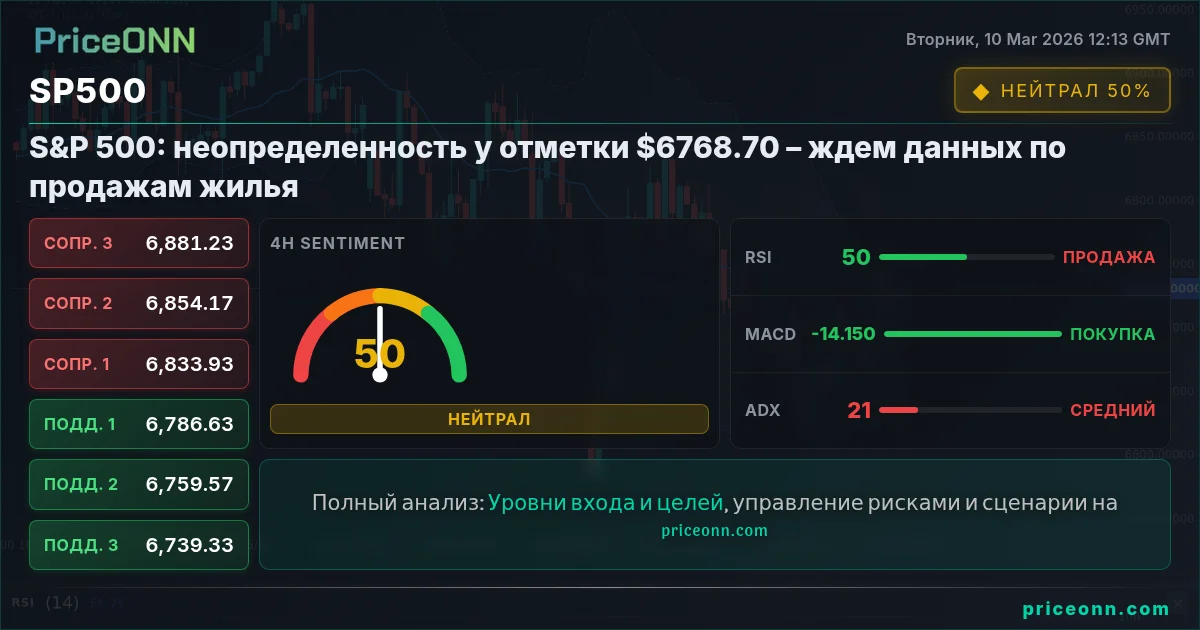
Индекс S&P 500 (SP500) торгуется на уровне $6768.70, испытывая встречный ветер в преддверии публикации данных по продажам жилья. Эти данные будут иметь решающее значение для оценки состояния жилищного сектора и его потенциального влияния на экономику в целом. Инвесторы внимательно следят за ключевыми техническими уровнями, чтобы определить дальнейшее направление движения индекса. Важно отметить, что текущая ситуация также находится под влиянием политики ЦБ РФ и ее влияния на курс рубля, а также корреляции индекса MOEX с российским рынком. Анализ SP500 сегодня требует учета всех этих факторов.
- RSI на дневном таймфрейме на уровне 42.56 указывает на усиление медвежьего импульса.
- Критический уровень поддержки находится на отметке $6640.47, пробой ниже может спровоцировать дальнейшее снижение.
- Гистограмма MACD показывает отрицательный импульс, указывая на давление продаж.
- Предстоящие данные по продажам жилья и напряженность на Ближнем Востоке являются ключевыми факторами корреляции SP500 с DXY.
Почему уровень $6768.70 – это линия фронта для SP500
Уровень $6768.70 оказывается поворотной точкой для SP500. После периода устойчивого бычьего импульса индекс сталкивается с усилением давления продаж. Дневной график показывает тревожную картину: RSI на уровне 42.56 указывает на рост медвежьего импульса. Это говорит о том, что "быки" теряют контроль, и "медведи" могут быть готовы взять верх. Гистограмма MACD также подтверждает эту точку зрения, показывая отрицательный импульс и подчеркивая усиление давления продаж.
С точки зрения анализа нескольких таймфреймов, часовой график показывает небольшое восстановление с RSI на уровне 52.46 и ADX на уровне 28.88, демонстрирующим сильный восходящий тренд, что предполагает краткосрочный бычий импульс. Однако дневной график показывает, что общая тенденция по-прежнему является медвежьей с сильным трендом на ADX 33.6. Трейдерам следует помнить об этом при принятии решений.
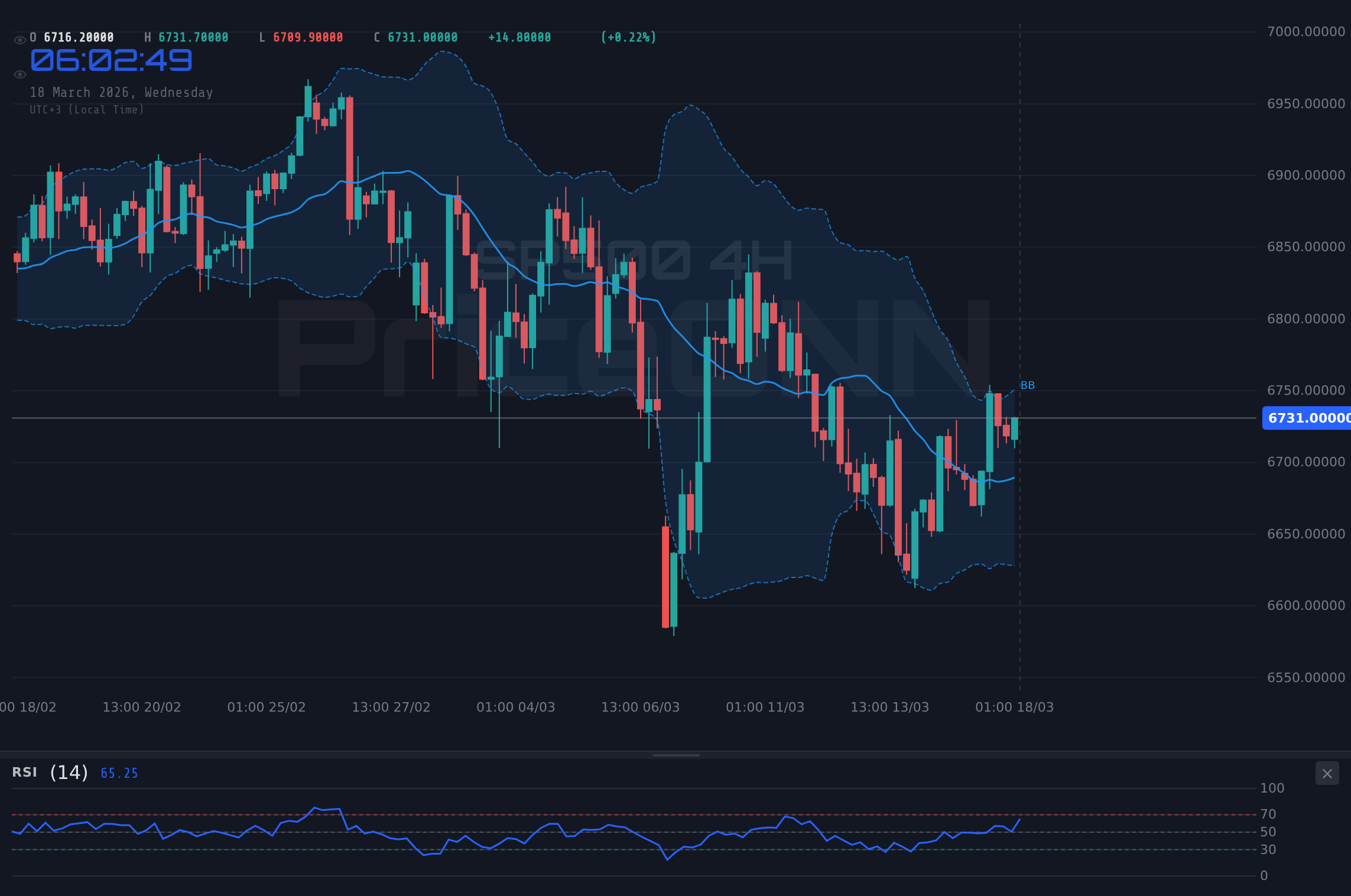
Также стоит отметить корреляцию между SP500 и DXY (индекс доллара). Поскольку DXY укрепляется до 98.55 на фоне напряженности на Ближнем Востоке, это оказывает дополнительное давление на SP500. Эта обратная зависимость предполагает, что любое дальнейшее укрепление доллара может усугубить понижательное давление на индекс. Инвесторам следует внимательно следить за DXY как за опережающим индикатором потенциального направления SP500. По данным Reuters, Федеральная резервная система, вероятно, сохранит свою ястребиную позицию из-за сохраняющегося инфляционного давления, что может еще больше поддержать доллар и оказать давление на SP500.
Дорожная карта "быков": сценарий отскока
Если SP500 сможет удержаться выше ближайшей поддержки на уровне $6757.80, мы можем увидеть отскок к уровню сопротивления $6816.07. Успешный прорыв выше этого сопротивления может открыть путь для дальнейшего роста к $6872.57. Этот сценарий зависит от положительных экономических данных и деэскалации геополитической напряженности.
Для реализации бычьего сценария необходимо совпадение нескольких факторов. Прежде всего, рынок должен увидеть положительные экономические данные, подтверждающие идею продолжения экономического роста. В частности, отчет о продажах жилья, который окажется лучше ожиданий, может придать столь необходимый импульс настроениям. Кроме того, деэскалация геополитической напряженности на Ближнем Востоке может ослабить спрос на доллар как на "тихую гавань", что поможет ослабить понижательное давление на SP500. Скальперам следует следить за быстрыми отскоками от внутридневных уровней поддержки, а свинг-трейдеры могут рассмотреть возможность открытия длинных позиций при подтвержденном прорыве выше $6794.73. Долгосрочные инвесторы могут рассматривать эту коррекцию как возможность увеличить свои позиции по сниженной цене.
Где "медведи" берут контроль: сценарий пробоя
И наоборот, если SP500 не сможет удержаться выше поддержки $6757.80, может развернуться сценарий пробоя. Это, вероятно, спровоцирует движение к следующему уровню поддержки на уровне $6640.47. Пробой ниже этого уровня может привести к более значительной коррекции в направлении $6493.73. Этот сценарий более вероятен, если данные по продажам жилья разочаруют и геополитическая напряженность усилится.
Медвежий сценарий основан на сочетании негативных экономических данных и повышенных геополитических рисков. Разочаровывающий отчет о продажах жилья будет сигнализировать о слабости в жилищном секторе, что может оказать давление на общий экономический рост. Кроме того, эскалация напряженности на Ближнем Востоке может привести к всплеску спроса на доллар как на "тихую гавань", что окажет дальнейшее понижательное давление на SP500. Скальперам следует искать возможности для открытия коротких позиций по индексу на внутридневных ралли, а свинг-трейдеры могут рассмотреть возможность открытия коротких позиций при подтвержденном прорыве ниже $6757.80. Долгосрочным инвесторам следует рассмотреть возможность сокращения своей доли в акциях, если медвежий сценарий наберет обороты.
Игра ожидания: сценарий консолидации
Также возможно, что SP500 может оставаться в диапазоне между поддержкой $6757.80 и сопротивлением $6816.07. Этот сценарий, вероятно, развернется, если экономические данные будут смешанными, а геополитическая напряженность останется стабильной. В этом случае трейдерам следует сосредоточиться на торговле в диапазоне, покупая вблизи поддержки и продавая вблизи сопротивления. Значение ADX 22.15 на 4-часовом графике предполагает, что индекс в настоящее время не находится в сильном тренде, что поддерживает возможность сценария консолидации. Stochastic K=84.47 и D=61.22 на 4-часовом графике показывают, что цены растут, поэтому трейдерам следует следить за этими индикаторами.
Для скальперов рынок, ограниченный диапазоном, предоставляет широкие возможности для получения прибыли от небольших ценовых движений. Свинг-трейдеры также могут извлечь выгоду из торговли в диапазоне, но им нужно быть терпеливыми и ждать четких сигналов перед открытием позиций. Долгосрочным инвесторам следует сохранять нейтральную позицию на рынке, ограниченном диапазоном, ожидая четкого прорыва или пробоя, прежде чем вносить какие-либо существенные изменения в свои портфели.
Наиболее вероятный сценарий: усиление медвежьего импульса (вероятность 60%)
Основываясь на текущей технической картине и преобладающих рыночных настроениях, медвежий сценарий представляется наиболее вероятным исходом. Сочетание негативных индикаторов импульса (RSI и MACD), укрепление доллара и возможность разочаровывающих экономических данных позволяют предположить, что SP500, вероятно, пробьет поддержку $6757.80 и двинется к более низким уровням. Я присваиваю этому сценарию вероятность 60%, в то время как бычьему сценарию и сценарию консолидации присваиваются вероятности 25% и 15% соответственно.
Dow Jones также демонстрирует медвежий тренд с RSI на уровне 34.7 и ADX на уровне 29.53. При цене на сырую нефть WTI на уровне $90.42 и RSI на уровне 77.82 инфляция, вероятно, будет проблемой в ближайшей перспективе, что продолжит оказывать давление на SP500. USD также укрепляется, что также отрицательно коррелирует с SP500
Ключевые триггеры, за которыми стоит следить на этой неделе
Несколько ключевых событий и публикаций данных могут оказать существенное влияние на SP500 на этой неделе. Инвесторам следует обратить пристальное внимание на следующие триггеры:
- Данные по продажам жилья: Отчет, который окажется лучше ожиданий, может обеспечить краткосрочный импульс, в то время как разочаровывающий отчет может усугубить понижательное давление.
- Напряженность на Ближнем Востоке: Любая эскалация напряженности может привести к всплеску спроса на доллар как на "тихую гавань", оказывая давление на SP500.
- Комментарии Федеральной резервной системы: Любые намеки со стороны ФРС относительно будущих повышений процентных ставок также могут повлиять на настроения рынка.
Технический обзор
| Индикатор | Значение | Сигнал |
|---|---|---|
| RSI (14) | 52.46 (1H) / 42.56 (1D) | Нейтральный (1H) / Медвежий (1D) |
| Гистограмма MACD | Положительная (1H) / Отрицательная (1D) | Бычий (1H) / Медвежий (1D) |
| Stochastic | 56.04 (1H) / 38.07 (1D) | Медвежий (1H) / Медвежий (1D) |
| ADX | 28.88 (1H) / 33.6 (1D) | Сильный восходящий тренд (1H) / Сильный нисходящий тренд (1D) |
| Bollinger | Средняя полоса | Наблюдение |
Ключевые уровни
Уровни поддержки
Уровни сопротивления
Часто задаваемые вопросы: Анализ SP500
Что произойдет, если SP500 пробьет поддержку на уровне $6757.80?
Если SP500 пробьет уровень поддержки $6757.80, это может спровоцировать значительную распродажу в направлении следующего уровня поддержки на уровне $6640.47. Этот сценарий пробоя, вероятно, развернется, если данные по продажам жилья разочаруют и геополитическая напряженность усилится, что приведет к увеличению неприятия риска.
Стоит ли продавать SP500 на текущих уровнях $6768.70, учитывая RSI на уровне 42.56 на дневном графике?
При RSI на уровне 42.56 на дневном графике SP500 демонстрирует усиление медвежьего импульса. Хотя он еще не находится в зоне перепроданности, это говорит о том, что давление продаж нарастает. Пробой ниже $6757.80 может подтвердить медвежий сигнал и оправдать открытие короткой позиции, но всегда управляйте своим риском с помощью стоп-лосса.
Что говорит нам отрицательная гистограмма MACD об анализе тренда SP500?
Отрицательная гистограмма MACD указывает на то, что SP500 испытывает отрицательный импульс, что говорит об увеличении давления продаж. Этот медвежий сигнал согласуется с показаниями RSI и поддерживает возможность пробоя ниже уровня поддержки $6757.80. Трейдерам следует проявлять осторожность и искать подтверждение медвежьего тренда перед открытием коротких позиций.
Как повлияют предстоящие данные по продажам жилья на SP500 на этой неделе?
Предстоящие данные по продажам жилья являются ключевым катализатором для SP500 на этой неделе. Отчет, который окажется лучше ожиданий, может обеспечить краткосрочный импульс настроениям, в то время как разочаровывающий отчет может усугубить понижательное давление на индекс. Реакция рынка на эти данные, вероятно, определит направление движения SP500 в ближайшие дни.
Предупреждение о рисках: Торговля на финансовых рынках сопряжена с риском. Торгуйте только капиталом, который вы можете позволить себе потерять. Прошлые результаты не являются показателем будущих результатов. Всегда проводите тщательное исследование и консультируйтесь с квалифицированным финансовым консультантом, прежде чем принимать какие-либо инвестиционные решения.
Влияние санкций на российский рынок также стоит учитывать при анализе SP500, особенно в контексте корреляции с индексом MOEX. Кроме того, ключевая ставка ЦБ РФ, инфляция и данные по ВВП также оказывают влияние на локальные рынки и могут косвенно влиять на глобальные индексы.
Отслеживайте рынки в реальном времени
ИИ-анализ и данные в реальном времени.