

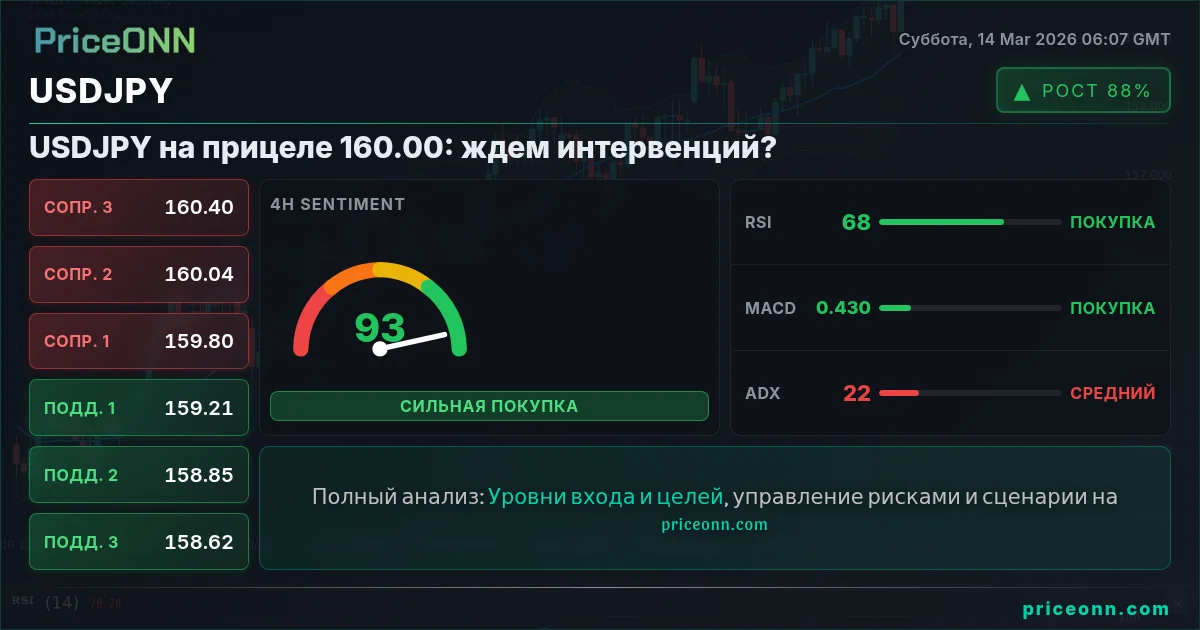
Быки по USDJPY не показывают признаков замедления, пара закрылась в прошлую пятницу на отметке $159.74. Главный вопрос сейчас заключается в том, вмешается ли Банк Японии (BoJ), когда пара приблизится к психологически значимому уровню 160.00. Сила доллара, подпитываемая геополитической напряженностью и ожиданиями продолжения ястребиной политики Федеральной резервной системы, все больше затрудняет укрепление иены.
- USDJPY закрылась в прошлую пятницу на отметке $159.74, самом высоком уровне с июля 2024 года, усиливая опасения по поводу интервенций.
- Ключевые уровни поддержки, за которыми стоит следить: 159.568 (1H поддержка), 158.768 (1D поддержка) и 158.231 (1D поддержка)
- RSI на дневном графике находится на уровне 70.07, что указывает на условия перекупленности, которые могут привести к откату.
- При DXY на уровне 100.2 сила доллара является серьезным препятствием для иены, повышая ставки для предстоящих данных по индексу потребительских цен (CPI).
Наблюдая за USDJPY на протяжении всего цикла ставок 2024 года, нынешний всплеск ощущается по-другому. Сочетание факторов - сильный доллар, рост цен на нефть, вызванный напряженностью на Ближнем Востоке, и нежелание BoJ ужесточать денежно-кредитную политику - создает идеальный шторм для ослабления иены. Геополитическая напряженность на Ближнем Востоке подливает масла в огонь, направляя потоки капитала в доллар как в тихую гавань. Сообщения в новостях указывают на то, что нефть марки Brent превышает 100 долларов США, поскольку удары США в Иране угрожают поставкам нефти, что еще больше оказывает давление на иену из-за зависимости Японии от импорта энергоносителей. По данным Reuters, представители ФРС сохраняют ястребиную позицию в отношении инфляции, поддерживая рост доллара. Этот бычий импульс очевиден на 1-часовом графике, где сила тренда составляет 83%. Скальперы могут искать быстрые возможности для открытия длинных позиций выше 159.733 (1H сопротивление), но должны остерегаться потенциального флэш-крэша, вызванного интервенцией.
Для свинг-трейдеров 4-часовой график дает более четкую картину. RSI на уровне 68.1 предполагает, что еще есть место для дальнейшего роста, прежде чем пара станет чрезмерно перекупленной. Ключевые уровни, за которыми стоит следить: 159.39 (4H сопротивление) и 158.894 (4H поддержка). Прорыв выше 159.691 (4H сопротивление) может сигнализировать о продолжении восходящего тренда, а прорыв ниже 158.699 (4H поддержка) может привести к более глубокой коррекции. MACD в настоящее время демонстрирует положительную динамику, но медвежья дивергенция может стать ранним предупреждающим знаком потенциального разворота. Долгосрочным инвесторам следует сосредоточиться на общей картине. Дневной график показывает сильный восходящий тренд, пара торгуется вблизи самых высоких уровней с июля 2024 года. Однако RSI на уровне 70.07 указывает на то, что пара перекуплена, и коррекция может быть не за горами. Ключевые уровни, за которыми стоит следить: 159.633 (1D сопротивление) и 158.768 (1D поддержка). ADX на уровне 21 предполагает, что тренд умеренно сильный, но еще не достиг неустойчивого уровня.
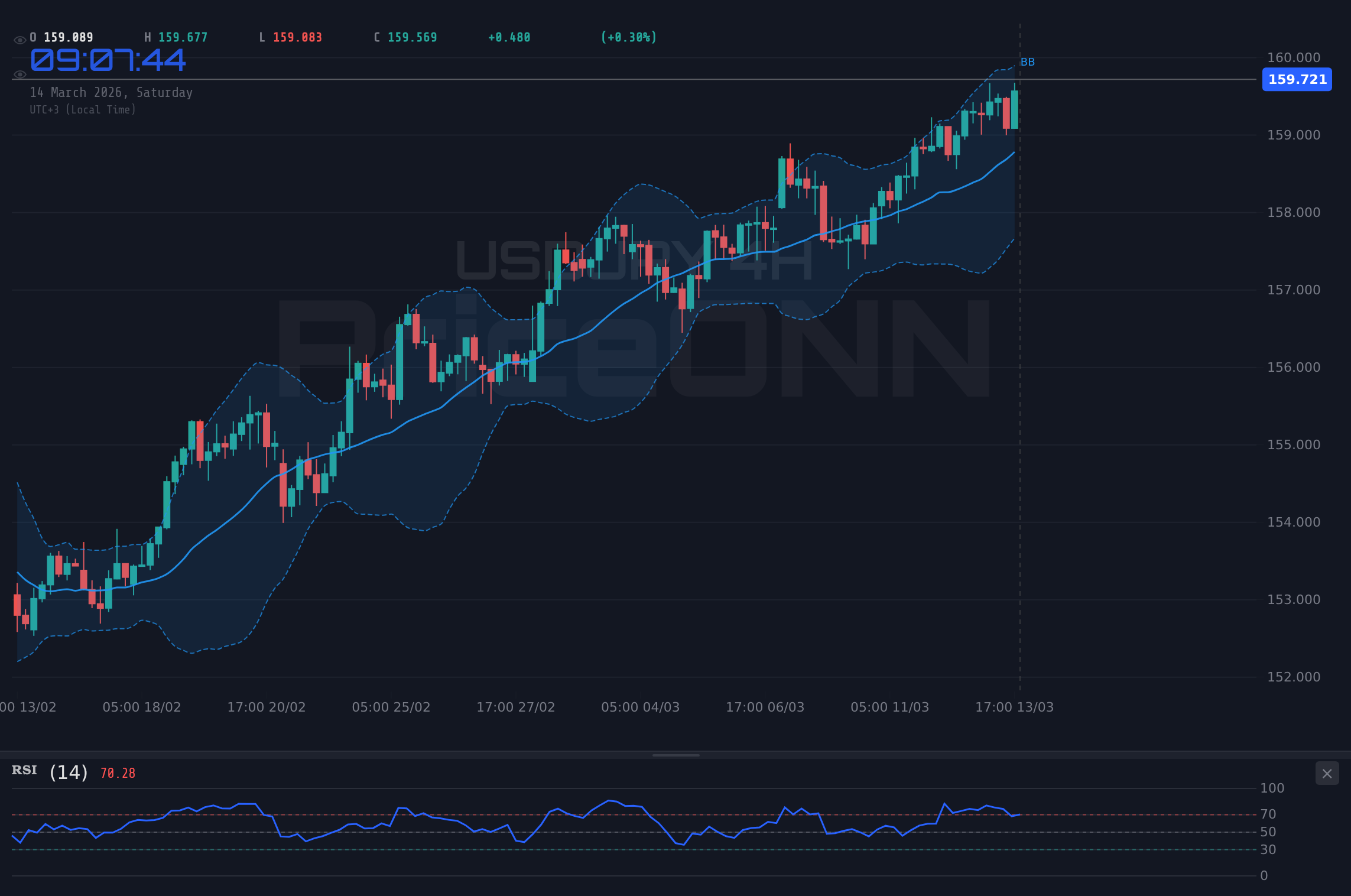
Одним из наиболее важных факторов, определяющих USDJPY, является расхождение в денежно-кредитной политике между Федеральной резервной системой и Банком Японии. В то время как ожидается, что ФРС продолжит повышать процентные ставки для борьбы с инфляцией, BoJ, вероятно, сохранит свою сверхмягкую денежно-кредитную политику в обозримом будущем. Это расхождение создает значительное преимущество в доходности для доллара, делая его более привлекательным для инвесторов. По данным Bloomberg, индекс доллара США (DXY) приближается к 10-месячному максимуму, подпитываемому эскалацией напряженности на Ближнем Востоке. При DXY на уровне 100.2 USDJPY находится под давлением, чтобы двигаться выше. Ослабление иены усугубляется зависимостью Японии от импорта энергоносителей. Рост цен на нефть, вызванный геополитической напряженностью и перебоями в поставках, оказывает дополнительное давление на японскую валюту. Рынок внимательно следит за предстоящими данными по индексу потребительских цен (CPI) для получения дополнительных подсказок о политическом курсе ФРС. Сильные данные по индексу потребительских цен могут укрепить ожидания продолжения повышения ставок, что еще больше укрепит доллар и окажет давление на иену.
Глядя на техническую картину, 1-часовой график в настоящее время показывает сильный восходящий тренд, но RSI на уровне 64.78 предполагает, что пара приближается к зоне перекупленности. MACD положителен, но гистограмма начинает сужаться, что указывает на то, что импульс может замедляться. Непосредственная поддержка находится на уровне 159.568, за которым следуют 159.507 и 159.455. Сопротивление наблюдается на уровнях 159.681, 159.733 и 159.794. Осциллятор Stochastic находится в зоне перекупленности, с K=92.33 и D=75.65, что предполагает, что откат может быть неизбежным. ADX находится на уровне 16.4, что указывает на слабый тренд. На 4-часовом графике тренд нейтральный, но RSI находится на уровне 68.1, что предполагает, что пара приближается к зоне перекупленности. Поддержка наблюдается на уровнях 158.894, 158.699 и 158.398. Сопротивление наблюдается на уровнях 159.39, 159.691 и 159.886. Осциллятор Stochastic показывает медвежий кроссовер, с K=76.52 и D=82.2. ADX находится на уровне 22.13, что указывает на умеренный тренд. Дневной график показывает сильный восходящий тренд, но RSI находится на уровне 70.07, что указывает на условия перекупленности. Поддержка наблюдается на уровнях 158.768, 158.231 и 157.903. Сопротивление наблюдается на уровнях 159.633, 159.961 и 160.498. Осциллятор Stochastic находится в зоне перекупленности, с K=97.53 и D=85.19. ADX находится на уровне 21, что указывает на умеренный тренд.
Наблюдая за аналогичными моделями в USDJPY за последние несколько лет, становится ясно одно: интервенция BoJ - это дикая карта. В прошлом центральный банк агрессивно вмешивался, чтобы защитить иену, но эти интервенции часто были недолгими. Фундаментальные факторы ослабления иены - расхождение в денежно-кредитной политике и зависимость Японии от импорта энергоносителей - трудно преодолеть. Поэтому любая интервенция, вероятно, обеспечит лишь временное облегчение. Рыночные настроения в отношении USDJPY в подавляющем большинстве бычьи. Трейдеры делают ставку на то, что доллар продолжит укрепляться и что BoJ не сможет или не захочет остановить падение иены. Согласно рыночным новостям PriceONN, USD/JPY нацелена на 160.00, поскольку слабость иены подпитывает опасения по поводу интервенций. Это мнение подкрепляется тем фактом, что пара неоднократно тестировала ключевые уровни сопротивления в последние недели. Хотя коррекция возможна, общая тенденция остается твердо восходящей. Еженедельный прогноз для USDJPY является бычьим, ожидается, что пара продолжит свой подъем к уровню 160.00. Однако трейдерам следует быть готовыми к повышенной волатильности, поскольку надвигается интервенция BoJ.
Ключевым уровнем, за которым следует следить на предстоящей неделе, является 160.00. Устойчивый прорыв выше этого уровня может спровоцировать резкое ралли, а отскок может привести к более глубокой коррекции. Трейдерам также следует обратить пристальное внимание на предстоящие данные по индексу потребительских цен (CPI), которые могут оказать существенное влияние на доллар. Сильные данные по индексу потребительских цен могут укрепить ожидания продолжения повышения ставок, что еще больше укрепит доллар и окажет давление на иену. И наоборот, слабые данные по индексу потребительских цен могут привести к откату доллара и временному ралли иены. Рыночные новости PriceONN подчеркивают, что USD/JPY нацелена на 160.00, поскольку геополитические риски подпитывают спрос на доллар. Этот геополитический контекст добавляет еще один уровень сложности в уравнение USDJPY. Эскалация напряженности на Ближнем Востоке может направить потоки капитала в доллар как в тихую гавань, еще больше усугубляя ослабление иены. Поэтому трейдерам следует внимательно следить за геополитическими событиями в дополнение к экономическим данным и политике центрального банка.
Недавнее ослабление японской иены вызвало опасения по поводу потенциальной интервенции со стороны Банка Японии. Последний раз BoJ вмешивался на валютный рынок в 2022 году, когда он продавал доллары для покупки иен в попытке поддержать валюту. Однако интервенция оказала ограниченное влияние, и иена продолжила ослабевать по отношению к доллару. Эффективность интервенции зависит от нескольких факторов, включая размер интервенции, авторитет центрального банка и основные экономические условия. В нынешних условиях BoJ сталкивается с трудной задачей. Фундаментальные факторы ослабления иены - расхождение в денежно-кредитной политике и зависимость Японии от импорта энергоносителей - трудно преодолеть только посредством интервенции. Поэтому любая интервенция, вероятно, обеспечит лишь временное облегчение. По данным PriceONN, USD/JPY приближается к самому высокому уровню с июля 2024 года, и рынок ожидает интервенции BoJ. Вопрос в том, захочет ли BoJ и дальше терпеть ослабление иены или вмешается, чтобы защитить валюту.
Подводя итог, пара USDJPY находится в сильном восходящем тренде, обусловленном сочетанием факторов, включая силу доллара, рост цен на нефть и сверхмягкую денежно-кредитную политику Банка Японии. Хотя коррекция возможна, общая тенденция остается твердо восходящей. Трейдерам следует обратить пристальное внимание на предстоящие данные по индексу потребительских цен (CPI) и геополитические события, которые могут оказать существенное влияние на пару. Ключевым уровнем, за которым следует следить, является 160.00, который может спровоцировать резкое ралли или более глубокую коррекцию. Анализ 4-часового таймфрейма для USDJPY выявляет ключевые уровни поддержки на 158.894, 158.699 и 158.398. И наоборот, уровни сопротивления определены на 159.39, 159.691 и 159.886. Индекс относительной силы (RSI) находится на уровне 68.1, что указывает на то, что актив приближается к условиям перекупленности, что может сигнализировать о надвигающейся коррекции цены. Осциллятор Stochastic отображает медвежий кроссовер, с K=76.52 и D=82.2, что еще больше предполагает потенциальный спад. Индекс среднего направления (ADX) на уровне 22.13 указывает на умеренную силу тренда. В совокупности эти индикаторы предполагают, что трейдерам следует проявлять осторожность, наблюдая за сигналами, которые подтверждают либо продолжение восходящего тренда, либо начало разворота.
Прорыв выше 159.733 (1H сопротивление) может спровоцировать резкое ралли к 160.00 и выше. Следующей целью будет 160.498 (1D сопротивление). Устойчивый прорыв выше 160.00 может открыть дверь для дальнейшего роста.
Прорыв ниже 159.568 (1H поддержка) может привести к более глубокой коррекции к 159.507 и 159.455. Следующей целью будет 158.768 (1D поддержка). Устойчивый прорыв ниже 158.768 может аннулировать восходящий тренд.
Для тех, кто рассматривает возможность выхода на рынок, потенциальный торговый план может выглядеть следующим образом: Длинную позицию можно рассмотреть выше 159.733, нацеливаясь на 160.00 в качестве первой цели по прибыли и 160.498 в качестве второй. Стоп-лосс ордер можно разместить ниже 159.568, чтобы ограничить потенциальные убытки. Это установка с высокой вероятностью (65-70%), но трейдерам следует знать о риске интервенции со стороны Банка Японии. Также важно внимательно следить за DXY, поскольку он имеет сильную положительную корреляцию с USDJPY. Если DXY продолжит расти, это, вероятно, окажет повышательное давление на USDJPY. Как говорится в новостях, доллар нацелен на 105.50, поскольку геополитическая напряженность и политика центральных банков сталкиваются. Пока данные по индексу потребительских цен не разрешат эту ситуацию, следует проявлять осторожность. Экономический календарь включает в себя важные события, такие как события в США и еврозоне 11 марта 2026 года и события в Великобритании и США 13 марта 2026 года, которые могут спровоцировать волатильность на валютных рынках.
Часто задаваемые вопросы: Анализ USDJPY
Что произойдет, если USDJPY пробьет сопротивление на уровне $159.733?
Прорыв выше 1H сопротивления на уровне $159.733 может спровоцировать резкое ралли к $160.00 и выше. Следующей целью будет $160.498, который является уровнем 1D сопротивления. Устойчивый импульс выше $160.00 может открыть дверь для дальнейшего роста.
Стоит ли покупать USDJPY на текущих уровнях $159.74, учитывая RSI на уровне 70.07?
Хотя восходящий тренд силен, RSI на уровне 70.07 на дневном графике указывает на условия перекупленности, что предполагает осторожность. Более консервативным подходом было бы дождаться отката к поддержке на уровне $159.568 или $158.768, прежде чем рассматривать длинную позицию.
Является ли медвежий кроссовер на 4H Stochastic oscillator сигналом к продаже для USDJPY?
Медвежий кроссовер на 4H Stochastic, с K=76.52 и D=82.2, предполагает, что пара может быть готова к коррекции. Однако важно учитывать другие факторы, такие как общий восходящий тренд и сила доллара, прежде чем принимать решение. Прорыв ниже поддержки на уровне $159.568 подтвердит сигнал к продаже.
Как предстоящие данные по индексу потребительских цен (CPI) повлияют на USDJPY на этой неделе?
Предстоящие данные по индексу потребительских цен являются ключевым катализатором для USDJPY. Сильные данные по индексу потребительских цен могут укрепить ожидания продолжения повышения ставок со стороны Федеральной резервной системы, что еще больше укрепит доллар и окажет давление на иену. И наоборот, слабые данные по индексу потребительских цен могут привести к откату доллара и временному ралли иены.
Отслеживайте рынки в реальном времени
ИИ-анализ и данные в реальном времени.