
EURUSD Retreats to $1.15 as Iran Tensions Fuel Oil Surge
EURUSD slips to $1.15 amid rising geopolitical tensions and surging oil prices. Will the dollar continue its dominance?
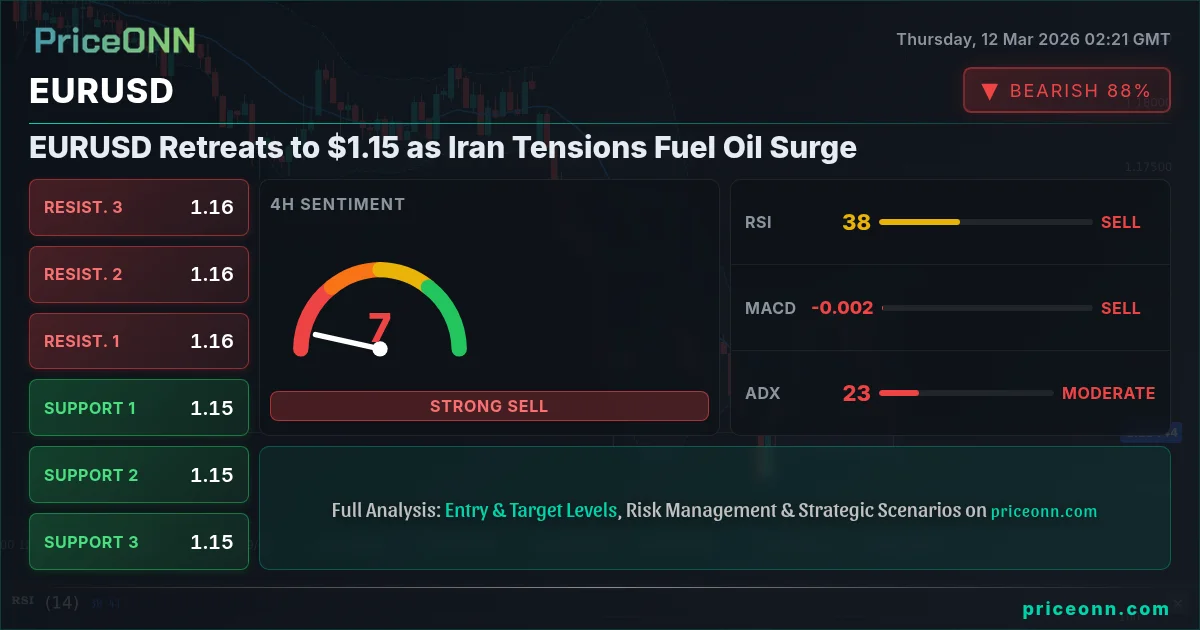
EURUSD's retreat to $1.15 is raising eyebrows across the forex market. Is this a temporary dip, or a sign of deeper troubles brewing for the Euro amid rising oil prices and geopolitical tensions?
- EURUSD trades at $1.15, pressured by a strengthening dollar index and surging oil prices.
- Key support lies at 1.15358, which, if broken, could trigger further downside.
- The 1-hour RSI at 34.42 suggests oversold conditions, but the overall trend remains bearish.
- Geopolitical tensions involving Iran and rising oil prices are significantly impacting the Eurozone's economic stability.
Dollar Strength Weighs on EURUSD
The primary driver behind EURUSD's recent decline is the strengthening dollar. The DXY (Dollar Index) currently sits at 99.15, a 0.62% increase for the day. As the dollar gains ground, major pairs like EURUSD often face downward pressure. This inverse correlation is a classic market dynamic, and it's playing out in real-time. Traders should monitor the DXY closely; any further gains could spell more trouble for the Euro.
Iran Tensions and the Oil Price Surge
Adding fuel to the fire is the escalating situation involving Iran. Crude oil prices, particularly Brent, have surged to $98.92, a staggering 8.06% daily increase. According to recent news, these tensions are threatening Eurozone stability. Higher oil prices translate to increased inflationary pressures, especially for energy-dependent economies like those in the Eurozone. This inflationary pressure could limit the ECB's (European Central Bank) ability to stimulate the economy, further weakening the Euro.
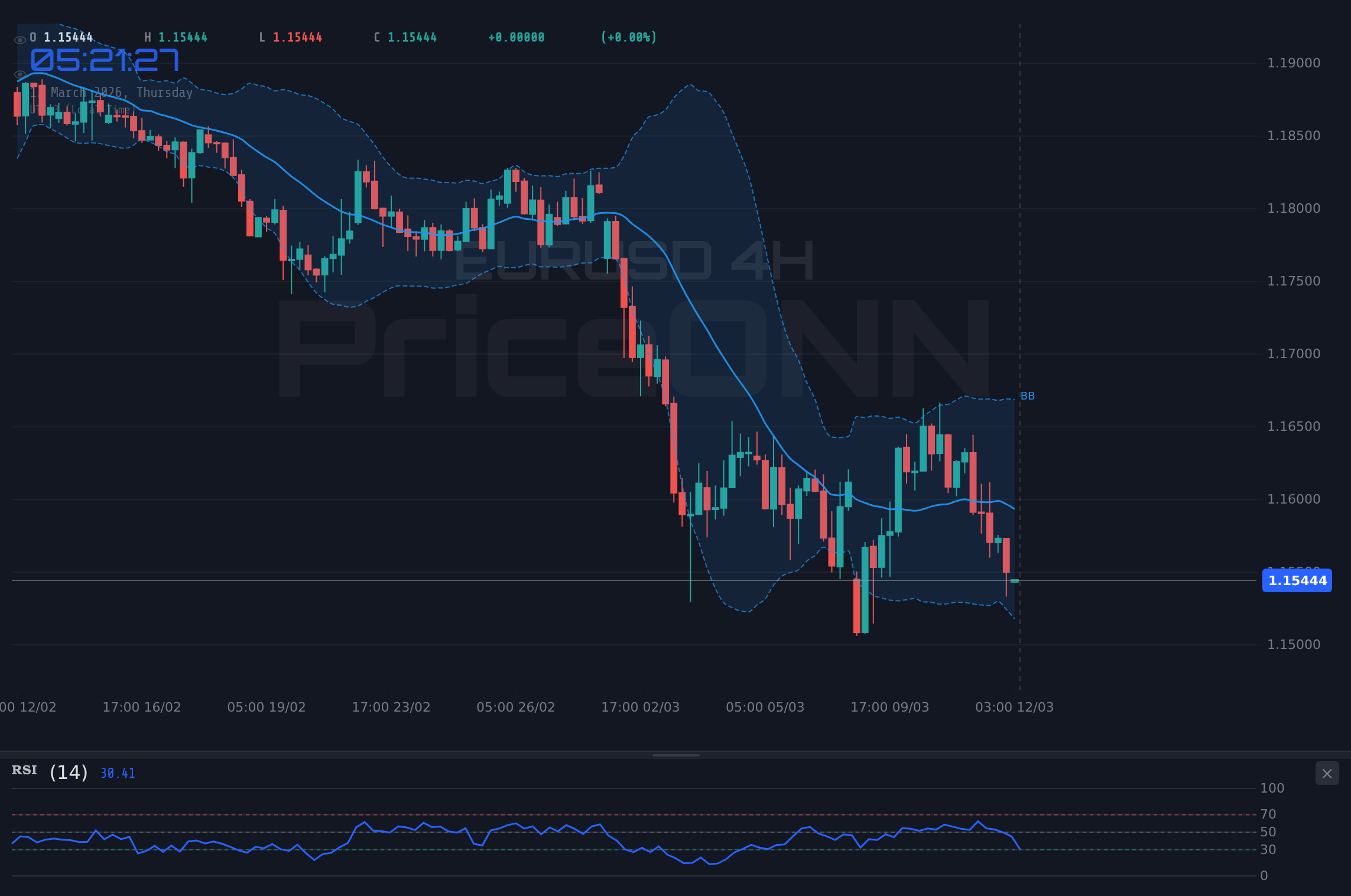
Technical Breakdown: Key Levels to Watch
From a technical perspective, EURUSD is testing critical support levels. The 1-hour chart shows immediate support at 1.15358. A break below this level could open the door to further downside, potentially targeting 1.15264 and 1.15197. On the upside, immediate resistance is at 1.15519, followed by 1.15586 and 1.1568. The 1-hour RSI at 34.42 suggests the pair is approaching oversold conditions, but the overall bearish trend remains intact, as confirmed by the ADX at 26.91, indicating a strong downward trend.
EURUSD Macroeconomic Factors
The recent price action in EURUSD reflects a confluence of macroeconomic factors. The Australian Financial Review may be interested in the EURUSD forecast for March 2026 given the pair's current dynamics. With the US dollar strengthening, and oil prices surging due to geopolitical tensions, the euro is facing significant headwinds. Traders should also keep an eye on upcoming economic data releases, including the GBP data on Friday, March 13th. Any surprises in these figures could trigger significant volatility in the forex market, especially for EURUSD.
ECB's Tightrope Walk
The ECB is in a difficult position. While the US Federal Reserve has been relatively hawkish in its approach to monetary policy, the ECB faces the challenge of managing inflation without stifling economic growth in the Eurozone. The surge in oil prices further complicates this task, as it adds inflationary pressures while simultaneously acting as a tax on consumers and businesses. This limits the ECB's ability to stimulate the economy. We are closely watching for any policy shifts and their impact on the EURUSD.
What Does This Mean for Traders?
For traders, the current environment calls for caution and strategic positioning. The bearish trend in EURUSD is well-established, but oversold conditions may present short-term opportunities for counter-trend trades. However, given the fundamental backdrop of dollar strength and geopolitical risks, the overall bias remains to the downside. Traders should consider strategies that capitalize on this trend, such as selling rallies or shorting breakouts below key support levels.
Market Sentiment and Positioning
Market sentiment towards EURUSD is increasingly bearish. The combination of dollar strength, rising oil prices, and ECB's limited policy options has created a perfect storm for the Euro. Institutional positioning data, such as the Commitment of Traders (COT) report, could provide further insights into the overall market sentiment. Keep an eye on these reports to gauge the extent of bearish positioning and potential for a sentiment reversal.
USD/CAD Correlation
It's worth noting the correlation between EURUSD and other currency pairs, particularly USD/CAD. As oil prices rise, commodity currencies like the Canadian dollar often gain strength. This can put downward pressure on USD/CAD, creating a divergence with EURUSD. Traders should monitor these correlations to identify potential trading opportunities and manage risk effectively.
Short-Term Outlook
In the short term, EURUSD is likely to remain under pressure as long as the dollar remains strong and geopolitical tensions persist. Key levels to watch include the immediate support at 1.15358 and resistance at 1.15519. A break of either of these levels could trigger a significant move in the pair. Traders should also be prepared for increased volatility as economic data releases and geopolitical developments unfold.
Frequently Asked Questions: EURUSD Analysis
What happens if EURUSD breaks below 1.15358 support?
If EURUSD breaks below the 1.15358 support level, as the 1-hour chart suggests, further downside is likely. The next support levels to watch are 1.15264 and 1.15197. This breakdown could signal a continuation of the bearish trend.
Should I sell EURUSD at current $1.15 levels given the RSI at 34.42?
While the RSI at 34.42 suggests oversold conditions, the overall bearish trend remains intact. Consider selling on rallies towards the 1.15519 resistance level, rather than initiating a short position at current levels. This allows for a better risk-reward ratio.
Is the negative MACD momentum a strong sell signal for EURUSD?
Yes, the negative MACD momentum on the 1-hour chart reinforces the bearish outlook. It indicates that selling pressure is likely to continue, and traders should be cautious about initiating long positions until the MACD shows signs of a bullish reversal.
How will the upcoming GBP data on Friday affect EURUSD this week?
The upcoming GBP data on Friday, March 13th, could indirectly impact EURUSD. Strong GBP data could lead to a weaker dollar, providing some relief for the Euro. However, the primary drivers for EURUSD remain dollar strength and geopolitical tensions.
Track markets in real-time
AI-powered analysis, technical indicators and real-time price data.
Join Our Telegram Channel
Breaking market news, AI analysis and trading signals instantly.
Join Channel