
DowJones30: медведи усиливают давление, индекс упал до $46 891,50
DowJones30 обвалился до $46 891,50, сигнализируя об усилении медвежьего давления. Ключевые уровни поддержки в фокусе, поскольку рынок реагирует на рост цен на нефть и геополитическую напряженность. Анализ Dow Jones сегодня показывает высокую волатильность.

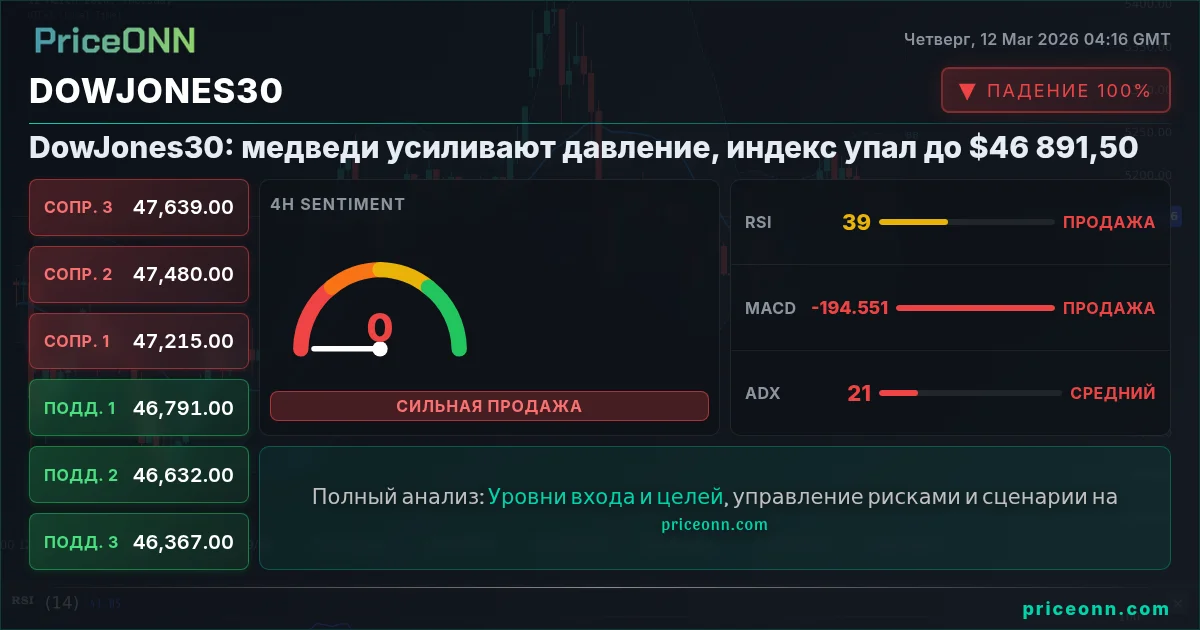
DowJones30 сталкивается со значительными препятствиями, торгуясь в настоящее время на уровне $46 891,50, поскольку быки и медведи борются за контроль на фоне эскалации геополитических рисков и роста цен на нефть. Индекс тестирует более низкие уровни, что побуждает к критическому изучению его краткосрочной траектории. Анализ Dow Jones сегодня показывает, что индекс будет подвержен высокой волатильности в ближайшие дни.
- RSI на уровне 32.12 на 1H графике предполагает условия перепроданности, но общая тенденция остается медвежьей.
- Критическая поддержка находится на уровне 46 772.67, прорыв ниже которого может спровоцировать дальнейшее снижение.
- ADX на уровне 27.37 указывает на сильный медвежий тренд в краткосрочной перспективе.
- Геополитическая напряженность и рост цен на нефть обуславливают корреляцию DowJones30 с более широкими рыночными опасениями.
Бычий сценарий: Разворот на горизонте?
Несмотря на текущие медвежьи настроения, есть аргументы в пользу потенциального бычьего разворота. Одним из ключевых факторов является состояние перепроданности, указанное RSI на 1-часовом графике, который находится на уровне 32.12. Исторически такие уровни перепроданности предшествовали краткосрочным отскокам, поскольку покупатели вступают в игру, чтобы воспользоваться более низкими ценами. Кроме того, в то время как ADX указывает на сильный нисходящий тренд, Stochastic Oscillator показывает индекс в зоне перекупленности. Это расхождение часто может сигнализировать о потенциальном ослаблении нисходящего импульса.
С фундаментальной точки зрения, потенциальное ослабление геополитической напряженности или замедление роста цен на нефть может принести некоторое облегчение DowJones30. Кроме того, любые положительные сюрпризы в предстоящих экономических данных, особенно в отношении инфляции или занятости, могут повысить рыночные настроения и спровоцировать ралли. Крайне важно следить за реакцией рынка на эти потенциальные катализаторы, чтобы оценить силу любого потенциального бычьего разворота.
Медвежий сценарий: Нисходящий импульс продолжается
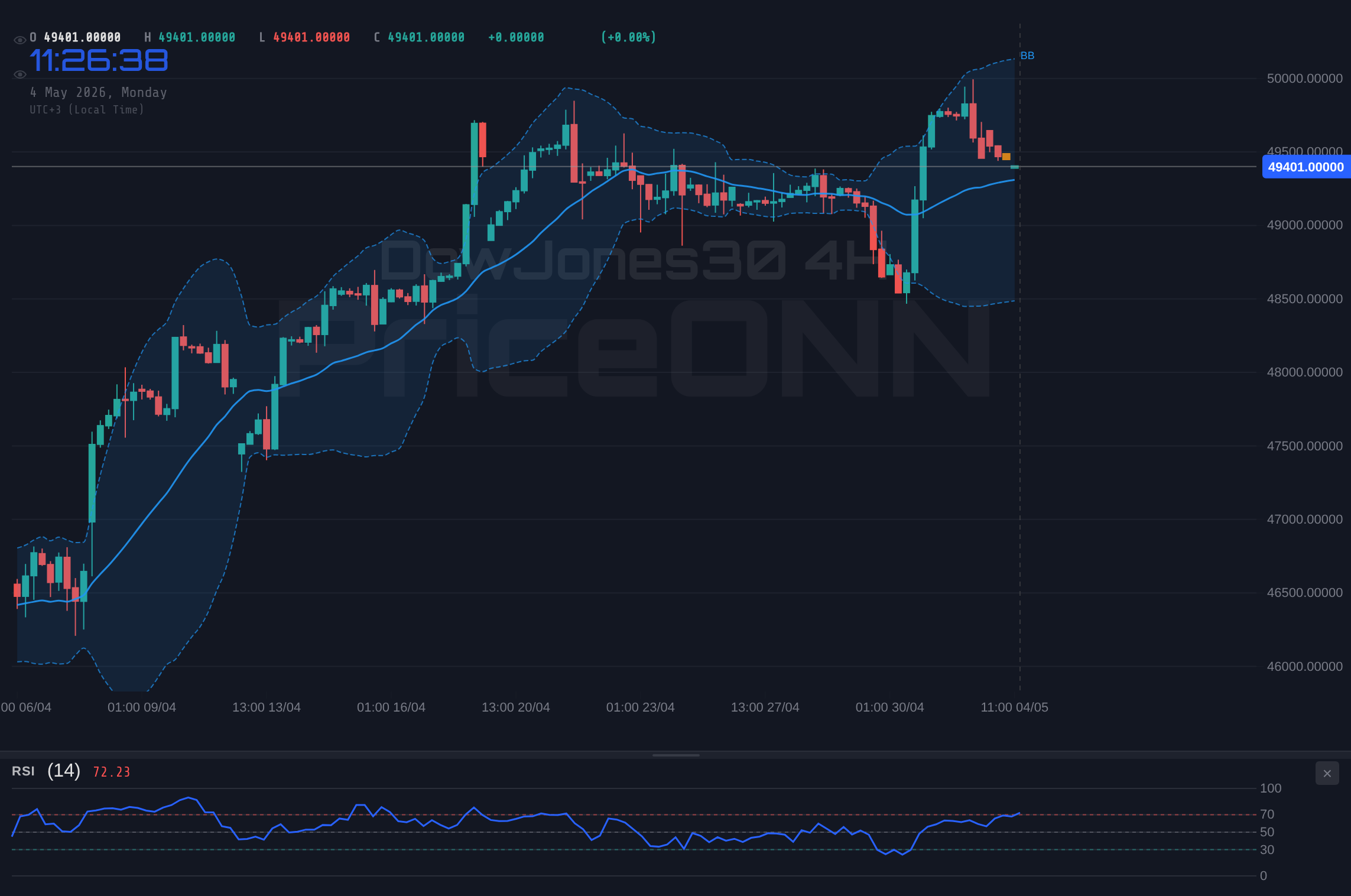
С другой стороны, медвежий сценарий для DowJones30 остается убедительным. Индекс в настоящее время торгуется ниже своих ключевых скользящих средних, а гистограмма MACD указывает на отрицательный импульс на нескольких таймфреймах. 4H график показывает, что MACD все еще значительно ниже сигнальной линии, что указывает на то, что продавцы не только сильны, но и активно заинтересованы в усилении давления. Дневной график также показывает индекс ниже своей 200-дневной скользящей средней, значительного уровня, который часто выступает в качестве ключевой поддержки. Прорыв ниже этого уровня может открыть дверь для дальнейшего снижения.
Фундаментально, эскалация геополитической напряженности на Ближнем Востоке и скачок цен на нефть создают среду неприятия риска, которая, как правило, оказывает давление на рынки акций. Согласно последним отчетам, цены на нефть тестируют отметку в 100 долларов, усугубляя опасения по поводу инфляции и усиливая опасения по поводу влияния на корпоративные доходы. DXY в настоящее время находится на уровне 99.23, что еще больше оказывает давление на индекс. Более того, предстоящие публикации экономических данных, включая данные по GBP в пятницу, могут еще больше усугубить медвежьи настроения, если они не оправдают ожиданий.
Технические факторы как решающий аргумент: Анализ ключевых уровней и индикаторов
1-часовой график для DowJones30 рисует медвежью картину. Цена торгуется ниже средней полосы Bollinger Bands, и RSI, хотя и находится в зоне перепроданности, еще не показал никаких признаков устойчивого разворота. Ключевые уровни поддержки, за которыми следует следить, включают 46 772.67, за которым следуют 46 697.33 и 46 596.67. Прорыв ниже 46 772.67 может спровоцировать дальнейшую распродажу к более низким уровням поддержки.
На 4-часовом таймфрейме технические индикаторы также благоприятствуют медведям. RSI находится на уровне 38.55, что указывает на то, что еще есть место для дальнейшего снижения, прежде чем индекс достигнет зоны перепроданности. Гистограмма MACD отрицательная, что подтверждает медвежий импульс. Уровни сопротивления, за которыми следует следить, включают 46 948.67, за которым следуют 47 049.33 и 47 124.67. Неспособность пробиться выше 46 948.67 может усилить медвежий уклон.
Дневной график обеспечивает более долгосрочную перспективу. В то время как RSI приближается к зоне перепроданности на уровне 29.93, общая тенденция остается медвежьей. Гистограмма MACD отрицательная, и цена торгуется ниже своей 200-дневной скользящей средней. Ключевые уровни поддержки, за которыми следует следить, включают 47 030, за которым следуют 46 722 и 46 272. Уровни сопротивления, за которыми следует следить, включают 47 788, за которым следуют 48 238 и 48 546.
Вердикт: Медведи сохраняют контроль
Учитывая технические и фундаментальные факторы, медведи, похоже, контролируют DowJones30 на данный момент. Эскалация геополитической напряженности, рост цен на нефть и негативные экономические данные создают среду неприятия риска, которая оказывает давление на рынки акций. Технические индикаторы также благоприятствуют медведям, с отрицательным импульсом и ценой, торгующейся ниже ключевых скользящих средних. ADX на 1D таймфрейме находится на уровне 32.59, что подтверждает силу нисходящего тренда. В то время как условия перепроданности на более коротких таймфреймах могут привести к временным отскокам, общий прогноз остается медвежьим.
Трейдерам крайне важно следить за ключевыми уровнями поддержки, упомянутыми выше. Прорыв ниже 46 772.67 может спровоцировать дальнейшую распродажу к более низким уровням поддержки. С другой стороны, устойчивый прорыв выше 46 948.67 потребуется для нейтрализации медвежьего уклона. До тех пор следует проявлять осторожность, и трейдерам следует уделять приоритетное внимание управлению рисками и ждать четких сигналов подтверждения, прежде чем открывать какие-либо новые позиции. Анализ Dow Jones сегодня показывает, что индекс будет подвержен высокой волатильности в ближайшие дни. Те, кто готов воспользоваться этим, будут вознаграждены.
Часто задаваемые вопросы: Анализ DowJones30
Что произойдет, если DowJones30 пробьет поддержку на уровне $46 772.67?
Если DowJones30 пробьет уровень поддержки $46 772.67, это может спровоцировать дальнейшую распродажу к следующим уровням поддержки на $46 697.33 и $46 596.67. Этот пробой подтвердит медвежий импульс и увеличит вероятность дальнейшего снижения.
Стоит ли покупать DowJones30 на текущих уровнях $46 891.50, учитывая RSI на уровне 32.12?
Хотя RSI на уровне 32.12 указывает на условия перепроданности, важно учитывать общую медвежью тенденцию. Открытие длинной позиции на текущих уровнях было бы рискованным без дальнейшего подтверждения разворота. Рекомендуется дождаться устойчивого прорыва выше $46 948.67, прежде чем рассматривать возможность входа в длинную позицию.
Является ли отрицательная гистограмма MACD сильным сигналом на продажу для DowJones30?
Отрицательная гистограмма MACD подтверждает медвежий импульс, но это не самостоятельный сигнал на продажу. Его следует использовать в сочетании с другими техническими индикаторами и фундаментальным анализом для принятия обоснованных торговых решений. Положение MACD ниже сигнальной линии является еще одним признаком давления со стороны продавцов.
Как повлияют предстоящие данные по GBP в пятницу на DowJones30 на этой неделе?
Как повлияют решения ЦБ РФ на курс рубля и, следовательно, на DowJones30? Предстоящие данные по GBP в пятницу могут косвенно повлиять на DowJones30, повлияв на настроения на мировом рынке. Данные, которые окажутся лучше ожидаемых, могут повысить аппетит к риску и принести некоторое облегчение индексу, в то время как данные, которые окажутся хуже ожидаемых, могут усугубить медвежьи настроения и спровоцировать дальнейшее снижение.
Отслеживайте рынки в реальном времени
ИИ-анализ и данные в реальном времени.