

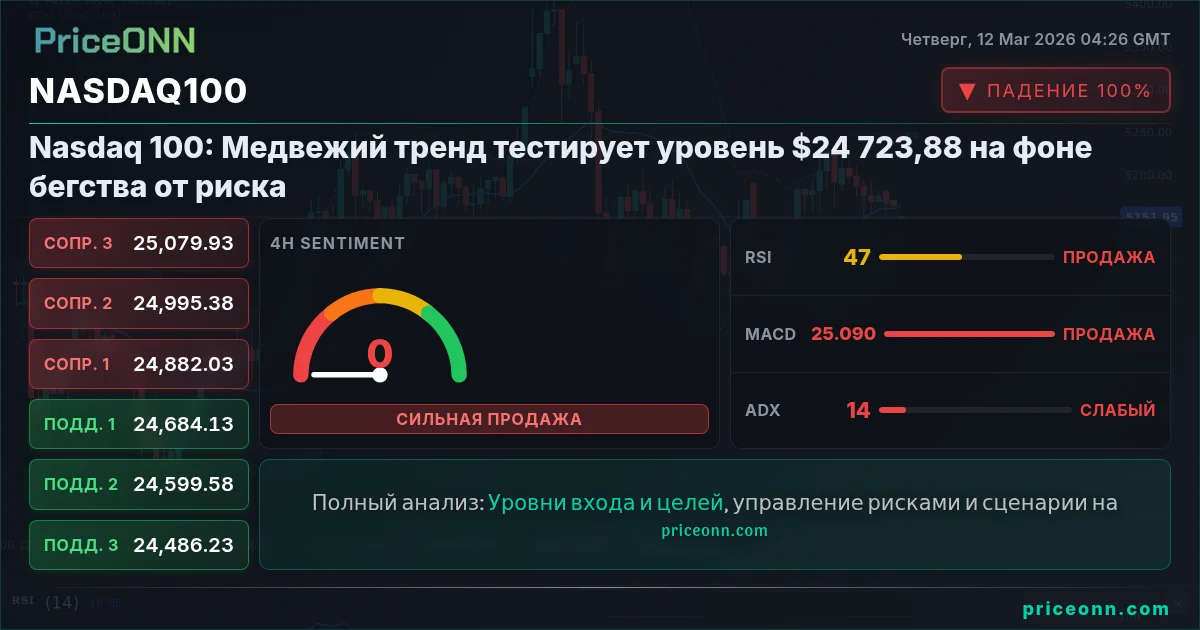
Nasdaq 100 в настоящее время борется с медвежьим трендом, тестируя уровень $24 723,88. Это происходит на фоне эскалации геополитической напряженности и укрепления доллара, создавая атмосферу неприятия риска, которая оказывает давление на акции.
- RSI на уровне 36.4 на 1-часовом графике сигнализирует о потенциальной перепроданности, но дальнейшее давление вниз может сохраниться.
- Критическая поддержка находится на уровне 24 670.15, прорыв ниже которого может спровоцировать дальнейшее снижение.
- Гистограмма MACD указывает на отрицательный импульс, предполагая, что медвежьи настроения все еще контролируют ситуацию.
- Сила DXY отрицательно коррелирует с Nasdaq 100, усиливая давление вниз.
На динамику Nasdaq 100 влияет несколько факторов. Индекс доллара (DXY) в настоящее время торгуется на уровне 99.23, демонстрируя рост на 0.34%. Этот рост индекса доллара обычно оказывает давление на акции и другие рисковые активы, включая Nasdaq 100. Стоит отметить обратную корреляцию между DXY и Nasdaq 100, поскольку более сильный доллар делает акции США относительно более дорогими для иностранных инвесторов.
Усиливая медвежьи настроения, геополитическая напряженность на Ближнем Востоке нарастает, о чем свидетельствуют недавние новости, указывающие на скачок цен на нефть выше 90 долларов за баррель. Это вызвало опасения по поводу потенциального инфляционного давления и его влияния на глобальную экономическую стабильность. Возросшая неопределенность вокруг Ближнего Востока подталкивает инвесторов к более безопасным активам, что еще больше давит на рискованные активы, такие как Nasdaq 100.
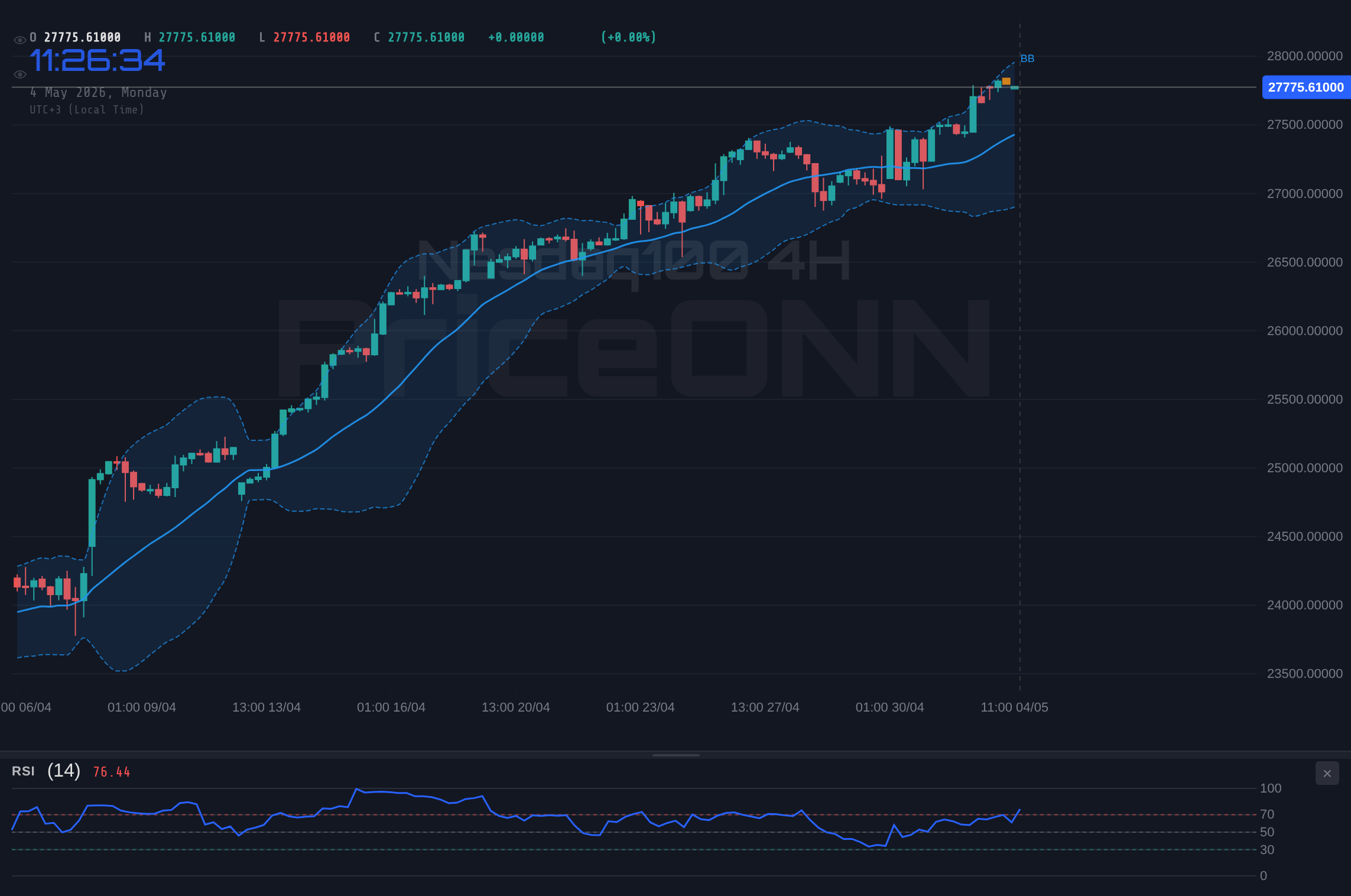
С технической точки зрения, Nasdaq 100 сталкивается со значительными проблемами. На 1-часовом таймфрейме тренд медвежий с силой 78%. Ключевые уровни поддержки, за которыми стоит следить, - 24 670.15, 24 631.65 и 24 579.37. Прорыв ниже 24 670.15 может привести к дальнейшему снижению, потенциально нацеливаясь на следующий уровень поддержки на 24 631.65. Уровни сопротивления расположены на 24 760.93, 24 813.21 и 24 851.71. RSI(14) на 1-часовом графике составляет 36.4, что указывает на то, что индекс приближается к условиям перепроданности. Однако это не обязательно означает немедленный разворот, поскольку индекс может оставаться перепроданным в течение длительного периода во время сильного нисходящего тренда.
MACD на 1-часовом графике показывает отрицательный импульс, при этом линия MACD находится ниже сигнальной линии. Это указывает на то, что медвежий тренд все еще сохраняется. Осциллятор Stochastic, с K=14.25 и D=15.89, находится в зоне перепроданности, сигнализируя о потенциальном краткосрочном отскоке. Однако общая тенденция предполагает, что любой такой отскок, вероятно, будет ограниченным.
На 4-часовом таймфрейме ситуация несколько неоднозначная. Хотя тренд нейтральный, RSI(14) находится на уровне 46.36, что указывает на то, что еще есть место для дальнейшего снижения, прежде чем индекс достигнет условий перепроданности. MACD также указывает на отрицательный импульс, поддерживая медвежий прогноз. Осциллятор Stochastic находится в зоне перепроданности, с K=15.49 и D=46.4, что предполагает потенциал для отскока. Однако ADX находится на уровне 14.78, что указывает на слабый тренд, что подразумевает, что индекс может оставаться в диапазоне в ближайшей перспективе.
Глядя на дневной таймфрейм, тренд медвежий с силой 90%. Ключевые уровни поддержки, за которыми стоит следить, - 24 797.04, 24 672.1 и 24 493.88. Уровни сопротивления расположены на 25 100.2, 25 278.42 и 25 403.36. RSI(14) находится на уровне 45.24, что указывает на то, что еще есть место для дальнейшего снижения. MACD также указывает на отрицательный импульс, поддерживая медвежий прогноз. Осциллятор Stochastic находится в зоне перекупленности, с K=70.21 и D=58.86, что предполагает потенциал для отката. ADX находится на уровне 29.02, что указывает на сильный тренд, который поддерживает медвежий уклон.
Сочетание факторов - более сильный доллар, геополитическая напряженность и негативные технические индикаторы - создает сложную среду для Nasdaq 100. Инвесторам следует проявлять осторожность и внимательно следить за ключевыми уровнями поддержки. Прорыв ниже 24 670.15 на 1-часовом графике может спровоцировать дальнейшее снижение, в то время как прорыв ниже 24 797.04 на дневном графике подтвердит медвежий тренд. И наоборот, устойчивое движение выше 24 760.93 на 1-часовом графике или 25 100.2 на дневном графике будет говорить о том, что медвежье давление ослабевает.
Добавляя сложностей, цены на сырую нефть нацелены на 90 долларов, поскольку напряженность в отношениях с Ираном угрожает стабильности еврозоны. Это подчеркивает взаимосвязанность мировых рынков и потенциал геополитических событий для влияния на цены акций. Если напряженность на Ближнем Востоке продолжит нарастать, это может привести к дальнейшему неприятию риска и негативно повлиять на Nasdaq 100.
Предстоящие публикации экономических данных также сыграют решающую роль в формировании краткосрочных перспектив для Nasdaq 100. Инвесторы будут внимательно следить за данными по GBP в пятницу. Любые сюрпризы в этих публикациях данных могут спровоцировать значительную волатильность на рынке и повлиять на динамику Nasdaq 100.
Учитывая текущие рыночные условия, важно учитывать общее настроение рынка. Настроение рынка часто может действовать как самоисполняющееся пророчество, направляя цены в определенном направлении. Важно знать о преобладающих настроениях и избегать попадания не на ту сторону рынка.
Для свинг-трейдеров крайне важно определять точки входа и выхода на основе технических индикаторов и графических моделей. Ищите сигналы подтверждения перед входом в сделку, такие как прорыв выше ключевого уровня сопротивления или прорыв ниже ключевого уровня поддержки. Всегда используйте стоп-лосс ордера, чтобы ограничить потенциальные убытки.
Часто задаваемые вопросы: Анализ Nasdaq 100
Что произойдет, если Nasdaq 100 пробьет поддержку на уровне $24 670.15?
Если Nasdaq 100 пробьет уровень поддержки $24 670.15, это может спровоцировать дальнейшее снижение к следующей поддержке на уровне $24 631.65 на 1-часовом графике. Этот пробой укрепит медвежий тренд и потенциально приведет к усилению давления продаж.
Стоит ли покупать Nasdaq 100 на текущих уровнях $24 723.88, учитывая RSI на уровне 36.4?
Хотя RSI на уровне 36.4 предполагает, что Nasdaq 100 приближается к условиям перепроданности на 1-часовом таймфрейме, покупка на текущих уровнях сопряжена с риском. Общий тренд остается медвежьим, поэтому рекомендуется дождаться подтверждения разворота, прежде чем открывать длинную позицию.
Является ли отрицательный сигнал MACD на 1-часовом графике надежным индикатором дальнейшего снижения?
Отрицательный сигнал MACD на 1-часовом графике, с линией MACD ниже сигнальной линии, подтверждает медвежий тренд. Хотя это и не является самостоятельным сигналом, он усиливает аргументы в пользу продолжения давления вниз, особенно в сочетании с пробоями ниже ключевых уровней поддержки.
Как предстоящие данные по GBP в пятницу повлияют на Nasdaq 100?
Предстоящие публикации данных по GBP в пятницу могут косвенно повлиять на Nasdaq 100 через более широкие рыночные настроения и аппетит к риску. Позитивные данные могут повысить уверенность на мировом рынке, оказав некоторую поддержку, в то время как негативные данные могут усугубить неприятие риска и оказать давление на индекс.
Волатильность создает возможности - те, кто подготовлен, будут вознаграждены.
Отслеживайте рынки в реальном времени
ИИ-анализ и данные в реальном времени.